The best cycling routes around Villalcampo
13
riders
4
rides
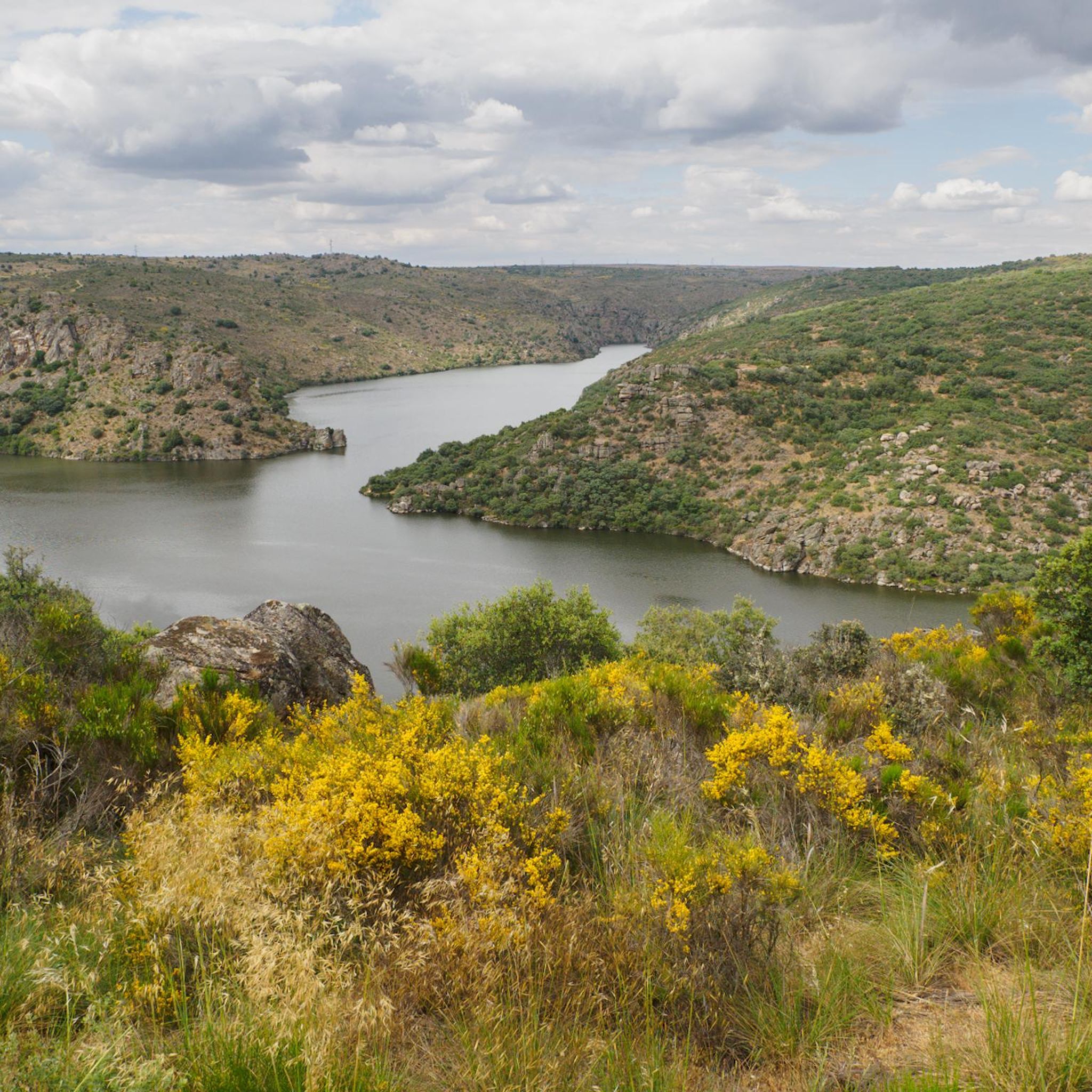
Touring cycling routes around Villalcampo are set within the dramatic landscapes of the Arribes del Duero Natural Park, characterized by deep river canyons and granite cliffs carved by the Douro River. The region features varied topography, including impressive rock formations and significant hydroelectric reservoirs like the Villalcampo and Ricobayo dams. These physical features create a challenging environment for cycling, with routes often including substantial climbs.
Best touring cycling routes around Villalcampo
- The most popular touring cycling route is View of…
Last updated: August 22, 2026
3
riders
Moderate bike ride. Good fitness required. Mostly paved surfaces. Suitable for all skill levels.
4
riders
91.6km
07:50
1,000m
1,000m
Hard bike ride. Very good fitness required. Mostly paved surfaces. Suitable for all skill levels.

Sign up for free
2
riders
Hard bike ride. Very good fitness required. Mostly paved surfaces. Suitable for all skill levels.
2
riders
43.9km
04:01
520m
510m
Hard bike ride. Very good fitness required. You may need to push your bike for some segments of this route.
2
riders
62.3km
05:40
1,020m
1,020m
Hard bike ride. Very good fitness required. Mostly paved surfaces. Suitable for all skill levels.
Our route recommendations are based on thousands of hikes, rides, and runs completed by other people on komoot.
Start today with a free account
Your next adventure awaits.
Login or Signup

Tips from the Community

Mirador do Penedo Amarelo. It is located on Rua do Penedo Amarelo, in the urban area of Miranda do Douro. It offers wide panoramic views of the Douro River surrounded by green hills, the dam, the historic center and the co-cathedral of Miranda do Douro. It is one of the most outstanding urban viewpoints in the area.
3
0
The views from the Duero-Douro International Biological Station and its cruises are spectacular: Arribes del Duero / Douro International: river canyons with rock walls exceeding 200 meters, Mediterranean vegetation, and birds of prey such as griffon vultures and golden eagles. Lake Sanabria: crystal-clear waters surrounded by mountains and forests, with unique panoramic views from the solar-powered catamaran. Miranda do Douro: views of the river and the Portuguese historic center, especially at sunset.
2
0
It's located in the heart of the Arribes del Duero Natural Park, an area of great scenic beauty and biodiversity. Things to do nearby: Viewpoints: The viewpoint at the bridge itself and others nearby, such as the one in Villadepera. Hiking trails: Paths through the Arribes, ideal for photography and birdwatching. Charming villages: Villadepera, Pino del Oro, and other towns in the area. From the bridge, you can admire the granite cliffs of the Duero River and the deep riverbed that marks the natural border with Portugal.
2
0
The Requejo Bridge, also known as the Pino Bridge, is a jewel of historical engineering located in Villadepera (Zamora) over the Duero River, within the Arribes del Duero Natural Park. Year of inauguration: 1914. Designed by the engineer José Eugenio Ribera, a pioneer in the use of reinforced concrete in Spain. It was built to connect the Aliste and Sayago regions, facilitating communication between Zamora and Portugal.
2
0

This monument consists of three monoliths representing the three roads that converge at this location: the Via de la Plata, the Calzada Mirandesa, and the Via Dalmacia; and a curb where pilgrims can write a wish on a stone and throw it into the curb for it to come true.
1
0
From the Vale de Águia hill fort, there is a natural viewpoint with spectacular views of one of the meanders of the Douro. At the São João das Arribas hermitage, you can also enjoy stunning panoramic views of the canyon and waterfalls on the Spanish slope. The landscape includes cliffs, meadows, oak groves, and pastures, with abundant flora and fauna.
5
0
The GR-36 trail in the Miranda do Douro area is one of the most spectacular routes in northern Portugal, especially for its views of the Douro Canyon, which forms the natural border with Spain.
6
0
The Ricobayo Reservoir, also known as Salto de Ricobayo or Embalse del Esla, is an impressive hydroelectric engineering project located on the Esla River, less than 1 km from Ricobayo de Alba, in the municipality of Muelas del Pan. The reservoir is located in the area known as the Arribes del Esla, a deep geographic depression with spectacular landscapes.
1
0
Frequently Asked Questions
How many touring cycling routes are available around Villalcampo?
There are 4 touring cycling routes available around Villalcampo, all of which are categorized as difficult, offering a challenging experience for cyclists.
What is the general difficulty level of touring cycling routes in Villalcampo?
All the touring cycling routes listed for Villalcampo are rated as difficult. They often feature significant elevation gains and varied terrain, making them suitable for experienced cyclists looking for a challenge.
Are there any long-distance touring cycling routes in the Villalcampo area?
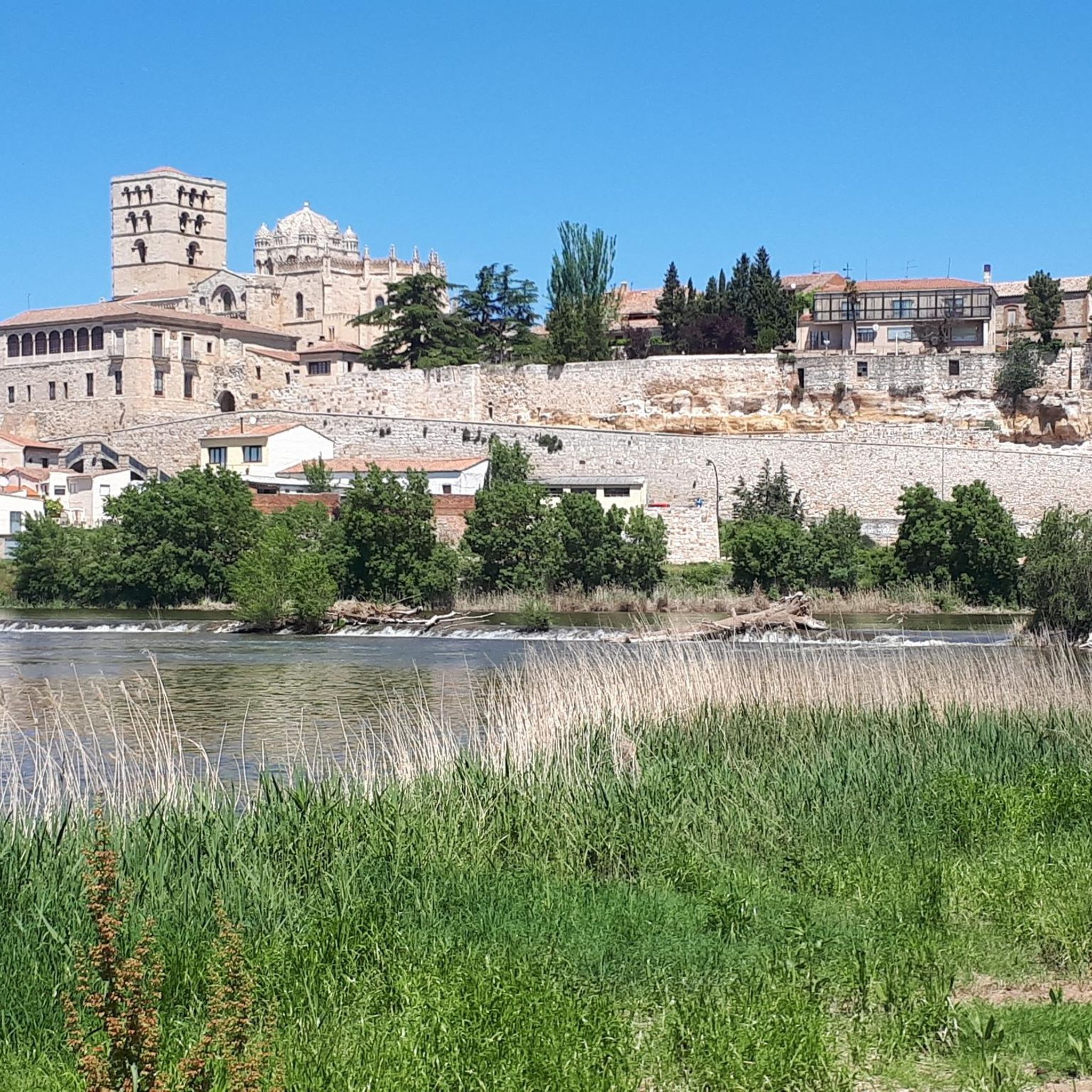
Yes, several routes offer longer distances. For example, the View of Zamora's Old Town – Zamora Stone Bridge loop from Zamora covers over 91 kilometers, and the View of the Douro Canyon – Yellow Rock Viewpoint loop from Cerezal de Aliste is approximately 62 kilometers long, both providing extensive rides through the region.
What natural features or viewpoints can I expect to see on a touring cycling trip near Villalcampo?
The region is rich in dramatic natural landscapes, primarily within the Arribes del Duero Natural Park. You can expect stunning views of the Douro River canyons and granite cliffs. Notable viewpoints include São João das Arribas Viewpoint, Mirador del Hullón, and the View of the Duero River from Mirador de Los Pueyos. The Villalcampo Hydroelectric Reservoir and Dam are also prominent features along some routes.
Are there any specific landmarks or points of interest along the cycling routes?
Beyond the natural beauty, you can encounter engineering marvels and other points of interest. The Requejo Bridge is a notable structure. You might also pass by the Ricobayo Reservoir, which is a significant feature in the landscape.
Are there any waterfalls accessible or visible from the touring cycling routes?
Yes, the region is home to beautiful waterfalls. The Abelón Waterfall, a natural monument with three fanning torrents, is a highlight in the Sayago region. Another is the Cadozos Waterfall, both offering picturesque natural sights.
Are there any circular touring cycling routes around Villalcampo?
Yes, all the touring cycling routes listed are circular, meaning they start and end at the same point. Examples include the Ricobayo Reservoir – Ricobayo Dam loop from Muelas del Pan and the Pontón Viewpoint – Torregamones Church loop from Villadepera.
What is the best time of year for touring cycling in Villalcampo?
The best seasons for touring cycling in this part of Spain are generally from April to mid-June and then again from September to October. During these periods, the weather is typically more favorable, avoiding the intense heat of summer and the colder, wetter conditions of winter.
Are the touring cycling routes in Villalcampo suitable for families or beginners?
Given that all listed touring cycling routes are rated as difficult, they are generally not recommended for beginners or young families. These routes often involve substantial climbs and varied terrain, requiring good fitness and cycling experience.
What are the options for parking when cycling in Villalcampo?
While specific parking facilities for each route are not detailed, the circular nature of the routes suggests that you can typically find parking near the starting points in the villages or towns mentioned, such as Muelas del Pan, Cementerio Municipal de Fonfría, or Villadepera.
Can I access the touring cycling routes around Villalcampo using public transport?
Information on direct public transport access to the specific starting points of these touring cycling routes is limited. It is advisable to research local bus services connecting to the villages like Muelas del Pan or Villadepera, or consider driving to the starting points.
What do other touring cyclists enjoy the most about touring cycling in Villalcampo?
Cyclists often praise the dramatic landscapes of the Arribes del Duero Natural Park, the impressive views of the Douro River canyons, and the challenging yet rewarding terrain. The blend of natural wonders and engineering marvels like the hydroelectric dams provides a unique cycling experience.
Most popular attractions around Villalcampo

Get inspired with the komoot mobile app


Explore more
Browse the best Cycling routes in other regions.
