Attractions and Places To See around Prats De Lluçanès - Top 20
Attractions and places to see around Prats De Lluçanès offers a blend of historical sites, cultural landmarks, and natural features within the Osona region of Catalonia. Situated on a plateau averaging 700 meters in altitude, the area provides panoramic views of the Lluçanès landscape, extending towards the Pyrenees and Montserrat. This region is characterized by its rich history and diverse natural environment, making it suitable for exploration. Visitors can discover ancient monasteries, charming villages, and various outdoor routes.
Best attractions…
Last updated: July 2, 2026
Olost and Church of Santa Maria
Highlight • Settlement
Translated by Google •
Tip by

Castell d'Olost
Highlight • Castle
Translated by Google •
Tip by

Sign up now to discover places like this
Get recommendations on the best single tracks, peaks, & plenty of other exciting outdoor places.
Sign up for free
Monastery of Santa Maria de Lluçà
Highlight • Religious Site
Translated by Google •
Tip by

Sant Sebastià de Prats de Lluçanès
Highlight • Religious Site
Translated by Google •
Tip by

Lluçà Road
Highlight • Cycleway
Tip by

Sign up for free to discover even more attractions around Prats De Lluçanès.
Sign up for free
Already have an account?
Start today with a free account
Your next adventure awaits.
Login or Signup
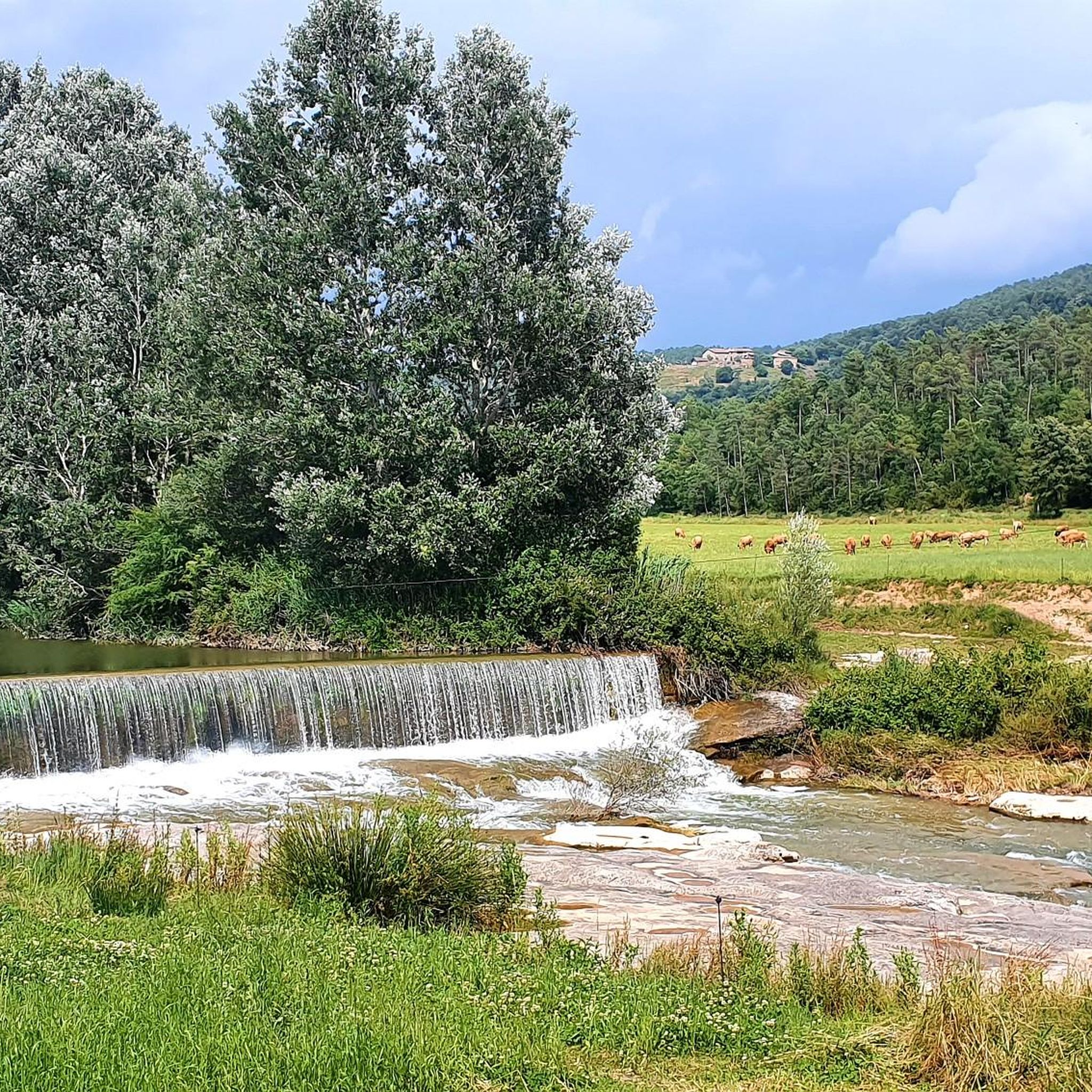
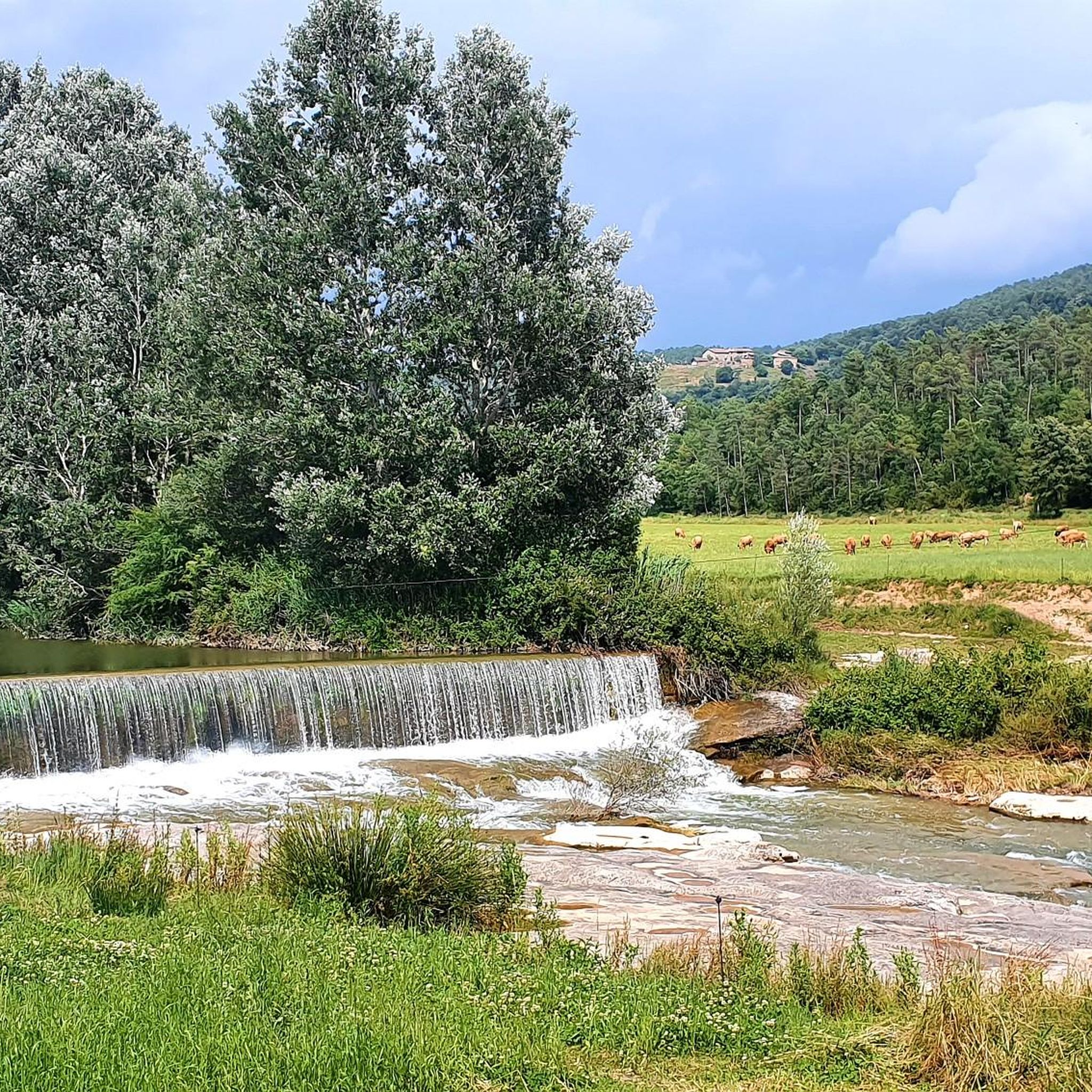
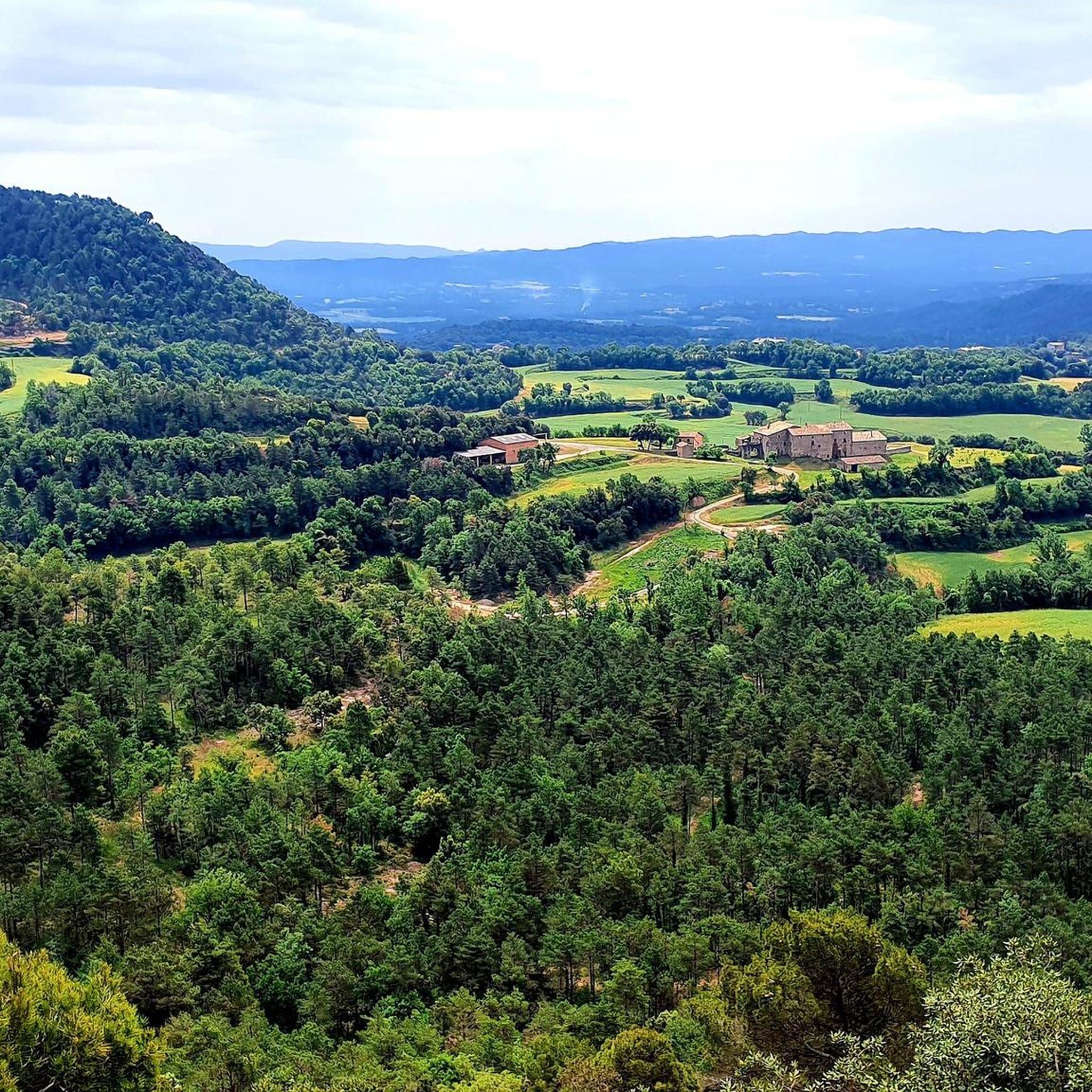

Tips from the Community

ant Sebastià de Prats de Lluçanès is a neoclassical church in Prats de Lluçanès (Osona) included in the Architectural Heritage Inventory of Catalonia. https://ca.wikipedia.org/wiki/Sant_Sebasti%C3%A0_de_Prats_de_Llu%C3%A7an%C3%A8s
2
0

Olost is a municipality in the province of Barcelona, in the county of Osona, in the sub-county of Lluçanés. It also includes the town of Santa Creu de Jutglar. The parish of Santa María de Olost has been documented since 908 and that of Santa Creu de Jotglar since 984. From 1966 to 1991 Mosén Ramon Vila i Pujol was rector of the church of Santa María de Olost.
14
0

Road in very good condition with smooth and constant ramps.
1
0

A pretty church just off the trail built on the side of an old farmhouse. The origins of the church date back to the 18th century.
4
0

Olost is a beautiful town that can be recognized from afar by the two bell towers of the Santa Maria church. Olost is a beautiful town, located in a small valley cut by the stream of Olost, with small shops that can be recognized from afar by the two bell towers of the church of Santa Maria. According to the legend, a couple promised a new bell tower if the virgin gave them a child; and they had a twin! It is a large nucleus, in relation to those surrounding it in the Lluçanès area, which already extended from the Sant Adjutori mountain range to the Olost stream already in modern times (17th and 18th centuries). The nerve center of Olost is Plaça Major, where the parish church and the town house are located. From this point the core is structured, both old and now. Among the streets built over the course of the 17th and 18th centuries, to the west of Plaça Major, you can count Carrer Berga, one of the longest in the town, Carrer Gelada, Carrer Nou and Carrer de Sant Adjutori, located in the ridge It also has the Raval del d'Olost, with preserved houses in Raval del Mig and Raval de Baix streets. In these older streets you can see houses framed with stone masonry walls that retain dated lintels indicating construction dates of the 17th and 18th centuries. We recommend going up to the viewpoint of Sant Adjutori, where there is the hermitage and hill from where you can observe beautiful panoramic views of the town and the mountains on the horizon that enclose the Lluçanès plateau: from the agricultural and forest landscape from Lluçanès to Montserrat, passing through the eastern Pyrenees in the north. https://turisme.llucanes.cat/municipi/olost/ https://turisme.llucanes.cat/visiteu/esglesia-santa-maria-olost/
4
0
The castle of Olost is located in a hollow – therefore in a not very strategic situation – next to the stream of Olost and to the south of the town of Olost and very close to its main nucleus, although it belongs to the municipality of Oristà. The castle arose in the 11th century after the disappearance of the castle of Oristà. It started as just a watchtower with a rectangular plan. Later on, it became a castle, although it was never a defense fortress but rather a stately residence bringing together feudal possessions. Of the old building, the tower and the Gothic chapel are currently preserved. https://ca.wikipedia.org/wiki/Castell_d%27Olost
2
0
Santa Maria de Lluçà is a work from Lluçà (Osona) declared a cultural asset of national interest. It is without a doubt the most remarkable archeological and historical building in Lluçanès. It is located in the municipality of Lluçà, at the foot of the castle. Surrounded by farmhouses, crops, forests and pastures that recall the recent autarkic past of farmhouses. https://ca.wikipedia.org/wiki/Santa_Maria_de_Llu%C3%A7%C3%A0
0
0

The castle of Olost is located in a hollow – therefore in a not very strategic situation – next to the stream of Olost and to the south of the town of Olost and very close to its main nucleus, although it belongs to the municipality of Oristà. The castle arose in the 11th century after the disappearance of the castle of Oristà. It started as just a watchtower with a rectangular plan. Later on, it became a castle, although it was never a defense fortress but rather a stately residence bringing together feudal possessions. Of the old building, the tower and the Gothic chapel are currently preserved. It is located on top of a rocky spur, to the north of the term. The plan of the current complex is trapezoidal and is the product of several construction phases, of which the oldest (15th-16th century) that is preserved in height corresponds to a square tower, dated to the 15th century, located in the East. The rest of the constructions are delivered to the tower and would be chronologically later (16th-18th centuries). To the south-west of the main complex, a square tower (from the late medieval period) is preserved, which is located on top of a hydraulic mill linked to the castle. This tower is given a section of perimeter wall, which would be later than the tower.[1] The rest of the walls and structures of the medieval construction (except for the aforementioned towers) would be located underground, together with the remains of the evolution and use of the whole complex.[1] The rest of the building consists of three floors, with a rectangular plan and a roof with a double lateral slope on the facade of the entrance door. The central part of the right facade is occupied by the tower with a rectangular plan and with the crowning with battlements redone in a modern way. Around the castle there are several outbuildings that are used as housing by the farmers.[1] The well block stands out, built with a cylindrical body made of stone and mortar, currently restored with the addition of cement, flanked by two pillars with an elongated rectangular base that support a wooden beam that acts as the axis of a double-sloped roof with Arabic tiles On one of the pilasters, on the outer and upper part, the date 1678 is preserved. Info taken from Wikipedia
1
0
Frequently Asked Questions
What historical and cultural sites can I explore in Prats de Lluçanès?
Prats de Lluçanès is rich in history. You can visit the 12th-century Monastery of Santa Maria de Lluçà, known for its Romanesque architecture and well-preserved cloister. The town also features the current parish church, Església de Sant Vicenç, built between 1627 and 1649, and the small Romanesque church of Sant Andreu de Llanars, dating back to 997. Don't miss the Castell d'Olost, an 11th-century stately residence with a preserved tower and Gothic chapel.
Are there any natural attractions or scenic viewpoints near Prats de Lluçanès?
Absolutely. The region offers stunning natural beauty. The Olost and Church of Santa Maria area provides panoramic views from the viewpoint of Sant Adjutori, extending across the Lluçanès landscape to the Pyrenees and Montserrat. You can also visit the Riera Merlès, a charming natural spot ideal for connecting with nature and enjoying clear waters. The Santuari de Lurdes offers another beautiful panoramic view from its balcony at 741 meters.
What outdoor activities, such as hiking or cycling, are available around Prats de Lluçanès?
Prats de Lluçanès is an excellent base for outdoor enthusiasts. You'll find numerous hiking and cycling routes that explore the area's forests, hills, and streams. For hiking, consider routes like the 'La Sierra de Sant Andreu' or the 'Chapel of Bona Sort – Santa Eulàlia de Pardines loop'. Cyclists can enjoy the Lluçà Road, known for its good condition. For more detailed routes, check out the Hiking around Prats De Lluçanès, MTB Trails around Prats De Lluçanès, and Gravel biking around Prats De Lluçanès guides.
Are there any family-friendly attractions or activities in the area?
Yes, the area offers options for families. The Olost and Church of Santa Maria is considered family-friendly, offering a chance to explore a charming settlement and enjoy views. The Ruta de la Bruixa Napa (Witch Napa's Route) is an enchanting natural area that provides a tranquil experience and is suitable for swimming, which can be an adventurous outing for families.
Where can I find unique local products or experience local culture?
Prats de Lluçanès hosts a vibrant Sunday market where you can find a variety of quality local products, reflecting the region's rich agricultural traditions. The town also has a rich history, with traditional dances like the Trencadansa performed in historic squares, and buildings that survived the burning of the town in 1714 during the War of Succession.
What is the Santuari de Lurdes and what makes it special?
The Santuari de Lurdes (Sanctuary of Lourdes) was built in 1881 in a modernist style and expanded in 1958. It is one of the most visited monuments in the area, featuring mural paintings by Ramon Noé and Antoni Cortada. Its balcony, at an altitude of 741 meters, offers one of the most beautiful panoramic views of the region.
Can I learn about the local history and traditions in a museum?
Yes, the Museu Municipal Miquel Soldevila is dedicated to the artist Miquel Soldevila and also houses collections related to the history and customs of Prats de Lluçanès. It includes objects from ancient trades and features the 'Espai Puigvistós,' a permanent exhibition showcasing elements found in the common grave of Puigvistós.
Are there any unique natural features for swimming or relaxation?
The Riera Merlès is a charming natural spot a few kilometers away, with clear waters perfect for a refreshing dip during warmer days. Another option is the Ruta de la Bruixa Napa, an enchanting natural area suitable for swimming, though it requires a short walk to access.
What is the significance of the 'Bruixa Napa' (Witch Napa) in the region?
The region has a history intertwined with legends, including that of Maria Pujol, known as 'Bruixa Napa,' who was the last witch executed in Catalonia in 1767. The 'Roc Foradat' is associated with her legend, and the Ruta de la Bruixa Napa is named after her, offering a natural area for exploration.
What is the Ruta urbana de Prats de Lluçanès?
The Ruta urbana de Prats de Lluçanès is an urban route that highlights various emblematic points of the town. It includes modernist buildings like Torre Malla, historic squares where traditional dances are performed, and buildings that survived the burning of the town in 1714. The route also features the historic Cafè Orient, which once served as a cinema.
What is the <a href="https://www.komoot.com/highlight/5300105" target="_blank" rel="noopener">Sant Sebastià de Prats de Lluçanès</a>?
The Sant Sebastià de Prats de Lluçanès is a neoclassical church whose origins date back to the 18th century. It is considered a historical site and is included in the Architectural Heritage Inventory of Catalonia.
Are there any historical communal structures to see?
Yes, you can visit Les Tres Fonts (The Three Fountains), an 18th-century village fountain located within the urban center. Additionally, the Public Wash House (Safareig públic), a covered wash house with brick arches, showcases historical community practices.
Most popular routes around Prats De Lluçanès
Most popular attractions around Prats De Lluçanès

Get inspired with the komoot mobile app


Explore more
Still not found the Highlight you’re looking for? See guides of the top attractions in other regions:
