Attractions and Places To See around Els Prats De Rei - Top 20
Attractions and places to see around Els Prats De Rei include a rich tapestry of historical, cultural, and architectural sites within the Anoia region of Catalonia. Situated on the Segarra plateaus, the area features a well-preserved medieval center with Roman influences. The landscape is characterized by dryland cereal cultivation and forests, offering diverse natural features. This region provides a blend of historical exploration and natural beauty.
Best attractions and places to see around Els Prats De Rei
- The most popular…
Last updated: May 26, 2026
Cogulló of Can Torra
Highlight • Summit
Translated by Google •
Tip by

Monastery of Sant Ramon Nonat
Highlight • Religious Site
Translated by Google •
Tip by

Sign up now to discover places like this
Get recommendations on the best single tracks, peaks, & plenty of other exciting outdoor places.
Sign up for free
Castelltallat Castle (astronomical observatory)
Highlight • Castle
An astronomical observatory inaugurated in 2004, is located in the Sierra de Castelltallat in the municipality of …
Tip by

Roman Villa of Sant Amanç de Viladés
Highlight • Historical Site
Translated by Google •
Tip by

Castell de Boixadors
Highlight • Castle
The Castell de Boixadors is on top of a hill in a very privileged position. It is located at the western end of the Castelltallat mountain range. It was …
Translated by Google •
Tip by

Sign up for free to discover even more attractions around Els Prats De Rei.
Sign up for free
Already have an account?
Start today with a free account
Your next adventure awaits.
Login or Signup

Tips from the Community

A must-see cultural visit to the region, along with other Romanesque towns and monuments. In my opinion, the best thing about this monastery is its layout and the views from the outside.
0
0

I grew up there, long before the observatory and the archaeological works at the Castle. When we were little, it seemed to us that the idea that there was a castle behind the church was a chimera. When it was brought to light, it seemed like magic.
0
0
Historic center of Catalonia, more beautiful than the official one.
0
0

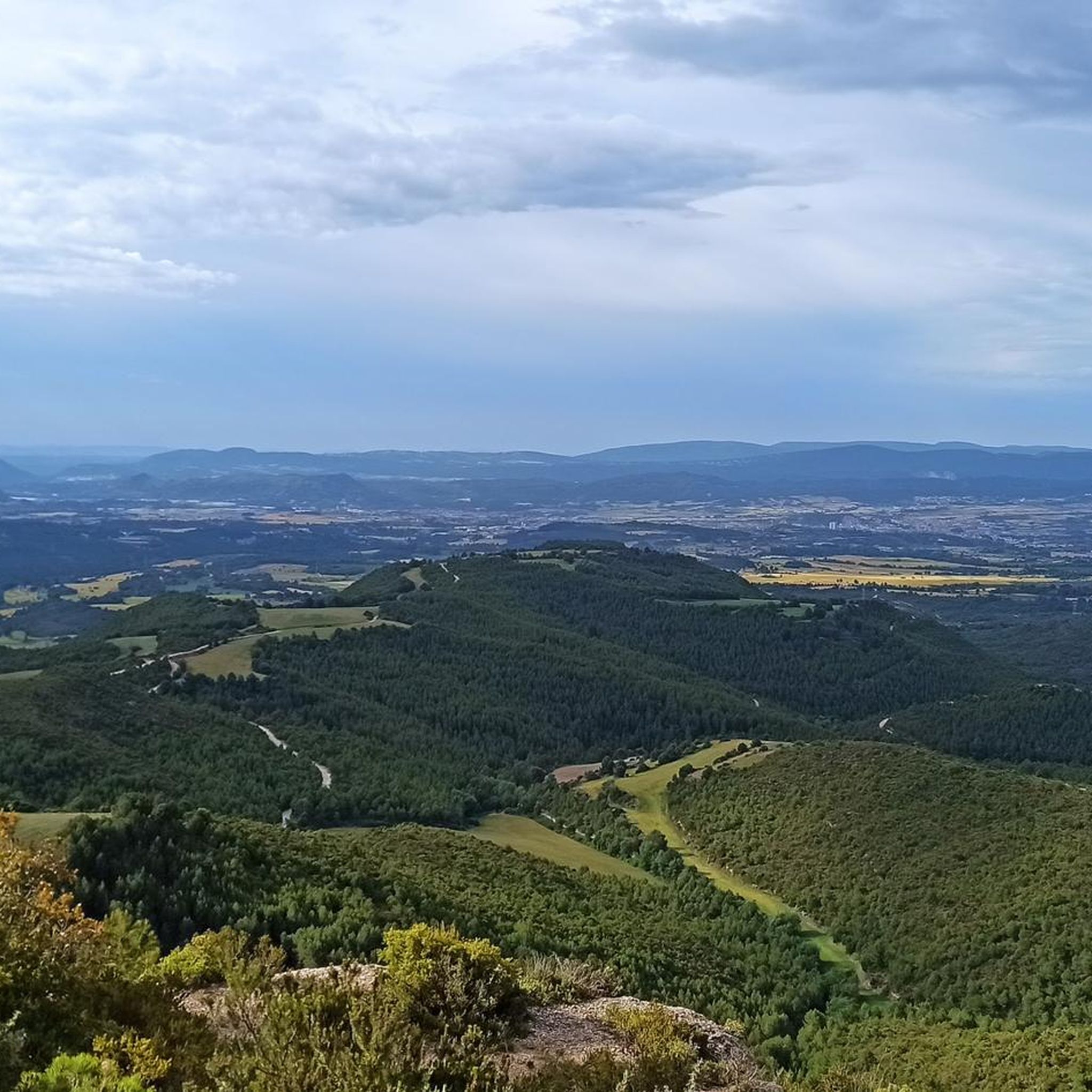
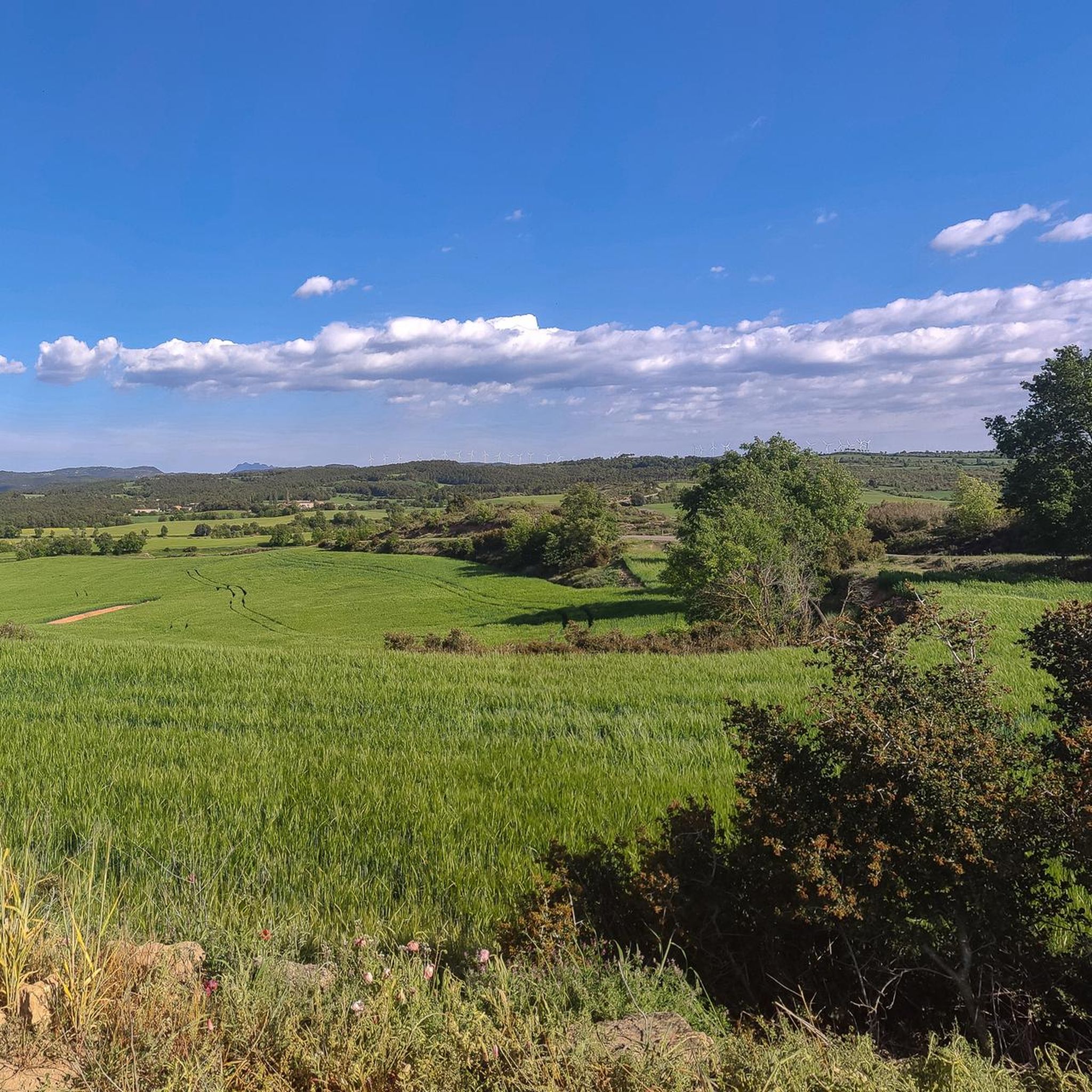
peak of Cogulló de Cal Torre, a mountain included in the list of the 100 Peaks of the FEEC and bordering the municipalities of Rajadell and Castellfollit del Foix. At its summit, the ridges of the Serra del Colomer (which we climbed), the Serra de Cal Torre (parallel to the first and also called the Palomes on some maps), and the ridge of La Serra converge , through which we will continue the path. From the top we have magnificent views of Montserrat, Sant Llorenç, Montseny and part of Central Catalonia. But on clear days we can also see the Pyrenees, such as Pedraforca, Gallina Pelada or Cadí. At the top we will find a wooden fire watch house as well as a geodesic vertex (reference 277112001). This peak is one of the disputed points for the centrality of Catalonia, for which, every September 11, a very crowded gathering is held there. Unfortunately, the summit is accessible to motor vehicles, motorbikes but also all-terrain vehicles, which damages the balance of the environment.
0
0
The archaeological site of Sant Amanç de Viladés is made up of a Roman villa, an early medieval settlement and some remains from the Iberian period. The entire site is located on the southern side of a mountain range, crossed by the C-25 road in the section that goes from Rajadell to Calaf and which divides the whole into two parts: north and south. The importance of the Roman town of Rajadell is understood by the presence of a Roman road that connected the lands of the Manresa sector with those of Calaf and Prats de Rei (ancient Roman municipality of Sigarra). The route of this road had to necessarily follow the Rajadell stream very closely as it passed through the Roman town. Passing through this place is the most suitable for moving between the Bages and Anoia regions, as indicated by the Peric oratory, located at the foot of the N-141g and parallel to the Eix Transversal C-25. The appearance that the site has now corresponds to the plan of the Low Empire. Currently the road crosses the Roman site and divides the remains of the Roman villa into two sectors. The northern sector corresponds to the residential area or pars urbana, with an elongated structure, where the noble rooms and the set of terms are located. The southern sector is on flatter terrain and was intended for agricultural work, especially wheat and vines (pars rustica). At the western end of the villa there were bathrooms, characterized by different air-conditioned spaces, with areas of hot, warm and cold water and with the oven to heat the whole. The main body of the residential area consists of three rooms, one of which preserved a polychrome mosaic. The original is in the Museu Comarcal de Manresa, and a reproduction of part of it can be seen at Rajadell Town Hall.
0
0

Source of fresh drinking water at the foot of the road and next to the Monastery of Sant Ramón, a frequent place of passage for the brevets of Calaf, Tàrrega and Fuliola.
0
0
The passage through Sant Ramon is a classic between Tàrrega and Calaf, with a gentle ascent. Right in front of the Monastery you will find a fountain, or if you prefer a bar with good sandwiches.
0
0

From the Castelltallat Observatory we can observe magnificent views of the Pla de Bages and Montserrat.
0
0
Frequently Asked Questions
What historical sites can I explore in Els Prats De Rei?
Els Prats De Rei boasts a rich history. You can wander through its ancient walled town, characterized by narrow medieval streets and traces of Roman influence. Key historical sites include the Roman Villa of Sant Amanç de Viladés, the Castelltallat Castle (which also houses an astronomical observatory), and the Castell de Boixadors. Don't miss the Town Hall, an important example of Catalan Gothic civil architecture, and the Church of Santa Maria, which contains Roman funerary stelae and a late-Roman necropolis.
Are there any ancient Roman sites to visit in the area?
Yes, Els Prats De Rei has significant Roman heritage. The Roman Villa of Sant Amanç de Viladés is an archaeological site featuring a Roman villa, an early medieval settlement, and Iberian remains. Within the town, the Church of Santa Maria's atrium houses a collection of five Roman funerary stelae, and near its apse, you can find a late-Roman necropolis with slab tombs and sarcophagi.
Where can I find medieval architecture around Els Prats De Rei?
The heart of Els Prats De Rei is its well-preserved medieval monumental center, with traditional layouts and narrow streets. Beyond the town, you can visit the Castell de Boixadors, located on a hill with a privileged position. Another notable medieval structure is the Torre de la Manresana, considered one of the best-preserved towers in the country, located a couple of kilometers from the town.
What kind of natural landscape surrounds Els Prats De Rei?
Els Prats De Rei is nestled in the Segarrencs plateaus of the Anoia region, within a small valley formed by the nascent Anoia River. The landscape is diverse, with approximately 60% dedicated to dryland cereal cultivation and 40% covered by forests, primarily pine and oak. This offers a blend of agricultural scenery and natural woodlands.
What natural viewpoints offer the best panoramic scenery?
For breathtaking views, head to the Cogulló of Can Torra, a summit offering magnificent panoramas of Montserrat, Sant Llorenç, Montseny, and parts of Central Catalonia. On clear days, you might even spot the Pyrenees. Another excellent viewpoint is Castelltallat Castle, situated on a hill at 911 meters above sea level, providing views of the Pla de Bages and Montserrat.
Are there hiking opportunities near the attractions?
Yes, the region offers various hiking trails. You can find routes suitable for different skill levels, such as the easy "Cogulló of Can Torra loop from Castellfollit del Boix" or the moderate "Puig de Sant Miquel – Old Church loop from Catalan as own language in Catalonia." For more options, explore the hiking guide for Els Prats De Rei.
Can I go cycling or mountain biking in the area?
Absolutely. The Segarrencs plateaus are ideal for cycling. Mountain biking routes include one that ascends to the Torre de la Manresana and another that reaches the Serra de Rubió, where you can observe wind turbines. For road cycling, consider routes like "El Prats del Rei and Copons - loop near Igualada." Discover more routes in the cycling guide and road cycling guide for Els Prats De Rei.
Are there family-friendly attractions in Els Prats De Rei?
Families can enjoy several attractions. The Monastery of Sant Ramon Nonat is noted as family-friendly and offers a source of fresh drinking water. The Castelltallat Castle (astronomical observatory) also welcomes families and offers activities designed for all types of audiences. Additionally, cultural events like the Living Nativity Scene and the Roman Dinner can be engaging for all ages.
What cultural events or traditions are unique to Els Prats De Rei?
Els Prats De Rei is known for its vibrant cultural events. During Holy Week, the tradition of "Caramelles" sees groups parading through the streets. In July, the town celebrates its Roman past with a traditional Roman dinner held in the Plaça Major. One of Catalonia's most significant events, the Living Nativity Scene (Pessebre Vivent), is hosted here, featuring an original musical composition.
What is the best time of year to visit Els Prats De Rei?
The region offers attractions year-round. For outdoor activities like hiking and cycling, spring and autumn generally provide pleasant weather. Summer is ideal for experiencing cultural events like the Roman Dinner. If you're interested in unique traditions, consider visiting during Holy Week for "Caramelles" or in winter for the renowned Living Nativity Scene.
Is the Monastery of Sant Ramon Nonat accessible for visitors with mobility needs?
Yes, the Monastery of Sant Ramon Nonat is listed as wheelchair accessible, making it a suitable option for visitors with mobility needs. It's a religious building where the only preserved remains of the saint are venerated and is a frequent passage point for cyclists.
What can I expect to see at the Municipal Archaeological Museum Josep Castellà i Real?
Located in the basement of the Casa de la Vila (Town Hall), the Municipal Archaeological Museum Josep Castellà i Real exhibits local archaeological finds. It houses a unique collection of Etruscan vases, offering insights into the region's ancient history and connections.
Most popular routes around Els Prats De Rei
Most popular attractions around Els Prats De Rei

Get inspired with the komoot mobile app


Explore more
Still not found the Highlight you’re looking for? See guides of the top attractions in other regions:
