The best walks and hikes around Hontoria De Valdearados
4.7
(8)
25
hikers
23
hikes
Hiking around Hontoria De Valdearados offers routes through a landscape characterized by rolling hills, agricultural fields, and river valleys. The region features a mix of open terrain, vineyards, and areas with historical significance. Elevation changes are generally moderate, making it accessible for various hiking abilities.
Best hiking trails in Hontoria De Valdearados
- The most popular hiking route is Sendero de las Loberas (PRC-BU-69) — circular desde Caleruega, a 6.8 miles (10.9 km) trail that takes 2 hours 54 minutes…
Last updated: July 4, 2026
4.5
(2)
8
hikers
10.9km
02:54
120m
120m
Moderate hike. Good fitness required. Mostly accessible paths. Sure-footedness required.
4.5
(2)
4
hikers
12.4km
03:17
120m
120m
Moderate hike. Good fitness required. Easily-accessible paths. Suitable for all skill levels.

Sign up for free
5.0
(1)
2
hikers
Moderate hike. Good fitness required. Easily-accessible paths. Suitable for all skill levels.
5.87km
01:34
70m
70m
Moderate hike. Great for any fitness level. Mostly accessible paths. Sure-footedness required.
14.6km
03:53
150m
150m
Moderate hike. Good fitness required. Easily-accessible paths. Suitable for all skill levels.
Get access to more routes and recommendations from other explorers.
Sign up for free
Already have an account?
Our route recommendations are based on thousands of hikes, rides, and runs completed by other people on komoot.
Start today with a free account
Your next adventure awaits.
Login or Signup



Tips from the Community

It is also worth strolling through its surroundings among vineyards and lavender fields, enjoying viewpoints and nature trails, and learning about its wine tradition, which makes the visit a perfect combination of medieval history, religious heritage, and tranquil nature.
1
0
Caleruega, in the province of Burgos and in the heart of the Ribera del Duero, is one of the most beautiful villages in the area and stands out for its great historical and spiritual value, as it is the birthplace of Santo Domingo de Guzmán, founder of the Dominicans. The most interesting thing is to walk through its stone old town and visit the Dominican monumental complex, formed by the Royal Monastery of Santo Domingo (on the site where the saint was born), the convent and the Guzmanes tower, as well as the church of San Sebastián, where he was baptized.
2
0

The Church of Saint Andrew the Apostle in Zazuar is a large church built between the 16th and 19th centuries. Its interior combines Gothic and Renaissance styles and is notable for its altars with 15th-century Castilian panels, a Gothic monstrance, and a processional cross. The masonry and stone tower was completed in 1802.
4
0
The Church of Saint Andrew the Apostle in Zazuar was built between the 16th and 19th centuries. Its interior combines Gothic and Renaissance styles and is notable for its altars with 15th-century Castilian panels, a Gothic monstrance, and a processional cross. The masonry and stone tower was completed in 1802.
4
0
The Church of Our Lady of the Assumption in Quemada, Burgos, is a Romanesque church (12th-13th centuries). Its most notable features are the 16th-century Renaissance tower, an 18th-century main altarpiece, and a Renaissance baptismal font.
4
0
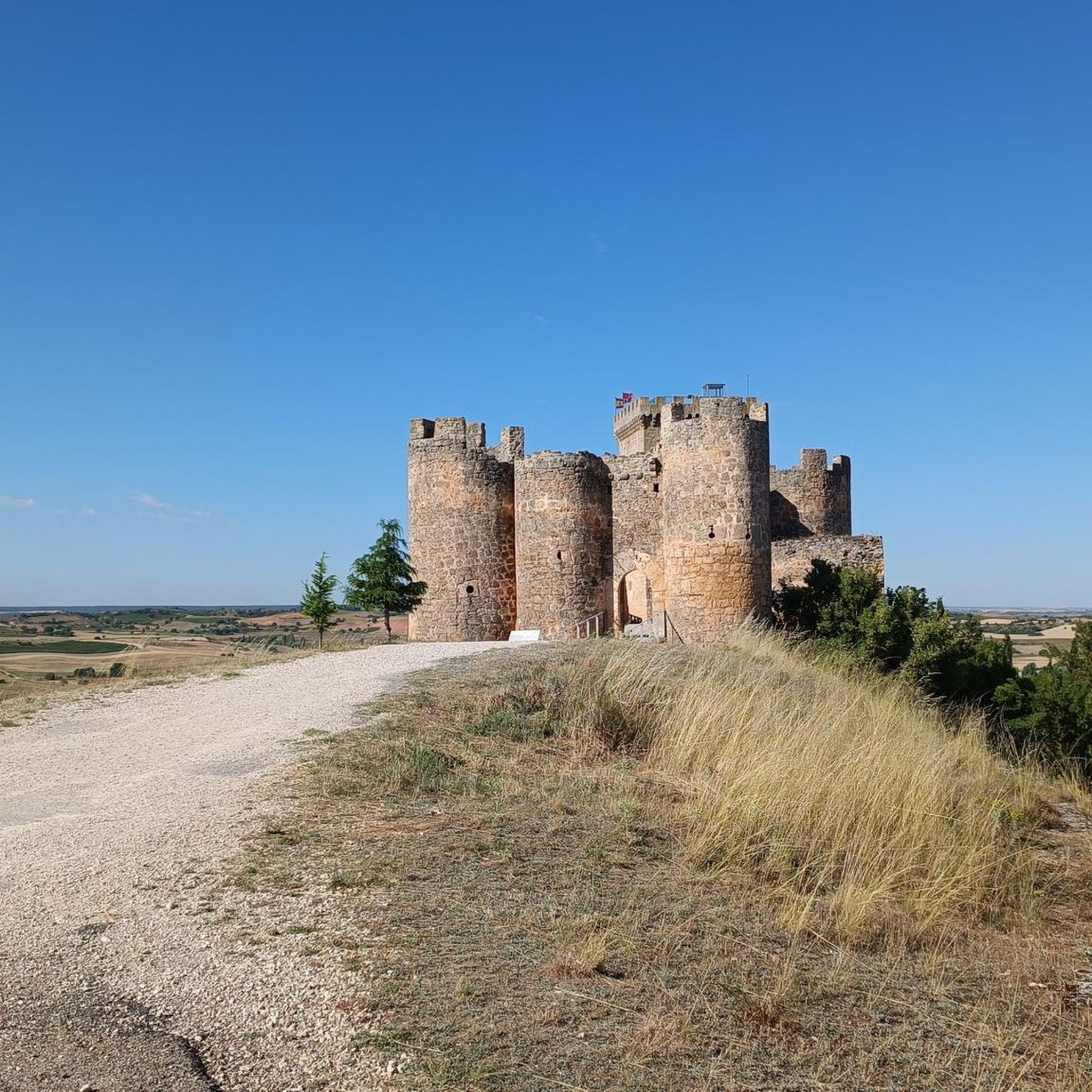
Peñaranda de Duero is an excellent choice! This charming medieval town in the province of Burgos, Castile and León, has a lot to offer. Plus, you can enjoy a stroll through the historic center and the walls surrounding the town.
2
0

Nice area for outdoor activities.
0
0

Another of the towns in the region that is worth visiting.
1
0
Frequently Asked Questions
How many hiking trails are available around Hontoria De Valdearados?
There are over 20 hiking routes around Hontoria De Valdearados, offering a variety of experiences through its unique landscape.
What kind of landscape can I expect when hiking in Hontoria De Valdearados?
The region of Hontoria De Valdearados is characterized by rolling hills, expansive agricultural fields, and serene river valleys. You'll encounter a mix of open terrain, vineyards, and areas rich in historical significance.
What do other hikers say about the trails in Hontoria De Valdearados?
The hiking routes in Hontoria De Valdearados are highly rated by the komoot community, with an average score of 4.7 stars from 8 reviews. Over 25 hikers have already explored the varied terrain using komoot, often praising the well-maintained paths and scenic views.
Are there easy hiking trails suitable for beginners in Hontoria De Valdearados?
Yes, Hontoria De Valdearados offers 7 easy hiking routes, perfect for beginners or those looking for a relaxed stroll. These trails generally feature moderate elevation changes, making them accessible for various abilities.
Are there any challenging hikes in Hontoria De Valdearados?
Currently, the guide does not list any routes classified as 'difficult'. The trails in Hontoria De Valdearados are primarily easy to moderate, focusing on accessible exploration of the region's natural and historical landscapes.
Can I find circular walks in Hontoria De Valdearados?
Yes, many of the routes in Hontoria De Valdearados are circular. For example, you can enjoy the Sendero de las Loberas (PRC-BU-69) — circular desde Caleruega, or the Peñaranda de Duero to San Juán del Monte — circular via the Río Arandilla, both offering convenient loops.
Are the hiking trails in Hontoria De Valdearados suitable for families?
Given the prevalence of easy and moderate trails with generally moderate elevation changes, many routes in Hontoria De Valdearados are suitable for families. The varied landscapes, including vineyards and historical areas, can also offer engaging points of interest for children.
What interesting landmarks can I see near the hiking trails?
While hiking, you can explore several historical and cultural landmarks. Consider visiting Peñaranda de Duero, a charming settlement, or the impressive Colegiata Santa Ana. The Roman town of Clunia — circular from Peñalba de Castro route also takes you past significant historical sites.
Are there any routes that go through vineyards?
Yes, the region is known for its vineyards. The Sendero de las Viñas (PRC-BU 71) — circular desde Quemada por Zazuar is a prime example, leading you directly through picturesque vineyard landscapes and agricultural areas.
What is the best time of year to hike in Hontoria De Valdearados?
The best time to hike in Hontoria De Valdearados is typically during spring and autumn when the weather is mild and the natural scenery, including vineyards, is at its most vibrant. Summers can be warm, while winters are generally cooler but still offer opportunities for hiking.
Are there any trails that offer good viewpoints?
While specific 'viewpoint' trails aren't explicitly highlighted, the rolling hills and open terrain of Hontoria De Valdearados naturally offer many scenic vistas. The Views of the Balsa de Arauzo de Salce — circular from Arauzo de Torre route is designed to showcase panoramic views, particularly of the Balsa de Arauzo de Salce.
What kind of wildlife might I encounter while hiking in Hontoria De Valdearados?
The region's mix of agricultural fields, river valleys, and open terrain provides habitats for various local wildlife. You might spot birds of prey, small mammals, and other typical Iberian fauna. The Sendero de las Loberas, for instance, explores areas historically associated with wildlife.
Most popular attractions around Hontoria De Valdearados

Get inspired with the komoot mobile app


Explore more
Browse the best Hikes in other regions.
