Attractions and Places To See around Valverde De La Virgen - Top 20
Best attractions and places to see around Valverde De La Virgen, a municipality in León, Spain, are primarily linked to its historical role on the Camino de Santiago and its religious heritage. The area features significant architectural landmarks and cultural sites. It is situated at the confluence of the Raposeras and Oncina streams, offering local scenery for outdoor activities. The municipality is known for its historical fortifications and important religious buildings.
Best attractions and places to see around Valverde De…
Last updated: May 26, 2026
León Cathedral
Highlight • Religious Site
Translated by Google •
Tip by

San Marcelo Square and the Lion Sculpture
Highlight • Monument
We go back to Roman times to understand part of the theme of this sculpture. Cloacina, in Roman mythology, was the goddess who ruled over the …
Translated by Google •
Tip by

Sign up now to discover places like this
Get recommendations on the best single tracks, peaks, & plenty of other exciting outdoor places.
Sign up for free
Roman City Walls of León
Highlight • Historical Site
Roman wall: Its …
Translated by Google •
Tip by
Plaza de Santo Domingo Fountain, León
Highlight • Monument
Translated by Google •
Tip by
Casa Botines Gaudí Museum
Highlight • Monument
Translated by Google •
Tip by

Sign up for free to discover even more attractions around Valverde De La Virgen.
Sign up for free
Already have an account?
Start today with a free account
Your next adventure awaits.
Login or Signup

Tips from the Community

By choosing this name, the bishopric of Leon pays tribute to a saint whose name will be familiar to the many pilgrims who pass through here on the “Camino frances”, because some time before (in the autonomous region of La Rioja) they reached the town named after him, Santo Domingo de la Calzada, also a very famous destination on the approximately 800-kilometer-long pilgrimage route from the Pyrenees to the tomb of the apostle in Santiago de Compostela in Galicia.
6
0

A beautiful, lively square right at the entrance to the old town of Leon.
4
0

EL LEÓN DE SALEAL: We go back to Roman times to understand part of the theme of this sculpture. Cloacina, in Roman mythology, was the goddess who ruled over the Cloaca Máxima, the sewer system of Rome. The sewer name comes from the name of this goddess, because thanks to the origin of sewer systems, a quality of life was achieved in terms of sanitation of urban environments and public health from the beginning to the present day. It should be remembered that the origin of the name of this city and province of León comes from the word legio ("legion"). Legio VII Gemina was the Roman camp that settled here and with it the origin of the city of León. A lion with strength and claws as a symbol of the sanitation system (the modern version of Cloacina Máxima) in constant renewal and maintenance. The goal was achieved: to do something symbolic and reflect the efforts and human work of so many years, to give solidity to our public health and the health of the environment.
6
0
Very well done how the lion climbs out of the drain here
5
0
Here you can still admire part of the impressive Roman city wall.
1
1
The building was designed by Gaudi. Inside there is a museum that displays some of his works.
2
0

Above the entrance door there is a sculpture of Saint George killing the dragon. The building was designed for the weaving workshop on the ground floor and semi-basement, while the remaining four floors were used for rental apartments. Designed by the architect with a cubic shape, the four corners are highlighted with pointed elements.
10
0
It is the great Gothic cathedral. Over the centuries it has been rebuilt several times under the direction of numerous famous architects, giving it its own character.
10
0
Frequently Asked Questions
What is the historical significance of Valverde de la Virgen?
Valverde de la Virgen holds significant historical importance, primarily due to its direct location on the French Way of the Camino de Santiago. The municipality was even originally named "Valverde del Camino" because of this connection. Its heritage is deeply rooted in religious sites and traditions, serving as a spiritual waypoint for pilgrims for centuries.
What religious sites can I visit in Valverde de la Virgen?
The most prominent religious site is the Basilica de la Virgen del Camino, a modern architectural marvel featuring sculptures by José María Subirachs and an 18th-century Baroque altarpiece. You can also visit the Parish Church of Santa Engracia, known for its ancient bell tower that hosts returning stork nests each year.
Are there any attractions related to Antoni Gaudí near Valverde de la Virgen?
Yes, you can visit the Casa Botines Gaudí Museum in León, which is one of only three works Gaudí created outside of Catalonia. Originally a commercial and residential building, it now houses the largest Antonio Gaudí museum in León, showcasing the building's history and Gaudí's influence.
What natural features can be found in the Valverde de la Virgen area?
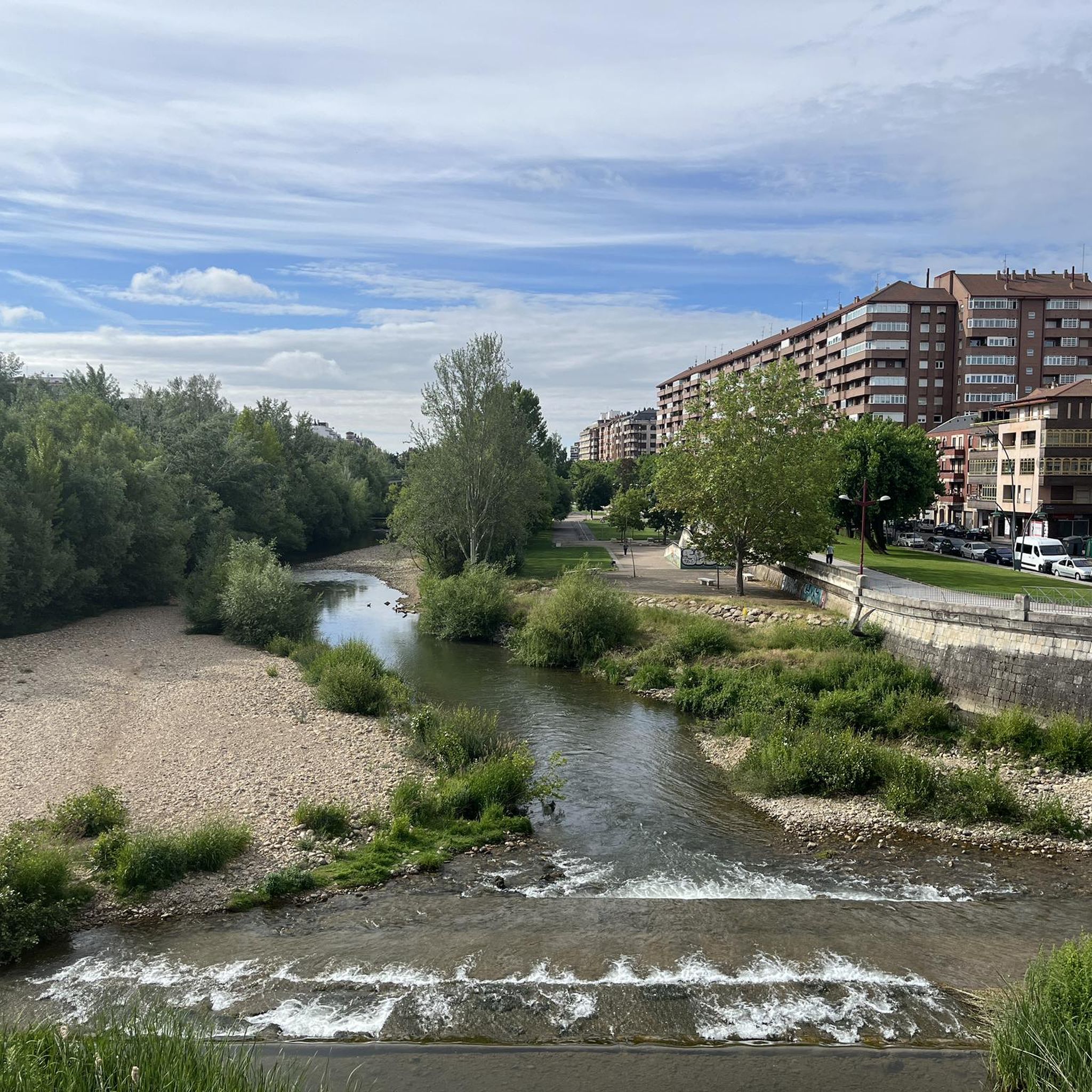
While not known for grand natural parks, Valverde de la Virgen is nestled at the confluence of the Raposeras and Oncina streams, which are tributaries of the Esla river. This provides a pleasant local scenery and opportunities for outdoor activities along the waterways.
What outdoor activities can I do near Valverde de la Virgen?
The area around Valverde de la Virgen offers various outdoor activities. You can find numerous running trails, such as the 'Trails of Ferral del Bernesga – Alto de la Macarena loop'. For cyclists, there are road cycling routes like the 'Convento de San Marcos – Río Bernesga in León loop', and MTB trails including 'Senderos del Ferral del Bernesga – circular'.
Are there family-friendly attractions around Valverde de la Virgen?
Many of the historical and cultural sites in the broader region are considered family-friendly. For example, the León Cathedral, San Marcelo Square, and the Roman City Walls of León are all suitable for families to explore together. The local municipality also offers facilities like a summer swimming pool and municipal sports areas.
What is the best time to visit Valverde de la Virgen?
Valverde de la Virgen can be visited throughout the year, but the region comes alive during specific events. The traditional Pilgrimage of San Froilán on October 5th is a vibrant celebration with processions, markets, and traditional dances. Summer festivities also take place during the last weekend of July and the first weekend of August, offering a lively atmosphere.
What is the Plaza de Santo Domingo known for?
The Plaza de Santo Domingo Fountain, León is considered the heart of the city of León. It's a significant roundabout that connects the Old Town with the modern part of the city, serving as a central point for social, commercial, and historical life. It also features the Museum of León and the church of San Marcelo nearby.
What do visitors enjoy most about the attractions near Valverde de la Virgen?
Visitors particularly appreciate the rich history and architectural beauty. The León Cathedral is often highlighted for its stunning Gothic architecture and historical depth, with many finding the free audio guide very engaging. The Roman City Walls of León are also admired for their well-preserved sections and the insight they offer into the city's past defensive capabilities.
Are there any unique cultural traditions or events in Valverde de la Virgen?
Yes, Valverde de la Virgen actively participates in the traditional Pilgrimage of San Froilán every October 5th. This event draws thousands of faithful from across the province and Asturias, featuring a procession to the Sanctuary of Our Lady of the Way, decorated carts, music, traditional dances, and local products like *morcillas* and hazelnuts.
What is the significance of the San Marcelo Square and the Lion Sculpture?
The San Marcelo Square and the Lion Sculpture in León symbolize the city's Roman origins. The lion sculpture, emerging from a drain, represents the city's ancient sanitation system, referencing the Roman goddess Cloacina and the Legio VII Gemina, the Roman camp that founded León. It's a lively square in the heart of the old town.
Most popular routes around Valverde De La Virgen

Get inspired with the komoot mobile app


Explore more
Still not found the Highlight you’re looking for? See guides of the top attractions in other regions:
