The best road cycling routes around Navalvillar De Ibor
5.0
(6)
105
riders
11
rides
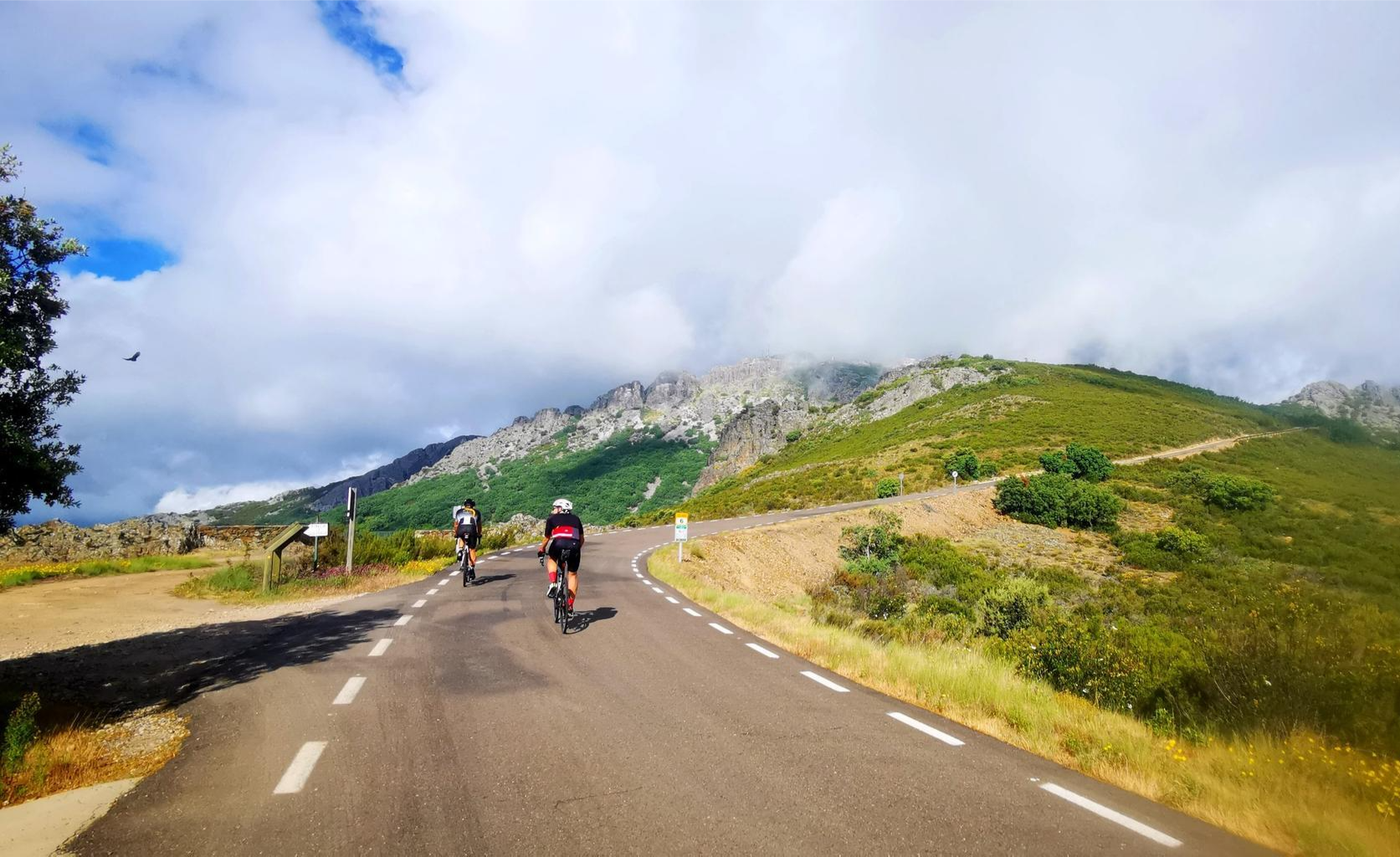
Road cycling routes around Navalvillar De Ibor traverse a landscape characterized by mountain ranges such as the Sierras de Goterones and La Cueva, situated within the Villuercas-Ibores-Jara Geopark. The terrain features significant geological formations, river valleys carved by the Ibor River and its tributaries, and extensive forests of chestnut, cork, and holm oaks. Cyclists can expect varied elevations, including challenging climbs and descents, across well-paved surfaces.
Best road cycling routes around Navalvillar De Ibor
- The most popular road cycling route…
Last updated: October 28, 2026
4
riders
66.7km
04:08
1,350m
1,350m
Hard road ride. Very good fitness required. Mostly well-paved surfaces and easy to ride.
5.0
(1)
4
riders
Moderate road ride. Good fitness required. Mostly well-paved surfaces and easy to ride.

5.0
(1)
18
riders
74.1km
04:49
1,380m
1,380m
Hard road ride. Very good fitness required. Some segments of this route may be unpaved and difficult to ride.
5.0
(1)
23
riders
78.2km
04:10
1,500m
1,500m
Hard road ride. Very good fitness required. Mostly well-paved surfaces and easy to ride.
5.0
(1)
22
riders
63.7km
03:27
1,280m
1,280m
Hard road ride. Very good fitness required. Some segments of this route may be unpaved and difficult to ride.
Get access to more routes and recommendations from other explorers.
Already have an account?
Our route recommendations are based on thousands of hikes, rides, and runs completed by other people on komoot.
Start today with a free account
Your next adventure awaits.



Other adventures around Navalvillar De Ibor

Tips from the Community

El Alto del Humilladero and Pico Villuercas, near Guadalupe (Cáceres), form one of the most spectacular mountain routes in Extremadura, within the Villuercas‑Ibores‑Jara UNESCO Geopark. It is the highest summit in Extremadura accessible by road.
3
0

The floral decoration of the openings and the popular architecture of the adjacent houses give this gate one of the most unique images of the city. Continue further into Calle Sevilla to the fountain.
15
2
Gives the feeling of being on a film set or somewhere in Mexico. Perhaps not so strange, because the Virgin of Guadalupe is the patroness of Mexico. In the hills, the virgin is said to have been found seven centuries ago. Strictly forbidden to take photos inside the walls, monks walk with the group...
16
1
The Arco de las Eras (Dorsenboog) is built of natural stone and brick in the arches and the superstructure. The architecture still preserves remnants of the old battlements that protected the entrance. This arch was part of the second defensive ring, which surrounded the city and protected its southern edge. The arch was restored in the early 20th century and served as an entrance gate
13
1
De Arco de las Eras (Dorsenboog) is constructed of natural stone and brick in the arches and the superstructure. The architecture still preserves remnants of the old battlements that protected the entrance. This arch was part of the second defensive ring, which surrounded the city and protected the southern edge. The arch was restored in the early 20th century and served as an entrance gate for
12
1
The Royal Monastery of Santa María de Guadalupe is a 14th-century monastery located in the Spanish town of Guadalupe, in the province of Cáceres. It was declared a UNESCO World Heritage Site in 1993. Inside, you can appreciate Gothic, Mudéjar, Renaissance, Baroque, and Neoclassical architectural styles. A place with a rich history and breathtaking architectural beauty! 🌟🏰
17
0
It formed part of the second defensive ring built to protect Puebla from the south, securing access from the south and east. Restored in the early 20th century, it was used as an entry point for pilgrims and travelers, especially to regulate access when it was closed due to overcrowding.
18
0
Located in the historic center, this arch is one of the inner gates of the old wall that surrounded the first defensive perimeter of the Monastery of Guadalupe. Built in the 16th century, it formed part of the defenses created to regulate the passage of pilgrims and merchants to the Monastery. Along with the Arch of San Pedro and the Arch of Chorro Gordo, it marked the boundary of the first ring of walls surrounding the site. [extremadura.com], [guadalupeturismo.com]
15
0
Frequently Asked Questions
What types of road cycling routes can I find around Navalvillar De Ibor?
The Navalvillar De Ibor area offers a diverse range of road cycling routes, from moderate rides along river valleys to challenging climbs with significant elevation gains. The terrain is characterized by mountain ranges like the Sierras de Goterones and La Cueva, within the Villuercas-Ibores-Jara Geopark, featuring well-paved surfaces.
Are there challenging road cycling routes for experienced cyclists?
Yes, Navalvillar De Ibor is known for its challenging road cycling routes. There are 8 difficult routes available, including the demanding ascent to Pico Villuercas. A notable option is the Pico Villuercas Summit – Collado del Hospital loop from Navalvillar de Ibor, which covers 77.0 km and features a substantial climb to 1543 meters above sea level, offering panoramic views.
Are there any moderate road cycling routes suitable for less experienced riders?
While many routes are challenging, there are 3 moderate road cycling routes available. One such option is The natural pool of río Viejas from Castañar de Ibor — circular by the río Ibor, a 41.8 km trail leading through the scenic Ibor River valley. This route offers a less strenuous experience compared to the mountain climbs.
What are the typical distances and durations for road cycling routes in this region?
Road cycling routes around Navalvillar De Ibor vary in length and duration. For instance, the moderate The natural pool of río Viejas from Castañar de Ibor — circular by the río Ibor is 41.8 km and takes about 2 hours 14 minutes. More challenging routes, like the Pico Villuercas Summit – Collado del Hospital loop from Navalvillar de Ibor, span 77.0 km and can take around 4 hours 10 minutes to complete.
What kind of natural landscapes will I encounter while road cycling here?
You will cycle through a landscape rich with diverse flora, including extensive chestnut forests, scrubland, and pastures dotted with cork oaks and holm oaks. The region is part of the Villuercas-Ibores-Jara Geopark, featuring significant geological formations, river valleys carved by the Ibor River and its tributaries, and mountain passes offering breathtaking views.
Are there any circular road cycling routes available?
Yes, many of the road cycling routes around Navalvillar De Ibor are circular, allowing you to start and end at the same point. Examples include Catañar de Ibor to Campillo de Deleitosa — circular, a 66.7 km difficult path, and The natural pool of río Viejas from Castañar de Ibor — circular by the río Ibor, a moderate 41.8 km route.
What are some notable landmarks or attractions to see along the road cycling routes?
Along the routes, you can encounter several interesting landmarks. The challenging climb to Pico Villuercas Summit offers spectacular panoramic views. You might also spot the ancient Muslim Cabañas del Castillo Castle, perched amidst high rock formations, or enjoy views from View of Guadalupe and the Humilladero Hermitage.
Can I combine road cycling with other outdoor activities in the area?
Absolutely. The region, part of the Villuercas-Ibores-Jara Geopark, is excellent for various outdoor activities. Besides cycling, you can enjoy hiking through pristine nature, explore geological points of interest, or even go wild swimming in natural pools like the Natural Pool of Río Viejas on warmer days.
Is Navalvillar De Ibor a good place for wildlife spotting while cycling?
Yes, the region is designated as a Special Protection Area for Birds (ZEPA), making it an excellent spot for ornithological tourism. While cycling, you might have opportunities to observe various bird species, including eagle owls and griffon vultures, especially in the more remote and mountainous sections.
What do other cyclists say about road cycling in Navalvillar De Ibor?
The road cycling routes in Navalvillar De Ibor are highly rated by the komoot community, with an average score of 5.0 stars from 6 reviews. Cyclists often praise the varied terrain, from river valleys to challenging mountain passes, and the stunning natural scenery of the Geopark.
When is the best time of year to go road cycling in Navalvillar De Ibor?
The region is ideal for road cycling during spring and autumn when temperatures are milder. Even on warm days, the presence of natural pools like those along the Ibor River offers opportunities for a refreshing dip, suggesting pleasant conditions for cycling during much of the year, avoiding the peak heat of summer.
Are there any specific climbs or mountain passes that are popular among road cyclists?
Yes, the area is known for its significant climbs. The Pico Villuercas Summit is a challenging and long ascent (11 km with an average 6% gradient) that rewards with spectacular views. Another notable climb is Puerto de Campillo, offering gratifying views at 700 meters above sea level.
Most popular attractions around Navalvillar De Ibor

Get inspired with the komoot mobile app


Explore more
Browse the best Road cycling routes in other regions.
