Attractions and Places To See around Portaje - Top 20
Best attractions and places to see around Portaje include a collection of historical sites and architectural marvels. This region in Cáceres, Spain, is characterized by its ancient bridges, historical ruins, and a medieval castle, offering insights into centuries of history. Visitors can explore structures dating back to Roman times and the 15th century, often set within scenic landscapes near rivers like the Tagus and Alagón. The area provides opportunities to discover significant cultural heritage and man-made monuments.
Best attractions and…
Last updated: June 29, 2026
Convent of San Antonio de Padua
Highlight • Religious Site
Translated by Google •
Tip by

Iron Bridge of Coria
Highlight • Bridge
Translated by Google •
Tip by

Sign up now to discover places like this
Get recommendations on the best single tracks, peaks, & plenty of other exciting outdoor places.
Sign up for free
Medieval Bridge of Coria
Highlight • Bridge
Translated by Google •
Tip by
Castillo de Portezuelo
Highlight • Castle
The construction of the castle dates back to …
Translated by Google •
Tip by
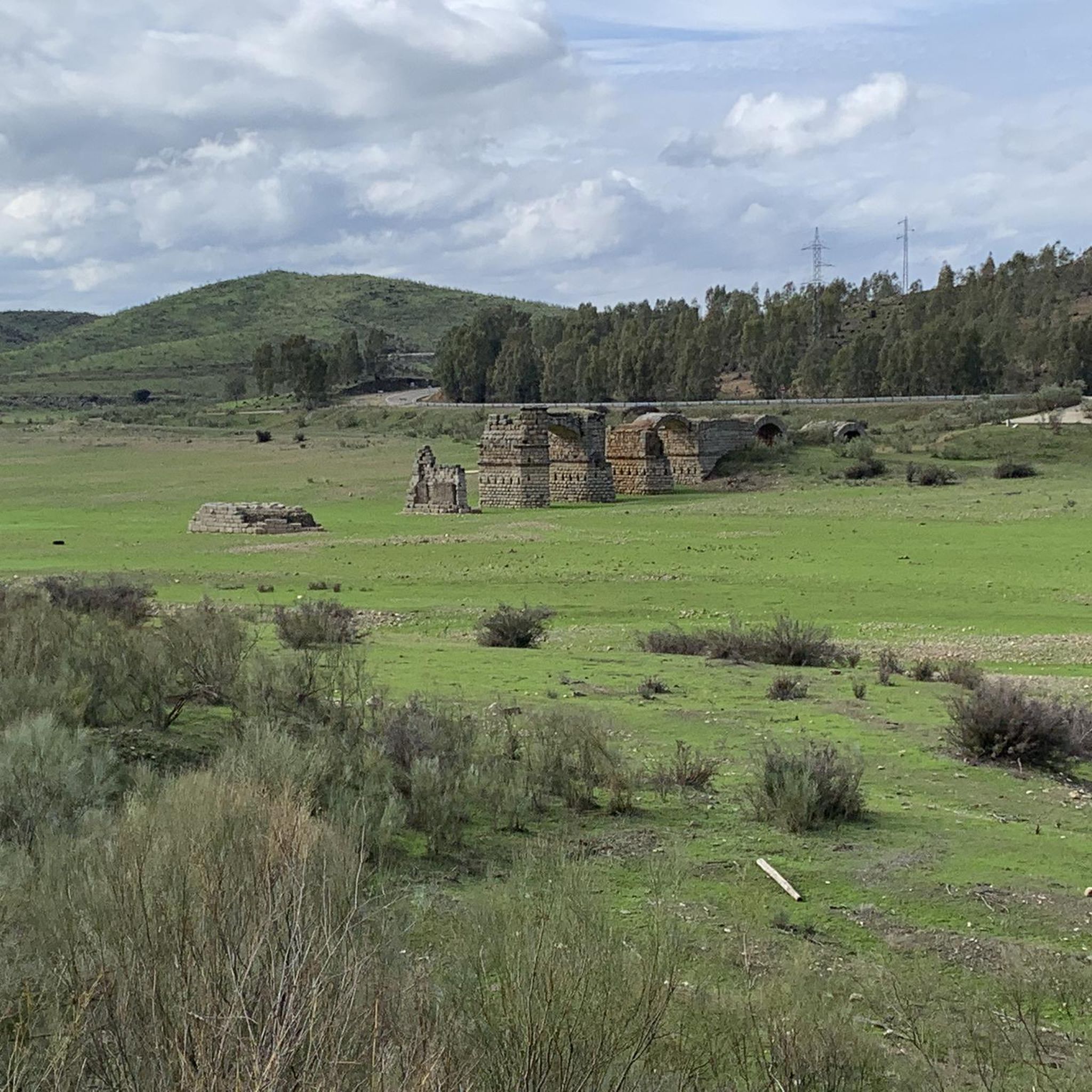
Puente de Alconétar
Highlight • Bridge
Translated by Google •
Tip by

Sign up for free to discover even more attractions around Portaje.
Sign up for free
Already have an account?
Start today with a free account
Your next adventure awaits.
Login or Signup
Tips from the Community

I don't know whose idea it was to restore the northwest tower so badly, a crime in plain sight... Today they are working on the "restoration" of the barbican. Alfonso II, in 877, failed to conquer the fortress of Portezuelo. In the month of July 997, when Almanzor crossed the Alconeter bridge and through Coria and the castle of Portezuelo he reached Santiago of Compostela. Conquered by Ferdinand II of León in 1166 and lost in 96. In 1219 Diego Sánchez, master of Alcántara, took it again: “he left Çamora with a large army against the Moors who still had much of Estremadura belonging to their conquest and the master with his knights and vassals joined the king in the city of Coria. From there the army left together and laid siege to a castle. called Portillo, which were a Sierra not far from Ceclavin. They beat him for combat and captured more than two hundred Moors in it." According to sources, the castle had an Arab and Christian population until 1386.
0
0

The Iron Bridge in Coria is a beautiful civil work of metal architecture and nineteenth-century modernist design. It was built by the Asturian engineers D. Salvador and D. Próspero Ardura. The bridge stands over the Alagón River, connecting both banks in the City of Coria. Its total length is 178.30 meters, and its deck has a width of 7.78 meters, with a two-way road flanked by two sidewalks.
9
0
The Medieval Bridge of Coria is a historical structure that is located next to the main façade of the Monastery of San Juan Bautista or Corias. Its construction had the objective of connecting the monastery with the town of Corias. Although its foundations are believed to be of Roman origin, the bridge was rebuilt in 1571, as indicated by an inscription preserved on one of the stones of its parapet.
8
0
Portezuelo Castle, also known as Marmionda Castle, is an ancient fortress located in the municipality of Portezuelo, in the province of Cáceres. The construction of the castle dates back to the 12th century. During this time, the Almohads invaded al-Andalus (1147), putting an end to the Almoravid empire. In 1167, the Christian king of León, Ferdinand II, conquered the castle and gave it to the Knights Templar. However, in 1196, the Almohads recovered it. Finally, in 1213, Alfonso IX of León definitively reconquered it and handed it over to the Order of San Julián del Pereiro, later known as the Order of Alcántara. Throughout its history, the castle underwent various renovations, the 16th century being the last of some importance. Unfortunately, it was abandoned in the second half of the 17th century.
8
0

Places worth visiting
0
0

Just outside of Portezuelo is the Castillo de Portezuelo. It dates from the 12th century and can be seen from many kilometers away.
1
0

The convent of San Antonio de Padua is located on the outskirts of Garrovillas de Alconétar. It is a Franciscan convent from the 15th century, today in ruins.
1
0

It is surprising to find such spectacular ruins. It is a convent dating from 1496. We hope that they can be cared for as they deserve and that the historical heritage that it represents is protected.
0
0
Frequently Asked Questions
What kind of attractions can I expect to find around Portaje?
Portaje, located in Cáceres, Spain, is rich in historical sites and architectural marvels. You'll discover ancient bridges, historical ruins, and a medieval castle, offering a glimpse into centuries of history. The area is particularly known for structures dating back to Roman times and the 15th century, often set within scenic landscapes near rivers like the Tagus and Alagón.
Are there any notable historical bridges to visit in the Portaje area?
Yes, the region is famous for its historical bridges. You can explore the ruins of the Roman bridge Puente de Alconétar over the Tagus river, known for its monumental arches. Another significant structure is the Medieval Bridge of Coria, which, despite its Roman foundations, was rebuilt in 1571. Additionally, the Iron Bridge of Coria, a 19th-century modernist design, spans the Alagón River.
What historical ruins can I explore near Portaje?
A prominent historical ruin is the Convent of San Antonio de Padua. Founded in 1476, this religious building has undergone numerous reforms and now stands in ruins due to past looting. It offers a fascinating look into the region's past and the architectural styles of the 15th century.
Is there a castle I can visit in the Portaje region?
Absolutely. The Castillo de Portezuelo, also known as Marmionda Castle, is an ancient fortress dating back to the 12th century. It offers spectacular views of the valley and the town of Portezuelo below, and its history is tied to various Christian and Almohad conquests.
What do visitors enjoy most about the attractions around Portaje?
Visitors frequently express admiration for the historical significance and the preserved ruins. For instance, many find the Convent of San Antonio de Padua to be a 'spectacular ruin' and a 'ghostly time capsule.' The monumental grandeur of the Roman bridge Puente de Alconétar and the dramatic views from the Medieval Bridge of Coria are also highly appreciated.
Are there hiking opportunities near the attractions in Portaje?
Yes, the area around Portaje offers several hiking trails. You can find routes like the 'Coria to Ermita Virgen de Argeme,' 'Route of the Canals,' and 'Vía Dalmacia Trail,' all rated as moderate difficulty. For more options, explore the Hiking around Portaje guide.
Can I go running or mountain biking near these historical sites?
Yes, there are dedicated routes for both running and mountain biking. For runners, options include loops around Coria and the Castillo de Portezuelo. Mountain bikers can enjoy trails like 'Coria and Torrejoncillo Loop' or 'Pescueza and Canchos de Ramiro.' You can find more details in the Running Trails around Portaje and MTB Trails around Portaje guides.
Are there any family-friendly attractions or activities in the Portaje area?
While many attractions are historical, the Iron Bridge of Coria is noted as family-friendly, offering an interesting civil work of metal architecture. Exploring the historical bridges and castle ruins can also be an engaging activity for families interested in history and outdoor walks.
What is the typical difficulty of the outdoor routes near Portaje's attractions?
Most of the nearby hiking, running, and MTB routes are classified as moderate difficulty. Some longer or more challenging routes, such as certain loops involving the Castillo de Portezuelo, are rated as difficult, offering options for various fitness levels.
Are there any natural features or viewpoints to enjoy in the region?
The attractions themselves are often set within scenic landscapes. The Medieval Bridge of Coria offers dramatic views over the old city, and the Castillo de Portezuelo provides spectacular panoramic views of the valley below. The presence of the Tagus and Alagón rivers also contributes to the natural beauty of the area.
What is the best time of year to visit Portaje's attractions?
While specific seasonal tips are not provided, the region's historical sites and outdoor routes can generally be enjoyed during spring and autumn when temperatures are milder for exploration. Summer can be quite hot in Extremadura, making early mornings or late afternoons more suitable for outdoor activities.

Get inspired with the komoot mobile app


Explore more
Still not found the Highlight you’re looking for? See guides of the top attractions in other regions:
