Attractions and Places To See around Ayora - Top 20
Best attractions and places to see around Ayora, a town in inland Valencia, offers a diverse range of historical landmarks, natural landscapes, and cultural experiences. Situated in the Ayora-Cofrentes Valley, the region is characterized by mountains, lush greenery, and rich biodiversity, making it suitable for outdoor exploration. The area provides opportunities to explore ancient castles, significant religious buildings, and expansive natural parks.
Best attractions and places to see around Ayora
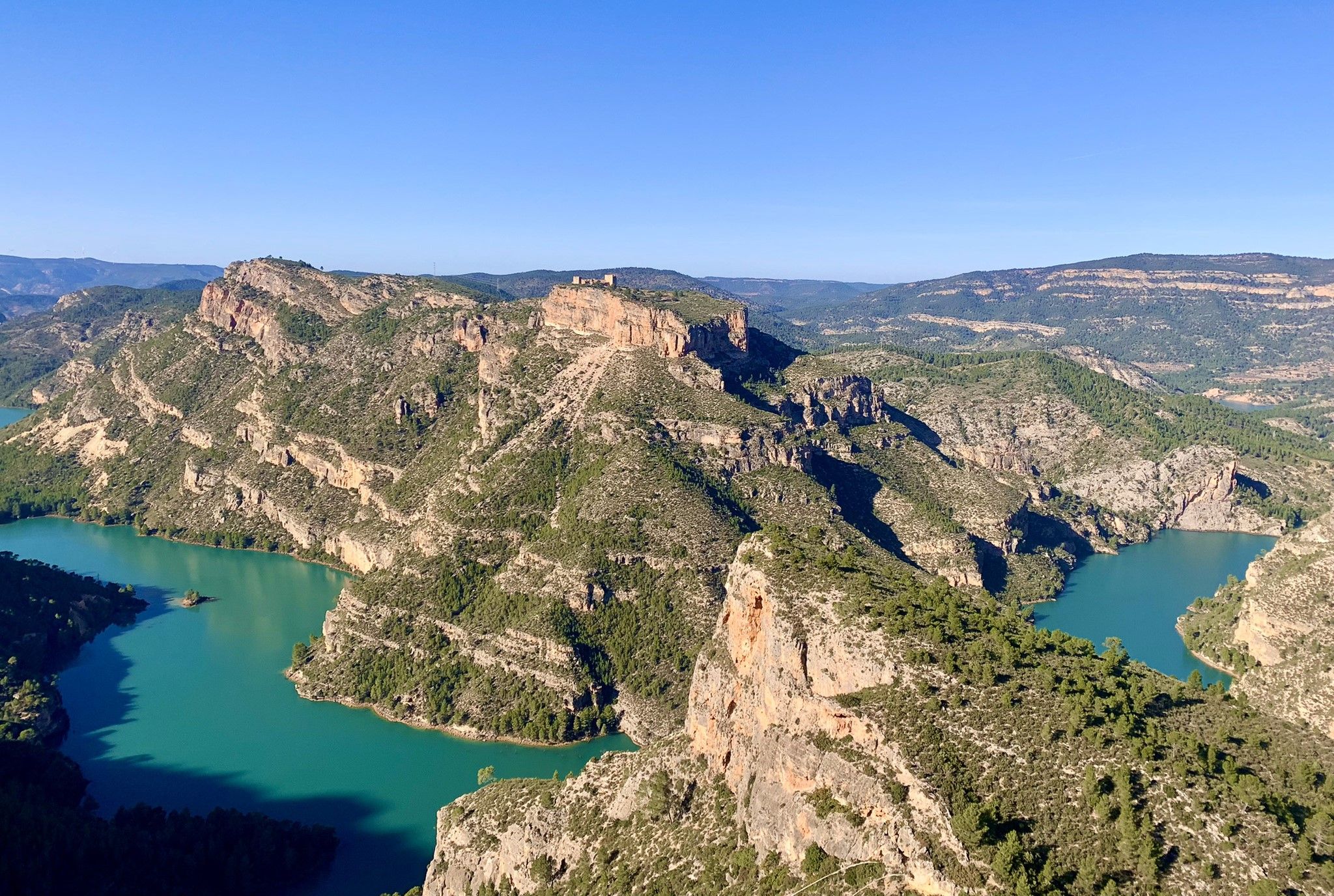
- The most popular attractions is Pico de Caroche, a…
Last updated: May 10, 2026
Castle of Almansa
Highlight • Castle
The remains of rammed earth walls in …
Translated by Google •
Tip by

Palace of the Counts of Cirat
Highlight • Historical Site
Translated by Google •
Tip by
Sign up now to discover places like this
Get recommendations on the best single tracks, peaks, & plenty of other exciting outdoor places.
Sign up for free
Pico de Caroche
Highlight • Summit
Translated by Google •
Tip by

Church of the Assumption (Iglesia de la Asunción), Almansa
Highlight • Religious Site
Translated by Google •
Tip by
Casas de Benalí
Highlight • Mountain Hut
Translated by Google •
Tip by
Sign up for free to discover even more attractions around Ayora.
Sign up for free
Already have an account?
Start today with a free account
Your next adventure awaits.
Login or Signup

Other adventures around Ayora

Tips from the Community

The Archpriestal Church of the Assumption in Almansa is an impressive historical and architectural monument. Located in the Plaza de Santa María, next to the Palace of the Counts of Cirat, this church was built in several stages from the 16th to the 19th century.
6
0

Wow how beautiful! And the trip itself is what it's all about. What a beautiful rugged area.
2
0

Beautiful facility. We stayed there on our long-distance hike from Tarifa to Switzerland and can highly recommend the accommodation and the excellent cuisine.
3
0

The patronage of this church - "Santa MARIA ASUNCION" or "Nuestra Señora de La Asunción" (in German-speaking countries it is called "Mariä Himmelfahrt") - refers to one of the many memorial or feast days in honor of the Mother of God Mary in the church year. It goes back to the feast of her bodily assumption into heaven, which the (Catholic) Church celebrates annually on August 15th. In Christian Orthodox churches the feast is celebrated under the name "Maria Entschläfung". In rural areas it is part of the local custom - depending on the region - that on this special day bundles of herbs are collected by the population and blessed in the festive service.
3
0
The patronage of this church - "Santa MARIA ASUNCION" or "Nuestra Señora de La Asunción" (in German-speaking countries it is called "Mariä Himmelfahrt") - refers to one of the many memorial or feast days in honor of the Mother of God Mary in the church year. It goes back to the feast of her bodily assumption into heaven, which the (Catholic) Church celebrates annually on August 15th. In Christian Orthodox churches the feast is celebrated under the name "Maria Entschläfung". In rural areas it is part of the local custom - depending on the region - that on this special day bundles of herbs are collected by the population and blessed in the festive service.
2
0
The Church of the Assumption in Almansa is an imposing monument that stands in front of the Plaza de Santa María. It is a must-see when touring the historic center of Almansa. Inside, Our Lady of Bethlehem, the Patroness of the city, presides over the High Altar. Construction began on April 30, 1524. Throughout the first half of the 16th century, it was developed from the foundation to the elevation of the nave walls, the side chapels, and buttresses were added. The sculptural group on the façade represents the Annunciation, with the Virgin kneeling before a lectern and the archangel Gabriel in front of her. If you're thinking of visiting the city, here's a little history to inspire you!
5
0
The Palace of the Counts of Cirat, also known as “the Big House”, is a Renaissance-style building with a civil character. It was built in the last quarter of the 16th century by the Almanseño noble Don Alfonso de Pina. This palace is located in the Plaza de Santa María in the town of Almansa. This palace is a historical and architectural testimony that deserves to be appreciated for its beauty and cultural significance. If you ever have the opportunity to visit Almansa, I recommend exploring this magnificent Renaissance building. 🏰🌟
6
0
The original construction could have been the work of the Almohads, who used to use the rammed earth technique for their defensive buildings. The remains of rammed earth walls in this castle, traditionally attributed to the Almohad period, were actually built during the first decades of Christian rule, at the end of the 13th century or the beginning of the 14th century. In the 14th century, Almansa and its fortress were incorporated into the Villena manor. Don Juan Manuel took advantage of the previous construction and ordered its walls to be rebuilt.
5
0
Frequently Asked Questions
What natural attractions can I explore around Ayora?
The Ayora region is rich in natural beauty. You can visit Pico de Caroche, a summit offering incredible panoramic views from 1,126 meters above sea level. Other notable natural sites include La Hunde, an extensive pine forest perfect for recreation and wildlife spotting, and the Sierra Palomera, home to the deep Cueva Negra. The Ayora-Cofrentes Valley itself is characterized by mountains, lush greenery, and biodiversity, with the Júcar and Cabriel rivers adding to its charm.
Are there any historical sites or ancient ruins to visit in Ayora?
Ayora boasts several significant historical sites. The Castle of Almansa, though not in Ayora itself, is a prominent historical castle nearby, known for its strategic position and Almohad origins. Within Ayora, you can explore the ruins of Ayora Castle, a Moorish fortress with a rich history, and the Ancient Iberian Village of Castellar de Meca, one of the largest Iberian cities on the peninsula during the Iron Age, featuring preserved walls and defensive towers.
What cultural and religious landmarks are worth seeing in the area?
The region offers several cultural and religious landmarks. The Church of the Assumption (Iglesia de la Asunción), Almansa is an impressive architectural monument with Renaissance, Baroque, and Neoclassical elements. In Ayora, the imposing Gothic-Renaissance Church of Nuestra Señora de la Asunción houses splendid altarpieces. You can also follow the Ruta de las Ermitas (Route of the Hermitages) to discover various chapels, or visit the 13th-century Church of Santa María la Mayor.
Are there family-friendly activities or attractions around Ayora?
Yes, there are several family-friendly options. The Church of the Assumption (Iglesia de la Asunción), Almansa and the Palace of the Counts of Cirat are both listed as family-friendly historical sites. For outdoor fun, the extensive pine forest of La Hunde offers areas for camping and recreation. The Historic Centre of Ayora is also pleasant for strolls, and Los Morerales Park hosts open-air cinema and concerts in warmer months.
Where can I go hiking or walking near Ayora?
The Ayora-Cofrentes Valley is ideal for hiking. You can find numerous trails, including the ascent to Pico de Caroche for challenging routes with rewarding views. For easier walks, consider the circular 'Queen's Path,' a low-difficulty 1.7 km trail. The Sierra de Ayora and Sierra Palomera mountain ranges also offer diverse natural enclaves for exploration. For more detailed routes, check out the Running Trails around Ayora guide, which includes moderate options like the 'Ayora – Ermita del Santo Ángel loop'.
What cycling routes are available in the Ayora region?
Ayora is a great base for cycling enthusiasts. You can explore various road cycling routes through the scenic Ayora-Cofrentes Valley, with options ranging from moderate to difficult. For example, the 'Ayora-Cofrentes Valley Loop' is a challenging 76 km ride. Gravel biking is also popular, with routes like the 'Ayora Castle – Ayora loop' offering a moderate 25 km ride. Discover more options in the Road Cycling Routes around Ayora and Gravel biking around Ayora guides.
Are there any unique local experiences or traditions in Ayora?
Ayora is known for its significant honey production. You can learn about this at the Beekeeping Interpretation Center, located within the Ayora Tourist Office. If you visit in October, you might experience the 'Primer Corte de la Miel' (First Honey Harvest) Festival, a vibrant fair celebrating this local tradition. Strolling through the historic center and following the 'Hilo Rojo' tour also offers insights into local stories and traditions.
Where can I find impressive viewpoints in the Ayora area?
For breathtaking views, ascend to Pico de Caroche, which offers incredible vistas from its 1,126-meter peak. Another excellent spot is Montemayor, a summit about 2 km from Ayora at 1,200 meters, also featuring a hermitage and astonishing panoramic views. The Castle of Almansa also provides a strategic viewpoint over the surrounding landscape.
What are some hidden gems or lesser-known spots near Ayora?
Beyond the main attractions, consider visiting Casas de Benalí, an old town in a remote area within La Canal de Navarrés, known for its peculiar charm and as a stop for long-distance hikers. The Abrigo de Tortosilla is an archaeological site with prehistoric cave paintings, part of a UNESCO World Heritage site. Also, the Cueva de Don Juan, about 12 km from Ayora, offers guided tours through a spectacular underground world of stalactites and stalagmites.
What is the best time of year to visit Ayora for outdoor activities?
The Ayora region, with its diverse natural landscapes, is generally pleasant for outdoor activities during spring and autumn when temperatures are milder. These seasons are ideal for hiking, cycling, and exploring historical sites without the intense heat of summer. Summer can be suitable for activities in the early morning or late afternoon, and you might enjoy open-air events in parks. Winter offers cooler temperatures, which can be refreshing for some outdoor pursuits.
Can I find any unique architectural sites in the region?
Yes, the region features unique architectural sites. The Palace of the Counts of Cirat in Almansa, also known as 'the Big House,' is a beautiful Renaissance-style building from the 16th century. In Ayora, the Convent of San Francisco de Padua, founded by Franciscans in 1573, offers a glimpse into historical religious architecture. The historic center of Ayora itself, with its districts and plazas like Plaza Mayor, showcases traditional Valencian architecture.
Most popular attractions around Ayora

Get inspired with the komoot mobile app


Explore more
Still not found the Highlight you’re looking for? See guides of the top attractions in other regions:
