Attractions and Places To See around Bárboles - Top 19
Best attractions and places to see around Bárboles include a mix of historical landmarks and natural features within the province of Zaragoza, Spain. The area offers insights into Aragonese history with sites like the remains of Bárboles Castle and the Renaissance-style Parish Church. Nearby, visitors can explore significant engineering feats of the Imperial Canal of Aragon and protected wetlands. This region provides diverse points of interest for those exploring the Aragonese landscape.
Best attractions and places to see around Bárboles
…Last updated: July 2, 2026
Jalón River Aqueduct (El Caracol)
Highlight • Bridge
Translated by Google •
Tip by

Balsa de Larralde
Highlight • Lake
Translated by Google •
Tip by

Sign up now to discover places like this
Get recommendations on the best single tracks, peaks, & plenty of other exciting outdoor places.
Sign up for free
Soto de la Alameda Trail
Highlight (Segment) • Trail
- This is an area, especially the one closest to Utebo, where many people walk or cycle. The path …
Translated by Google •
Tip by
Clavería Bridge over the Imperial Canal of Aragon
Highlight • Bridge
Translated by Google •
Tip by

Mouth of the Jalón River
Highlight • River
Translated by Google •
Tip by
Sign up for free to discover even more attractions around Bárboles.
Sign up for free
Already have an account?
Start today with a free account
Your next adventure awaits.
Login or Signup
Tips from the Community

The Larralde raft is worth seeing, but not the rest.
0
0

Architecturally, it's stunning, but we couldn't find a way to follow the canal without getting our feet wet. In the end, we crossed the Jalón River under the canal and then rejoined it. The question remains whether we could have crossed the canal walls on foot. On the left side, there was an open metal gate (we were already on the right side), but on the other side of the Jalón River, we saw another metal gate locked with a padlock.
0
0

A few beautiful kilometers along the riverbank, but keep in mind: - This is an area, especially the one closest to Utebo, where many people walk or cycle. The path is narrow. Going slowly is the best way to enjoy it and for others to enjoy it too. - When the Ebro rises, some sections of this path can flood, making it untraversable. If it's flood season, it's best to avoid it, even if there's a way across. - In the area of the poplar grove closest to the Barca de Sobradiel, landslides have occurred along the banks as the Ebro rises. Always pay attention to the terrain in this area because sometimes cracks or holes are partially hidden by vegetation.
1
0

Wikipedia The Jalón River Aqueduct, also known as the Grisén or Jalón Walls or El Caracol, is the most representative work of the construction of the Imperial Canal of Aragon, built in the 18th century. This aqueduct is located in the natural setting of El Caracol, between the municipalities of Alagón and Grisén, about 25 kilometers from the city of Zaragoza. The objective of this work was to cross the greatest obstacle found in the layout of the canal, the Jalón River. Initially, the creation of a large siphon beneath the waters of the Jalón was proposed, but finally the layout of the canal twists towards the Jalón Valley to face the river perpendicularly. A route of more than 2 kilometers in total length begins, of which 1,380 meters run between stone walls.
0
0

A beautiful stretch of trail that runs through the thicket, near the riverbank, within a pleasant poplar forest. This is a flood-prone area, so it will be impassable during flooding.
0
0
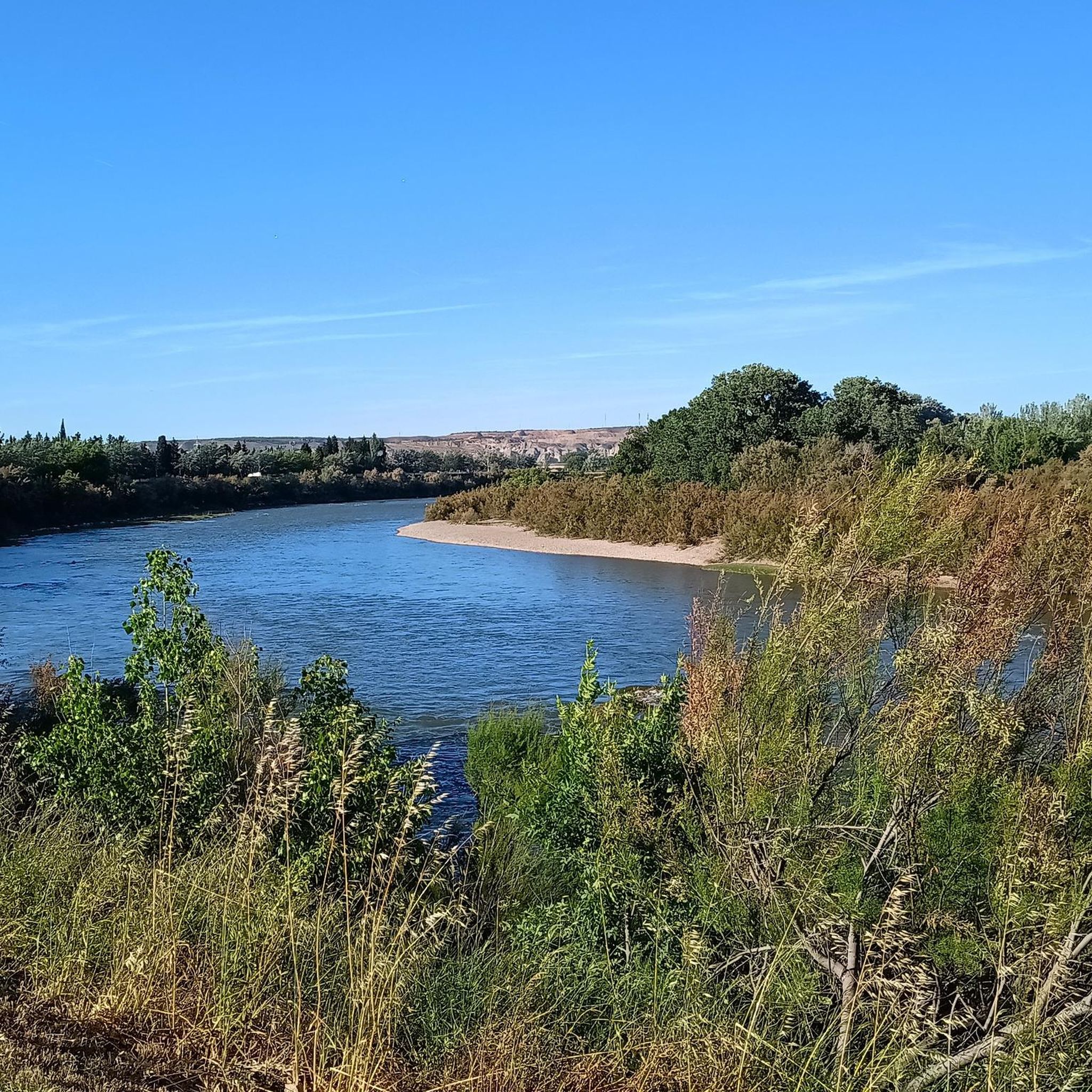
A magical place where in a few meters the current mouth of the river Jalón joins the Ebro, the hundred-year-old boat passing between the banks and the remains of the Muslim castle and old Christian town of Castellar. Be careful in summer with mosquitoes.
0
0

The Larralde Raft together with the 'Ojo del Cura' and the 'Ojo del Fraile' are the last to form part of the set of Wetlands in the area, very important for the conservation of native fauna and flora and the water cycle.
1
1
Historic arch bridge built in the 18th century to cross the Imperial Canal of Aragon. Nice picture to photograph!
2
0
Frequently Asked Questions
What historical landmarks can I explore in Bárboles itself?
In Bárboles, you can visit the Arco del Castillo, which is all that remains of the former Bárboles Castle, a historical reminder of the fortification burned down in 1592. Another significant site is the Iglesia Parroquial de la Asunción de Nuestra Señora, a late 16th-century Renaissance church with a 15th-century Mudejar bell tower and Baroque plasterwork. Its tower and Mudejar elements are declared Cataloged Assets of Aragonese Cultural Heritage.
Are there any natural areas to visit near Bárboles?
Yes, a notable natural area is Balsa de Larralde, a 4-hectare wetland near Zaragoza. It's part of an ancient complex of lagoons, recovered for its rich variety of flora and fauna, including poplars and reedbeds that provide refuge for various animals. You can also visit the Mouth of the Jalón River, where it joins the Ebro, offering a unique river confluence.
What engineering marvels can I see around Bárboles?
The region features impressive engineering works related to the Imperial Canal of Aragon. You can see the Clavería Bridge over the Imperial Canal of Aragon, an 18th-century historic arch bridge. Another significant site is the Jalón River Aqueduct (El Caracol), an 18th-century aqueduct considered a major feat of the Imperial Canal, located between Alagón and Grisén.
Are there family-friendly attractions in the Bárboles area?
Several attractions are suitable for families. The Balsa de Larralde wetland is great for observing nature. Historical sites like the Jalón River Aqueduct (El Caracol), the Clavería Bridge, and the Jubo Bridge offer interesting historical context and are generally accessible for family visits.
Where can I go hiking near Bárboles?
There are several hiking opportunities around Bárboles. You can explore routes like the 'Ermita de Peraman y Murallas de Grisén — circular by the Imperial Canal of Aragón' or the 'Jubo Bridge loop from Pinseque'. For more options and detailed routes, check out the Hiking around Bárboles guide.
Are there cycling routes available around Bárboles?
Yes, the area offers various cycling routes. For mountain biking, consider routes like 'Balsa de Larralde – Solar Labyrinth loop from Pinseque'. If you prefer road cycling, options include 'Alagón - Muel — round trip via Épila and Lumpiaque'. You can find more detailed routes in the MTB Trails around Bárboles and Road Cycling Routes around Bárboles guides.
What is unique about the residential areas in Bárboles?
Bárboles is known for its distinctive Barrio Alto (Upper Quarter), which features numerous cave houses. These underground dwellings, carved into a mound, were once quite prevalent, offering a unique glimpse into traditional Aragonese living.
What do visitors particularly enjoy about the attractions near Bárboles?
Visitors appreciate the blend of historical significance and natural beauty. The Clavería Bridge is often highlighted as a well-preserved historic arch bridge, great for photography. The Balsa de Larralde is valued for its rich flora and fauna, offering a peaceful natural escape. The historical context of sites like the Jalón River Aqueduct also draws significant interest.
Are there any religious or cultural sites beyond the main church?
Yes, in the nearby area of Peramán, you can find the Ermita de Ntra. Sra. de la Ola (Hermitage of Our Lady of the Wave). This local point of interest is associated with a legend of a miraculous image of the Virgin Mary found in the Jalón river, adding to the region's cultural tapestry.
Can I find any manor houses or historical residences in Bárboles?
Bárboles features a Marquis's Mansion, a manor house with a tower-shaped viewpoint and the remains of what was likely the mansion of the marquises, complete with an Aragonese gallery. This offers a glimpse into the historical aristocratic presence in the town.
What is the best time of year to visit Bárboles for outdoor activities?
The region of Aragón, where Bárboles is located, generally experiences hot, dry summers and mild winters. Spring (April-May) and autumn (September-October) are often ideal for outdoor activities, offering pleasant temperatures for hiking and cycling without the intense summer heat.
Are there any day trip options for exploring more of the Aragón region's nature?
While not directly in Bárboles, the wider Aragón region offers natural attractions suitable for day trips from the Zaragoza area. Options include the stunning Monasterio de Piedra, known for its waterfalls and natural park, and the unique landscapes of the Los Monegros desert. For more information on Aragón's nature, you can visit spain.info.

Get inspired with the komoot mobile app


Explore more
Still not found the Highlight you’re looking for? See guides of the top attractions in other regions:
