The best cycling routes around Villaseca De La Sagra
3.9
(8)
122
riders
31
rides
Touring cycling routes around Villaseca De La Sagra are characterized by generally flat and undulating terrain, making them accessible for various skill levels. The region, located in the province of Toledo, offers a peaceful countryside with comfortable dirt tracks that often wind between riverbeds and railway lines. This area provides numerous cycling routes connecting to neighboring towns and natural features, ideal for exploring the local landscape. The Villaseca De La Sagra cycling terrain primarily consists of paved and unpaved surfaces suitable for touring bicycles.
Best touring cycling routes around Villaseca De La Sagra
- The most popular touring cycling route is Villaluenga, Cabañas, and Villaseca de la Sagra Loop, a 19.7 miles (31.7 km) trail that takes 2 hours 1 minute to complete. This route mostly features paved surfaces and explores surrounding villages.
- Another top favourite among local touring cyclists is Villaluenga de la Sagra, Cabañas de la Sagra y Bargas – circular route, a moderate 24.9 miles (40.0 km) path. This route offers a journey through the local countryside and nearby towns.
- Local touring cyclists also love the Public Fountain (Parking lots) – Alcántara Bridge loop from Villaseca de la Sagra, a 32.9 miles (52.9 km) trail leading through varied landscape, often completed in about 3 hours 38 minutes.
- Touring cycling around Villaseca De La Sagra is defined by peaceful countryside, comfortable dirt tracks, and routes along riverbeds and railway lines. The network offers options for different ability levels, from easy loops to more challenging long-distance paths.
- The routes in Villaseca De La Sagra are highly rated by the komoot community with an average score of 3.0 stars from over 2 reviews. More than 90 touring cyclists have used komoot to explore Villaseca De La Sagra's varied terrain.
Last updated: October 28, 2026
5.0
(2)
3
riders
31.7km
02:01
120m
120m
40.0km
02:49
260m
260m
Moderate bike ride. Good fitness required. Mostly paved surfaces.

7
riders
37.5km
02:38
280m
280m
Moderate bike ride. Good fitness required. Mostly paved surfaces.
4
riders
22.8km
01:47
190m
190m
Moderate bike ride. Good fitness required. Mostly paved surfaces.
5
riders
Moderate bike ride. Good fitness required. Mostly paved surfaces.
Get access to more routes and recommendations from other explorers.
Already have an account?
Our route recommendations are based on thousands of hikes, rides, and runs completed by other people on komoot.
Start today with a free account
Your next adventure awaits.


Tips from the Community

What to see in Cabañas de la Sagra Parish Church of Our Lady of the Assumption Built between the 16th and 17th centuries, with a Mudéjar coffered ceiling and unique wooden details. Roman Villa Archaeological remains from the 3rd century AD, evidence of the Roman past in the area. Osborne Bull A Spanish cultural icon, visible from the road, ideal for photos. Natural surroundings Walks to Fuente de la Mora and Los Pinos, peaceful routes through fields of grain.
2
0
Cabañas de la Sagra is a peaceful and welcoming village, perfect for escaping the hustle and bustle of the city. It stands out for its agricultural surroundings (cereals and legumes), its culinary traditions, and its proximity to Toledo and Madrid.
2
0
The Plaza Mayor of Alameda de la Sagra is the social and cultural heart of the town, a space that blends tradition and everyday life. Located in the historic center of the town, it is surrounded by charming streets and traditional buildings. It is a meeting point for locals and visitors alike, with bars, restaurants, and shops offering typical cuisine.
15
0
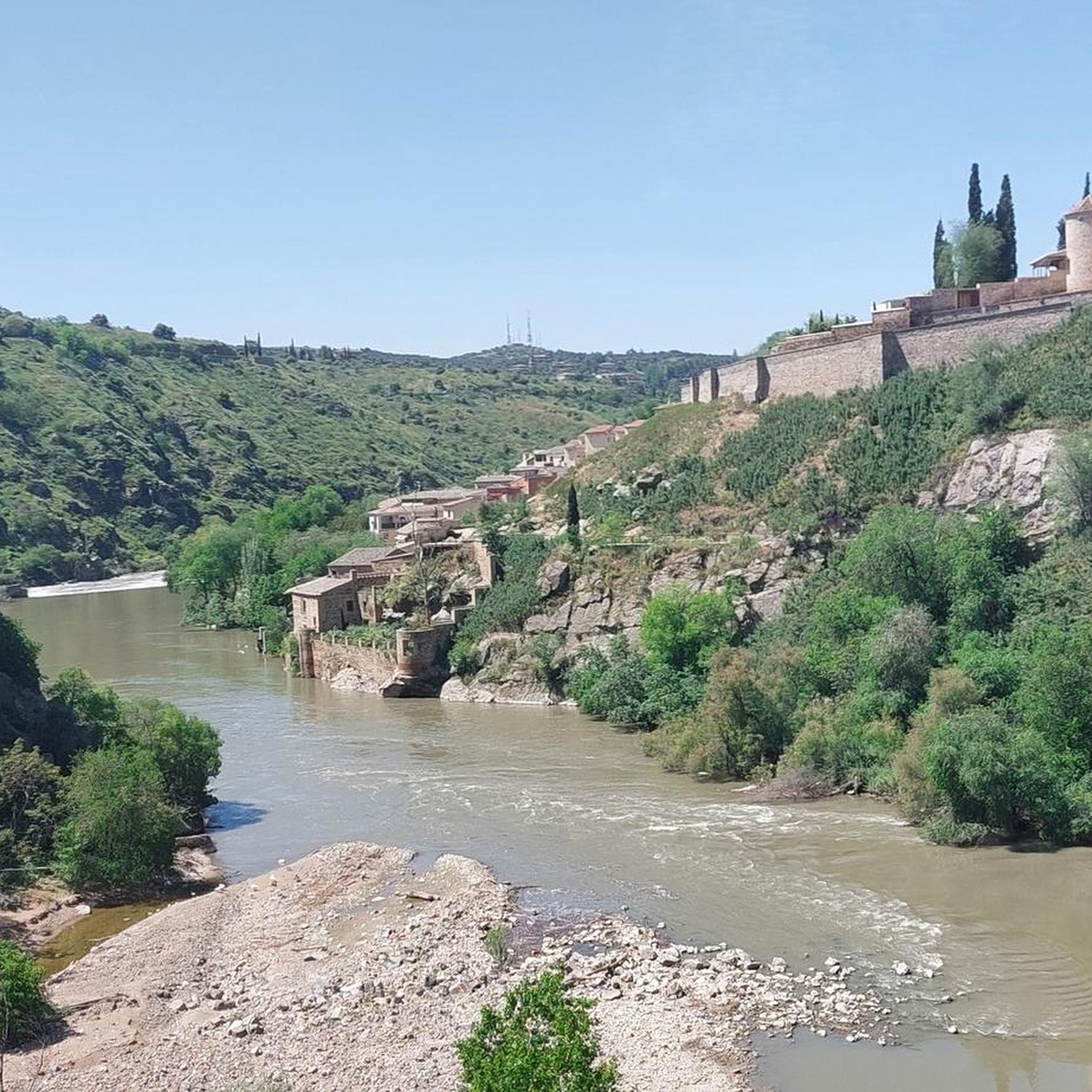
The Safont Waterwheel is a unique landmark in Toledo, located in Safont Park, next to the Tagus Nature Trail, very close to the Azarquiel Bridge and the bus station. It's an ideal spot for strolling along the riverbank and discovering a corner steeped in history and interesting facts.
4
0
The Bisagra Gate is one of Toledo's most iconic monuments and a monumental entrance to its historic center. Muslim Origin: The original gate, known as the Old Bisagra Gate or Bab al-Saqra ("Sacred Gate"), was built in the 9th century during Islamic rule. Renaissance Reconstruction: In the 16th century, under the reigns of Charles V and Philip II, the New Bisagra Gate was built, the gate that remains today. Construction began around 1540 and was completed in 1576. Notable Architects: Alonso de Covarrubias, Nicolás de Vergara the Elder, Juan de Benavides, Eugenio Sánchez, among others, participated.
10
0
The Alcántara Bridge is one of Toledo's most iconic monuments, with a history dating back to Roman times and an architecture that has evolved over the centuries. Originally built by the Romans in the 3rd century AD, as part of the network of roads that connected the Empire. Its name comes from the Arabic "al-qanṭarah," meaning "the bridge," given by the Muslims after its reconstruction in the 10th century.
10
0

Its existence is relatively recent, 1994. In the 16th century, a hydraulic machine called "El artificio de Juanelo" was used to bring water from the Tagus to Toledo. The Noria de Safont is a recreation of a noria of the same size as those of Hamma in Syria and its elevated channel. It is not in operation since it was damaged a few years ago.
0
1

Crossing this bridge is always impressive, and it has spectacular views of the Alcázar of Toledo and the Castillo de San Servando, especially if you cross it at night. It has a Roman origin. It was built in the 3rd century. The Roman roads that linked Emerita Augusta (Mérida) with Caesar Augusta (Zaragoza) crossed here, as well as those that continued to the east and south passing through Consaburum (Consuegra). The Alcántara Bridge has undergone numerous reconstructions because for centuries it was the main access to the city of Toledo, and, in addition to the movement of people and goods, we must add the damage caused by successive wars, conquests and reconquests. In the 10th century it had to be restored by the Arabs, although from that time only the spur on the side facing the Castle of San Servando remains. Due to a great flood that partially destroyed it, King Alfonso The great tower that overlooks the city belongs to this period. The Catholic Monarchs would also order this tower to be renovated, turning it into a kind of military fortress. The fortified door decorated with the image of San Ildefonso, the patron saint of the city of Toledo, and the shield of the Catholic Monarchs, is precisely one of the most impressive elements of this Bridge.
0
0
Frequently Asked Questions
How many touring cycling routes are available around Villaseca de la Sagra?
There are over 35 touring cycling routes around Villaseca de la Sagra, offering a variety of options for different preferences and skill levels.
What is the typical terrain like for touring cycling in Villaseca de la Sagra?
The terrain is generally flat and undulating, making it accessible for various skill levels. You can expect a mix of paved surfaces and comfortable dirt tracks, often winding between riverbeds and railway lines, particularly along sections of the Camino Natural del Tajo.
What are the difficulty levels of the touring cycling routes?
The routes cater to a range of abilities. You'll find 3 easy routes, 26 moderate routes, and 8 more difficult options, ensuring there's something for every touring cyclist.
Are there any easy touring cycling routes suitable for beginners or families?
Yes, there are easy routes available. For instance, the Bike loop from Cabañas de la Sagra is an easy 18.1 km option, perfect for a relaxed ride. The generally flat terrain of the region also makes many routes suitable for families.
Can I find longer touring cycling excursions in the area?
Yes, Villaseca de la Sagra is close to longer cycling paths. The broader Castilla-La Mancha region is part of the Ruta de Don Quijote, an easy to moderate self-guided cycling holiday with daily distances of 46-55 km. Additionally, routes like the Place – Villaluenga de la Sagra loop from Villaluenga-Yuncler offers a challenging 58.1 km ride.
Are there circular touring cycling routes available?
Absolutely. Many routes are designed as loops, allowing you to start and end in the same location. A popular choice is the Villaluenga de la Sagra, Cabañas de la Sagra y Bargas – circular route, a moderate 40 km path exploring the local countryside and nearby towns.
What kind of landmarks or natural features can I expect to see along the cycling routes?
The routes offer a peaceful countryside experience. You can encounter historical sites like the Church of Nuestra Señora de la Asunción (Cabañas de la Sagra), and scenic sections of the Camino Natural del Tajo (GR 113). The area also features charming villages and agricultural landscapes.
Are there any historical sites to explore while cycling?
Yes, the region is rich in history. In Cabañas de la Sagra, you can visit the Mudejar Church of Nuestra Señora de la Asunción. The village of Mocejón, with its Parish Church of San Esteban Protomártir, also offers insights into local history, and a climb in this area can provide incredible views of northern Toledo.
What is the best time of year to go touring cycling in Villaseca de la Sagra?
The region experiences a temperate Mediterranean climate. Spring and autumn are generally ideal, offering pleasant temperatures for cycling. Summers can be hot, and winters colder, so plan accordingly for those seasons.
Is there parking available near the touring cycling routes?
Yes, parking is generally available. Some routes, like the Public Fountain (Parking lots) – Alcántara Bridge loop from Villaseca de la Sagra, even mention parking lots in their description, indicating convenient access points for cyclists arriving by car.
What do other touring cyclists enjoy the most about touring cycling in Villaseca de la Sagra?
The area is highly rated by the komoot community, with an average score of 3.0 stars. Reviewers often praise the peaceful countryside, the comfortable dirt tracks, and the variety of routes that wind along riverbeds and railway lines, offering a unique exploration of the local landscape.
Are there any routes that connect Villaseca de la Sagra to neighboring towns?
Yes, Villaseca de la Sagra serves as a hub for several routes that connect to neighboring towns. A great example is the Villaluenga, Cabañas, and Villaseca de la Sagra Loop, which explores these surrounding villages on mostly paved surfaces.
Most popular routes around Villaseca De La Sagra
Most popular attractions around Villaseca De La Sagra

Get inspired with the komoot mobile app


Explore more
Browse the best Cycling routes in other regions.
