The best MTB trails around Marcilla De Campos
5.0
(2)
35
riders
7
rides
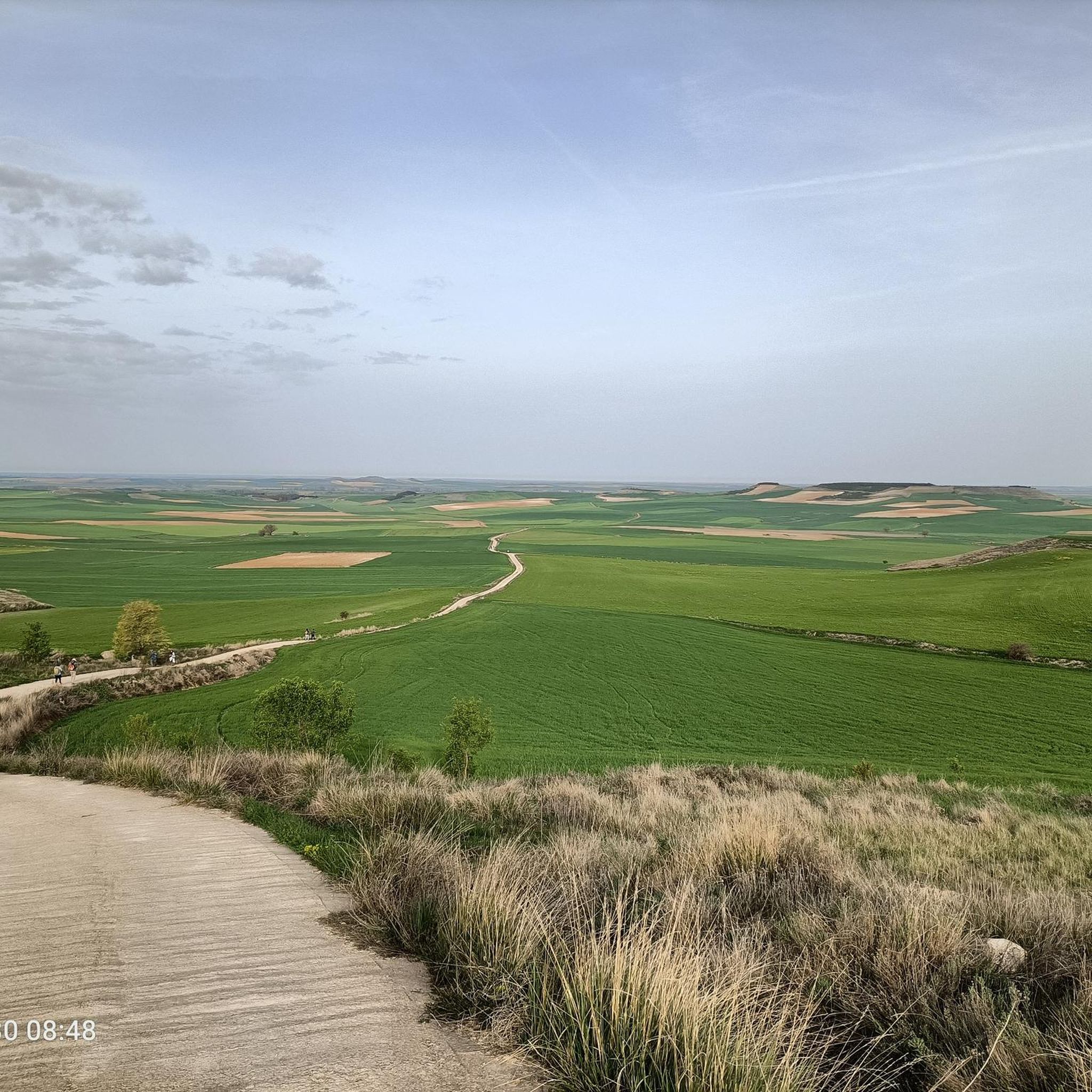
Mountain bike trails around Marcilla De Campos are characterized by the vast, open plains of the Tierra de Campos region, offering a landscape of infinite horizons. The terrain is generally flat to gently rolling, making many routes accessible for various skill levels. A prominent feature for mountain biking is the historic Canal de Castilla, with its flat towpaths providing ideal conditions for cycling. This area provides a blend of natural exploration and cultural heritage, with routes often traversing cereal fields…
Last updated: July 12, 2026
4
riders
28.8km
02:09
70m
70m
Explore 17.9 miles (28.8 km) of the Camino de Santiago on this moderate mountain bike loop from Frómista, featuring historical churches and
5.0
(1)
1
riders
Hard mountain bike ride. Very good fitness required. Advanced riding skills necessary.

Sign up for free
79.1km
06:14
270m
270m
This difficult 49.2-mile mountain biking loop around Osorno explores the historic Canal de Castilla, featuring locks and aqueducts.
46.1km
03:35
280m
280m
Moderate mountain bike ride. Good fitness required. Advanced riding skills necessary.
2
riders
Moderate mountain bike ride. Good fitness required. Advanced riding skills necessary.
Get access to more routes and recommendations from other explorers.
Sign up for free
Already have an account?
Our route recommendations are based on thousands of hikes, rides, and runs completed by other people on komoot.
Start today with a free account
Your next adventure awaits.
Login or Signup
Popular around Marcilla De Campos


Tips from the Community

La Esclusa 15, also known as La Quince, is part of the Northern Branch of the Canal de Castilla. It is an old limestone ashlar lock used in the 18th-19th centuries to overcome the canal's differences in level.
3
0


Beautiful sunrise on the Way of St. James
2
1

Santa Maria la Blanca is a temple-fortress of Templar origin dating back to the 12th century.
3
1
The Puente del Rey is one of the most outstanding structures of the Canal de Castilla, one of the most important hydraulic engineering works in Spain. The Canal de Castilla was built between the 18th and 19th centuries with the aim of facilitating the transport of goods, especially cereals, from the interior of Castile to the ports of northern Spain.
7
0

The Castile Channel (Canal de Castilla) is a historic canal in northern Spain, built between the latter half of the 18th century and the first half of the 19th century. It passes through the provinces of Burgos, Palencia and Valladolid and has a total length of 207 kilometres. The canal was originally built to facilitate the transport of grain from Castile to the ports in the Bay of Biscay, but today it is mainly used for irrigation and tourism.
2
1
The Iglesia de Santa María la Blanca in Villalcázar de Sirga is an important stop on the Camino de Santiago. The church was built at the end of the 12th century, during the transition from Romanesque to Gothic style, and was completed in the 14th century. It is a temple-fortress with a beautiful portal from the 13th century, decorated with an impressive sculptural ensemble. Inside you will find a collection of polychrome tombs from the 13th and 14th centuries, a Gothic altarpiece from the 15th and 16th centuries, and a beautiful image of the Virgen del Rosario. The church is linked to the Order of the Temple and has played an important role as a religious site on the Camino de Santiago.
3
1

The church was built in a transitional style from Romanesque to Gothic. The southern double portal with sculptures of Christ Pantocrator, Tetramorphs and Apostles is particularly noteworthy. The Chapel of St. James, dating from the early 14th century, is also very interesting, as it contains the sarcophagi of Infante Felipe and his wife Leonor Ruíz de Castro. This church also contains the White Virgin 'Virgen Blanca', who was sung about by Alfonso X the Wise in his 'Cantigas' (religious songs). She represented one of the most important religious sites on the Way of St. James.
3
0
Frequently Asked Questions
What is the overall character of mountain biking in Marcilla de Campos?
Mountain biking around Marcilla de Campos is defined by the vast, open plains of the Tierra de Campos region, offering a landscape of infinite horizons. The terrain is generally flat to gently rolling, making many routes accessible for various skill levels. A prominent feature for mountain biking is the historic Canal de Castilla, with its flat towpaths providing ideal conditions for cycling. This area provides a blend of natural exploration and cultural heritage, with routes often traversing cereal fields and alongside the canal.
How many mountain bike trails are available in Marcilla de Campos?
There are 8 mountain bike trails available around Marcilla de Campos, offering a range of experiences from moderate to difficult. These routes are highly rated by the komoot community, with an average score of 5.0 stars.
Are there any circular mountain bike routes in the area?
Yes, several circular routes are available. For a challenging option, consider the Canal of Castilla and Camino de Santiago — circular route by The King's Bridge from Frómista, which is 43.1 miles (69.4 km) long. Another option is the Canal de Castilla - Osorno Loop Trail, a 49.1 miles (79.1 km) difficult route. For a moderate ride, the Itero de la Vega a Melgar de Yuso — circular desde Frómista covers 28.6 miles (46.1 km).
What kind of terrain and elevation can I expect on mountain bike trails near Marcilla de Campos?
The terrain in Marcilla de Campos and the broader Tierra de Campos region is predominantly flat to gently rolling, characterized by vast open plains and cereal fields. While there are no significant climbs, routes like the Canal de Castilla - Osorno Loop Trail can still accumulate around 876 feet (267 meters) of elevation gain over its 49.1 miles (79.1 km) length, offering a good workout without technical difficulties.
Are there any family-friendly mountain bike trails in Marcilla de Campos?
While specific 'easy' rated trails are not listed, the generally flat and gently rolling terrain of the region, especially along the Canal de Castilla, makes many routes accessible for families. The Canal's towpaths provide compacted dirt tracks that are suitable for less experienced riders, offering adjustable distances to suit different fitness levels. These routes are often categorized as having 'low difficulty' and are welcoming for various cycling preferences.
What natural features or landmarks can I see while mountain biking in the area?
The region offers several interesting natural and historical features. You can explore the historic Canal de Castilla, an 18th-century engineering marvel with scenic towpaths. Along the canal, you might encounter the Quadruple Lock of the Canal de Castilla, a notable structure. The area is also known for its vast plains and the tranquil La Laguna, a natural lagoon that contributes to the local biodiversity.
What is the best time of year for mountain biking in Marcilla de Campos?
The best time for mountain biking in Marcilla de Campos is generally during spring and autumn when temperatures are milder. The open plains can be exposed to strong sun in summer and cold winds in winter. Spring brings blooming fields, while autumn offers pleasant weather and changing colors, making for comfortable riding conditions.
Are there any routes that combine historical elements with mountain biking?
Absolutely. The Canal of Castilla and Camino de Santiago — circular route by The King's Bridge from Frómista is an excellent choice. This difficult 43.1-mile (69.4 km) route combines the historical towpaths of the Canal de Castilla with sections of the Camino de Santiago, offering varied scenery and a rich historical context.
What do other mountain bikers say about the trails in Marcilla de Campos?
The mountain bike trails around Marcilla de Campos are highly rated by the komoot community, with an average score of 5.0 stars from over 2 reviews. More than 38 mountain bikers have used komoot to explore the varied terrain, often praising the expansive views, the peaceful solitude of the plains, and the accessible nature of the Canal de Castilla routes.
Are there any cultural attractions to explore by bike in Marcilla de Campos?
Yes, Marcilla de Campos offers a rich cultural experience. You can visit the open-air museum, the Centro de Interpretación de la Vida Rural, which showcases the region's past way of life through sculptures and exhibits. Exploring these ethnographic and cultural sites by bike adds a unique dimension to your outdoor activity, blending nature, history, and gentle adventure.
Are there any moderate difficulty mountain bike trails available?
Yes, there are several moderate difficulty trails. The French Way: Villalcázar de Sirga Loop is a 17.9-mile (28.8 km) moderate trail that follows a section of the historic French Way. Another moderate option is La Quince Lock – Lock No. 15, Canal de Castilla loop from Palacios de Riopisuerga, which covers 18.4 miles (29.6 km).
Most popular routes around Marcilla De Campos
Most popular attractions around Marcilla De Campos

Get inspired with the komoot mobile app


Explore more
Browse the best MTB trails in other regions.
