The best walks and hikes around Torrubia Del Campo
3.5
(6)
28
hikers
3
hikes
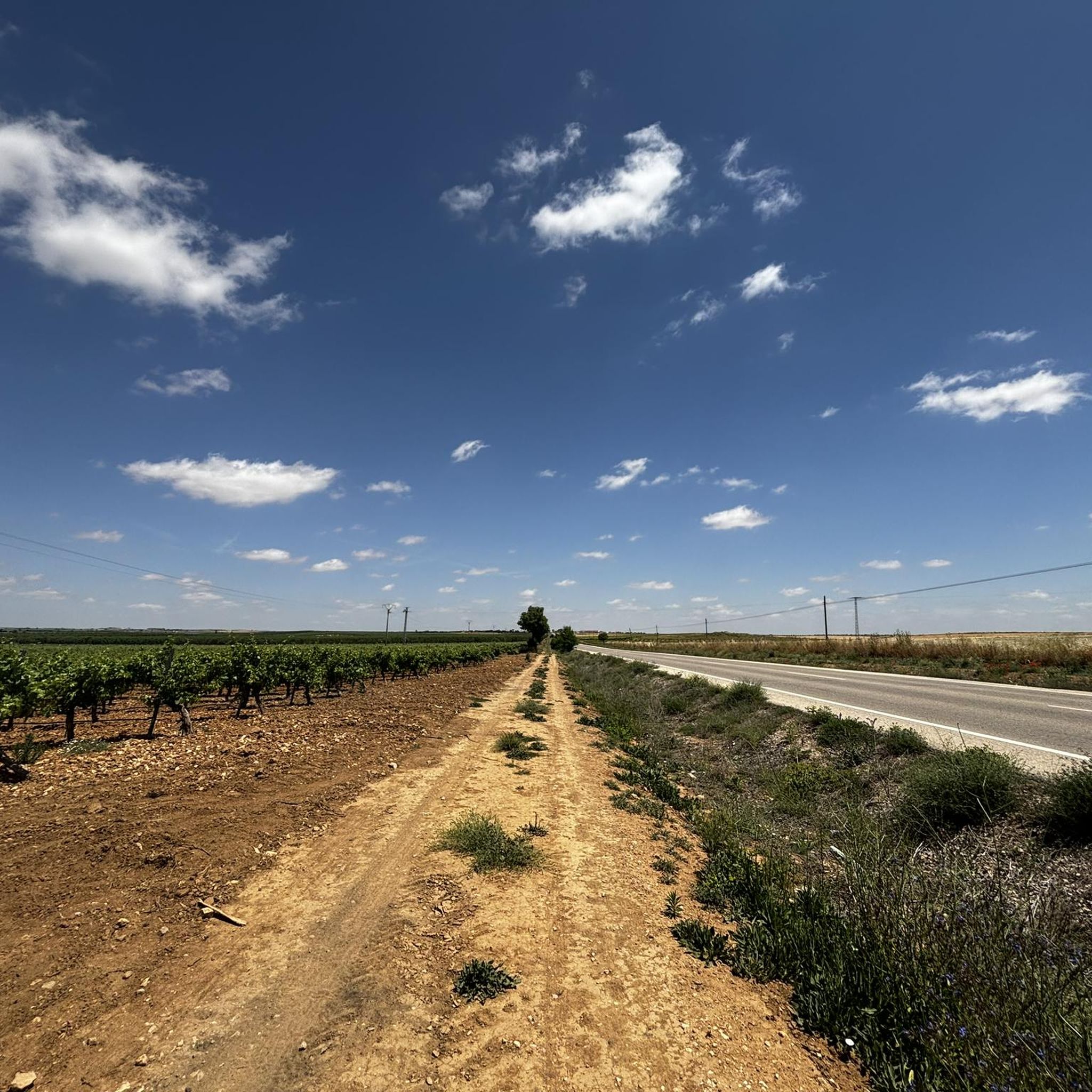
Hiking around Torrubia Del Campo offers exploration of traditional rural landscapes within the province of Cuenca, Castile-La Mancha. The area is characterized by expansive agricultural fields, including vibrant sunflower fields, and historic village streets. While the immediate vicinity provides gentle walking experiences, Torrubia Del Campo is also situated near the diverse natural landscapes of the Serranía de Cuenca, which features karst formations, rivers, and forests. This blend provides varied terrain for outdoor activities.
Best hiking trails around Torrubia Del Campo
…Last updated: May 14, 2026
1.0
(1)
1
hikers
17.1km
04:24
70m
70m
Moderate hike. Good fitness required. Easily-accessible paths. Suitable for all skill levels.
6.25km
01:40
70m
70m
Easy hike. Great for any fitness level. Easily-accessible paths. Suitable for all skill levels.

Sign up for free
22.3km
05:58
250m
260m
Hard hike. Very good fitness required. Easily-accessible paths. Suitable for all skill levels.
4.0
(3)
14
hikers
10.8km
02:46
30m
30m
Moderate hike. Good fitness required. Easily-accessible paths. Suitable for all skill levels.
4.0
(1)
11
hikers
2.95km
00:48
40m
40m
Easy hike. Great for any fitness level. Easily-accessible paths. Suitable for all skill levels.
Our route recommendations are based on thousands of hikes, rides, and runs completed by other people on komoot.
Start today with a free account
Your next adventure awaits.
Login or Signup




Tips from the Community

The necropolises of the Segóbriga Archaeological Park are areas of great historical and archaeological interest. These necropolises are located on the outskirts of the ancient Roman city, following the Roman tradition of locating cemeteries outside the urban limits.
21
0
The Amphitheatre of the Segóbriga Archaeological Park is one of the most impressive buildings on the site. Built between the 1st and 2nd centuries AD, this amphitheatre could seat around 5,500 spectators. It was the largest building in the city and was used for gladiator shows, animal fights and other public events. The amphitheatre has an irregular elliptical shape, with a length of 75 metres and an arena measuring 40 x 34 metres. Despite having been looted over the centuries, its good preservation is partly due to the fact that it was used as a granary and corral for animals.
23
0
The Epigraph Museum at the Segóbriga Archaeological Park is a facility dedicated to the preservation and display of Roman inscriptions. This museum houses over 700 epigraphic fragments that offer a unique insight into life and society in ancient Segóbriga. The museum is located in the park's Interpretation Centre, which also provides detailed information about the history and architecture of the Roman city. Visitors can explore the inscriptions and learn about different aspects of Roman life, from funerary inscriptions to dedications and public decrees.
22
0
The Hermitage of the Virgin of the Remedies, located in the Archaeological Park of Segóbriga, is a 16th-century construction that has been rebuilt on several occasions. This hermitage is known for the legend of the appearance of the Virgin of the Remedies in the place. In addition to its religious value, the hermitage is associated with a Visigothic necropolis, where ceramic and stone materials from prehistoric times have been found. This discovery adds an additional layer of historical interest to the site, showing the continuity of human occupation in the region since ancient times.⛪🚶♀️😎
23
0
The Monumental Baths of the Segóbriga Archaeological Park are one of the most impressive buildings on the site. These baths, built in the 1st century AD, were a place of social gathering and hygiene for the city's inhabitants. The thermal complex includes several rooms, such as the frigidarium (cold room), the tepidarium (warm room), the caldarium (hot room) and the laconicum (dry sauna). These rooms were designed to offer a complete bathing experience, following the model of the classical Roman baths.
21
0
The Forum of the Segóbriga Archaeological Park is one of the most outstanding elements of this historic site. Built around 15 BC during the time of Augustus, the forum was the political and social centre of the city. This rectangular space, located to the east of the main street, was surrounded by a portico with large columns. From the forum, the most emblematic monuments of the city were accessed, making it a place of great importance for the public and ceremonial life of Segóbriga.
22
0
The Casa de Silvano is one of the outstanding structures in the Segóbriga Archaeological Park, located in Saelices, Cuenca. This house, dating back to the 3rd century, is best known for its mosaic. The park itself is a historical and cultural site that allows visitors to explore the ancient Roman city of Segóbriga, founded in the 2nd century BC and once an important urban center in the region. The park features a wide range of archaeological ruins, including an amphitheater, a theater, thermal baths, aqueducts, and several dwellings, including the Casa de Silvano. Visitors can tour these spaces and learn about the daily life of the inhabitants of Segóbriga through information panels and guided tours.
21
0
The Segóbriga Archaeological Park is a fascinating historical site located in Saelices, in the province of Cuenca, Spain. This park allows visitors to explore the ruins of the ancient Roman city of Segóbriga, which was an important urban center in the region during the 2nd century BC and beyond. Among the most notable archaeological remains are an amphitheater, a theater, thermal baths, aqueducts, homes, and other public and private buildings that offer a detailed insight into daily life in Roman times. In addition, the park has an Interpretation Center that provides additional information and historical contexts to enrich the visit. 🌄🚶♀️😎 🐶 DOGFRIENDLY-SE ADMITENTE DOGS
23
0
Frequently Asked Questions
How many hiking trails are available around Torrubia Del Campo?
There are several hiking routes available around Torrubia Del Campo, offering a variety of experiences. Our guide features 8 distinct trails, ranging from easy walks to more challenging excursions, allowing you to explore the diverse landscapes of the region.
What kind of landscapes can I expect to see while hiking near Torrubia Del Campo?
Hiking near Torrubia Del Campo offers a blend of traditional rural landscapes. You'll encounter expansive agricultural fields, including vibrant sunflower fields when in bloom, and charming historic village streets. The area is also close to the Serranía de Cuenca, which features more rugged terrain with karst formations, rivers, and forests.
Are there easy hiking trails suitable for beginners in Torrubia Del Campo?
Yes, there are easy hiking options perfect for beginners. For instance, the Archaeological Park of Segobriga – circular by the Ciguela River is an easy 3.9-mile (6.2 km) path that combines historical exploration with natural river scenery, making it a great choice for a relaxed walk.
When is the best time of year to go hiking in Torrubia Del Campo?
The best time for hiking in Torrubia Del Campo is generally during spring and early summer when the weather is mild and the famous sunflower fields are in full bloom, offering a spectacular visual experience. Autumn also provides pleasant temperatures and beautiful colors. Summers can be hot, so early morning or late afternoon hikes are recommended.
Are there any circular hiking routes in the area?
Yes, several routes in the region are circular. A popular option is the Senda de los Chozos – circular from Horcajo de Santiago (PR-CU 65), a moderate 10.6-mile (17.1 km) trail that explores the rural surroundings. Another is the Tarancón - Belinchón - circular via the Negrín Path (PR-CU 116), which is a longer, more challenging option.
What interesting landmarks or attractions can I see near the hiking trails?
The area around Torrubia Del Campo offers several historical and natural landmarks. You can explore the Segóbriga Archaeological Park, a significant historical site. Other notable attractions include the Monastery of Uclés and Castle, and the Views of the Castle of Puebla de Almenara.
What do other hikers enjoy most about hiking in Torrubia Del Campo?
The area is highly rated by the komoot community, with an average score of 3.0 stars from over 5 reviews. Hikers often praise the tranquil rural settings, the opportunity to experience traditional Spanish countryside, and the blend of gentle walks with access to more rugged natural beauty further afield in the Serranía de Cuenca.
Are there any longer, more challenging hikes for experienced hikers?
Yes, for those seeking a greater challenge, the Tarancón - Belinchón - circular via the Negrín Path (PR-CU 116) is a difficult 13.9-mile (22.3 km) trail. It leads through varied rural terrain and typically takes around 6 hours to complete, offering a more strenuous experience.
Is there parking available at the trailheads?
While specific parking details vary by trailhead, most rural hiking areas in Castile-La Mancha, including those near Torrubia Del Campo, typically offer informal parking spaces or roadside parking near the start of popular routes or in nearby villages. It's advisable to check specific route details on komoot for more precise parking information.
What is the typical elevation gain on hikes around Torrubia Del Campo?
The elevation gain varies significantly depending on the specific route. Many trails in the immediate vicinity of Torrubia Del Campo, especially those through agricultural fields, feature relatively gentle elevation changes, often less than 100 meters. However, routes extending towards the Serranía de Cuenca can involve more substantial ascents and descents, reaching over 250 meters on some longer trails.
Can I combine hiking with cultural exploration in Torrubia Del Campo?
Absolutely. Torrubia Del Campo itself is a village with historic streets and houses, offering a cultural walking experience. Many trails, like the Archaeological Park of Segobriga – circular by the Ciguela River, directly incorporate historical sites, allowing you to blend outdoor activity with exploring the rich heritage of the region.
Most popular routes around Torrubia Del Campo
Most popular attractions around Torrubia Del Campo

Get inspired with the komoot mobile app


Explore more
Browse the best Hikes in other regions.
