Attractions and Places To See around Cartaya - Top 20
Best attractions and places to see around Cartaya include a blend of historical landmarks, diverse natural landscapes, and cultural sites. This town in the province of Huelva, Andalusia, offers access to both inland features and coastal areas. The region is characterized by extensive salt marshes, pine forests, and unique sandy formations, alongside historical fortresses and religious buildings. Visitors can explore a variety of environments, from river estuaries to beaches.
Best attractions and places to see around Cartaya
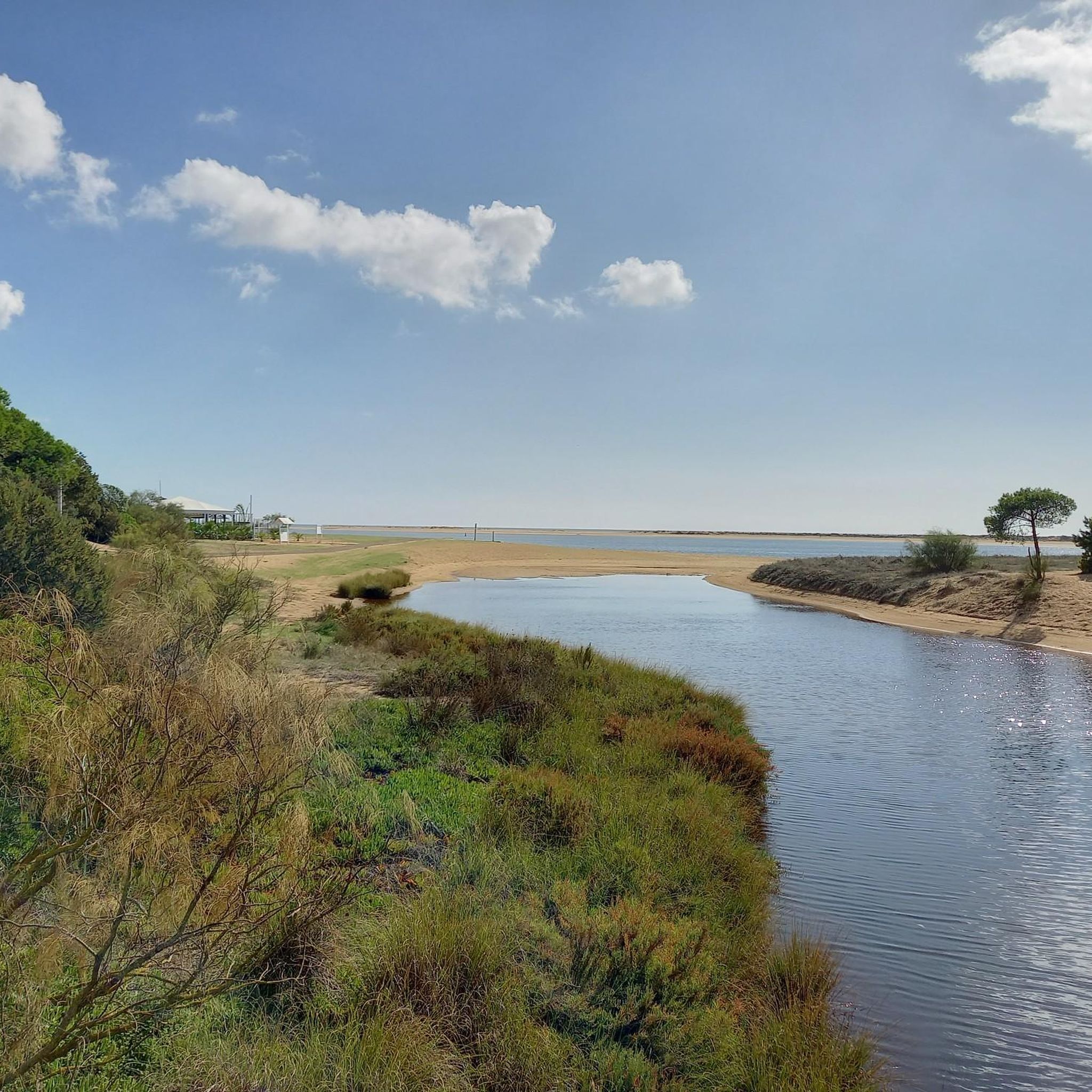
- The most popular attractions is Río Piedras Marshes, a protected natural area that features a system of marshes and a unique sandy formation known as El Rompido arrow. This estuary is rich in fauna and flora, making it a significant ecological site.
- Another must-see spot is Monument to the Discovering Faith, a man-made monument located at Punta del Sebo where the Tinto and Odiel rivers meet. This 37-meter high sculpture, donated by the United States, represents a Franciscan friar and commemorates Christopher Columbus's first voyage.
- Visitors also love La Ría Promenade, a trail that runs along the Odiel River. This promenade offers panoramic views of the river and the city, providing a space for walking and cycling.
- Cartaya is known for its historical sites, natural reserves, and coastal features. The area offers a variety of attractions, from 15th-century fortresses to extensive pine forests and beaches.
- The attractions around Cartaya are appreciated by the komoot community, with more than 40 upvotes and 14 photos shared by visitors.
Last updated: August 16, 2026
Monument to the Discovering Faith
Highlight • Monument
Translated by Google •
Tip by

La Ría Promenade
Highlight • Trail
Translated by Google •
Tip by
Sign up now to discover places like this
Get recommendations on the best single tracks, peaks, & plenty of other exciting outdoor places.
Sign up for free
Castillo de los Zúñiga
Highlight • Castle
Translated by Google •
Tip by

Muelle de Río Tinto
Highlight • Bridge
The construction was designed by the English engineers Sir George Barclay Bruce and Thomas Gibson, who planned it with two platforms, an upper one where mineral trains ran and a lower one for freight trains.
Translated by Google •
Tip by

Cathedral of Huelva
Highlight • Religious Site
Translated by Google •
Tip by
Sign up for free to discover even more attractions around Cartaya.
Sign up for free
Already have an account?
Start today with a free account
Your next adventure awaits.
Login or Signup

Tips from the Community

The Estuary Promenade in Huelva is one of the city's most iconic and modern spaces, ideal for enjoying nature, sports, and sunset views.
8
0
The Monument to the Faith of the Discoverer, also known as the Columbus Monument, is one of the most representative symbols of the city of Huelva. It is located at Punta del Sebo, a natural setting where the Tinto and Odiel rivers meet, approximately 4 km from the city center.
9
0
Huelva Cathedral, officially known as the Holy Cathedral of Our Lady of Mercy, is one of the city's most iconic monuments, with a rich history spanning several centuries and architectural styles. It began as a convent of the Discalced Mercedarians in 1605, on the site of the former hermitage of San Roque, by order of Alonso Pérez de Guzmán, 7th Duke of Medina Sidonia.
2
0

It was designed by the American sculptor Gertrude Vanderbilt Whitney and donated to Spain by the United States in 1929. The sculpture, in Cubist style and inspired by Egypt, is 37 metres high and represents a Franciscan friar from the Monastery of La Rábida. This friar welcomed Christopher Columbus while he was planning his first voyage and awaiting confirmation of funding from the Spanish monarchs. The pedestal of the monument includes reliefs depicting Mayan, Aztec, Inca and Christian elements.
9
0
The Paseo Maritimo de la Ría in Huelva is a beautiful promenade that runs along the Odiel River. Opened in 2016, this promenade has become a modern symbol of the city. It offers a perfect place to walk, cycle or simply enjoy the panoramic views of the river and the city.
8
0

Among all the churches in the city, the parish church of La Merced, due to its history and physiognomy, was chosen to be the seat of the Cathedral Chapter and Holy Cathedral when the Diocese of Huelva was separated from the Archdiocese of Seville on November 26, 1953. The church was inaugurated as the Cathedral of Huelva on March 15, 1954.
6
0
We find its origin in the purchase of mining operations in Huelva by the Rio Tinto Company Limited in 1873, which brought an important development for the province of Huelva. The transport of minerals from the mining basin to the port of Huelva to be able to unload them required the construction of this dock, which was built between 1874 and 1876. The construction was designed by the English engineers Sir George Barclay Bruce and Thomas Gibson, who planned it with two platforms, an upper one where mineral trains ran and a lower one for freight trains.
7
0
Frequently Asked Questions
What natural areas can I explore around Cartaya?
Cartaya is rich in natural beauty. You can explore the Río Piedras Marshes, a protected natural reserve with extensive salt marshes, coastal pine woods, and the unique 'Flecha del Rompido' sandy formation. The area is ideal for birdwatching and offers a unique landscape where the river meets the sea. Additionally, the Cartaya Pine Forests cover a vast area, providing trails and recreational zones, and the Laguna del Portil is a significant haven for birds.
Are there historical sites to visit in Cartaya?
Yes, Cartaya boasts several significant historical sites. The 15th-century Castillo de los Zúñiga is a well-preserved fortress built to defend the region. Other notable landmarks include the 15th-century Ermita de Nuestra Señora de Consolación with its Andalusian Baroque and Mudéjar influences, and the Renaissance-era Iglesia Parroquial de San Pedro. You can also find the remains of the Castle of San Miguel Arca de Buey and the 15th and 16th-century Pilares Mudéjares, which were ancient water collection structures.
What family-friendly activities are available around Cartaya?
Families visiting Cartaya have several options. The La Ría Promenade is a pleasant trail along the Odiel River, perfect for walking or cycling with scenic views. The Monument to the Discovering Faith offers an interesting historical and cultural experience at the confluence of the Tinto and Odiel rivers. For more active fun, Aquopolis Cartaya is a water park with various attractions, and the Cartaya Pine Forests provide recreational zones and picnic areas.
Where can I find good walking or hiking routes near Cartaya?
The natural surroundings of Cartaya offer numerous opportunities for walking and hiking. The Río Piedras Marshes feature trails that allow you to explore its unique ecosystem. For more structured routes, you can find various options in the area, including easy to moderate trails that wind through the pine forests and along the coast. Explore more walking and hiking routes around Cartaya on the komoot guide.
Are there cycling routes available around Cartaya?
Yes, Cartaya is a great base for cycling. There are several road cycling routes, such as the 'El Portil, Cartaya, and Aljaraque Loop' or the 'El Rompido Lighthouse – El Portil Beach loop from Cartaya'. For mountain biking enthusiasts, trails like the 'Odiel Estuary – Wooden Bridge Over the Marshes loop' or routes exploring the pine forests are available. You can find detailed information and maps for these and other cycling adventures on the Road Cycling Routes around Cartaya and MTB Trails around Cartaya komoot guides.
What are the best places for scenic views in the Cartaya area?
Cartaya offers several viewpoints for breathtaking scenery. The Lighthouses of El Rompido, both the old (1861) and new (1976) structures, provide panoramic views of El Rompido village and the Marismas del Piedras. The La Ría Promenade also offers excellent views of the Odiel River and the city. Additionally, specific viewpoints like San Miguel, La Barranca, and Pantano offer diverse perspectives of the dune cordons, El Rompido, and the Piedras River.
Are there any unique engineering or industrial heritage sites to see?
Yes, Cartaya and its surroundings feature interesting engineering heritage. The Muelle de Río Tinto is a historic pier built in the 19th century for transporting minerals, now used for tourism and offering beautiful views. Another notable structure is the Puente de La Tavirona, an iron bridge built in 1931 across the Río Piedras, originally part of a railway line.
What coastal attractions are near Cartaya?
Cartaya's municipal district includes charming coastal areas. El Rompido is a traditional fishing village known for its white-washed houses and beautiful beach located on the Río Piedras river estuary. Nuevo Portil offers natural surroundings of pines and junipers, with facilities for active leisure and water sports. San Miguel Beach is another lovely option for enjoying the coast.
What is the best time of year to visit Cartaya for outdoor activities?
Cartaya generally enjoys a mild climate, making it suitable for outdoor activities for much of the year. Spring (March to May) and autumn (September to November) are particularly pleasant, with comfortable temperatures ideal for hiking, cycling, and exploring natural reserves like the Río Piedras Marshes. Summers can be hot, especially for strenuous activities, but the coastal areas offer refreshing sea breezes.
Are there any attractions around Cartaya that are wheelchair accessible?
Yes, some attractions in the Cartaya area offer wheelchair accessibility. The La Ría Promenade is designed to be wheelchair-friendly, providing a smooth path along the river. The Castillo de los Zúñiga is also noted as being wheelchair accessible, allowing visitors to explore this historical fortress. It's always advisable to check specific access details for other sites before your visit.
What kind of wildlife can I spot in the natural areas?
The natural areas around Cartaya, particularly the Río Piedras Marshes and Laguna del Portil, are significant for wildlife observation. These protected reserves are home to a rich variety of plants and birds, making them excellent spots for birdwatching. You can expect to see various migratory and resident bird species, especially in the marshlands and along the estuary.
Most popular routes around Cartaya
Most popular attractions around Cartaya

Get inspired with the komoot mobile app


Explore more
Still not found the Highlight you’re looking for? See guides of the top attractions in other regions:
