Attractions and Places To See around Castañar De Ibor - Top 20
Best attractions and places to see around Castañar De Ibor, nestled within the Villuercas Ibores Jara Geopark, offer a rich blend of natural wonders and historical sites. This region in Cáceres province is characterized by its significant geological heritage, including karstic caves and unique rock formations. Visitors can explore ancient historical monuments, traditional churches, and scenic viewpoints that showcase the area's rich past and natural beauty.
Best attractions and places to see around Castañar De Ibor
- The most popular attractions…
Last updated: August 18, 2026
Collado del Hospital
Highlight • Mountain Pass
Translated by Google •
Tip by

Temple of the Woodcutters of Augustobriga
Highlight • Historical Site
Translated by Google •
Tip by

Sign up now to discover places like this
Get recommendations on the best single tracks, peaks, & plenty of other exciting outdoor places.
Sign up for free
Talavera la Vieja (ruins)
Highlight • Historical Site
Translated by Google •
Tip by

Puerto de Arrebatachacas
Highlight • Mountain Pass
Translated by Google •
Tip by

Acueducto de las Herrerías
Highlight • Monument
Translated by Google •
Tip by
Sign up for free to discover even more attractions around Castañar De Ibor.
Sign up for free
Already have an account?
Start today with a free account
Your next adventure awaits.
Login or Signup
Popular around Castañar De Ibor
Tips from the Community

A must-see photo stop if your route takes you there...
0
1

The Herrerías aqueduct is an old hydraulic infrastructure designed to supply energy to a blacksmith shop in Campillo de Deleitosa. Later it would also be used to supply three mini power plants. Actually, the aqueduct is only part of a larger work, which consists of a seven-kilometer canal and its related structures. This canal begins in a dam built right where the Batanes, Colmenar and Torneros gorges converge.
8
1

Spectacular but ghostly remains of a marble temple from an ancient Roman city called Augustobriga. Close your eyes and imagine what the city looked like in its great days.
1
1
Talavera la Vieja corresponds to the Roman city of Augustobriga, halfway between Mérida (Emérita Augusta) and Talavera de la Reina (Caesarobriga). For a long time it was doubted that this was the Roman city, until an inscription was discovered that unquestionably linked the ancient city with the town of Talavera la Vieja. It is interesting to note that the only Roman portico of the Curia that is preserved today comes from this city. Today it is next to the EX-118, since it was saved from the flood by moving the stones and relocating them in the place where they are now. This historical monument is better known as "the marbles".
9
0
Remains of a marble temple from an ancient Roman city called Augustobriga. Spectacular views of the Valdecañas reservoir and the bridge that crosses Guadalupe.
1
1

Site with a lot of history behind it that goes back to the time of the Romans in the second century. The old town of Talavera la Vieja or also known as Talaverilla, originally located on the banks of the Tagus River, was flooded in 1963 due to the construction of the Valdecañas Reservoir. Today they can be seen from its shores in a movie landscape but what stands out the most are the Roman ruins of "Los Mármoles" and the "Cilla" temple that can still be visited and date back to the 2nd century when in this place The citadel of Augustobriga was located, which used to have between 4,000 and 7,500 inhabitants at that time. The discovery, in addition to several dolmens, allows us to indicate that there was a population in this area even before it was inhabited by the Romans.
2
0

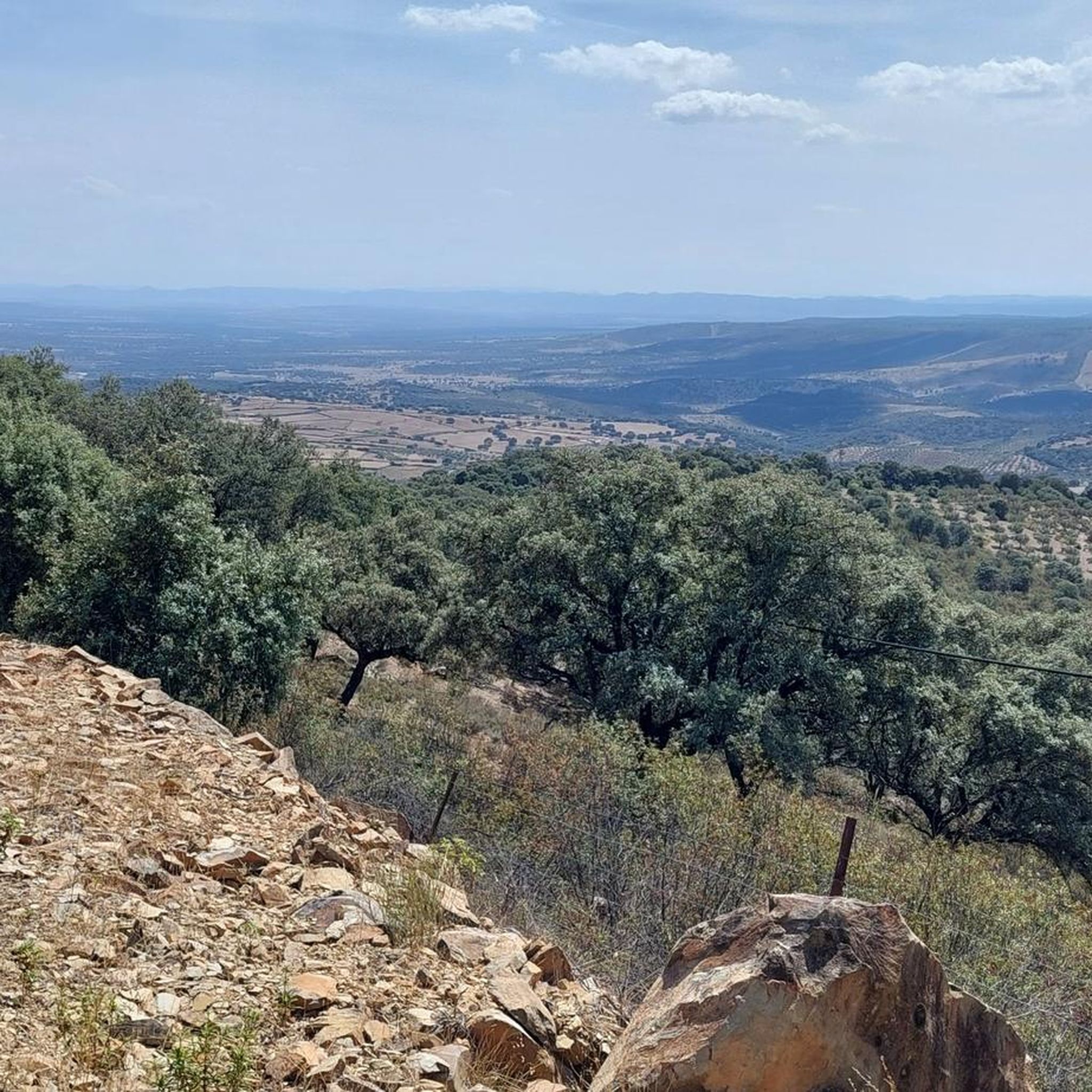
The views from here are a good reward for the climb. The site is full of references to the Camino de Guadalupe with a statue of a pilgrim, an iron cross, a milestone indicating the kilometer point and a post with the official logo indicating the way.
1
1

Narrow well-paved road with practically no vehicle traffic. Ascent from Guadalupe towards Carrascalejo, long but stretched with percentages that do not exceed 7%. The entire route is flanked by forests of oaks, cork oaks and chestnut trees. The landscape is spectacular with the Villuercas peak in the background.
0
0
Frequently Asked Questions
What natural wonders can I explore in Castañar De Ibor?
Castañar De Ibor is rich in natural beauty. You can visit the unique Cueva de Castañar, a geological marvel with impressive speleothems (visits are regulated, but an Interpretation Center offers a virtual tour). Don't miss the ancient chestnut groves and the beautiful Chorrera de Calabazas waterfall, or the picturesque Meandros del Gualija where the Gualija River forms graceful meanders.
Are there any significant historical sites or ancient ruins in the area?
Yes, the region boasts several historical sites. Explore the remains of the Roman city of Augustobriga at the Temple of the Woodcutters of Augustobriga, offering spectacular views of the Valdecañas reservoir. You can also visit the ruins of Talavera la Vieja, which was once the Roman city of Augustobriga, now partially submerged by the Valdecañas Reservoir. The Cabañas del Castillo Castle, a 12th-century Muslim fortress, also offers incredible historical insights and views.
Where can I find the best panoramic views around Castañar De Ibor?
For breathtaking views, head to Puerto de Arrebatachacas, a mountain pass offering rewarding vistas after a climb. The Cabañas del Castillo Castle also provides incredible views between the Sierra de la Ortijuela and Sierra del Alcornocal. Additionally, the Plaza de España in Castañar de Ibor offers panoramic views of the surrounding mountains and groves, and the Camorro de Castañar provides inimitable views of the Sierra de Gredos and Las Villuercas.
What kind of hiking opportunities are available near Castañar De Ibor?
There are numerous hiking opportunities in the area. You can explore routes leading to idyllic autumn landscapes, including the 'Malos Pasos' trail. For more structured options, consider the Hiking loop from Castañar de Ibor or the Acueducto de las Herrerías loop from Campillo de Deleitosa. The Ruta de los Molinos near Guadalupe also offers a natural spectacle with paths winding alongside the Guadalupejo River.
Are there any cycling routes in the Castañar De Ibor region?
Yes, the area is great for cycling. You can find various routes, including the Villuercas Geopark: Arrebatacapas and Hospital Pass Loop for road cycling, or the Valdecañas Reservoir Loop for general cycling. These routes allow you to explore the diverse landscapes of the Villuercas Ibores Jara Geopark.
What cultural landmarks should I visit in Castañar De Ibor?
The 16th-century Iglesia Parroquial de San Benito Abad is a prominent cultural site with its rustic Baroque style and notable altarpiece. The deserted village of La Avellaneda holds particular historical importance for Castañar de Ibor. Also, the Acueducto de las Herrerías is an interesting historical hydraulic infrastructure.
Are there any natural swimming spots in Castañar De Ibor?
Yes, Castañar De Ibor features a recently added natural swimming pool in the municipal area, providing a refreshing spot for recreation. You can also explore the Río Viejas Valley, which has a route that passes by a natural pool.
What is the significance of the Villuercas Ibores Jara Geopark to Castañar De Ibor?
Castañar De Ibor is an integral part of the UNESCO Global Geopark Villuercas Ibores Jara. This designation highlights the region's significant geological heritage, including unique formations like Peña del Toro, which provides insights into Earth's Ediacaran period, and the Camorro de Castañar, a residual relief offering geological value and stunning views.
What do visitors enjoy most about the attractions around Castañar De Ibor?
Visitors particularly enjoy the spectacular views offered by sites like the Temple of the Woodcutters of Augustobriga and Puerto de Arrebatachacas. The historical depth of places like Talavera la Vieja (ruins) and the impressive architecture of Cabañas del Castillo Castle are also highly appreciated.
Are there any easy walks or trails suitable for beginners?
Yes, for easier walks, you can consider the Belvis de Monroy – circular via the Berrocal Hermitage and San Francisco Convent, which is an easy-grade hiking route. Many of the urban and hiking routes around the town itself are also accessible for a leisurely stroll.
Can I find any unique geological formations in the area?
Absolutely. Besides the Cueva de Castañar with its rare aragonite flowers, you can observe the limestone outcrops at Peña del Toro, which reveal ancient life forms. The Camorro de Castañar is a significant geological relief, and Cancho de las Narices showcases fascinating erosion patterns on its rock layers.
Most popular attractions around Castañar De Ibor

Get inspired with the komoot mobile app


Explore more
Still not found the Highlight you’re looking for? See guides of the top attractions in other regions:
