Attractions and Places To See around Mecquignies - Top 20
Best attractions and places to see around Mecquignies include a blend of historical landmarks, natural features, and cultural sites. This village in the Nord department of France offers diverse points of interest. Visitors can explore ancient churches, reconstructed châteaux, and unique natural monuments. The region provides opportunities to discover local history and natural scenery.
Best attractions and places to see around Mecquignies
- The most popular attractions is Le Caillou-qui-Bique, a natural monument that is a 20 to 25 meter…
Last updated: June 24, 2026
Le Caillou-qui-Bique
Highlight • Natural Monument
A little step back in time... …
Translated by Google •
Tip by

Le Chalet Du Garde
Highlight • Cafe
A growing number of tourists encouraged Léon Laurent to build a café restaurant in 1892 with a billiard room and bedrooms. It was the time of …
Translated by Google •
Tip by

Sign up now to discover places like this
Get recommendations on the best single tracks, peaks, & plenty of other exciting outdoor places.
Sign up for free
Emile Verhaeren Stone
Highlight • Monument
"Admire man and admire the earth, and you will live fervently and …
Translated by Google •
Tip by
Fort de Leveau
Highlight • Historical Site
Fort Leveau is one of six forts (Sarts, Boussois, Cerfontaine, Bourdiau, Hautmont and Leveau) built on the outskirts of Maubeuge to protect the border. It was built …
Translated by Google •
Tip by

Gussignies Castle
Highlight • Castle
Translated by Google •
Tip by
Sign up for free to discover even more attractions around Mecquignies.
Sign up for free
Already have an account?
Start today with a free account
Your next adventure awaits.
Login or Signup



Tips from the Community

I only saw it from a distance but it is beautiful
0
0

cafe in the middle of the woods, very friendly owner with cozy terrace. definitely recommended.
1
0

Very friendly welcome! Ideal place during a hike or a stroll in the surrounding area to drink a local beer, Daffodil.
1
0

Built on the initiative of the Count of Fourmestraux, this castle dates from the end of the 18th century. It is preceded by an alley and a courtyard. The entire castle is built in brick.
0
0

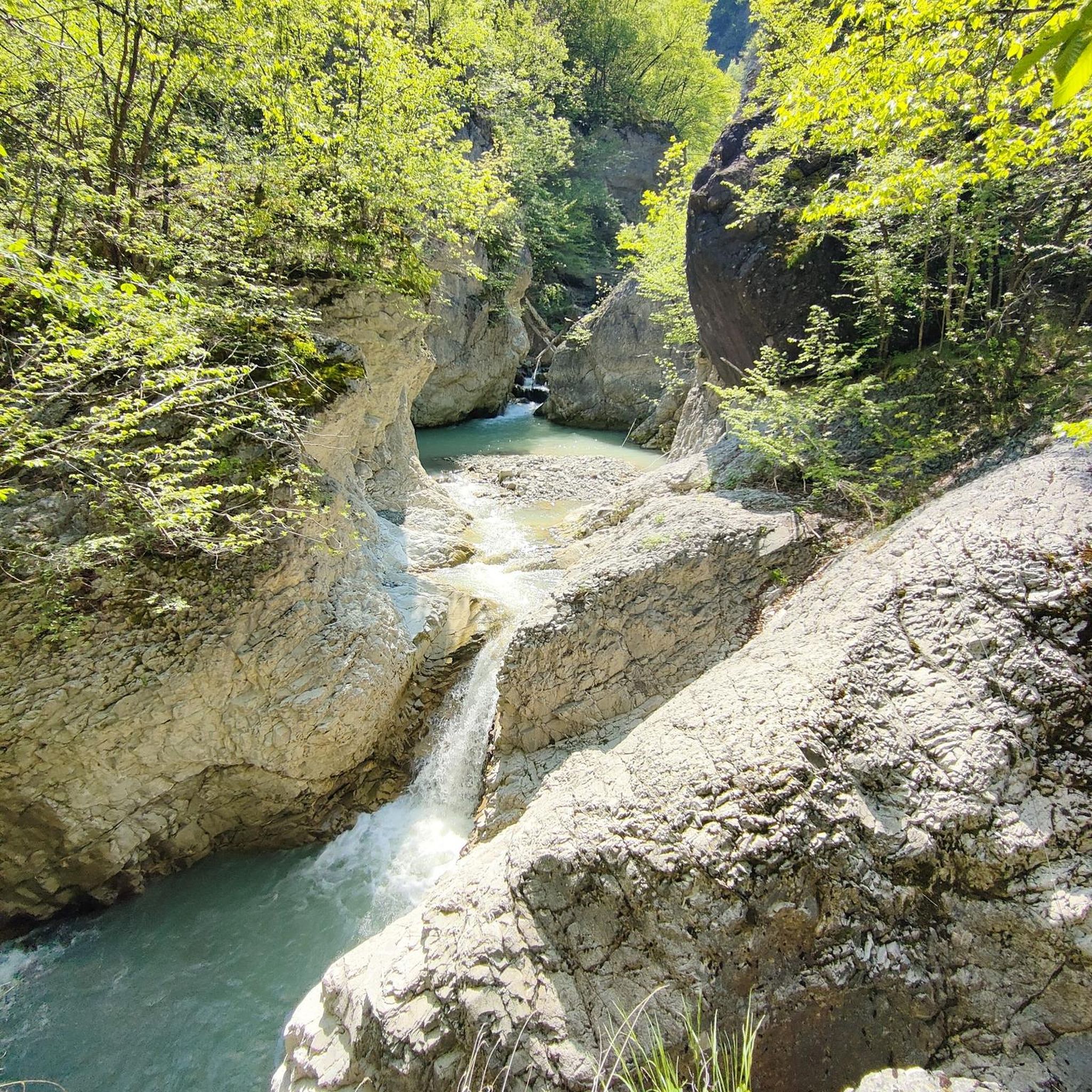
This rock formation is very special in the forest!
2
0

The park of the Château is visible from the Grand Place.
5
0

The seigniory of Gussignies was owned in the 15th century by the House of Haynin10 and in the 16th century by the family of Cordes. The feudal castle of Gussignies has disappeared; the current castle dates from the end of the 18th century, when the Count of Fourmestraulx had a hunting lodge built consisting of a corridor leading to boudoirs (oral tradition), the origin of the current castle. At the beginning of the 19th century, Anthime-Hyacinthe de Fourmestraulx established a marble sawmill at the bottom of the castle, along the Hogneau, and operated a quarry. Count Anthime Hyacinthe de Fourmestraulx Saint-Denis had two daughters who shared the castle: Mathilde (1809-1894) married Bertrand Delpoux de Nafines and Zoé (1817-1885) married Count Anne Philippe Picot de Moras. The castle was in poor condition and too small to accommodate the two families. It was transformed in 1865. On the death of the Countess Picot de Moras, the castle represented too large a share in the sharing and had to be sold. The Viscount of Lourmel du Hourmelin bought it in 1887 and in turn sold it in 1912 to Count Édouard Le Mesre de Pas for his daughter Marie-Thérèse, wife of René de Witte14[insufficient source]. The current castle has been the property of the Witte family since 1912. Yves de Witte (theologian) and his wife Renelde Nolet de Brauwere van Steeland took over the property in 1977 followed the following year by his brother Jacques-Antoine (lawyer) and his married Thérèse Delvaux de Fenffe. Their father, Bertrand de Witte and his wife Marie-Simone de la Kethulle de Ryhove, settled in the outbuildings of the castle. https://www.cirkwi.com/fr/point-interet/1157581-chateau-de-gussignies
9
0
A legend has been perpetuated for generations on this 25 meter high stone planted on a ridge (in patois we say that it rocks). A little step back in time... Saint-Ghislain completes the construction of its abbey. The devil decides that he will take advantage of the inauguration day to destroy the abbey and its occupants, by throwing an enormous stone found in the Pyrenees at the community. An angel warns Saint-Ghislain of the imminent danger weighing on the abbey. He gathers as many pairs of worn shoes as possible, which he slips into a huge bag and takes to the road to meet the evil one. Coming across a poor fellow in rags with holes in his shoes at this place, the devil, quite exhausted by the heavy load, questions him: “Is the abbey of Saint-Ghislain still far away? ". - “I’m coming from there, if it’s far!” » replies the old man while emptying his bag, filled with threadbare shoes, in front of the devil. Discouraged and disappointed, Satan preferred to give up, dropping his heavy stone on the ground and walking away blaspheming, fooled by the subterfuge. An hour and a half. N.B.: some historians say that this is the legend of Saint Remacle, during the construction of Stavelot Abbey. You are therefore free to substitute Remacle for Saint-Ghislain since this substitution does not modify the spirit of the story. In both cases, the devil is defeated. Cfr de informatiesteen ter hoogte van Le Chalet de Garde.
10
1
Frequently Asked Questions
What are some unique natural attractions near Mecquignies?
One of the most unique natural attractions is Le Caillou-qui-Bique, a 25-meter-high stone perched on a ridge, steeped in local legend. The Mecquignies Stream, originating in the Mormal Forest, also flows through the village, offering natural scenery.
What historical sites can I visit around Mecquignies?
You can explore several historical sites, including the Fort de Leveau, part of Maubeuge's defensive fortifications, which now houses a museum dedicated to World War I. The Église Saint-Aicard, dating back to around 1200, is another historical monument with original wall sections and a distinctive ship-keel timber frame. The Gussignies Castle, originally an 18th-century hunting lodge, is also nearby.
Are there any cultural points of interest in Mecquignies?
Mecquignies is home to numerous chapels and oratories, such as Chapelle St Roch and Chapelle Notre Dame de Lourdes. You can also see the old wash house at the Fontaine de l'Adzout. Every two years in July, the village hosts a medieval festival with knight tournaments and sound and light shows, bringing history to life.
Are there hiking trails suitable for different skill levels near Mecquignies?
Yes, there are various hiking trails available. For example, you can find moderate routes like the "Chemin des sabotiers loop from Mecquignies" (11.2 km) or the "Forêt de Mormal loop from Obies" (12.8 km). Easier options include the "Château d'Audignies loop from Audignies" (6.6 km). You can find more details and routes on the Hiking around Mecquignies guide.
What other outdoor activities can I do around Mecquignies?
Beyond hiking, the area offers opportunities for gravel biking and running. For gravel biking, you might consider routes like the "Rampemont Farm Castle – Colfontaine Wood loop from Gussignies" (38.3 km, moderate). Runners can explore trails such as the "Château d'Audignies loop from Bavay" (8.9 km, moderate). More options are available in the Gravel biking around Mecquignies guide and the Running Trails around Mecquignies guide.
Are there family-friendly attractions in Mecquignies?
The Fort de Leveau, with its World War I museum, is considered family-friendly. Additionally, the unique natural monument Le Caillou-qui-Bique offers an interesting outdoor experience for families, especially with its local legend.
Are there dog-friendly walking options around Mecquignies?
Many of the natural trails and forest paths in the area, such as those in the Mormal Forest, are suitable for dog walking. It's always advisable to keep dogs on a leash and respect local regulations, especially near protected areas or private property.
What is the best time of year to visit Mecquignies for outdoor activities?
The spring and summer months (roughly April to September) are generally ideal for outdoor activities in Mecquignies, offering pleasant weather for hiking, biking, and exploring historical sites. The medieval festival, if you're interested in cultural events, takes place every two years in July.
Are there places to eat or drink near the attractions?
Yes, Le Chalet Du Garde is a café and restaurant established in 1892, offering a convenient stop for visitors during a hike or walk. It's known for its friendly welcome and local beers.
Is parking available at the main attractions around Mecquignies?
Parking is generally available near the main attractions, especially at sites like Fort de Leveau. For natural sites like Le Caillou-qui-Bique, you can often find designated parking areas close to trailheads or access points.
What are some lesser-known attractions or 'hidden gems' in the Mecquignies area?
Beyond the main highlights, Mecquignies has several smaller, charming sites. The Emile Verhaeren Stone, engraved with verses by the Belgian author, offers a literary touch. The Old Mill (Moulin des Près), dating back to 1813, and the numerous small chapels and oratories scattered throughout the village provide glimpses into local history and devotion.
What do visitors enjoy most about Mecquignies?
Visitors appreciate the blend of historical landmarks, unique natural features, and the opportunities for outdoor activities. The local legends associated with sites like Le Caillou-qui-Bique add a special charm, and the welcoming atmosphere of places like Le Chalet Du Garde is often highlighted.
Most popular routes around Mecquignies

Get inspired with the komoot mobile app


Explore more
Still not found the Highlight you’re looking for? See guides of the top attractions in other regions:
