The best road cycling routes around Marville-Moutiers-Brûlé
4.3
(52)
553
riders
154
rides
Road cycling routes around Marville-Moutiers-Brûlé traverse a landscape characterized by gentle rolling hills and open rural roads. The region features a mix of agricultural areas and small villages, with historical landmarks often marking the routes. Elevation changes are generally moderate, making it suitable for various fitness levels. The terrain provides a consistent surface for road bikes, with scenic views of the French countryside.
Best road cycling routes around Marville-Moutiers-Brûlé
- The most popular road cycling route is Moulin de Mormoulins –…
Last updated: July 2, 2026
5.0
(1)
18
riders
48.3km
01:55
120m
120m
Easy road ride. Great for any fitness level. Mostly well-paved surfaces and easy to ride.
8
riders
101km
04:12
580m
580m
Moderate road ride. Good fitness required. Some segments of this route may be unpaved and difficult to ride.

Sign up for free
5.0
(1)
5
riders
46.7km
01:54
230m
230m
Easy road ride. Great for any fitness level. Mostly well-paved surfaces and easy to ride.
5
riders
Moderate road ride. Good fitness required. Some segments of this route may be unpaved and difficult to ride.
4
riders
70.7km
02:55
380m
380m
Moderate road ride. Good fitness required. Mostly well-paved surfaces and easy to ride.
Get access to more routes and recommendations from other explorers.
Sign up for free
Already have an account?
Our route recommendations are based on thousands of hikes, rides, and runs completed by other people on komoot.
Start today with a free account
Your next adventure awaits.
Login or Signup




Tips from the Community

The Saint-Martin church, located in Châtaincourt, was not always the only place of worship in the commune. A small chapel did indeed exist between Châtaincourt and the hamlet of Boutaincourt at a very ancient date, since Louis VII the Young, King of the Franks from 1137 to 1180, came there on pilgrimage in 1155. The Saint-Jacques chapel, such was its name, and the place of the same name no longer exist today, they were destroyed during the Wars of Religion.
0
0

A very beautiful greenway It's an old railway line that has been covered over; it used to go all the way to Dreux. We love going there for cycling, and it's also ideal for walking and rollerblading.
0
0

Very beautiful pond
0
0
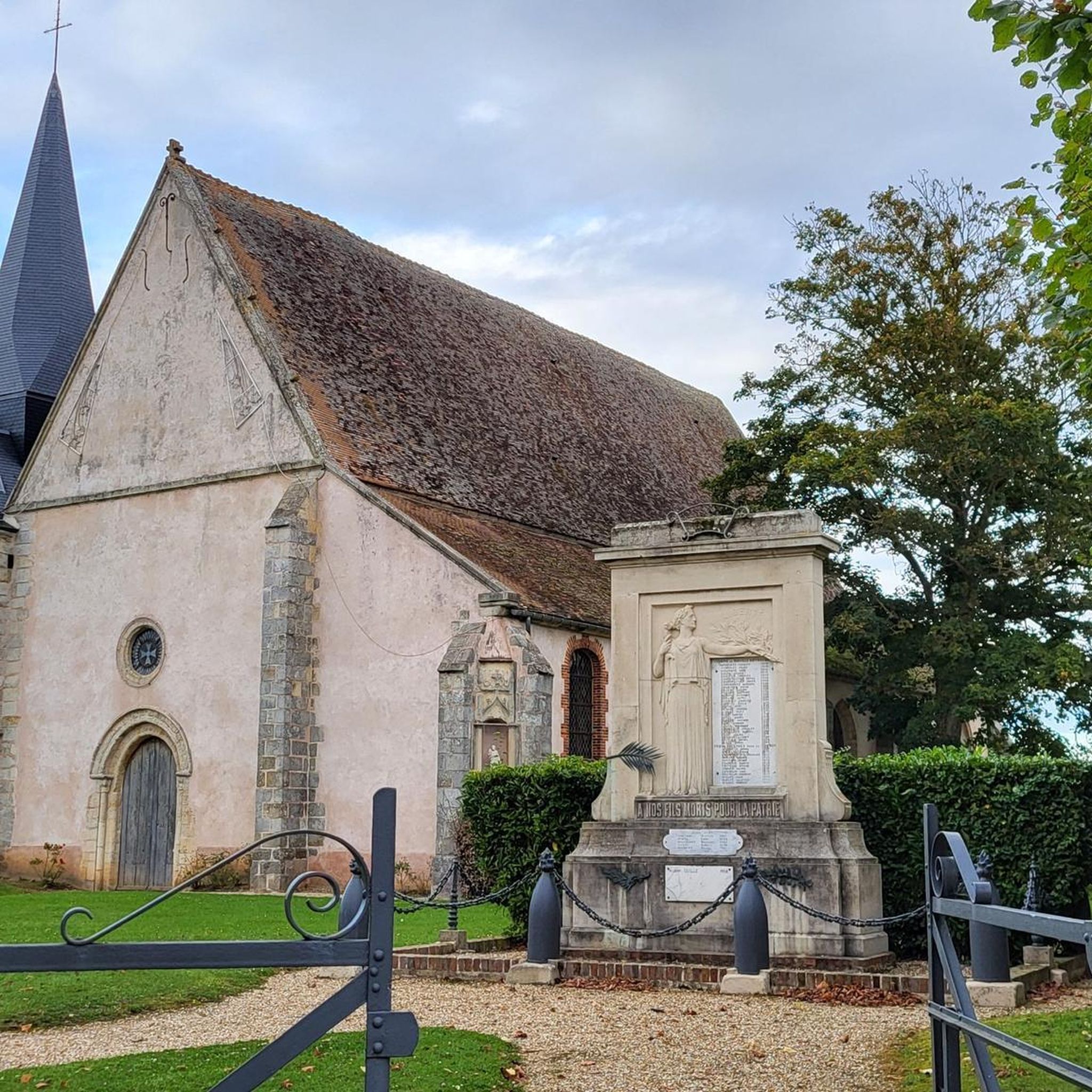
Located on the banks of the Blaise River, southwest of Dreux in the prestigious Crécy-Couvé district, the Marquise de Pompadour's residence from 1746 to 1757, the seigneury of Saulnières came under the Marquise's ownership in 1754. Some remarkable elements of the church's furnishings are undoubtedly due to the generosity of this patron of the arts. The Saint-Pierre church, built on the heights of the commune of Saulnières, is believed to have originally been the church of a Benedictine convent, which ceded it to its inhabitants in 1571 after the sack of their place of worship in 1562, during the First Battle of Dreux. While the cartularies of Saint-Père, Beaulieu, and Belhomer mention the town from the first half of the 12th century, we have no documents on the church before its transfer to the commune. The building (34 m by 11.5 m), oriented, with a single nave of four bays extended by a choir bay, ends with a three-sided chevet extended along the axis by a sacristy. The walls are made of cobblestone and grison rubble, while the twelve buttresses are sandstone. The steeply pitched roof is covered with tiles, and, practically in its center, stands a bell tower with a hexagonal base crowned by a spire of the same shape. The western door is framed by two buttresses: it is surmounted by a rose window that probably dates from the 19th-century construction campaign. In the south wall, at the level of the first bay, a blocked, semicircular-arched entrance door suggests a Romanesque construction. From the second bay, light streams in generously through eight openings: semicircular arches for those in the nave and Gothic-style for the four choir bays; a fifth, axial, was blocked when the altarpiece was installed. The 16th-century stained-glass windows were destroyed during a bombing raid during the Second World War; only a few elements, listed as Historic Monuments, remain in the sacristy. The vault, covered with shingles, must have been painted, as evidenced by the hallmark decorated with black and white diamonds and chevrons, likely from the 16th century. The great simplicity of the architecture is offset by the relative richness of the furnishings. The late 15th-century stone statues representing Saint Barbara, a religious figure without attributes, and two angels from the same period constitute a fine example of Gothic sculpture, albeit lacking the two angels purchased in the early 20th century for the Louvre, where they are now on display. The choir's layout could date back to the time of Madame de Pompadour: the doors, open on either side of the central section, are surmounted by two painted and gilded wooden statues, Saint Peter and Saint Sebastian. The central section is crowned by God the Father, and the canvas depicts Saint Peter freed from his chains by an angel. A fragmentary funerary liter is still visible inside and outside. In 2003, the Sauvegarde de l'Art Français (French National Art Foundation) granted €10,000 in aid to help repair the structure and roof of the building, whose condition had been aggravated by the 1999 storm.
0
0
Mentioned in 1159 as a possession of the chapter of Chartres, the oldest parts of the church of Saint-Léger, the nave and western façade, must date back to the 11th century. The nave, 15 m long and 7 m wide, is built from small rubble stones embedded in mortar. Only the corner quoins of the façade and the semicircular arch of the entrance door are made of dressed stone. In 1514, a larger choir (10 m X 10 m) finished by a flat wall, was added to the east. Some of its pointed arched bays have retained their beautiful tracery. The entire choir and nave are covered by a beautiful framework in the shape of an inverted hull. A significant decoration, created in the 18th century, woodwork, stalls, work bench, glory arch, lectern, and communion railing have been fortunately preserved. Traces of medieval wall paintings and a coat of arms were spotted on the walls, as well as ancient graffiti on the exterior. A 12th-century stone baptismal font and a 15th-century stone statue of Saint Léger are listed as Historic Monuments. A slate bell tower, topped with a slate spire, rises above the slightly recessed gable of the western façade. The Sauvegarde de l'Art Français (French Art Protection Agency) granted aid of 100,000 francs in 1992 and then 40,000 francs in 1993 for essential work on the framework and roof.
0
0

large bird reserve and nautical activities
0
0
The Saint-Rémy church in Saint-Rémy-sur-Avre is dedicated to Saint Remi of Reims, Bishop of Reims who baptized Clovis in 496 in the Notre-Dame Cathedral of Reims. In the 12th century, it marked the border between the Duchy of Normandy and the French royal domain on which Saint-Rémy-sur-Avre depends. It is a flamboyant Gothic church from the 15th century, probably rebuilt since we have mention of its existence since the end of the 11th century.
0
0
The construction could date back to the beginning of the 12th century. The nave ends with a chancel with a four-sided apse. A bell tower outside the work is located against the west wall. A seigneurial chapel was built to the north of the chancel. The study of the framework has made it possible to determine several construction phases: 1117-1190, 1274, 1487-1520. The interior walls retain a painted historiated decoration on the back of the west portal, probably representing a dance of death, which could date back to the 1500s. The large funeral chapel built between 1577 and 1585 probably goes back to the architect Métezeau. Its decoration is representative of the end of Mannerism and the Henri IV style. The stained glass windows were restored by the master glassmaker Raphaël Lardeur and were installed in 1947. Lardeur also created the mosaic Stations of the Cross.
0
0
Frequently Asked Questions
How many road cycling routes are available around Marville-Moutiers-Brûlé?
There are over 150 road cycling routes documented on komoot for the Marville-Moutiers-Brûlé region, offering a wide range of options for different skill levels and preferences.
Are there easy road cycling routes suitable for beginners or families?
Yes, the region offers nearly 70 easy road cycling routes. A great option for a relaxed ride is the Moulin de Mormoulins – Château de Mormoulins loop from Mézières-en-Drouais, which is 17.0 miles (27.4 km) long and passes by historical landmarks.
What kind of terrain can I expect on road cycling routes in Marville-Moutiers-Brûlé?
The terrain around Marville-Moutiers-Brûlé is characterized by gentle rolling hills and open rural roads. You'll cycle through agricultural areas and small villages, with moderate elevation changes that make it suitable for various fitness levels. The routes offer consistent surfaces and scenic views of the French countryside.
Are there any challenging or advanced road cycling routes in the area?
While there are no routes classified as 'difficult,' the region features 87 moderate routes that offer a good challenge. For example, the Escorpain Castle – Cocherelle Dolmen loop from Les Pendants is a moderate 62.7 miles (100.9 km) path with significant elevation gain, perfect for experienced riders.
What historical landmarks or attractions can I see along the road cycling routes?
Many routes in Marville-Moutiers-Brûlé pass by historical landmarks and châteaux. You can explore sites like the Château de Mormoulins, Nogent-le-Roi Castle, or the Saint-Sulpice Church of Châteaudun. The Escorpain Castle – View of Château d’Escorpain loop from Vernouillet is a great route for château spotting.
Are there loop road cycling routes available?
Yes, many of the road cycling routes in the Marville-Moutiers-Brûlé area are designed as loops, allowing you to start and finish at the same point. Examples include the Moulin de Mormoulins – Château de Mormoulins loop and the The Donjon of Gilles – Nonancourt, historic center loop.
What is the best time of year for road cycling in Marville-Moutiers-Brûlé?
The region's gentle terrain and open roads are enjoyable for road cycling throughout much of the year. Spring and autumn offer pleasant temperatures and beautiful scenery, while summer provides longer daylight hours. Winter cycling is possible, but be prepared for cooler temperatures and potentially wet conditions.
Where can I find parking for road cycling routes?
Many routes start from villages or towns where public parking is available. For specific routes, check the tour details on komoot, as starting points often indicate nearby parking options. For instance, routes starting from Mézières-en-Drouais or Les Pendants typically have accessible parking.
What do other road cyclists enjoy most about the routes in Marville-Moutiers-Brûlé?
The road cycling routes in Marville-Moutiers-Brûlé are highly rated by the komoot community, with an average score of 4.4 stars from over 30 reviews. Cyclists often praise the quiet rural roads, the charming villages, and the historical châteaux that dot the landscape, making for a scenic and enjoyable ride.
Are there road cycling routes that pass by cafes or places to stop for refreshments?
Given the routes often pass through small villages and agricultural areas, you will find opportunities for refreshments. Many villages along the routes, such as those near the Château de Mormoulins – Château de Maintenon loop, offer local cafes or bakeries where you can take a break.
Most popular routes around Marville-Moutiers-Brûlé
Most popular attractions around Marville-Moutiers-Brûlé

Get inspired with the komoot mobile app


Explore more
Browse the best Road cycling routes in other regions.
