The best road cycling routes around Luray
4.6
(46)
377
riders
131
rides
Road cycling routes around Luray offer diverse terrain within the scenic Shenandoah Valley. The region is characterized by rolling hills, open farmlands, and roads that often follow river valleys or climb into the foothills of the Blue Ridge Mountains. Road cyclists can expect a mix of gentle gradients and more challenging ascents, providing varied experiences across the landscape.
Best road cycling routes around Luray
- The most popular road cycling route is Écluzelles, Chaudon, Ormoy — loop from Dreux, a…
Last updated: May 21, 2026
4.0
(1)
4
riders
44.5km
01:50
200m
200m
Easy road ride. Great for any fitness level. Mostly well-paved surfaces and easy to ride.
5.0
(1)
15
riders
Easy road ride. Great for any fitness level. Mostly well-paved surfaces and easy to ride.

Sign up for free
6
riders
Moderate road ride. Good fitness required. Mostly well-paved surfaces and easy to ride.
7
riders
54.1km
02:11
250m
250m
Moderate road ride. Good fitness required. Mostly well-paved surfaces and easy to ride.
9
riders
38.1km
01:32
180m
180m
Easy road ride. Great for any fitness level. Mostly well-paved surfaces and easy to ride.
Get access to more routes and recommendations from other explorers.
Sign up for free
Already have an account?
Our route recommendations are based on thousands of hikes, rides, and runs completed by other people on komoot.
Start today with a free account
Your next adventure awaits.
Login or Signup



Tips from the Community


The Moulin de Mormoulins is a watermill located on the Eure River in the hamlet of Mormoulins. This mill dates back to the 18th and 19th centuries and is a listed historical monument. You can admire the old stone building, the wooden wheel, and the canal that diverts water from the river as you pass in front of the mill. The mill is surrounded by green fields and trees, creating a peaceful and relaxing atmosphere.
0
0

Built in the 16th century and constructed from white stone from the Boncourt quarry, the church has a brown tile roof, accompanied by a bell tower and a belfry covered in slate. A small canopy, a vestibule, protects the sanctuary door, rebuilt in 1789. The bell was cast in the 17th century.
0
0
The construction of the original church of Sorel dates back to the 10th century. In 1113, this church was destroyed during the siege of the fortress of Sorel by the troops of Henry VIII of England coming from Normandy. Its identical reconstruction was unfortunately halted by a fire in 1134. The current church was rebuilt starting in the 13th century, with the chevet completed in the 15th century, and the first two bays of the nave and the northern seigneurial chapel in the 16th century. The bell tower was built in the 17th century by blinding a window. The building is constructed of flint, lime, and white stone on a sandstone base. The upper part is made of Vernon stone. The tiled roof is supported by a beautiful rafter frame whose tie beams are decorated with chimera heads, also called "howling devils." In the choir, the 19th-century altar recalls medieval sculptures. An interesting collection of stained-glass windows dating from 1850. After extensive renovations, masses have been celebrated again since 2007.
0
0
Dedicated to Saint Blaise, the church of Havelu is oriented and comprises a single nave. Its construction dates back to the 16th century. The choir, older and narrower than the nave, ends in a three-sided chevet. Constructed of flint blocks, the building is erected on a sandstone base. Two-stepped buttresses rise to the cornice. The western door appears to date from the 19th century, based on a Gothic-inspired model. It consists of a pointed arch with two tori exposed by wide grooves resting on prismatic bases. A lowered arch supports the blind tympanum. A shell is carved on the lintel of the south door, now walled up. A pointed octagonal spire rises from the bell tower. The roof is slate. Inside, the roof structure is exposed and retains the original stencilled decoration on the shingles. The name of the clergyman who commissioned it can still be seen: "M[ai]stre Jehan Menere p[re]b[t]re chaplain of this place." The furnishings of Havelu church are remarkable for their uniform 18th-century decoration. A partition altarpiece is located in the choir. Signed and dated by the artist, Pierre Pilastre (1753), it features, in the center, a painting of the Resurrection, inserted between two fluted pilasters flanked by scrolls with floral and fruit motifs and topped with fire pots. At the ends, each of the two doors is surmounted by a painting, one depicting Saint Blaise, the other Saint Barbara. At the choir entrance, the triumphal arch—by the same craftsman—also survives. A work bench, a confessional, and a lectern from the same period complete this decorative ensemble. In 1998, the Sauvegarde de l'Art Français (French Art Protection Association) granted a donation of 60,000 francs to strengthen the bell tower's framework.
0
0


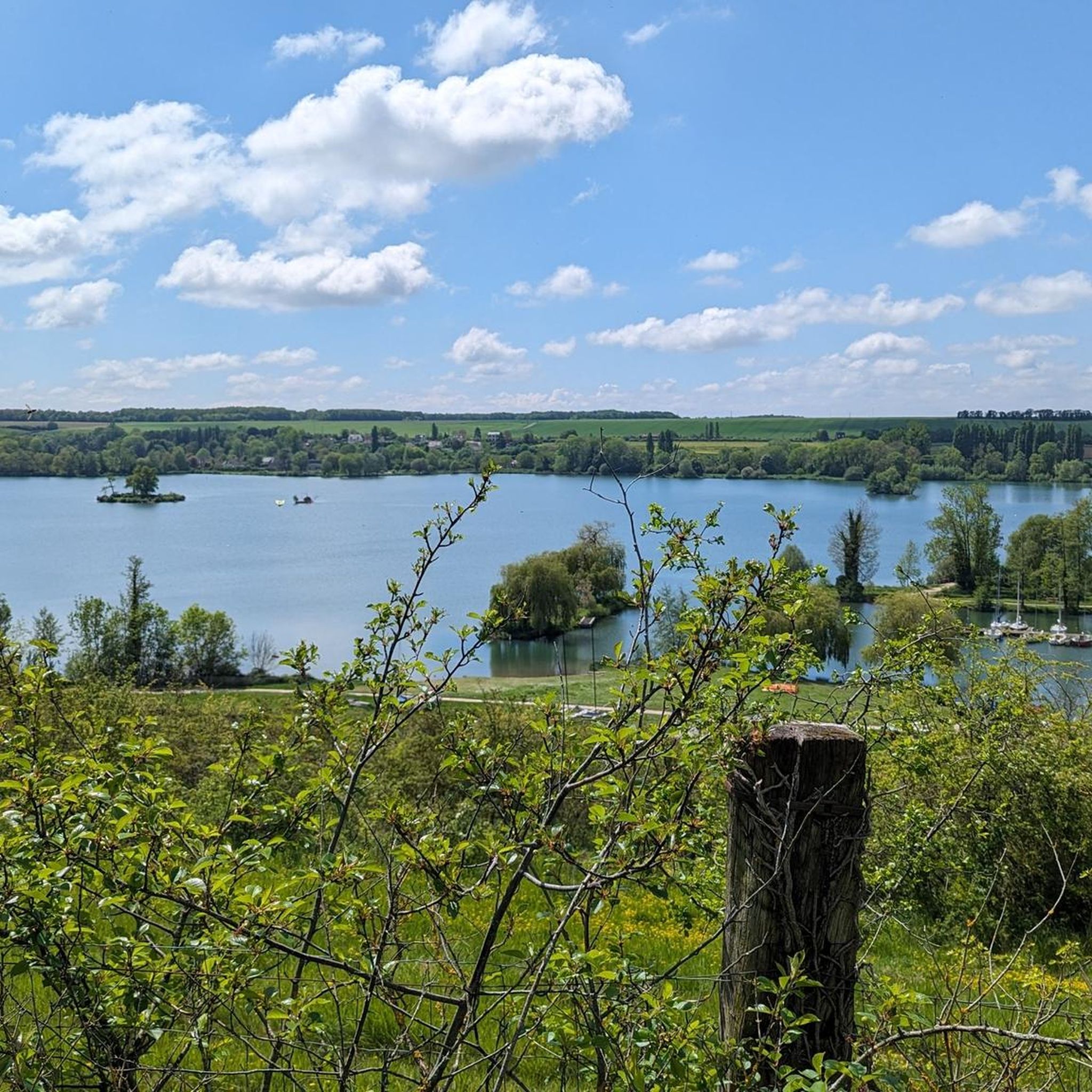
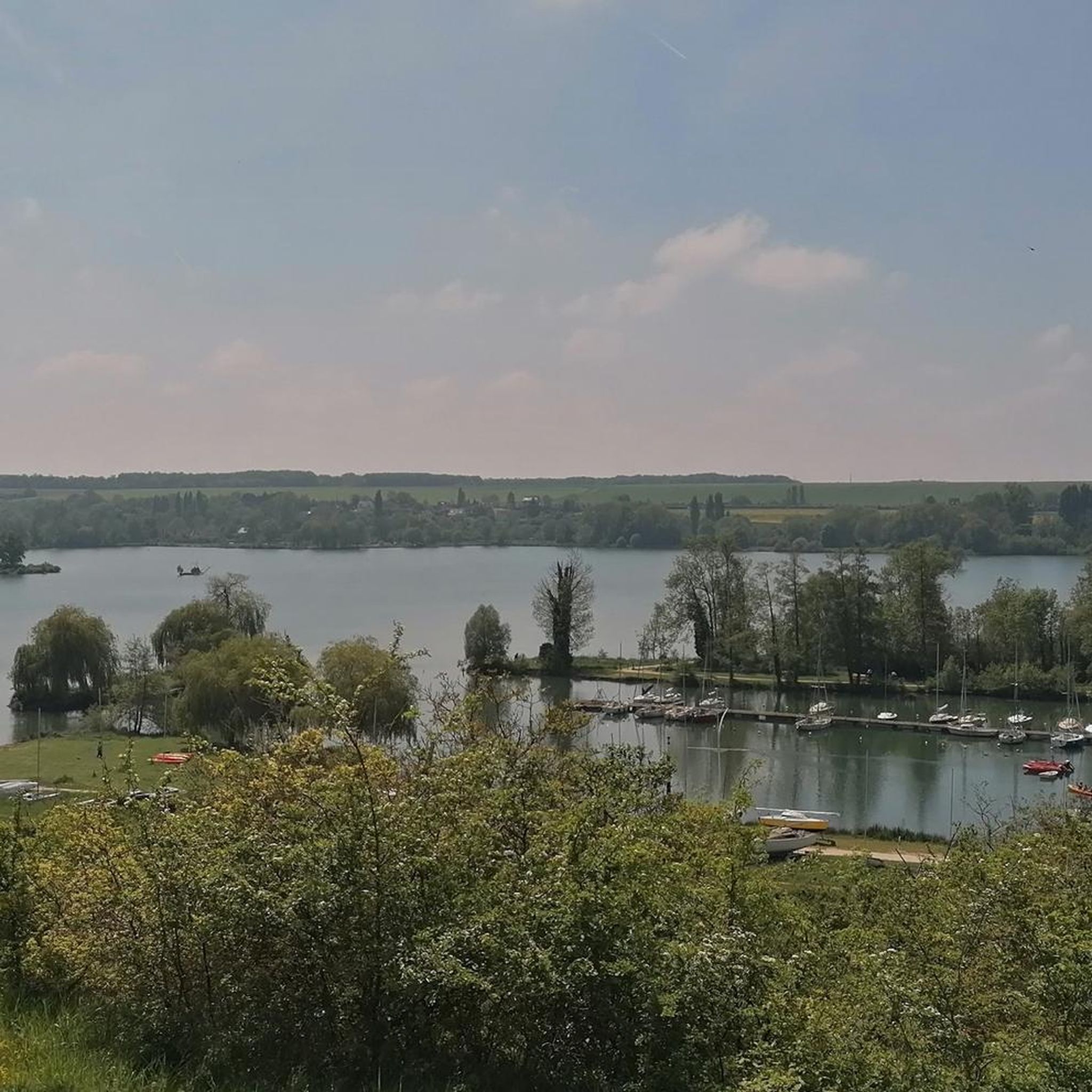
Very beautiful pond
0
0
Frequently Asked Questions
What kind of terrain can I expect when road cycling around Luray?
Road cycling routes around Luray are characterized by diverse terrain within the scenic Shenandoah Valley. You'll find rolling hills, open farmlands, and roads that often follow river valleys or climb into the foothills of the Blue Ridge Mountains. This offers a mix of gentle gradients and more challenging ascents.
How many road cycling routes are available in the Luray area?
There are over 130 road cycling routes available around Luray on komoot, offering a wide range of options for different skill levels and preferences.
Are there road cycling routes suitable for beginners in Luray?
Yes, Luray offers numerous routes suitable for beginners. Approximately 64 routes are rated as easy, featuring rolling terrain and scenic countryside views with minimal elevation gain. A good example is the Moulin de Mormoulins – Château de Mormoulins loop from Mézières-en-Drouais, an easy 17.0-mile path.
What are some longer distance road cycling routes in Luray?
For those seeking longer rides, Luray has several options. The Château de Mormoulins – Half-timbered house loop from Sainte-Gemme-Moronval is a moderate 40.3-mile (64.8 km) route, while the Avre Aqueduct – Anet Castle loop from Mézières-en-Drouais covers 33.6 miles (54.1 km) with moderate difficulty.
Are there any challenging road cycling routes for advanced riders in Luray?
While there are no routes explicitly rated as 'difficult' in the komoot guide for Luray, many of the 69 moderate routes offer significant elevation gain and longer distances, providing a good challenge. These routes often climb into the foothills of the Blue Ridge Mountains, testing endurance and skill.
What can I see along the road cycling routes around Luray?
Many routes pass by historical and scenic landmarks. You can explore various castles such as Château de Mormoulins, Château de Louye, and Château d'Abondant. Other points of interest include the beautiful church of Prouais and The Donjon of Gilles.
What do other road cyclists enjoy most about road cycling in Luray?
The area is highly rated by the komoot community, with an average score of 4.5 stars from over 50 reviews. Road cyclists often praise the varied terrain, from gentle valley roads to challenging ascents, and the scenic beauty of the Shenandoah Valley's rolling hills and farmlands.
Are there any circular road cycling routes in Luray?
Yes, many of the road cycling routes around Luray are designed as loops, allowing you to start and end at the same point. For instance, the Écluzelles, Chaudon, Ormoy — loop from Dreux is a popular circular route.
What is the best time of year for road biking in Luray?
Spring and fall generally offer the most pleasant conditions for road biking in Luray, with mild temperatures and vibrant scenery. Summer can be warm, while winter may bring colder temperatures and potential for snow or ice, especially in higher elevations, so checking local weather is always recommended.
Are there any road cycling routes that pass by breweries or places to stop for refreshments in Luray?
While specific brewery stops are not detailed in the route descriptions, the Luray area, being part of the Shenandoah Valley, is known for its local wineries and breweries. Many routes pass through towns and rural areas where you may find opportunities for refreshments. It's advisable to check local listings or plan your route with komoot's Points of Interest feature to find suitable stops.
How does road biking in Luray compare to other parts of the Shenandoah Valley?
Luray offers a representative experience of the Shenandoah Valley, with its characteristic rolling hills, farmlands, and scenic valley roads. It provides a good mix of easy and moderate routes, similar to other parts of the valley, but with its unique access to the foothills of the Blue Ridge Mountains and specific historical landmarks.
Most popular attractions around Luray

Get inspired with the komoot mobile app


Explore more
Browse the best Road cycling routes in other regions.
