The best road cycling routes around Lunas
4.7
(256)
3,519
riders
150
rides
Road cycling around Lunas offers diverse terrain across its natural preserves and scenic landscapes. The region is characterized by varied topography, including the Manzano Mountains and the Rio Grande valley, providing both challenging climbs and more gentle stretches. Extensive open spaces and hills define the area, making it suitable for different road cycling experiences. The routes often feature significant elevation changes, reflecting the area's undulating landscape.
Best road cycling routes around Lunas
- The most popular road cycling route is 360°…
Last updated: October 30, 2026
4.8
(4)
37
riders
46.2km
02:15
670m
670m
Moderate road ride. Good fitness required. Mostly well-paved surfaces and easy to ride.
4.8
(4)
36
riders
86.7km
04:24
1,440m
1,440m
Hard road ride. Very good fitness required. Mostly well-paved surfaces and easy to ride.

4.3
(4)
20
riders
36.6km
02:01
650m
650m
Moderate road ride. Good fitness required. Mostly well-paved surfaces and easy to ride.
4.0
(4)
36
riders
43.0km
01:54
400m
400m
Moderate road ride. Good fitness required. Mostly well-paved surfaces and easy to ride.
27
riders
28.3km
01:12
230m
220m
Easy road ride. Mostly well-paved surfaces and easy to ride.
Get access to more routes and recommendations from other explorers.
Already have an account?
Our route recommendations are based on thousands of hikes, rides, and runs completed by other people on komoot.


Other adventures around Lunas


Tips from the Community

Located in the Hauts Cantons of the Hérault, at the confluence of the Gravezon, Nize, and Dourdou rivers, Lunas is a charming village that combines history and a gentle way of life. Dominated by the Redondel rock, a former fortified site, it reveals pretty streets, a 17th-century castle, and the Saint-Pancrace church, whose origins date back to the 12th century. Don't miss the Notre-Dame-de-Nize chapel and its famous Fontaine des Yeux (Eyes Fountain), nestled in a peaceful natural setting.
0
0
The Saint-Martial church is unlike any other in Haut-Languedoc. Built in 1858-1859 to replace the village's old church, which had become too cramped, it occupies the north wing of the former castle of the viscounts of Narbonne, built in the 15th century. Even more surprisingly, this castle housed a black glass workshop until 1848, before being transformed into a place of worship. The bell tower, added in 1877, completes this original ensemble where religious heritage, seigneurial architecture, and industrial history blend. Observing the buildings surrounding the church, several elements of the original castle can still be distinguished. A few steps away is the old Saint-Martial church, now private property. Built on probably Romanesque foundations, it preserves parts dating back to the 15th century. Having become too dilapidated and too small to accommodate a growing population, it was replaced in 1859 by the new Saint-Martial church. Deconsecrated and then sold by the municipality in 1867, it remains a discreet but precious witness to the religious history of Hérépian.
3
0
The Saint-Majan church is the former abbey church of a powerful Benedictine monastery founded in the 7th century, whose prosperity was based in particular on the silver-bearing lead mines that gave their name to Villemagne-l'Argentière. During the Hundred Years' War, the building was transformed into a veritable fortress: walled-up windows, a rampart walk, and machicolations allowed the monks to defend their abbey. Despite the looting of the Wars of Religion in 1562, this remarkable Gothic church has survived the centuries and still bears the traces of this turbulent past. A few steps away is the former Saint-Grégoire church, the first place of worship of the abbey. Its elegant Romanesque architecture contrasts with the Gothic style of Saint-Majan. Transformed into an archaeological museum, it presents collections dedicated to the history of the village, from Antiquity to the Middle Ages, as well as to the exploitation of the ancient mines that shaped the wealth of Villemagne-l'Argentière. By visiting these two buildings, one travels through more than a millennium of history in just a few minutes.
3
0
Mentioned as early as the 12th century, the church of Saint-Alexandre has had a turbulent history. It was first destroyed in 1364 by English troops during the Hundred Years' War, then in 1563 during the Wars of Religion, when Bédarieux fell into the hands of the Protestants. A third destruction occurred in 1622, during the campaigns led by Louis XIII to retake the Protestant strongholds of Languedoc. Rebuilt in the 17th century, it features a surprising architectural detail: its choir is slightly off-center, a layout that would symbolize the head of Christ inclined on the Cross.
3
0
The Col de Thalis marks the crossing of a ridge line between two slopes in the south of Aveyron. From this high point, the view encompasses a succession of valleys, wooded ridges, and open spaces that reflect all the diversity of the mid-mountain landscapes. More than just a pass, this col is a true belvedere overlooking the surrounding reliefs.
2
0
From the D8E13 bridge, the viewpoint offers a beautiful postcard of Avène and the Orb.
3
0

Descent on a dirt road. Also a good spot for a picnic 👌
0
0

This tiny and peaceful village, with a worldwide reputation for the benefits of its water, is a perfect location for hikers and gravel enthusiasts. You have many options of loops from there. Enjoy!
0
0
Frequently Asked Questions
How many road cycling routes are available around Lunas?
There are over 130 road cycling routes around Lunas, offering a wide variety of experiences. These routes are highly rated by the komoot community, with an average score of 4.7 stars from more than 170 reviews.
What kind of terrain can I expect when road cycling in Lunas?
Road cycling around Lunas features diverse terrain, including the undulating landscapes of the Manzano Mountains (if we consider the general description of varied topography) and the Rio Grande valley (again, if we generalize the description of valleys). You'll find routes with significant elevation changes, such as the challenging Vision – Fontfroide Pass loop from Le Bousquet d'Orb, which includes over 1,450 meters of ascent, as well as more gentle stretches.
Are there any easy road cycling routes suitable for beginners or families in Lunas?
Yes, Lunas offers options for all skill levels. While many routes feature significant climbs, there are 8 easy routes available. For a moderate option that explores the local area with a mix of ascents and descents, consider the Lunas – Cemetery water fountain loop from Lunas.
What are some scenic highlights or landmarks I can see along the road cycling routes?
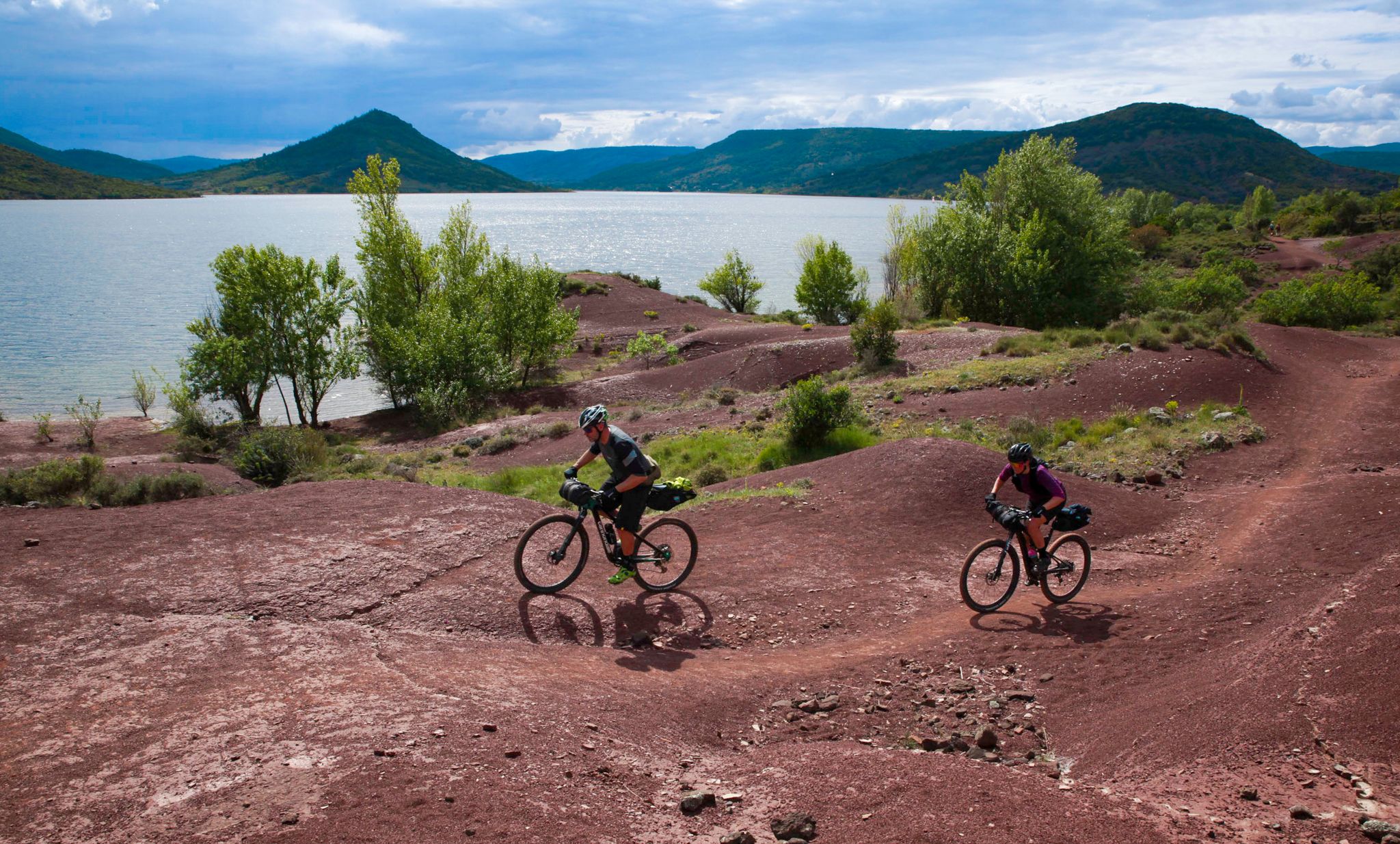
Many routes offer stunning views and pass by interesting landmarks. You can cycle around The Red Lands of Salagou, explore the Avène spa town, or pass by the Monts d'Orb Dam. For historical interest, some routes may lead you near the Boussagues Medieval Village or the Lauzières Castle ruins.
Are there any long-distance road cycling routes around Lunas?
Yes, Lunas is a great starting point for longer rides. For example, the Vision – Fontfroide Pass loop from Le Bousquet d'Orb is nearly 100 km (62 miles) long, and the Layrac Pass – Avène, spa town loop from Le Bousquet d'Orb covers over 82 km (51 miles).
What is the best season for road cycling in Lunas?
While specific seasonal conditions vary, the region's natural beauty makes it enjoyable for cycling across multiple seasons. Spring and autumn generally offer pleasant temperatures and vibrant scenery, ideal for longer rides. Summers can be warm, so early morning or late afternoon rides are often preferred.
Are there circular road cycling routes available?
Many of the road cycling routes around Lunas are designed as loops, allowing you to start and finish in the same location. A popular example is the 360° view of Lake Salagou – Lake Salagou loop from Lunas, which offers panoramic views.
What do other road cyclists say about the routes in Lunas?
The road cycling routes in Lunas are highly regarded by the komoot community, holding an impressive average rating of 4.7 out of 5 stars from over 170 reviews. Cyclists often praise the varied terrain, scenic views, and the sense of exploration offered by the region's natural preserves and open spaces.
Are there any challenging road cycling routes with significant elevation gain?
Absolutely. Lunas is known for its undulating landscape, providing plenty of challenging climbs. Routes like the Lunas – Baraque de Bral Pass loop from Le Bousquet d'Orb feature over 1,000 meters of elevation gain, making them ideal for experienced cyclists seeking a workout.
Where can I find parking for road cycling routes in Lunas?
While specific parking details for each trailhead are best checked on individual route pages, many routes start from towns or villages like Lunas or Le Bousquet d'Orb, where public parking is generally available. It's advisable to check local signage for parking regulations.
Are there cafes or restaurants near the road cycling routes in Lunas?
Yes, many routes pass through or near charming villages and towns where you can find cafes, restaurants, and pubs to refuel. For example, routes around the Avène spa town or the Boussagues Medieval Village offer opportunities for refreshment.
Is public transport an option to access road cycling routes in Lunas?
Accessing road cycling routes via public transport can vary. While some larger towns in the region may have bus or train services, it's best to research specific routes and their proximity to public transport stops. Many cyclists prefer to drive to a starting point in Lunas or a nearby village and begin their ride from there.
Most popular attractions around Lunas

Get inspired with the komoot mobile app


Explore more
Browse the best Road cycling routes in other regions.
