Attractions and Places To See around Denipaire - Top 20
Attractions and places to see around Denipaire, a rural commune in France's Vosges department, offer a blend of historical sites and natural landscapes. Situated in the Hure valley and near the Vosges Mountains, the area provides a tranquil setting. Denipaire serves as a base for exploring the rich historical, cultural, and natural heritage of the wider Grand Est region, including nearby Alsatian villages.
Best attractions and places to see around Denipaire
- The most popular attractions is La Bure Celtic Camp…
Last updated: October 5, 2026
Roche Mère Henry
Highlight • Other
The rock head with viewing platform was massively expanded by German troops and was fiercely contested for years. Underground passages …
Translated by Google •
Tip by

Trail of the Hamlets Fallen for France – La Fontenelle
Highlight • Historical Site
Here are buried some French soldiers who lost their lives on the battlefield of Hill 627, as the military name goes, defending France …
Translated by Google •
Tip by

Sign up now to discover places like this
Get recommendations on the best single tracks, peaks, & plenty of other exciting outdoor places.
La Bure Celtic Camp
Highlight • Historical Site
Translated by Google •
Tip by
Saint-Dié Cathedral
Highlight • Religious Site
Translated by Google •
Tip by
Roche d'Anozel
Highlight • Viewpoint
Translated by Google •
Tip by

Sign up for free to discover even more attractions around Denipaire.
Already have an account?
Start today with a free account
Your next adventure awaits.


Tips from the Community

The Roche d’Anozel is located in the Kemberg massif near Saulcy-sur-Meurthe, not far from Saint-Dié-des-Vosges. The striking Vosges sandstone rock is about 740 m high and approximately 15 m high and 20 m wide. An enigmatic inscription on the rock is dated to the year 1402. Particularly interesting is the view over the Meurthe valley and the surrounding Vosges mountains. The Roche is part of a network of well-marked hiking trails.
0
0

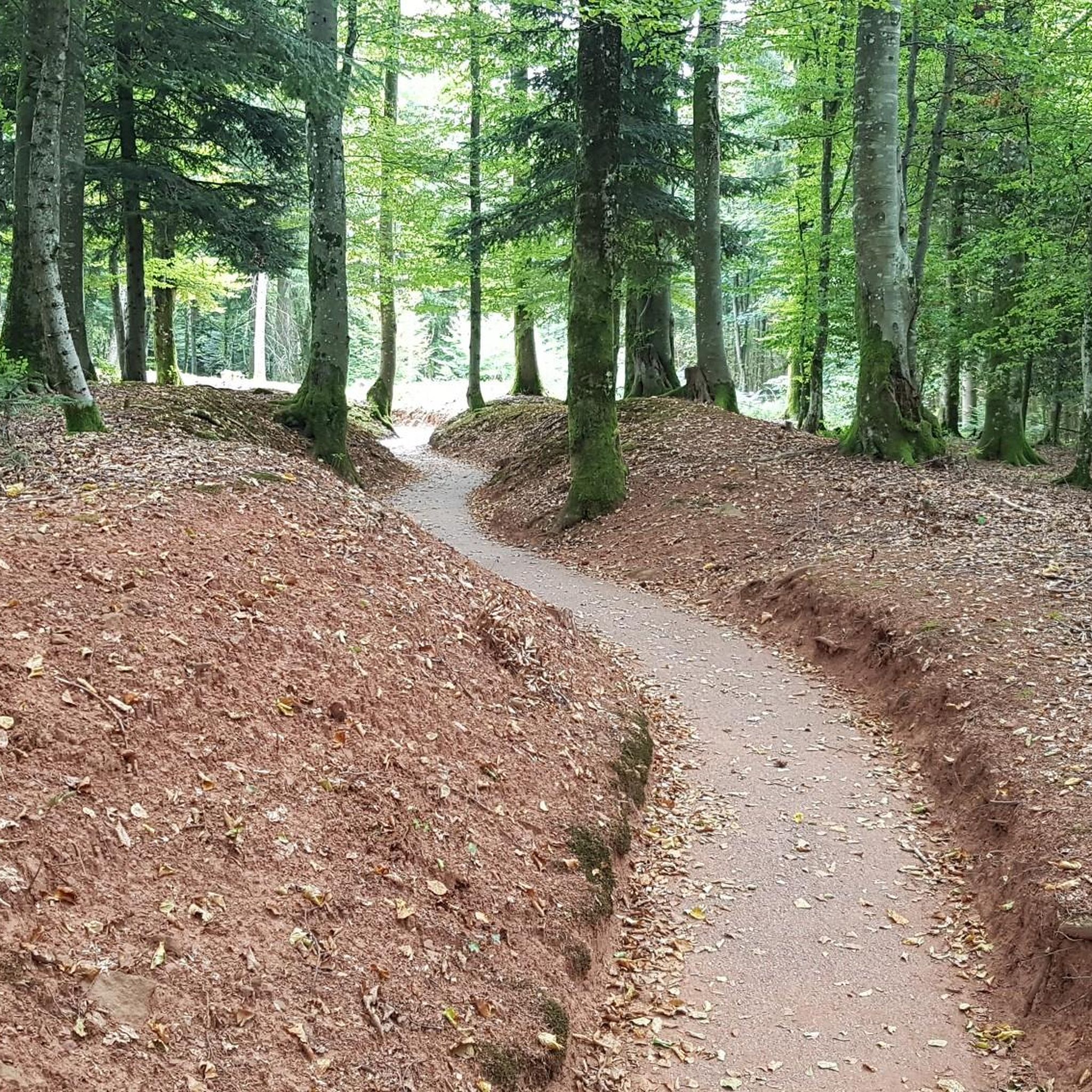
Camp accessible to mountain bikes but next to the bike
0
0

Two prominent rocks form a great viewing point here. They are connected by a bridge and can be reached via a staircase. On the first rock you will find a panoramic map on the brick parapet. There is a natural bench under this rock. The German command post for this section of the front during the First World War is also located here. It was fortified with reinforced concrete in 1916.
2
1


Emblematic rock of the Kemberg massif, from which the view of the Vosges is clear.
1
0

Large steep rock with south-facing viewing platform.
2
0

Frequently Asked Questions
What historical sites can I explore around Denipaire?
The region around Denipaire is rich in history. You can visit the ancient La Bure Celtic Camp, a fortified plateau with a history dating back to the Neolithic period, extensively used by Celts and Romans. Another significant site is Roche Mère Henry, a World War I fortress with observation platforms and underground passages offering panoramic views. Also, explore the Trail of the Hamlets Fallen for France – La Fontenelle, a poignant World War I battlefield and memorial with trails and information boards.
Are there any significant cultural landmarks near Denipaire?
Yes, several cultural landmarks are within reach. The Saint-Dié Cathedral, stemming from a 7th-century Benedictine monastery, showcases various architectural styles and was rebuilt after World War II. Further afield, you can visit the solemn Franco-German Military Cemetery of Bertrimoutier, a symbol of shared remembrance for soldiers from both nations who perished in World War I.
What natural features and viewpoints can I find in the Denipaire area?
Denipaire is nestled in the picturesque Hure Valley, within the Vosges Mountains. You can enjoy the natural beauty of the La Bure Celtic Camp, which is now a wooded plateau offering natural views. Roche Mère Henry provides an interesting vantage point from its two prominent rocks, connected by a bridge. The wider region, including the Ballon des Vosges Regional Nature Park, offers diverse landscapes of forests, rivers, and lakes.
What outdoor activities are popular around Denipaire?
The region is an excellent base for outdoor activities. You can find numerous routes for mountain biking, gravel biking, and road cycling. For example, explore MTB trails like the 'Pépinière du Paradis – Cascade des Molières loop' or gravel biking routes such as the 'Rascal's Head – Tête du Coquin Summit loop'. Road cyclists can enjoy routes like the 'Rabodeau Valley – Prayé Forest Road loop'. You can find more details on these activities in the dedicated guides for MTB Trails, Gravel Biking, and Road Cycling Routes around Denipaire.
Are there hiking opportunities near Denipaire?
Yes, the Vosges Mountains and the surrounding area offer excellent hiking opportunities. The Trail of the Hamlets Fallen for France – La Fontenelle provides historical trails. The wider region, including the Ballon des Vosges Regional Nature Park, is an 'open-air playground' with diverse landscapes and trails suitable for various skill levels, from easy walks to more challenging routes through forests and mountainous terrain.
What are some family-friendly attractions or activities in the area?
For families, the Saint-Dié Cathedral offers a cultural experience. The Franco-German Military Cemetery Bertrimoutier can be a thought-provoking visit for older children. The Trail of the Hamlets Fallen for France – La Fontenelle has a short, wheelchair-accessible path with information boards, making it suitable for families. Additionally, the natural surroundings of the Vosges Mountains provide opportunities for family walks and exploring the outdoors.
What do visitors enjoy most about the attractions around Denipaire?
Visitors appreciate the blend of historical significance and natural beauty. They particularly enjoy the insights into World War I history at sites like Roche Mère Henry and the Trail of the Hamlets Fallen for France – La Fontenelle. The ancient history of the La Bure Celtic Camp is also a highlight, often combined with scenic views. The tranquil setting and opportunities for outdoor activities like biking are also highly valued.
Are there any charming villages or towns to visit near Denipaire?
While Denipaire itself is a quiet village, its proximity to the Alsace region means you can easily visit several charming towns. These include Saint-Quirin, recognized as one of France's 'Most Beautiful Villages,' and the traditional Alsatian villages of Ribeauvillé, Hunawihr, Riquewihr, and Kaysersberg, known for their colorful half-timbered houses and historic centers.
What is the best time to visit Denipaire and its surrounding attractions?
The best time to visit Denipaire and its surrounding attractions largely depends on your preferred activities. Spring and autumn offer pleasant temperatures for hiking and cycling, with beautiful foliage in the Vosges Mountains. Summer is ideal for exploring natural sites and lakes, though it can be busier. The region's historical sites are accessible year-round, but outdoor exploration is most comfortable from late spring to early autumn.
Are there any lakes or water features to explore in the vicinity?
Yes, the Vosges region is known for its beautiful mountain lakes. While not directly in Denipaire, you can explore several picturesque lakes like Lac Lispach, Lac Blanc, Lac des Truites, Lac Vert, Lac Longemer, Lac Blanchemer, and Lac de Gérardmer. These offer opportunities for circular walks and enjoying the serene natural environment.
What kind of historical significance does the Denipaire area hold?
The area around Denipaire holds significant historical importance, particularly related to ancient Celtic and Roman occupation, as seen at the La Bure Celtic Camp. It also played a crucial role in World War I, with sites like Roche Mère Henry, the Trail of the Hamlets Fallen for France – La Fontenelle, and the Franco-German Military Cemetery of Bertrimoutier commemorating the intense trench warfare and sacrifices made in the region.
Most popular routes around Denipaire
Most popular attractions around Denipaire

Get inspired with the komoot mobile app


Explore more
Still not found the Highlight you’re looking for? See guides of the top attractions in other regions:
