Attractions and Places To See around Mérignas - Top 17
Best attractions and places to see around Mérignas include a selection of historical and natural points of interest. This commune in the Gironde department of France is situated on a plateau backed by the Gamage Valley and crossed by small valleys. The area is primarily wine-producing, with historical roots indicated by ceramics from before the 4th century. Visitors can explore ancient structures and scenic routes.
Best attractions and places to see around Mérignas
- The most popular attraction is Piste Roger…
Last updated: June 23, 2026
Sauveterre-de-Guyenne - bastide
Highlight • Other
Translated by Google •
Tip by

Church of Branne
Highlight • Religious Site
Showing Translation
Tip by

Sign up now to discover places like this
Get recommendations on the best single tracks, peaks, & plenty of other exciting outdoor places.
Sign up for free
Roger Lapébie track - Sauveterre to Cessac
Highlight (Segment) • Other
Translated by Google •
Tip by

Saint-Présentine Church
Highlight • Other
"The building, built in the 12th century, has the uniqueness of being isolated today in the middle of fields, a few kilometers southeast of the village. …
Showing Translation
Tip by

Country lane along the Dordogne
Highlight (Segment) • Other
Translated by Google •
Tip by
Sign up for free to discover even more attractions around Mérignas.
Sign up for free
Already have an account?
Start today with a free account
Your next adventure awaits.
Login or Signup

Tips from the Community

Lively small market town, with an arcaded market square
0
0

The website france-voyage informs: "The building, built in the 12th century, has the uniqueness of being isolated today in the middle of fields, a few kilometers southeast of the village. Originally, the church served the hamlet of Sallebruneau (which thus became the hamlet of Sainte-Présentine), which was attached to Frontenac in 1965. The church was built in a Romanesque style near the ruins of a Gallo-Roman ensemble. It was then located on a busy axis connecting Blasimon to Lugasson, a road that had been marked by the Templars and the Hospitallers. Although protected as a historical monument, the massive-looking church is now badly damaged. The frame and roof of the nave have disappeared." (Source: https://www.france-voyage.com/villes-villages/frontenac-11421/eglise-sainte-presentine-17985.htm )
0
0

The Saint-Étienne church of Branne is a true haven of peace in the heart of the village, offering a setting conducive to recollection and prayer. The architecture, both sober and majestic, bears witness to the deep faith that has inhabited these places through the centuries. The beauty of the sanctuary naturally invites the elevation of the soul and contemplation of the divine mysteries. One feels an atmosphere of serenity that helps each faithful to find themselves before the Lord in silence and dignity. It is a living place of worship where the presence of Christ is felt, recalling the importance of our Christian roots in the Gironde landscape. A spiritual stopover highly recommended for all those who seek to nourish their faith within a beautifully maintained church.
0
0

Sauveterre-de-Guyenne is a bastide. A bastide is a type of French medieval town, founded in the 13th and 14th centuries, primarily in southwestern France. A bastide is characterized by a rectangular street pattern that divides the town into eight blocks around a central market square. The Treaty of Paris (1229) prohibited the building of walls around new towns. Many bastides were provided with some form of fortification, such as gates, after their founding to provide some protection during turbulent times. Most bastides had only local significance and did not develop into large towns. As a result, many bastides, such as that of Sauveterre-de-Guyenne, have been preserved in their original state.
1
0

Between Branne and Saint-Émilion, it is on this particularly peaceful road that you can best appreciate the charm of the journey, only frequented by the rare inhabitants of this alluvial space.
1
0

Pretty village in the center of Entre-Deux-Mers - Medieval bastide with ramparts all around, some pretty gates and a central square which is worth a stop...
2
0

Very well developed cycle path and easy to ride.
2
0

Small quiet road, far from the road traffic along the Dordogne. Idyllic.
2
0
Frequently Asked Questions
What historical sites can I visit in and around Mérignas?
Mérignas and its surroundings are rich in history. You can explore ancient structures like the historic Mill Rouaret and the Romanesque Church, both among the town's oldest buildings. Nearby, the impressive Château de Rauzan, a 13th-century fortress, offers a glimpse into medieval times with its polygonal enclosure and high cylindrical keep. Don't miss Sauveterre-de-Guyenne - bastide, a well-preserved medieval town with ramparts and a central market square.
Are there any unique attractions in the Mérignas area?
Yes, for a truly unique experience, consider visiting the Mushroom in underground quarry. This attraction offers group visits by appointment, providing an interesting insight into the local environment and a different kind of natural wonder.
What kind of outdoor activities can I do near Mérignas?
The Mérignas area is excellent for outdoor activities, especially cycling and walking. You can enjoy the Piste Roger Lapébie, a beautiful, well-shaded cycle path on an abandoned railway line, or the Roger Lapébie track - Sauveterre to Cessac, a greenway winding through forests. For a peaceful stroll, the Country lane along the Dordogne offers an idyllic, traffic-free route between Branne and Saint-Émilion. There are also numerous road cycling, running, and mountain biking routes available. For more details on cycling routes, visit the Road Cycling Routes around Mérignas guide. For running, check out the Running Trails around Mérignas guide, and for mountain biking, the MTB Trails around Mérignas guide.
Are there family-friendly attractions or activities in Mérignas?
Yes, the Piste Roger Lapébie is particularly family-friendly. It's a well-developed cycle path on an old railway line, offering shade and even spots to pitch a tent, making it ideal for a leisurely family bike ride or walk. Its flat terrain makes it accessible for various ages and abilities.
What are the natural features and landscapes like around Mérignas?
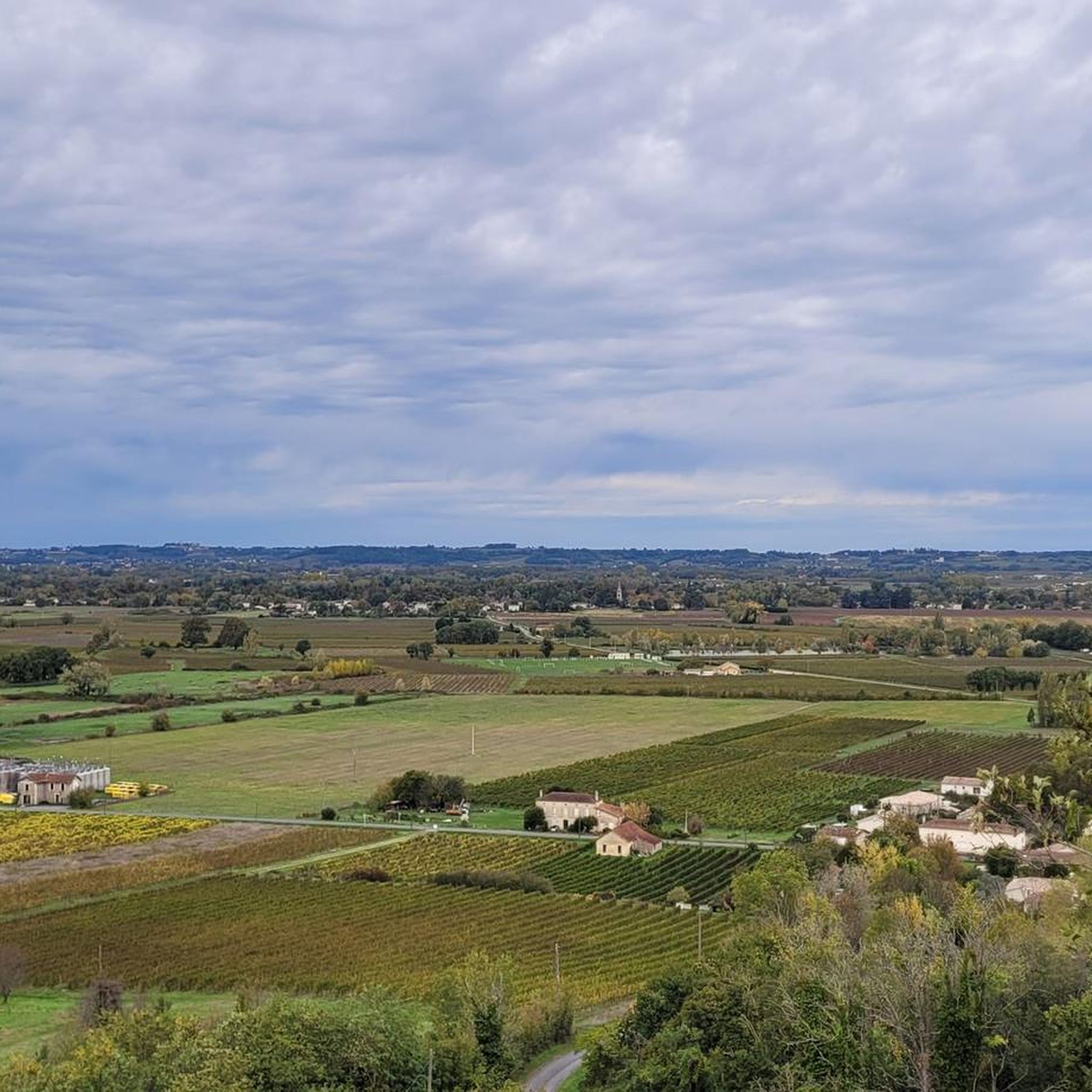
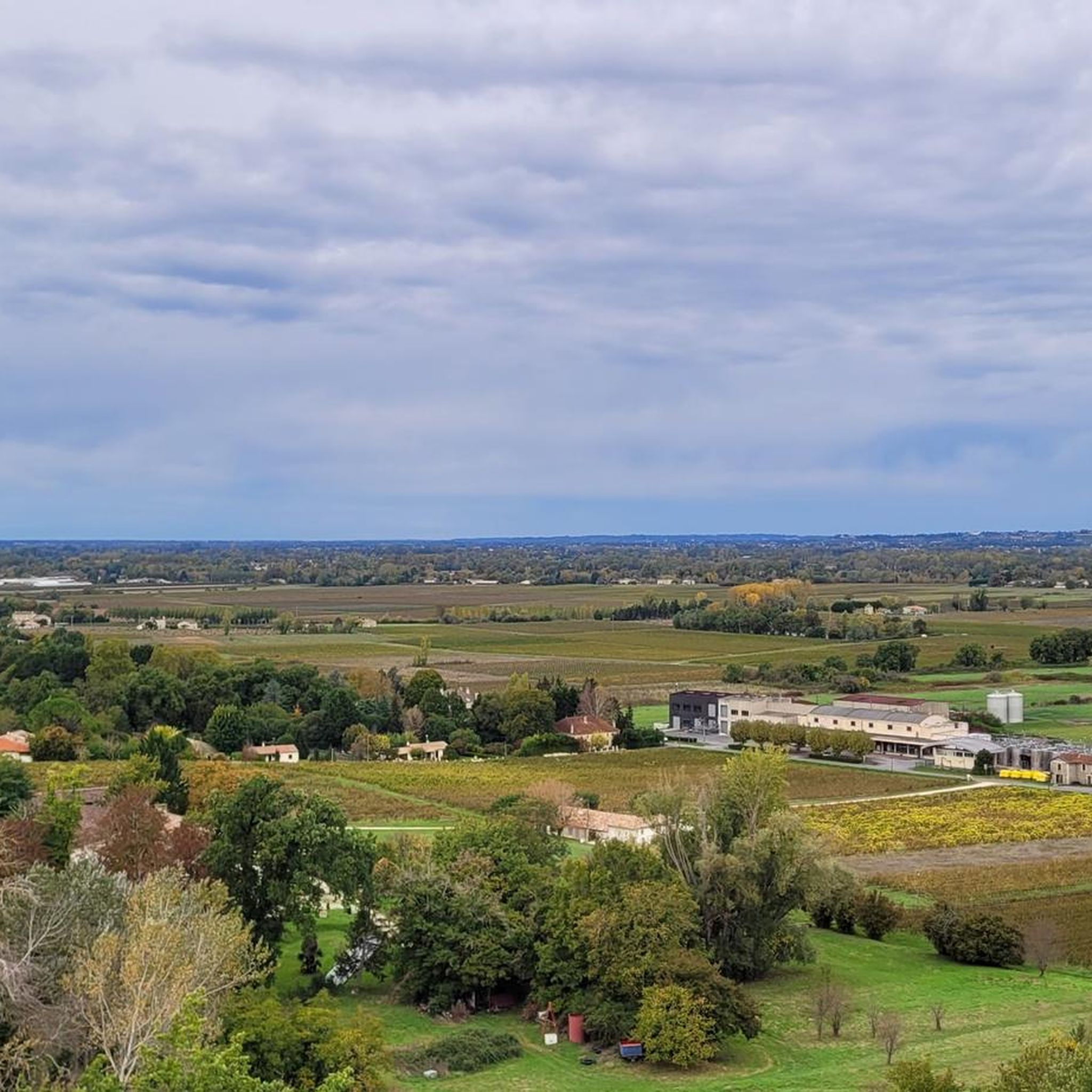
Mérignas is situated on a plateau backed by the Gamage Valley and is crossed by several small valleys. The region is primarily wine-producing, so you'll find rolling vineyards alongside natural landscapes. The area offers scenic routes, such as the quiet country lane along the Dordogne, providing picturesque views of the river and surrounding countryside.
What is the terrain and elevation like for outdoor activities near Mérignas?
The terrain around Mérignas, being on a plateau and crossed by valleys, offers a mix of gentle slopes and flatter sections. Cycle paths like the Roger Lapébie track are built on old railway lines, meaning they are generally flat and easy to ride. Other routes, particularly those for road cycling or mountain biking, may involve more varied elevation changes as they traverse the valleys and vineyards. You can find specific difficulty grades for various routes in the dedicated komoot guides for road cycling, running, and mountain biking.
What do visitors enjoy most about the attractions around Mérignas?
Visitors particularly appreciate the peaceful and scenic nature of the area. The greenways, like the Roger Lapébie track, are praised for being well-developed, easy to ride, and winding through beautiful forests. The quiet country lanes along the Dordogne are loved for their idyllic, traffic-free environment, offering a serene journey through the landscape. Historical sites like the Château de Rauzan are valued for their well-preserved medieval architecture and rich history.
Are there any dog-friendly walking routes in the area?
Many of the natural paths and greenways around Mérignas are suitable for walks with dogs, provided they are kept on a leash and you clean up after them. The Piste Roger Lapébie and the Country lane along the Dordogne are generally good options for a pleasant stroll with your canine companion.
What is the best time of year to visit Mérignas?
The Mérignas region, being a wine-producing area, is particularly beautiful during the spring and autumn months when the vineyards are either budding or displaying vibrant fall colors. Summer offers warm weather ideal for outdoor activities, though paths like the Piste Roger Lapébie are well-shaded. Always check local weather conditions before your visit.
Are there any castles or châteaux to visit near Mérignas?
Yes, the region boasts several historical castles. The prominent Château de Rauzan is a must-visit, known for its medieval history and Gothic architecture. Within Mérignas itself, Castle Cluzeau is another significant landmark. While Castle Pellebouc is also notable, it is a private property.
Are there any viewpoints or scenic spots around Mérignas?
The plateau location of Mérignas, combined with its position above the Gamage Valley and proximity to the Dordogne River, offers several scenic vistas. The quiet Country lane along the Dordogne provides idyllic views of the river and the surrounding vineyards. Exploring the various cycling and walking routes will lead you to many picturesque spots within the natural and wine-producing landscapes.

Get inspired with the komoot mobile app


Explore more
Still not found the Highlight you’re looking for? See guides of the top attractions in other regions:
