Attractions and Places To See around Flaujagues - Top 11
Attractions and places to see around Flaujagues, a commune in the Gironde department of Nouvelle-Aquitaine, France, offer a mix of historical sites, natural beauty, and cultural points of interest. The area is situated on the Dordogne River, a prominent natural feature. Flaujagues is part of a wine-growing region, providing a landscape rich in both natural and cultivated elements.
Best attractions and places to see around Flaujagues
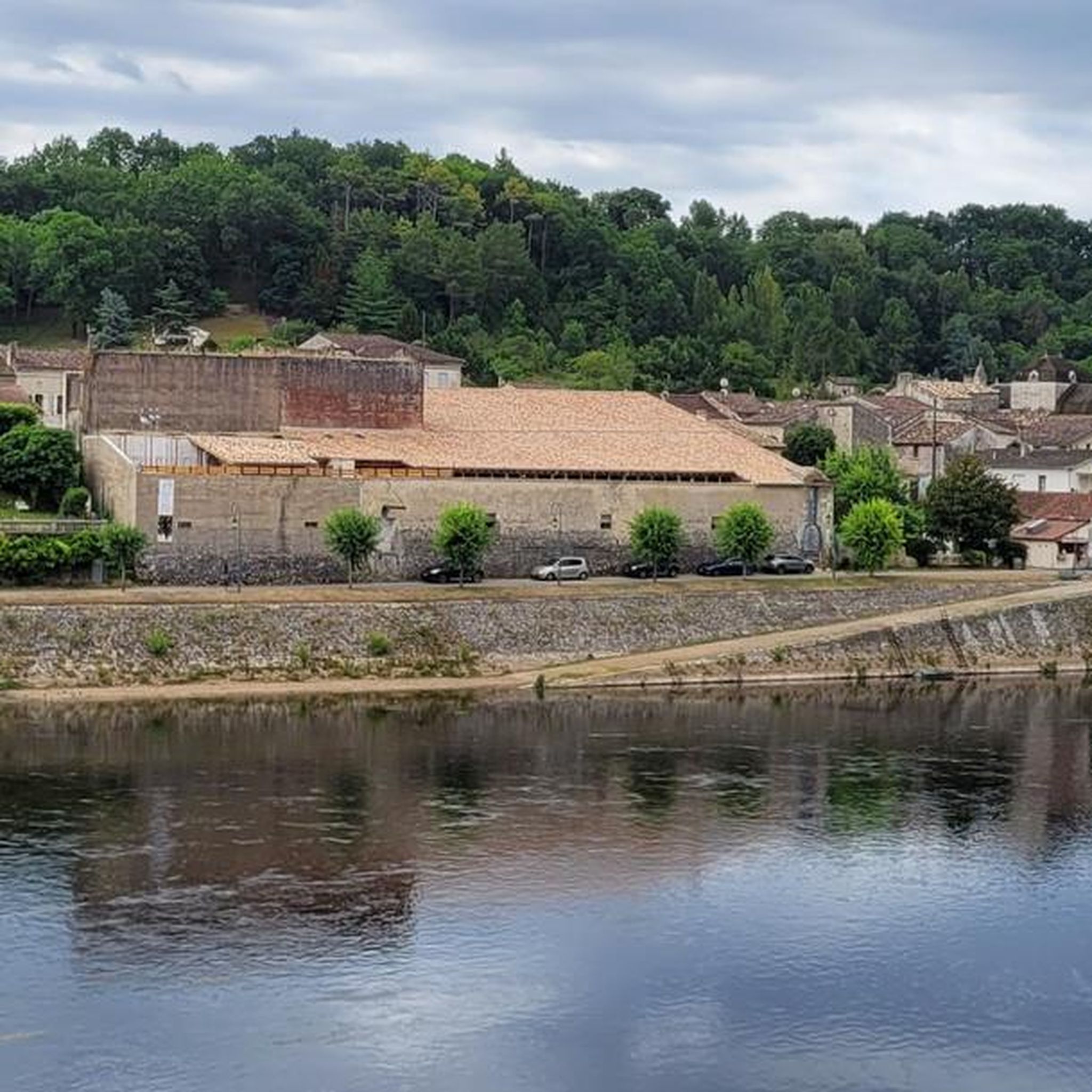
- The most popular attractions is View of the Dordogne and Castillon-la-Bataille, a viewpoint that offers views of the river and Castillon la Bataille. Castillon la Bataille features an urban flair with cafes.
- Another must-see spot is Dordogne at Castillon, a section of the Dordogne river. This area offers views of the Dordogne and is located in the Gironde, within a wine-growing region.
- Visitors also love Saint-Pierre Church, an 11th-century religious building. It features marble capitals from a Roman building and biblical motifs.
- Flaujagues is known for its historical sites, natural landscapes, and cultural points of interest. Visitors can explore religious buildings, river views, and archaeological remains, alongside opportunities for hiking and cycling.
- The attractions around Flaujagues are appreciated by the komoot community, with 20 upvotes and 5 photos shared by visitors.
Last updated: June 23, 2026
Pellegrue, St. Andrew's Church
Highlight • Other
Translated by Google •
Tip by

Saint-Pierre Church
Highlight • Religious Site
Translated by Google •
Tip by

Sign up now to discover places like this
Get recommendations on the best single tracks, peaks, & plenty of other exciting outdoor places.
Sign up for free
Dordogne at Castillon
Highlight • Lake
Translated by Google •
Tip by

Pellegrue, Markthalle aus dem späten 19. Jahrhundert.
Highlight • Other
Showing Translation
Tip by

Grafting of grapevines
Highlight • Structure
Translated by Google •
Tip by
Sign up for free to discover even more attractions around Flaujagues.
Sign up for free
Already have an account?
Start today with a free account
Your next adventure awaits.
Login or Signup




Tips from the Community

For the patronage of this house of God: The cross, which does not stand upright but is slanted, inevitably reminding the viewer of the letter "X" of the Latin alphabet, is (if this modern term may be applied to a person who lived around 2000 years ago) his trademark. The disciple of Jesus, who belongs to the circle of the twelve apostles, gave his name to the "St. Andrew's cross", on which he was executed as a martyr for his Christian faith. The feast of Saint Andrew in the calendar of saints is on November 30th in all major Christian denominations.
0
0

In the Markthalle there are benches, picnic tables and power outlets. In front of the hall there are at least two water sources.
0
0

Church from the 12th century. Several alterations visible. Bell tower is "new" (ca. 1890). A description (in French) is next to the entrance portal.
0
0

11th-century church built on the site of a Roman building. Marble capitals from this ancient building were used under the apse portico. The capitals of the triumphal arch are decorated with biblical motifs. Two bas-reliefs depicting Adam and Eve and Saints Peter and Paul are carved into the side walls of the bell tower.
2
0
A graft (also known as graft or seedling) is a graft in viticulture; a scion is grafted (grafted) onto the rootstock by means of special cutting forms, thus creating an artificial connection of two wooden parts of different grape varieties (the rootstock and a European variety susceptible to phylloxera) for the purpose of grafting the grapevines (Wikipedia).
1
0

The town is located in the Gironde at the heart of a wine-growing region, 13 km from Saint-Emilion and on the borders of the Dordogne department
0
0

Nice view of the Dordogne
0
0
Frequently Asked Questions
What natural features can I explore around Flaujagues?
The most prominent natural feature is the Dordogne River, which offers opportunities for fishing and scenic views. You can also visit the Dordogne at Castillon for beautiful river vistas. The area is also known for its vineyards, providing a rich natural and cultivated landscape.
What historical sites can I visit in and around Flaujagues?
Flaujagues and its surroundings are rich in history. You can explore the 17th-century Church of St. Martin in Flaujagues, or the 11th-century Saint-Pierre Church, which features marble capitals from a Roman building. Nearby, the Montcaret Archaeological Site (about 4 km northeast) offers the remains of a Roman villa. The village also has an 18th-century slipway at its port on the Dordogne River.
Are there any cultural experiences unique to the Flaujagues area?
Yes, the region is known for its viticulture. You can visit Guinots Cellars, which date from the 20th century, for tastings and a glimpse into local wine production. Additionally, the nearby UNESCO World Heritage site of Saint-Émilion (17 km away) offers a deep dive into wine culture, medieval history, and an underground church.
What do visitors enjoy most about the attractions near Flaujagues?
Visitors particularly appreciate the scenic views of the Dordogne River and the charming urban flair of Castillon-la-Bataille, as seen from the View of the Dordogne and Castillon-la-Bataille. The historical significance of sites like the Saint-Pierre Church, with its ancient Roman elements and biblical motifs, is also highly valued.
Are there opportunities for hiking around Flaujagues?
Yes, the region around Flaujagues is popular for hiking. A notable option is the 8 km literary footpath, 'Marriages of Julien Viaud, said Loti,' which explores areas that inspired writer Pierre Loti. For more structured routes, you can find various running trails, such as the 'Running loop from Flaujagues' (5.2 km, moderate difficulty), on the Running Trails around Flaujagues guide.
Can I go cycling near Flaujagues?
Absolutely. The area offers numerous routes for road cycling and touring. For example, you can explore the 'Saint-Pierre Church loop from Montcaret' (18.9 km, easy) or more challenging routes like the 'Saint-Émilion Village – Branne Bridge loop' (65 km, difficult). Find more options on the Cycling around Flaujagues guide and the Road Cycling Routes around Flaujagues guide.
Where can I find panoramic views of the Dordogne valley?
For stunning panoramic views, visit the Pierre Loti Bench in Flaujagues. This spot, named after the writer who married locally, offers expansive vistas over the Dordogne valley and was a favorite place for contemplation. Additionally, the View of the Dordogne and Castillon-la-Bataille provides excellent river views.
Is Flaujagues suitable for a family visit?
Yes, Flaujagues offers several family-friendly aspects. The Pierre Loti Bench and Footpath provide a pleasant outdoor activity. The designated picnic area is ideal for families, and the View of the Dordogne and Castillon-la-Bataille is also noted as family-friendly.
What is the best time of year to visit Flaujagues and its attractions?
The region around Flaujagues, being part of a wine-growing area, is particularly pleasant during spring and autumn when the vineyards are vibrant with new growth or harvest colors. Summer offers warm weather ideal for river activities and outdoor exploration, while the mild winters can still be suitable for historical site visits.
Are there any dog-friendly walking options around Flaujagues?
Many of the natural footpaths and trails around Flaujagues, including sections of the Pierre Loti literary footpath and other local hiking routes, are generally dog-friendly. It's always advisable to keep dogs on a leash, especially near agricultural areas or wildlife, and to check local signage for any specific restrictions.
What can I expect when visiting the Montcaret Archaeological Site?
The Montcaret Archaeological Site, located just 4 km northeast of Flaujagues, features the archaeological remains of a Roman villa. Visitors can explore the foundations and remnants of this ancient settlement, offering a fascinating glimpse into Roman history in the region.
What makes Saint-Émilion a popular destination near Flaujagues?
Saint-Émilion, approximately 17 km from Flaujagues, is a UNESCO World Heritage site renowned for its exceptional medieval center and world-famous wine. Visitors are drawn to its historic charm, underground church, and numerous wineries offering tours and tastings, making it a must-visit for history and wine enthusiasts.

Get inspired with the komoot mobile app


Explore more
Still not found the Highlight you’re looking for? See guides of the top attractions in other regions:
