Attractions and Places To See around Moigny-Sur-École - Top 20
Best attractions and places to see around Moigny-Sur-École include a blend of historical sites, natural beauty, and cultural points of interest within the tranquil École Valley. This village, nestled in the Essonne department of France, offers varied landscapes including forests, sandstone plateaus, and the École River. The area is part of the French Gâtinais Regional Natural Park, known for its biodiversity and numerous hiking trails. Visitors can explore ancient landmarks and significant cultural sites.
Best attractions and places to see…
Last updated: July 2, 2026
Cross of Lorraine on the Maquisards' Pignon
Highlight • Monument
Translated by Google •
Tip by

Fleury-en-Bière Castle
Highlight • Castle
Translated by Google •
Tip by

Sign up now to discover places like this
Get recommendations on the best single tracks, peaks, & plenty of other exciting outdoor places.
Sign up for free
Milly-la-Forêt
Highlight • Other
The hall
In 1479, by a special grace from Louis
The North-South facing Hall, 46 m long, 16 m wide and 13 …
Translated by Google •
Tip by

Domaine de Courances
Highlight • Castle
Translated by Google •
Tip by

Templar cross ?
Highlight • Other
Translated by Google •
Tip by

Sign up for free to discover even more attractions around Moigny-Sur-École.
Sign up for free
Already have an account?
Start today with a free account
Your next adventure awaits.
Login or Signup
Popular around Moigny-Sur-École

Other adventures around Moigny-Sur-École

Tips from the Community


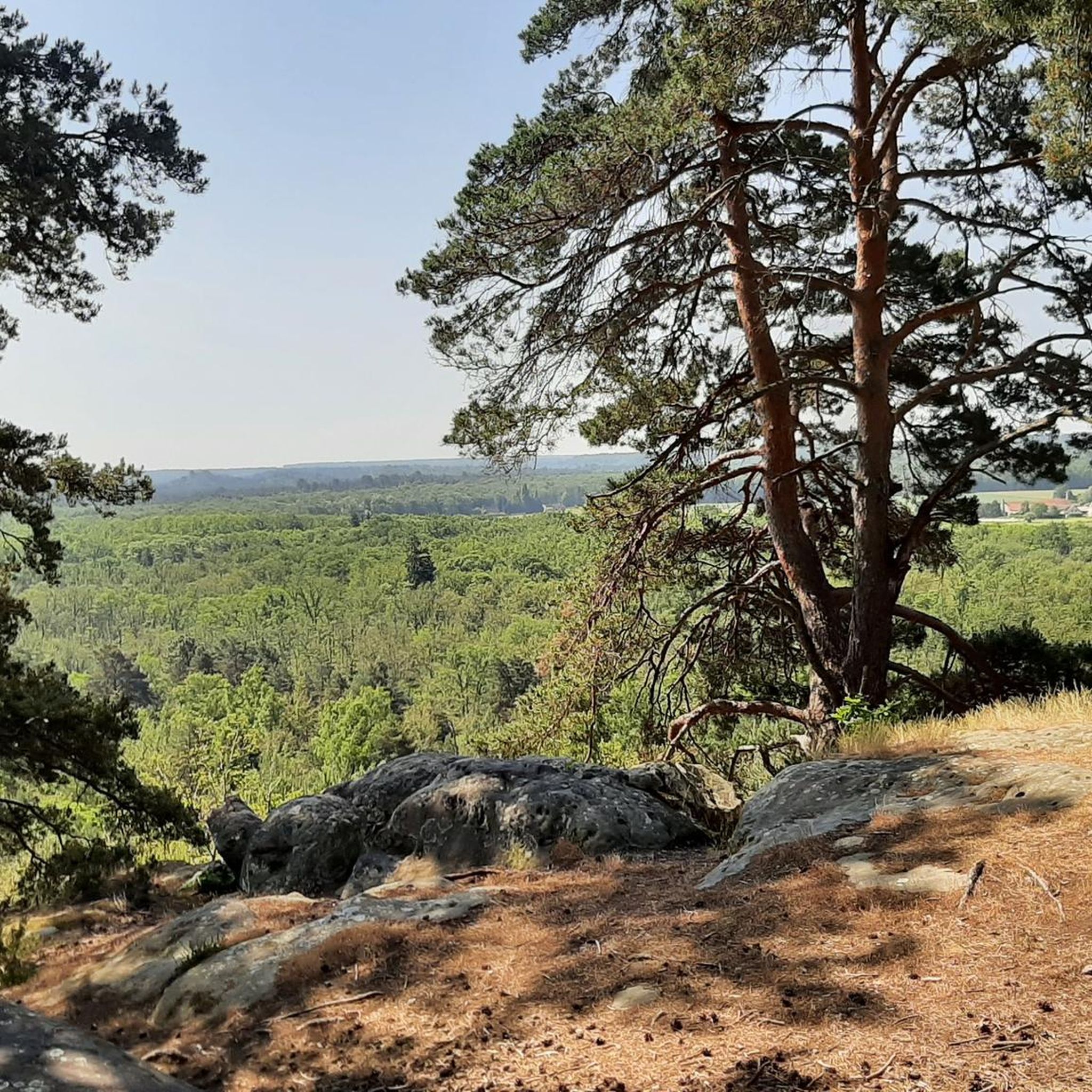
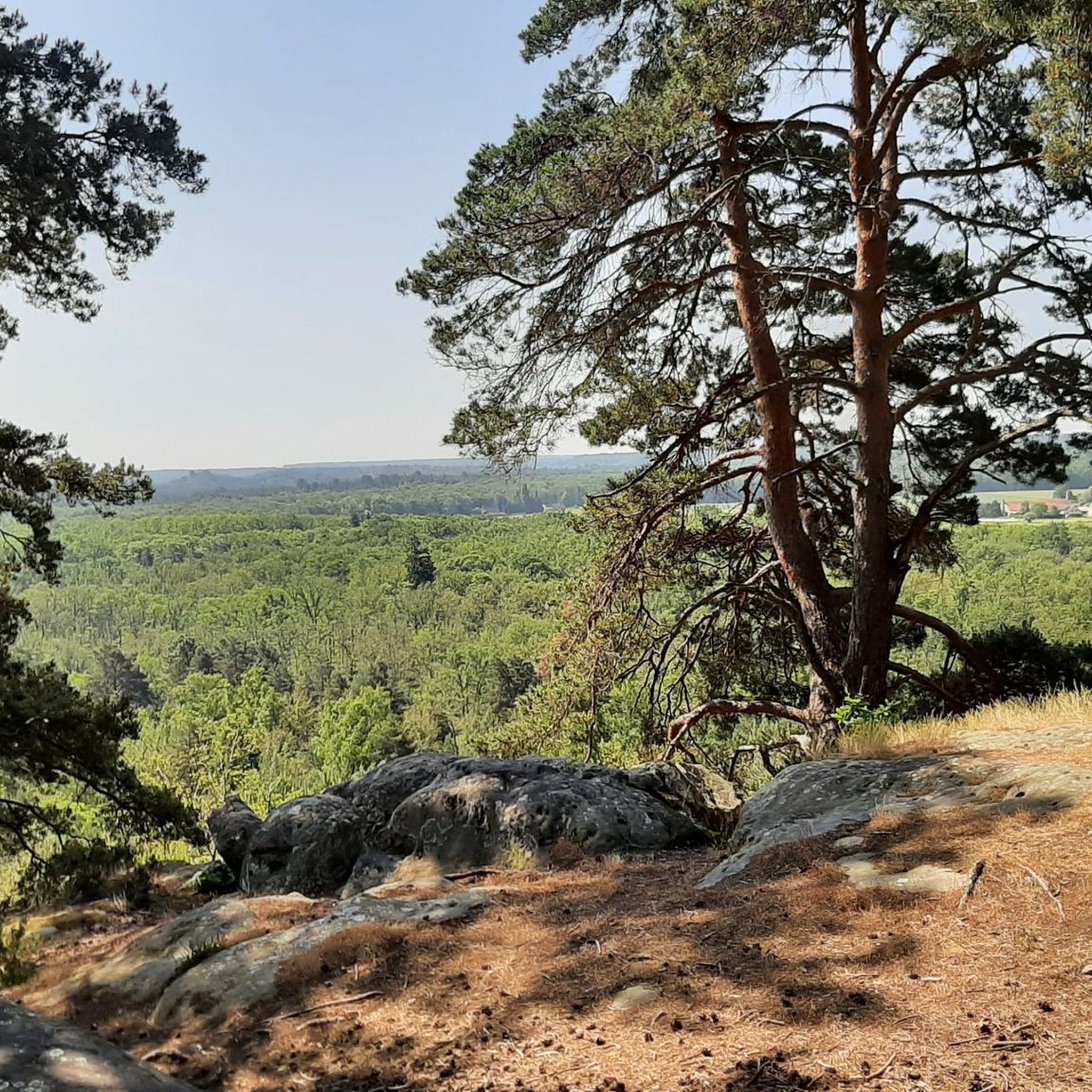
This Lorraine cross is actually located on the gable of the maquisards. There is a beautiful view of Fontainebleau. This place also serves as a break/photo point for trailers/hikers.
0
0

This was one of the locations used for the filming of the 3 Mousquetaires with Vincent Cassel, François Civil, Romain Dursis & Pio Marmai
0
0

The trail moves on to the main essentials The hall In 1479, by a special grace from Louis The North-South facing Hall, 46 m long, 16 m wide and 13 m high, covers a total surface area of 730 m2. 48 oak pillars, resting on “dice”-cut stone bases, support a chestnut frame typical of Ile-de-France at that time; this frame presents to the north (on the rue Langlois side) a “pavilion” farm. Today, La Halle is still the site of a market on Thursday afternoons. The square, the houses gathered all around, bear witness to the great commercial activity which already reigned in the region 500 years ago. La Halle has been classified as a Historic Monument since 1923. Bonde Castle is located near the town center of Milly-la-Forêt, Built near an artificial island in the l'École river to the west of the Notre-Dame collegiate church, its park is bordered to the west by the course of the river which forms a moat to the north protecting the châtelet. History Built in the 12th century by the lords of Milly, the castle was ruined during the English siege in 1432. At the end of the 15th century around 1475, owned by Admiral Louis Malet de Graville, it was rebuilt and enlarged. What was then the keep became the entrance gatehouse, the drawbridge was replaced by a permanent stone bridge and a gate closed access between the northern defense tower and the governor's house. A square courtyard was surrounded by a wall and had in the center a chapel dedicated to Saint Valentine. The castle was successively the property of Hugues III de Bouville, Olivier V de Clisson, Jean II de Montmorency, Jean-François de Faudoas d'Averton, Marc-Antoine Front de Beaupoil de Saint-Aulaire and Pierre Marie of Lau d’Allemans. In the 19th century, the towers of the chatelet were enhanced with brick battlements and a slender roof. In 1859 the Corne bridge was rebuilt near the castle washhouse which served as a watering trough for the animals. At the end of the 20th century the mills along the river were demolished. In 1964, the Bonde washhouse downstream of the river which was part of the estate was rehabilitated. On December 20, 1972, the castle was partly listed as a historic monument. The park was listed in 1991 for its fences, canals and paths. the house of Jean Cocteau. Entrance to the J. Cocteau house [This 17th century residence, flanked by turrets, was formerly called the Governor's House. It corresponds to an old outbuilding of the castle in front of which the vassals came to pay homage and faith to their lord. Jean Cocteau bought this house with Jean Marais in 1947 and lived there until his death. Notre-Dame de l’Assomption Church Founded in the 11th century, the former chapel of the castle, it was rebuilt around 1485 on the orders of Admiral de Graville in the Gothic style of the 13th and 14th centuries. The bell tower, 57 meters high, dates from the 11th century in its lower part and from the 12th and 13th centuries in its upper part. The arch of the main portal in the primitive Romanesque style comes from an old church in Milly (Saint-Pierre or Saint-Jacques). On the east side of the bell tower - Place Grammont side - the arms of Admiral de Graville are still visible. Many works of sacred art are found inside the church. The church was listed as a Historic Monument in 1926. The dovecote; Located on the old triangular square of the dovecote cul de sac, this old building was part of the Domaine du Moustier, property of Fulbert I, lord of Milly and officer at the court of Dagobert I in the 7th century. Destroyed in 1432 or 1433, the complex included a vast farm. According to a count in 1792 it had around 1200 niches. Only the lords held the right to build these premises designed for breeding. The Moustier de Péronne gate is one of the oldest vestiges of Milly and dates from the 7th century. It provided access to the moustier (monastery in old French) owned by Fulbert I, who obtained the land of Milly from Dagobert I. His son Wulfran was born there around the year 635. Entering religion, he became the apostle of the frieze (Netherlands), then bishop of Sens before retiring to Saint Wandrille where he died in 720.
1
0

There is no classic wayside cross (sometimes called a field cross in the open field) or a summit cross that crowns a mountain, but a rock engraving. The lower half of the drawing—whenever scratched into the rock—shows a chalice, such as might be used at Eucharistic celebrations. The outer edge of the vessel is decorated with a cross. Another great cross grows out of the chalice itself. Whether this rock engraving is actually connected to the order of the Knights Templar (the exact name was “Poor Knighthood of Christ and the Temple of Solomon in Jerusalem”), as indicated as a question in the highlight title, I cannot judge. In this case it would have to go back to the 12th or 13th century, i.e. it would have to have been preserved for a very long time.
2
0
This small sacred monument, in the shape of a "Croix de Lorraine," rises majestically on the Pignon des Maquisards. The structure consists of several elements: a two-tiered foundation above the rock, followed by a brick base containing a plaque with a dedicatory inscription. On top of this rests a brick obelisk, tapering slightly towards the top but not terminating in a point. Above the obelisk, the actual cross, visible from afar, stands enthroned in its typical form with two horizontal crossbeams.
0
1

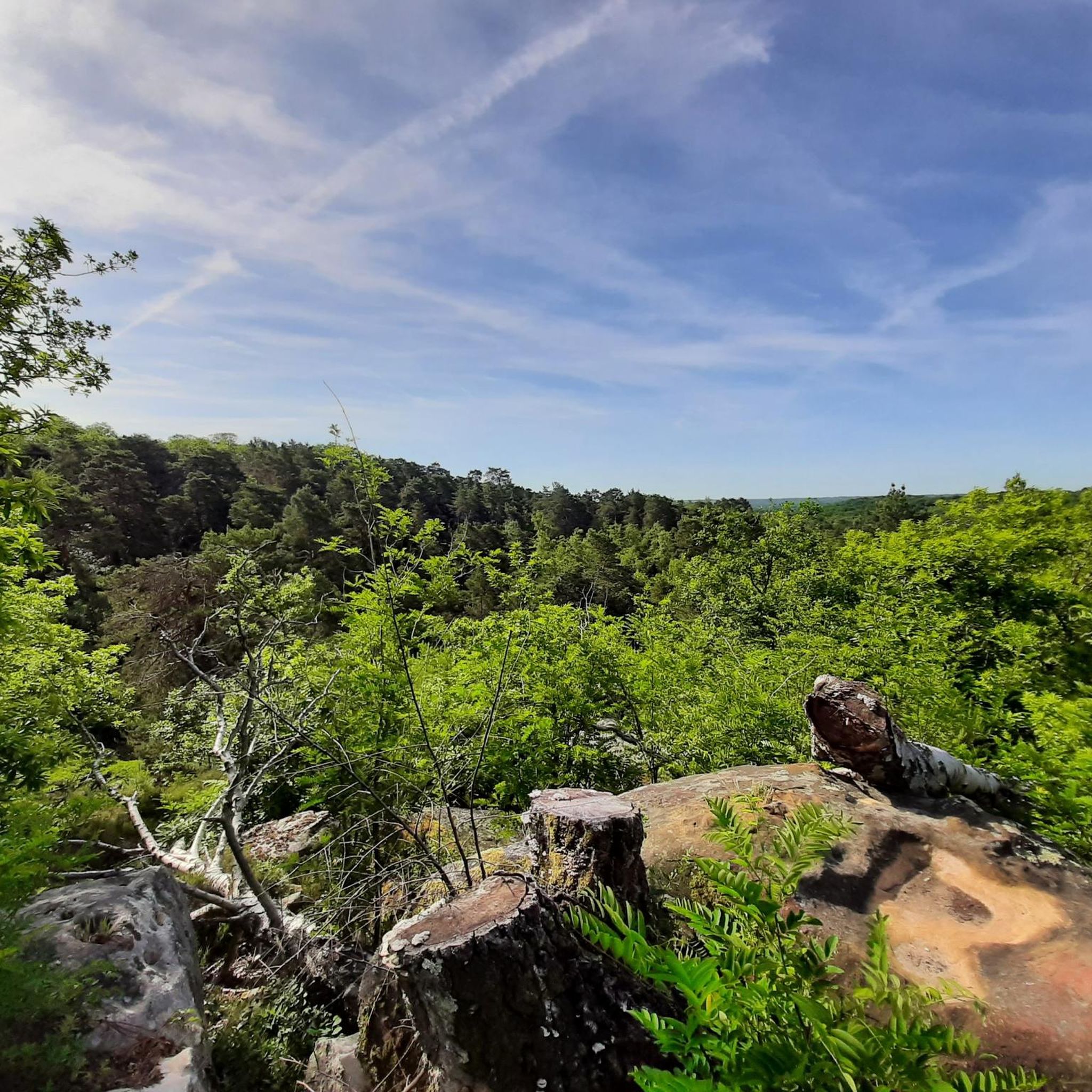
Great view, possibility to sit down for a break
1
2
Frequently Asked Questions
What historical sites can I explore in Moigny-sur-École?
Moigny-sur-École is rich in history. You can visit the Saint-Denis Church, dating back to the 12th century, which features early Gothic architecture, frescoes, and a rare frieze of human heads. Explore the vestiges of the ancient Fort Château, a motte-and-bailey castle that guarded the École River. Don't miss the Neolithic Polissoir de la Roche Grénolée, a polished sandstone slab used for weapons, or the historic Launay Fortified Farm. The village also has numerous old wells and washhouses, reflecting its historical connection to water.
Are there any natural attractions or features to see around Moigny-sur-École?
Yes, Moigny-sur-École is nestled in the verdant École Valley, offering diverse natural landscapes including alluvial plains, sandstone plateaus, and forests that are part of the Fontainebleau massif. The area is recognized for its rich biodiversity. You can also find the Grotte au Violon (Violin Cave) in the woods, known for its prehistoric rock engravings.
What outdoor activities are available near Moigny-sur-École?
The tranquil and rural character of Moigny-sur-École, within the French Gâtinais Regional Natural Park, makes it ideal for outdoor activities. You can find numerous trails for hiking, including a 4.5 km loop exploring the Gâtinais landscapes. There are also options for cycling and gravel biking, with routes ranging from easy to moderate difficulty.
What are some family-friendly attractions in the area?
Families can enjoy exploring the expansive grounds of Domaine de Courances, a 17th-century castle with a magnificent Renaissance water garden. The estate covers 75 hectares, offering plenty of space to roam. The nearby town of Milly-la-Forêt also offers cultural sites like the Maison de Jean Cocteau and the impressive The Cyclop of Jean Tinguely, which can be reached by foot or bike from Moigny-sur-École.
Are there any unique cultural or artistic sites nearby?
Absolutely. In nearby Milly-la-Forêt, you can visit the Maison de Jean Cocteau, the former home of the famous artist. Another unique site is The Cyclop of Jean Tinguely, a colossal and figurative architectural sculpture created by multiple artists. Moigny-sur-École itself is home to the last active artisanal sandstone quarry in the Fontainebleau massif, which historically supplied stone for major monuments like Versailles.
What is the Cross of Lorraine on the Maquisards' Pignon?
The Cross of Lorraine on the Maquisards' Pignon is a significant man-made monument and historical site. It serves as a memorial to the resistance fighters who operated from the massif of the three gables during World War II. Visitors appreciate it for its historical importance and the magnificent views it offers of the surrounding landscape.
Can I visit Fleury-en-Bière Castle?
The Fleury-en-Bière Castle is a historical castle known for its grandeur. However, it is private property and generally not open for public entry. While you can observe its impressive architecture from the outside, direct visits inside are usually not possible.
What is the best time to visit Moigny-sur-École for nature walks?
The École Valley and the surrounding French Gâtinais Regional Natural Park offer beautiful scenery throughout the year. Spring and autumn are particularly pleasant for nature walks, with mild temperatures and vibrant flora. Spring brings blooming plants, while autumn showcases colorful foliage. Summer is also suitable, though it can be warmer.
Are there any specific hiking trails recommended for easy walks?
Yes, there are several easy hiking routes around Moigny-sur-École. For example, the 'Mardelas Washhouse – Domaine de Courances loop from Dannemois' is an easy 6.9 km hike, and 'The Garnet Mill – Domaine de Courances loop from Moigny-sur-École' is another easy option at 4.6 km. You can find more details and routes on the hiking guide for Moigny-sur-École.
Where can I find local cuisine or places to eat in Moigny-sur-École?
While Moigny-sur-École is a tranquil village, you can find local dining options. For a unique experience, the Moulin de Dannemois, the former residence of singer Claude François, now operates as a museum, restaurant, and tea room. Additionally, nearby towns like Milly-la-Forêt offer more choices for cafes and restaurants.
What is the significance of the wells and washhouses in Moigny-sur-École?
Given Moigny-sur-École's proximity to the École River, water exploitation has always been central to the village's history. Numerous wells of various ages, both private and public, are scattered throughout the commune, with a particularly impressive example at Place du Puits showcasing typical Gâtinais architecture. The washhouses of Saint-Roch and Saint-Denis are also part of the small rural heritage, highlighting traditional life and water management in the region.
Are there any dog-friendly trails around Moigny-sur-École?
Many of the natural trails and paths in the École Valley and the French Gâtinais Regional Natural Park are suitable for walks with dogs. It's always recommended to keep dogs on a leash, especially in protected natural areas, to respect wildlife and other visitors. Check specific trail regulations for any particular restrictions.
Most popular routes around Moigny-Sur-École
Most popular attractions around Moigny-Sur-École

Get inspired with the komoot mobile app


Explore more
Still not found the Highlight you’re looking for? See guides of the top attractions in other regions:
