Attractions and Places To See around Saint-Romain-La-Virvée - Top 20
Best attractions and places to see around Saint-Romain-La-Virvée include a variety of historical sites and natural landscapes. This region, situated near the Dordogne river, offers opportunities to explore significant architectural structures and local heritage. Visitors can discover several hidden gems and places of interest within the area. The diverse attractions cater to those interested in history, engineering, and local culture.
Best attractions and places to see around Saint-Romain-La-Virvée
- The most popular attractions is Eiffel Bridge, a bridge that spans the Dordogne River. It features a newly created bike path and historical information panels for visitors.
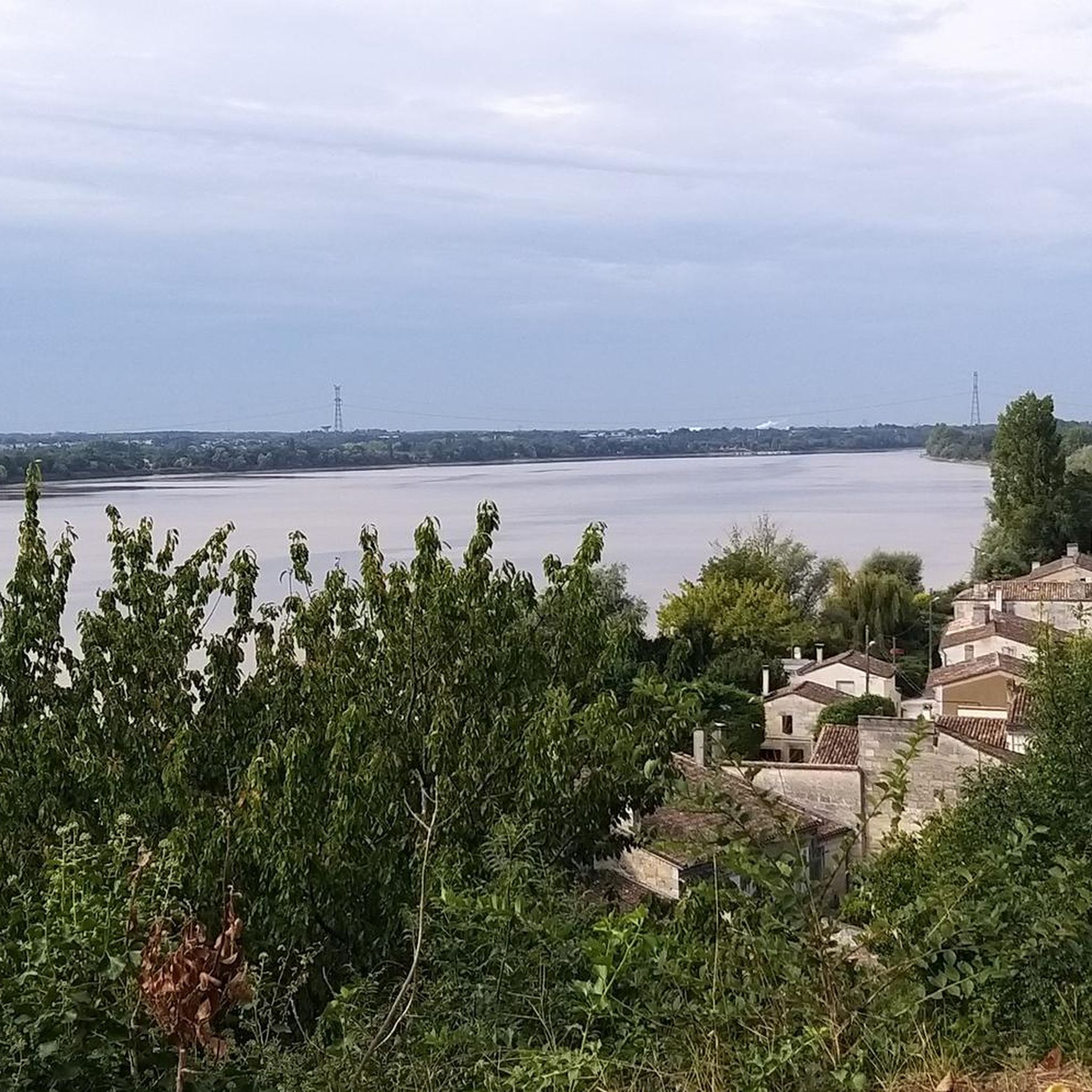
- Another must-see spot is Saint Vincent De Paul Town Hall, Church and Pond, a village with a lake located on the left bank of the Dordogne. The church is notable, even during restoration.
- Visitors also love Saint-André de Cubzac, a commune with historical vestiges and a fortified church. It is known for its Romanesque architecture and a 16th-century alabaster sculpture.
- Saint-Romain-La-Virvée is known for its historical bridges, religious buildings, and charming villages. The area offers a variety of attractions to see and explore, from engineering marvels to ancient churches.
- The attractions around Saint-Romain-La-Virvée are appreciated by the komoot community, with more than 70 upvotes and 10 photos shared by visitors.
Last updated: July 2, 2026
Saint Vincent De Paul Town Hall, Church and Pond
Highlight • Other
Translated by Google •
Tip by

Eiffel Bridge of Cubzac-les-Ponts
Highlight • Bridge
Translated by Google •
Tip by

Sign up now to discover places like this
Get recommendations on the best single tracks, peaks, & plenty of other exciting outdoor places.
Sign up for free
Saint-André de Cubzac
Highlight • Monument
En 1341, Édouard III d’Angleterre érigea la terre du Cubzaguais en châtellenie et la donna à Bérard III d’Albret, en raison de services rendus. Après la victoire de Castillon en 1453, les places anglaises revenaient à la France et Cubzac –dont la vocation à l’origine était principalement militaire– n’avait plus véritablement de raison d’exister. Suite à ce déclin, le siège de la châtellenie se déplaçait du château de Cubzac à la maison noble du Bouilh, qui donnait à la région une impulsion nouvelle économique.
Les guerres de religion ont sévi dans cette zone. Au cours de la période de la Convention nationale (1792-1795), la commune a adopté le nom révolutionnaire de Montalon. Le site de Montalon abrite les restes de trois moulins, dont l'un est transformé en petit observatoire. On peut par ailleurs y trouver la borne du « 45e parallèle » nord.
Vierge de Pitié, groupe sculpté de l'intérieur de l'église Saint-André classé monument historique en 1971.
Château du Bouilh, construit vers 1786-1787 pour le compte de Jean-Frédéric de La Tour du Pin Gouvernet
Le phare du port de Plagne,
Le port de Plagne ; ancien haut lieu de la pêche à l'esturgeon.
Le platane de Robillard, tricentenaire.
Le château Robillard est un castel du xvie siècle ; durant l'été, des spectacles y sont régulièrement donnés fr.wikipedia.org/wiki/Saint-Andr%C3%A9-de-Cubzac
Tip by
Carbon-Blanc, Liberation Square and Saint Paulin Church
Highlight • Other
The term “white charcoal” was sometimes used in the south of Toulouse to designate the central part of the ear of corn, due to the fact that its color is white and that its lightness makes it an interesting fuel, in particular for “well setting” »The fire when you light the fireplace.
Carbon-Blanc is not only the smallest municipality of the Bordeaux Metropolis by its size (less than 4 square kilometers), but it is also one of the youngest since its creation dates from 1853, date on which a decree of Napoleon III separated the territory from that of Bassens. But its history is very old.
The first traces of human occupation date back to Roman antiquity. A villa, the remains of which have been unearthed, then occupies the bottom of the slope which leads to the Gua valley, on the site of the current municipal center. fr.wikipedia.org/wiki/Carbon-Blanc#Toponymie
Translated by Google •
Tip by
Cubzac-les-Ponts railway bridge
Highlight • Bridge
Translated by Google •
Tip by
Sign up for free to discover even more attractions around Saint-Romain-La-Virvée.
Sign up for free
Already have an account?
Start today with a free account
Your next adventure awaits.
Login or Signup



Tips from the Community

This road bridge was built by Gustave Eiffel, between 1879 and 1883, on the foundations of a first suspension bridge (1839-1869) carried away by a storm. Destroyed during the Second World War, it was rebuilt by his grandson. The access ramp is supported by stone arcades which, seen from below, have the appearance of a Gothic cathedral.
0
0

A little piece of history with this bridge built by Gustave Eiffel!
0
0
Pretty lake with ducks, the opportunity to rest in a bucolic setting.
1
0

The Church of Saint-André-du-Nom-de-Dieu includes sections whose construction dates from the 12th to the 19th centuries. It was built by the Benedictines of the Abbey of La Sauve-Majeure and was once used by a priory founded after 1115, dependent on the abbey. The dominant style of this fortified church is Romanesque. Its massive, square-based bell tower is imposing. The building boasts beautiful stained-glass windows and a remarkable organ case. The church was last restored in 1977. The Virgin of Mercy is an alabaster sculpture dating from the 16th century and is a listed historic monument.
1
0
Construction of the Saint-Paulin church began in 1849. It was initially just a chapel linked to the Saint-Pierre de Bassens parish church. It became a parish church in 1852, one year before the creation of the commune of Carbon-Blanc. The bell tower was designed by Pierre Labbé: begun in 1848, it was completed with a spire in 1852. The transept and sacristies were built in 1864. The church has magnificent stained-glass windows installed gradually between 1867 and 1890 in the choir, the nave and the gallery, and finally the baptismal font. It is remarkable and quite rare that the works of three generations of master glassmakers (Thibaud, Villiet and Dagrand) are exhibited in the same church. The latter was restored in 1993.
1
0

Nice spot for a break before continuing on the old Eiffel bridge !
1
0

Quiet recovery 🙂
3
0

The linguistic proximity of the "Pont Eiffel", which spans the Dordogne river here, and the low mountain range "Eifel" in the far west of Germany is no coincidence: The family of the designer - whose world-famous Tower of Paris (named after its builder) is probably known to everyone - has German roots. The ancestors of the Eiffel Tower builder Gustave EIFFEL come from the Eifel town of Marmagen (in the Euskirchen district, North Rhine-Westphalia). The village square there - if you are interested, see the following hiking highlight https://www.komoot.com/de-de/highlight/1830307 - is named after him.
6
0
Frequently Asked Questions
What historical sites can I visit around Saint-Romain-La-Virvée?
The region is rich in history. You can explore Saint-André de Cubzac, a commune with historical vestiges, including a fortified Romanesque church and a 16th-century alabaster sculpture. The area also features the historic Eiffel Bridge of Cubzac-les-Ponts, an engineering marvel with a fascinating past.
Are there any notable engineering marvels to see in the area?
Yes, the most prominent is the Eiffel Bridge, which spans the Dordogne River. Built by Gustave Eiffel's family, it features a newly created bike path and information panels detailing its history and reconstruction after WWII.
What kind of natural landscapes or viewpoints can I explore?
You can visit Saint Vincent De Paul Town Hall, Church and Pond, a charming village with a picturesque lake on the left bank of the Dordogne. For more adventurous views, the Villegouge Singletrack offers challenging terrain and rewarding panoramas, though it's not suitable for beginners.
Are there family-friendly activities around Saint-Romain-La-Virvée?
Families can enjoy cycling on the dedicated bike path of the Eiffel Bridge, which offers a safe and scenic route. The village of Saint Vincent De Paul with its pond provides a pleasant setting for a leisurely stroll.
What outdoor activities, like cycling, are available near these attractions?
The region offers excellent cycling opportunities. You can find numerous routes for road cycling, gravel biking, and general cycling. For example, there are moderate road cycling routes like the 'Eiffel Bridge – Cubzac-sur-Dordogne Bridge loop' and various gravel biking trails. You can explore more options on the Road Cycling Routes, Gravel Biking, and Cycling guide pages.
Are there any wheelchair-accessible attractions?
Yes, the Eiffel Bridge of Cubzac-les-Ponts is noted as being wheelchair accessible, offering an opportunity for everyone to enjoy its historical significance and views over the Dordogne.
What do visitors enjoy most about the attractions in Saint-Romain-La-Virvée?
Visitors frequently praise the stunning views from the Eiffel Bridge and its well-maintained bike path. The historical information panels on the bridge are also highly appreciated. The charm of villages like Saint Vincent De Paul and the historical depth of Saint-André de Cubzac are also popular highlights.
Are there any challenging trails for experienced outdoor enthusiasts?
For those seeking a challenge, the Villegouge Singletrack is a very narrow trail with limestone pebbles, holes, and large steps. It offers a nice panorama but is described as challenging and not suitable for beginners.
Can I find places to relax by the water?
Yes, the pond at Saint Vincent De Paul Town Hall, Church and Pond provides a pleasant and cute setting by the water, ideal for a relaxing visit.
What is the best way to experience the Dordogne River in this area?
The best way to experience the Dordogne River is by cycling or walking across the Eiffel Bridge. It offers direct views of the river and connects the communes, providing a unique perspective of the landscape.
Are there any religious buildings of interest?
The church in Saint Vincent De Paul is notable, even during restoration. Additionally, Saint-André de Cubzac features a fortified Romanesque church with sections dating from the 12th century, including beautiful stained-glass windows and a remarkable organ case.
Most popular routes around Saint-Romain-La-Virvée

Get inspired with the komoot mobile app


Explore more
Still not found the Highlight you’re looking for? See guides of the top attractions in other regions:
