The best walks and hikes around Souvigné
4.7
(42)
241
hikers
31
hikes
Hiking around Souvigné offers diverse landscapes, including the expansive Forest of the Hermitain and the picturesque Sèvre Niortaise valley. The region features a hilly countryside with varied terrain, from woodlands to plains, shaped by a geological fault. Trails frequently pass through hamlets, revealing historical wells and lavoirs, providing a blend of natural beauty and cultural heritage.
Best hiking trails in Souvigné
- The most popular hiking route is Val Joyeux Lake Trail, a 4.0 miles (6.4 km) trail that takes…
Last updated: July 4, 2026
4.8
(18)
116
hikers
6.42km
01:40
40m
40m
Easy hike. Great for any fitness level. Easily-accessible paths. Suitable for all skill levels.
4.8
(8)
34
hikers
13.7km
03:31
50m
50m
Moderate hike. Good fitness required. Easily-accessible paths. Suitable for all skill levels.

Sign up for free
3.0
(1)
4
hikers
4.63km
01:11
20m
20m
Easy hike. Great for any fitness level. Easily-accessible paths. Suitable for all skill levels.
5.0
(1)
5
hikers
14.7km
03:50
110m
110m
Moderate hike. Good fitness required. Easily-accessible paths. Suitable for all skill levels.
5.0
(1)
5
hikers
Moderate hike. Good fitness required. Easily-accessible paths. Suitable for all skill levels.
Get access to more routes and recommendations from other explorers.
Sign up for free
Already have an account?
Our route recommendations are based on thousands of hikes, rides, and runs completed by other people on komoot.
Start today with a free account
Your next adventure awaits.
Login or Signup

Tips from the Community

In Touraine, in the heart of a wooded estate, the Château de Champchevrier is both royal and family-friendly. Family-friendly because it has been inhabited by the same family since 1728. Royal because Kings Louis Louis XIII stayed at the castle on several occasions, his doctor Jean Hérouard recounts it in his memoirs. Rebuilt during the Renaissance then embellished in the 18th century, Champchevrier is both a Historic Monument and a family castle in which each generation has passed on the love and respect for heritage. The history of the castle begins in the 11th century when a first building was built by Hugues de Champchevrier. The owners then succeeded one another on these lands: the Maillé family, the Lavals, the Bastarnays then in 1550, the Daillons who were behind the construction of the Renaissance castle. On the François I Pavilion, we can still see the mullioned windows from this period. Henri de Daillon having no sons, it was his nephew Antoine de Roquelaure, Marshal of France, who inherited the castle in 1686. He contributed to the exterior development of the castle by creating courtyards, gardens and a moat. The Château de Champchevrier was sold in 1728 to Jean-Baptiste Pierre Henri, first Baron de Champchevrier. In fact, the lands of the domain were erected into a barony in 1741 by letters patent from Louis XV. The first baron created the large perspectives which extend from the castle towards the forest, and had the terrace built to give elegance to the residence. This taste for the French art of living is found in particular in the immense portrait room covered with a magnificent Italian marble floor and adorned with a sumptuous 18th century earthenware stove commissioned by a royal repurchase during the demolition of the Château de Richelieu. A very beautiful set of porcelain tableware and numerous pieces of old crystal are displayed in display cases. The beauty of the Château de Champchevrier also lies in the rich furniture of the different rooms open to the public: in the music room, the precious Regency period furniture was already part of the inventory of the château when it was purchased by the family in 1728. But the visit is also worth the detour for its collection of exceptional tapestries made by three factories in the 16th and 17th centuries, including eight unique tapestries in the world from the royal factory of Amiens based on cartoons by Simon Vouët, official painter to Louis XIIII . Finally, the Château de Champchevrier reveals the daily life of those who shared the lives of the owners behind the scenes. The lingerie, particularly complete in terms of accessories, is an interesting testimony to all the stewardship necessary for the life of such a place. In the old kitchens, the large battery of copper pans and other utensils from yesteryear allows you to imagine the activity of the staff. A visit to the Château de Champchevrier is an unforgettable walk between nature and heritage, to the rhythm of the seasons between the life of the hounds and the family events of a residence whose inhabitants, guarantors of traditions, have their eyes fixed on the future.
0
0

These are the ruins of a 15th century castle. After 12 years of opening to the public, the castle is changing the way guided tours take place. These will now be by appointment only, every day and all year except Tuesdays from 9:30 a.m. to 12:30 p.m. and 2:00 p.m. to 6:00 p.m. More info here: http://www.chateaudevaujours.fr/
0
0
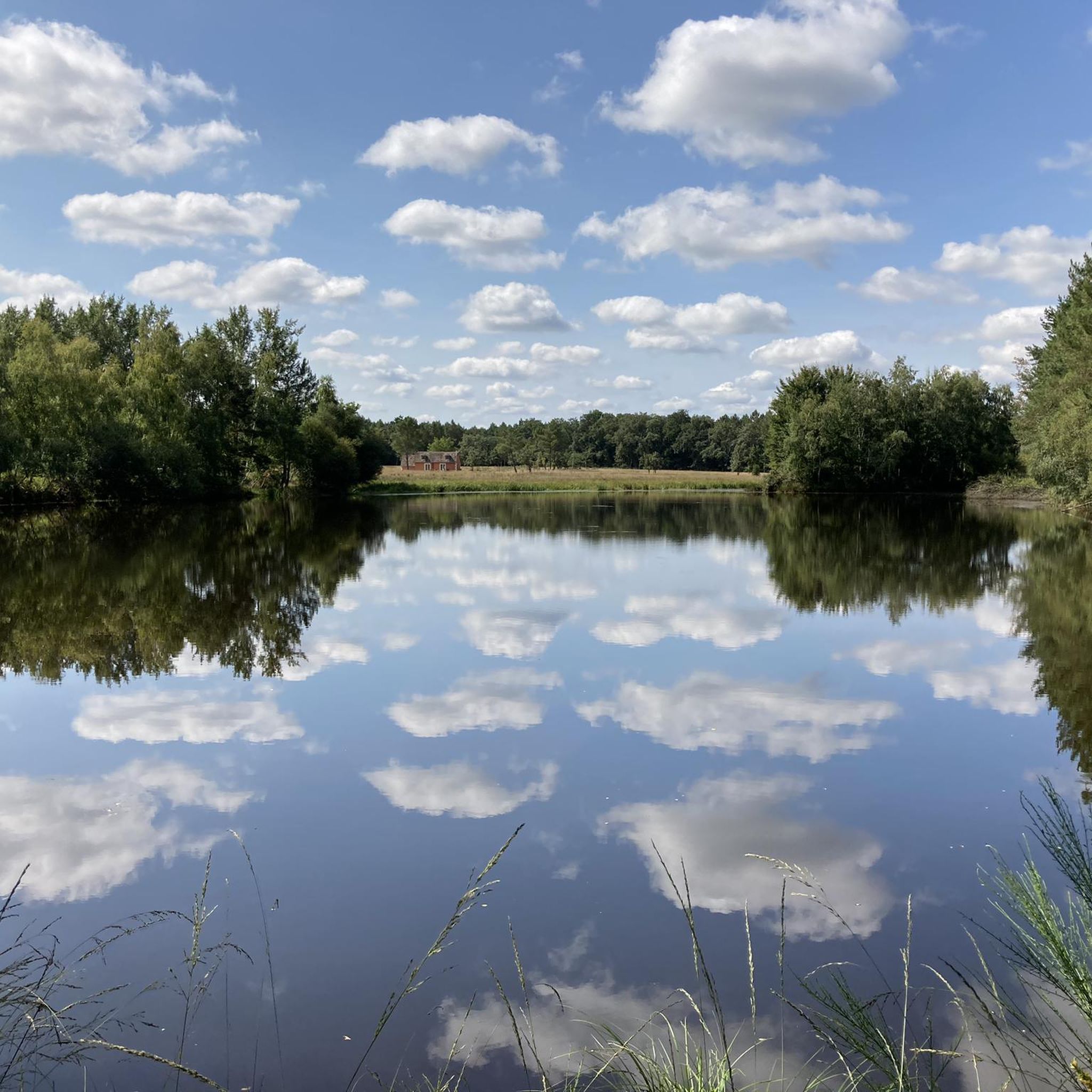
This is the menhir of the Val Joyous lake at Château la Vallière
0
0

Family property, Champchevrier Castle is a historic castle inhabited by the same family since 1728. It is open to the public from June 15 to the third weekend of September, European Heritage Days weekend.
1
0

one of the many castles in the Loire, from the 16th century
1
0

It's a big rock in the middle of a field... Why on earth the people way back when decided to put it there, I've no idea, but it's awesome!
0
0

The Menhir of Vaujours is a leaning megalithic stone, planted vertically which dates from the Neolithic era. It is a huge stone over 3.50 meters high and 1.50 meters wide.
2
0
The Menhir of Vaujours is a leaning megalithic stone, planted vertically which dates from the Neolithic era. It is a huge stone over 3.50 meters high and 1.50 meters wide.
3
0
Frequently Asked Questions
How many hiking trails are available around Souvigné?
There are over 25 hiking trails around Souvigné, catering to various fitness levels. You'll find a good mix of easy walks, moderate routes, and even a challenging option for experienced hikers.
What kind of landscapes can I expect to see on hikes in Souvigné?
Souvigné offers a diverse range of landscapes. You can explore lush green valleys, rolling hills, and dense forests like the Forêt de l'Hermitain, home to the impressive 'Le Patriarche' oak. Many trails also follow peaceful stream banks, cross open meadows, and showcase the region's unique bocage scenery.
Are there any easy, family-friendly walks in Souvigné?
Yes, Souvigné has several easy trails perfect for families. A great option is the Val Joyeux Lake Trail, which is about 6.4 km long and explores the scenic area around Val Joyeux Lake. Another easy choice is the Étang des Bois – Étang de Chouzé loop from Château de Vaujours, which is just over 4.5 km.
Are there any circular hiking routes in the Souvigné area?
Many of the trails around Souvigné are circular, allowing you to start and end at the same point. For example, the moderate Cléré-les-Pins loop offers varied scenery over 13.7 km. Another popular circular route is the Château du Breuil loop from Saint-Paterne, which is about 12.8 km.
What are some interesting natural features or landmarks to look out for on the trails?
Souvigné is rich in natural and historical points of interest. You might encounter the ancient 'Le Patriarche' oak in the Forêt de l'Hermitain, or discover historical wells and washhouses along the Savrelle stream valley. Don't miss Le Puits d'Enfer, a unique wooded area with a stream and multiple waterfalls, offering impressive scenery and limestone cliffs. You can also visit the Val Joyeux Lake.
What is the best time of year to go hiking in Souvigné?
The best times to visit Souvigné for outdoor activities are spring (March-May) for blooming wildflowers, summer (June-September) for hiking combined with pleasant weather, and autumn (October-November) for the vibrant colors of the deciduous trees in the forests.
Are there any trails with waterfalls in Souvigné?
Yes, the unique wooded area known as Le Puits d'Enfer features a stream and multiple waterfalls, making it an impressive site for refreshing walks. It's characterized by magnificent scenery, limestone cliffs, and lush vegetation.
What do other hikers say about the trails in Souvigné?
The trails in Souvigné are highly rated by the komoot community, with an average score of 4.7 stars from over 40 reviews. Hikers often praise the diverse landscapes, from dense woodlands to open meadows, and the well-maintained paths that offer a blend of natural beauty and cultural heritage.
Are there any historical sites or castles accessible from the hiking trails?
Yes, the region has several historical traces. You can discover historical wells and washhouses in the Savrelle stream valley. Additionally, you might pass by sites like the Château de Vaujours Ruins or the impressive Château de Champchevrier, adding a cultural dimension to your hike.
Where can I find more information about the Souvigné region?
For additional information about the Souvigné region, including local attractions and services, you can visit the official tourism website: tourisme-hautvaldesevre.fr.
Are there opportunities for birdwatching while hiking in Souvigné?
Yes, Souvigné is an excellent spot for birdwatching, particularly around local ponds like Curécy Pond. This pond serves as a refuge for migratory birds and features an accessible observatory on its shore, making it a great addition to a hike.
Most popular attractions around Souvigné

Get inspired with the komoot mobile app


Explore more
Browse the best Hikes in other regions.
