Attractions and Places To See around Seuilly - Top 20
Best attractions and places to see around Seuilly include historical sites, castles, and natural landscapes within the Loire Valley. This region is notable for its connection to the writer François Rabelais and offers a blend of cultural heritage and scenic beauty. Visitors can explore ancient abbeys, medieval fortresses, and museums. The area provides opportunities to discover the rich history and diverse points of interest.
Best attractions and places to see around Seuilly
- The most popular attractions is Fontevraud Royal Abbey…
Last updated: August 25, 2026
Montsoreau Castle
Highlight • Castle
Above all, since 2016 Montsoreau …
Translated by Google •
Tip by

Fontevraud Royal Abbey
Highlight • Religious Site
Translated by Google •
Tip by

Sign up now to discover places like this
Get recommendations on the best single tracks, peaks, & plenty of other exciting outdoor places.
Sign up for free
Saint Martin Collegiate Church, Candes
Highlight • Historical Site
Translated by Google •
Tip by

Royal Fortress of Chinon
Highlight • Castle
Translated by Google •
Tip by
Fontevraud
Highlight • Settlement
Translated by Google •
Tip by
Sign up for free to discover even more attractions around Seuilly.
Sign up for free
Already have an account?
Start today with a free account
Your next adventure awaits.
Login or Signup

Tips from the Community

The Royal Abbey of Fontevraud is one of the largest monastic communities in Europe dating back to the Middle Ages. It is a place with a rich history, located in the heart of the Loire Valley and listed as a UNESCO World Heritage Site. The abbey is a unique cultural site! An abbey with a royal destination, a formidable prison is today a place of creation (museum of modern art).
3
0
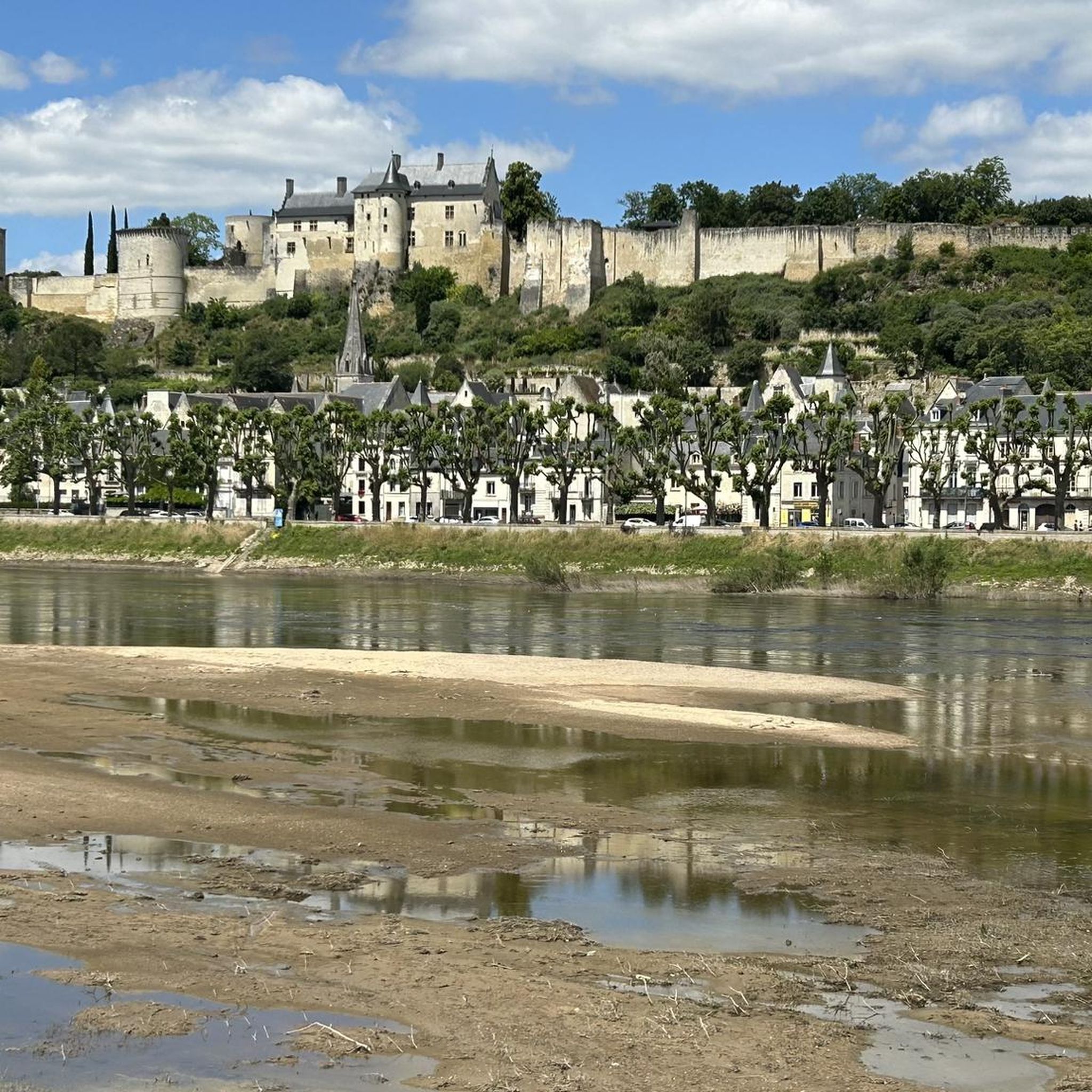
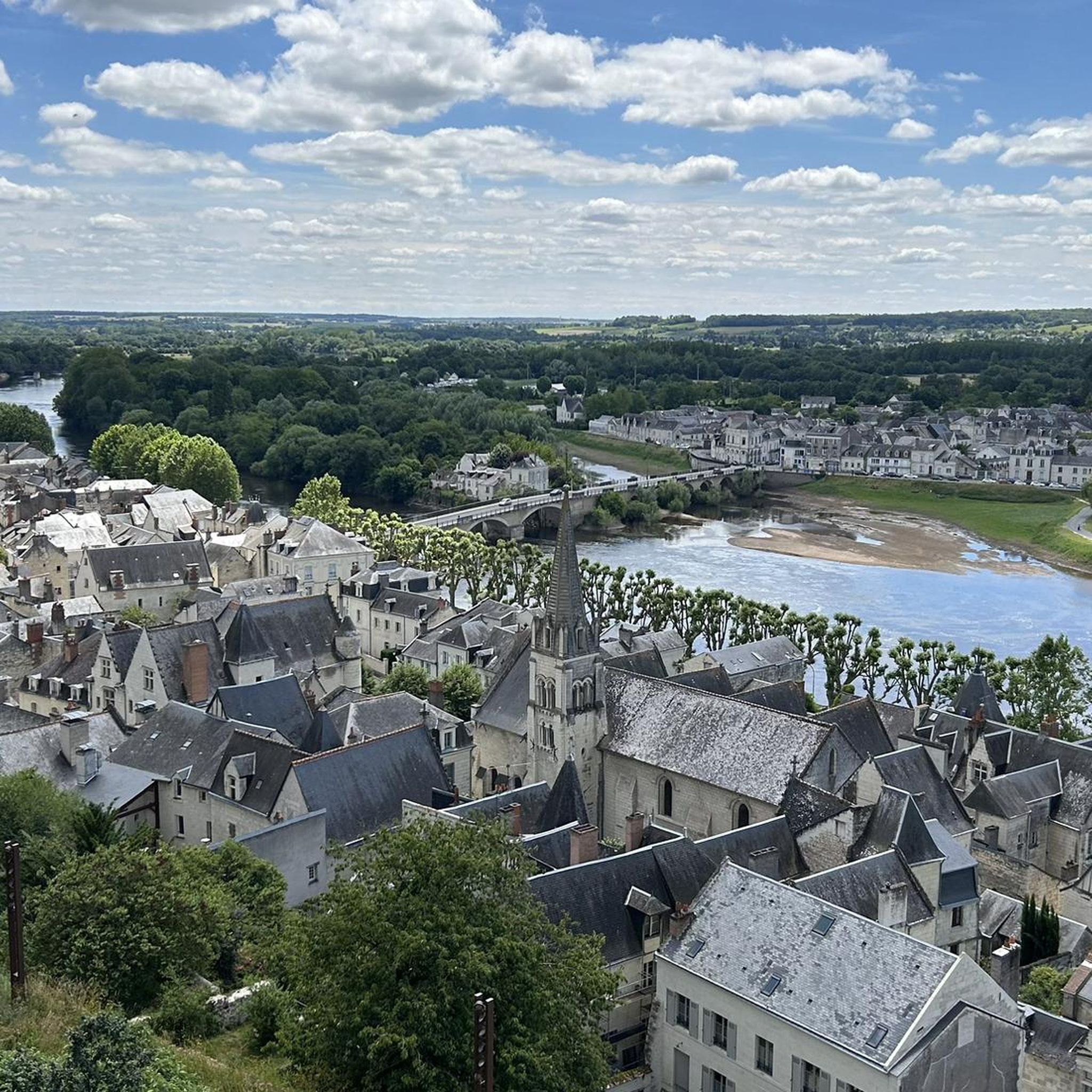
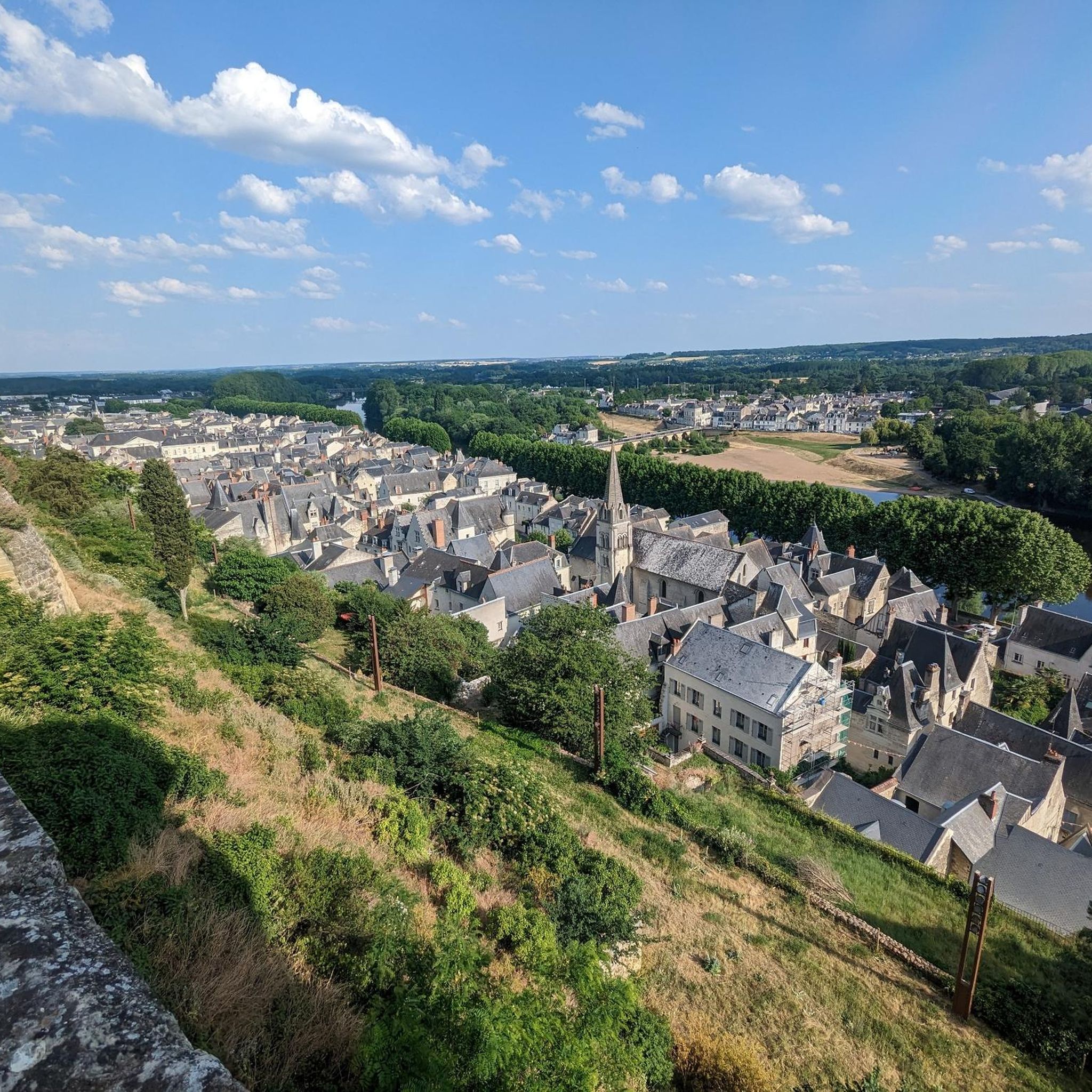
History in brief Antiquity: the site is strategically located on a promontory and has been inhabited for 3,000 years. It was not fortified until the end of the Roman Empire. Middle Ages: in 1154, the new King of England, Henry II Plantagenet, became ruler of an empire stretching from Scotland to the Pyrenees and made Chinon his continental capital. He had a large palace built next to the fortress, which has now disappeared. In 1189, abandoned by his sons, Richard the Lionheart and John Lackland, and fleeing from the King of France, he eventually died there. Philippe Auguste had the defensive Tour du Coudray built there after the siege of 1205. Renaissance: in 1454, the fortress became the main residence of Queen Marie d'Anjou, who lived there without her husband. She spent lavishly on decorating the house to her taste. From the 16th century onwards, the fortress was gradually abandoned and fell into disrepair. Despite the dangerous nature of the terrain, it became a public promenade in 1824 and was listed as a monument in 1840. The restoration of the estate began in 1854 thanks to the efforts of the writer Prosper Mérimée. Source: https://loirelovers.fr/en/visit-royal-fort-chinon/
6
0
Fontevraud-l'Abbaye is located in the natural region of the Loire Valley, listed as a "living cultural landscape" by UNESCO. As its name suggests, the history and present of the municipality are closely linked to the Abbey of Notre-Dame, founded in 1099. The abbey presents the originality of being part of a mixed order, but led by abbesses until the Revolution. was the necropolis of the Plantagenet dynasty. The recumbent figures of Richard the Lionheart, Henry II and Eleanor of Aquitaine are still preserved there. The vast abbey complex was transformed by Napoleon I into a penal colony and then into a "central house". This extraordinary prison closed its doors in 1963. While the abbey church and the various monastic sites were rehabilitated, the entire old abbey has since housed a prestigious cultural centre with, among other things, a renowned art museum, welcoming meetings and artists in residence. Art, history and heritage are highlighted throughout the year.
4
0
Located at the crossroads of Anjou, Touraine and Poitou, welcome to the Fontevraud-l'Abbaye Tourist Office, our travel advisors will welcome you in front of the Saint-Michel church to help you discover the destination. Let us advise you and discover a village full of charm. Formed around the famous royal abbey, the Plantagenets necropolis, it is today a lively village, rich in numerous monuments, shops and craftsmen. The Tourist Office offers you: a privileged welcome - a free wifi hotspot - a shop with a wide choice of regional products, gifts, books and souvenirs - good tips to visit more and spend less when buying your entrance tickets - a complete tourist guide - a website - but also to travel light, by leaving your luggage with us. More information and opening hours at https://www.ot-saumur.fr/nl/sheets/vvv-kantoor-fontevraud-labbaye-5404626/
5
0
The Royal Abbey of Fontevraud is one of the largest monastic communities in Europe dating back to the Middle Ages. It is a place steeped in history, located in the heart of the Loire Valley and listed as a UNESCO World Heritage Site. Let yourself be carried away by the magic of this ancient site and discover the Royal Abbey of Fontevraud, an architectural and historical jewel that will fascinate young and old alike. Thanks to captivating exhibitions, fascinating guided tours and a rich cultural programme, you will immerse yourself in the unique world of this abbey, founded in the 11th century and once a necropolis of the Plantagenets. Every stone, every vault, every corner tells a story... But Fontevraud is much more than a historical site... Broaden your discovery with a visit to the Fontevraud Museum of Modern Art, which houses more than 800 works donated by Martine and Léon Cligman. A prestigious collection that combines ancient and modern art, for an artistic immersion through the ages. Triggered? Find out more at https://www.ot-saumur.fr/en/abbeys-and-religious-heritage/royal-abbey-of-fontevraud-5344942/
4
0
The Royal Abbey of Fontevraud is one of the largest monastic communities in Europe dating back to the Middle Ages. It is a place with a rich history, located in the heart of the Loire Valley and listed as a UNESCO World Heritage Site.
5
0

Candes-Saint-Martin is the home of Saint Martin, Bishop of Tours, who died there in 397 on the exact site of the present collegiate church.
1
0

the paths of the castles - and another castle!
1
1
Frequently Asked Questions
What historical sites can I visit in Seuilly itself?
Seuilly is rich in history. You can explore the Musée Rabelais - La Devinière, the birthplace of François Rabelais, which dates back to the 15th century and includes a literary museum, troglodytic habitats, and vineyards. Another significant site is the Abbaye de Seuilly, founded around 1095, where Rabelais undertook his early studies. Its exteriors and gardens are freely accessible, and the Maison de Pays within offers local products and information. The 12th-century Eglise Saint Pierre in the village center is also notable for its stained-glass windows and historical significance.
Are there any castles to explore near Seuilly?
Yes, several impressive castles are within easy reach of Seuilly. The Royal Fortress of Chinon, just 6 km away, is a significant historical castle occupied for 3,000 years and associated with Joan of Arc. Another must-see is Montsoreau Castle, a UNESCO World Heritage Site that now houses a Museum of Contemporary Art. While the Château du Coudray-Montpensier in Seuilly is currently closed to the public, its 14th-century architecture is still noteworthy.
What natural landscapes and outdoor activities are available around Seuilly?
Seuilly is nestled within the 'mythical Rabelaisian landscapes,' offering beautiful scenery for outdoor activities. You can enjoy hiking trails that showcase the area's natural beauty, such as 'Sur les pas de Rabelais Botaniste' which connects the Abbey's gardens to La Devinière. The 'Sentier des guerres picrocholines' offers a longer route for hikers and cyclists across three communes. Additionally, the Marais de Taligny, a marsh near La Devinière and Seuilly Abbey, is a significant natural site with plans for future discovery trails.
Are there family-friendly attractions in the Seuilly area?
Absolutely! Many attractions around Seuilly are suitable for families. The Fontevraud Royal Abbey is a large monastic community with captivating exhibitions and guided tours that appeal to all ages. The Royal Fortress of Chinon offers a high-tech 'histopad' guided tour, an Escape Game, and family events during holidays. Montsoreau Castle, with its contemporary art museum, also hosts various events throughout the year that can engage families.
Where can I find hiking trails near Seuilly?
Seuilly offers several hiking opportunities. You can explore trails that highlight the 'Rabelaisian landscapes,' including an interpretative trail called 'Sur les pas de Rabelais Botaniste' which starts at the Abbey's gardens and leads to La Devinière. Other trails range from 7 km to 17 km, offering panoramic views, leading to an old mill-tower, or following the Quincampoix stream. The 'Sentier des guerres picrocholines' is a longer option for hikers and cyclists.
What cycling routes are available around Seuilly?
The area around Seuilly is excellent for cycling. You can find various routes for different types of biking. For mountain biking, explore routes like the 'Royal Abbey of Fontevraud – Troglodyte houses loop' or the 'Royal Fortress of Chinon – Views of Chinon and beyond loop.' Gravel biking options include the 'View of Candes-Saint-Martin – Saumur loop.' For general cycling, consider the 'Chinon Fortress – View of Château de Chinon loop' or the 'View of Château de Chinon loop from Thizay.' You can find more details on these and other routes in the MTB Trails around Seuilly, Gravel biking around Seuilly, and Cycling around Seuilly guides.
What is the best time of year to visit Seuilly for outdoor activities?
The Loire Valley generally enjoys pleasant weather for outdoor activities from spring through early autumn. Spring (April-May) brings blooming landscapes and mild temperatures, ideal for hiking and cycling. Summer (June-August) is warm and sunny, perfect for longer days exploring, though it can be busy. Early autumn (September-October) offers comfortable temperatures, beautiful fall foliage, and fewer crowds, making it another excellent time for outdoor pursuits.
Are there any unique natural features to explore near Seuilly?
Beyond the Rabelaisian landscapes, the Marais de Taligny is a unique natural site near La Devinière and Seuilly Abbey. This marsh is of scientific interest, with its sediments revealing millennia of environmental history. Plans are underway to develop discovery trails, allowing public access to its preserved natural setting and highlighting its ecological role.
What is the significance of François Rabelais in Seuilly?
Seuilly holds deep connections to the renowned writer François Rabelais. His birthplace, the Musée Rabelais - La Devinière, is a key cultural site. The surrounding Chinon vineyards served as the backdrop for the Picrocholine Wars in his work 'Gargantua.' Rabelais also undertook his early studies at the Abbaye de Seuilly. The region's landscapes are often referred to as 'Rabelaisian,' reflecting his profound influence on the area's identity.
What is the Fontevraud Royal Abbey and why is it important?
The Fontevraud Royal Abbey is one of Europe's largest monastic communities, dating back to the Middle Ages. It is a UNESCO World Heritage Site and served as the necropolis for the Plantagenet dynasty, housing the effigies of Richard the Lionheart, Henry II, and Eleanor of Aquitaine. Today, it's a vibrant cultural center with a museum of modern art, exhibitions, and a rich cultural program, making it a significant historical and artistic destination.
What can I expect at Montsoreau Castle?
Montsoreau Castle, immortalized by Alexandre Dumas, is a UNESCO World Heritage Site with a unique modern twist. Since 2016, it has housed a Museum of Contemporary Art, featuring the world's largest collection of 'Art and Language' movement works. Visitors can explore the castle's architecture, enjoy various art exhibitions, visit the castle's bookshop, and attend events held throughout the year.
Are there any viewpoints or scenic spots near Seuilly?
Yes, the region offers several scenic spots. The Royal Fortress of Chinon provides excellent views of the surrounding area. Many of the hiking and cycling trails around Seuilly, particularly those leading to an old mill-tower or following the Quincampoix stream, offer panoramic vistas of the Rabelaisian landscapes and the Loire Valley.
What is the Saint Martin Collegiate Church in Candes-Saint-Martin?
The Saint Martin Collegiate Church, Candes is a remarkable historical site built at the place of St. Martin's death. While an earlier structure existed, the majority of the current church dates from the 12th century, with significant fortifications added in the 15th century. It is known for its imposing singularity, rich carved decoration, and a monumental porch. It's one of the few fortified churches in Touraine and features a unique blend of architectural styles.
Most popular routes around Seuilly
Most popular attractions around Seuilly

Get inspired with the komoot mobile app


Explore more
Still not found the Highlight you’re looking for? See guides of the top attractions in other regions:
