The best cycling routes around Vincennes
4.2
(5486)
65,399
riders
46
rides
Touring cycling routes around Vincennes primarily traverse the expansive Bois de Vincennes, a large urban woodland characterized by its relatively flat terrain and numerous lakes. The area features a network of dedicated cycle paths and quiet roads, making it accessible for various cycling abilities. Key physical features include woodlands, several lakes such as Lac Daumesnil and Lac des Minimes, and the Marne Riverbanks to the east. The landscape offers a mix of natural green spaces and historical landmarks, providing varied scenery for cyclists.
Best touring cycling routes around Vincennes
- The most popular touring cycling route is Eiffel Tower and Quai d'Orsay – Alexandre III Bridge loop from Vincennes, a 20.2 miles (32.5 km) trail that takes 1 hour 56 minutes to complete. This moderate route offers views of iconic Parisian landmarks.
- Another top favourite among local touring cyclists is Coulée Verte René-Dumont – Passage national loop from Saint-Mandé, an easy 7.8 miles (12.6 km) path. This route guides cyclists through urban green corridors and local neighborhoods.
- Local touring cyclists also love the Vincennes Castle – Marne Loop loop from Vincennes, a 5.8 miles (9.3 km) trail leading through the Bois de Vincennes and along the Marne River, often completed in about 36 minutes.
- Touring cycling around Vincennes is defined by extensive woodlands, serene lakes, and historical landmarks like the Château de Vincennes. The network offers options for easy family rides as well as longer routes exploring the urban periphery.
- The routes in Vincennes are highly rated by the komoot community with an average score of 4.1 stars from over 100 reviews. More than 1000 touring cyclists have used komoot to explore Vincennes's varied terrain.
Last updated: August 27, 2026
4.6
(352)
1,829
riders
44.7km
02:46
110m
110m
Moderate bike ride. Good fitness required. Mostly paved surfaces. Suitable for all skill levels.
3.8
(4)
156
riders
Easy bike ride. Great for any fitness level. Mostly paved surfaces. Suitable for all skill levels.

Sign up for free
4.5
(17)
73
riders
33.2km
01:58
150m
150m
Moderate bike ride. Good fitness required. Mostly paved surfaces. Suitable for all skill levels.
3.9
(9)
284
riders
10.6km
00:38
50m
50m
Easy bike ride. Great for any fitness level. Mostly paved surfaces. Suitable for all skill levels.
4.1
(9)
94
riders
43.6km
02:38
250m
250m
Moderate bike ride. Good fitness required. Mostly paved surfaces. Suitable for all skill levels.
Get access to more routes and recommendations from other explorers.
Sign up for free
Already have an account?
Our route recommendations are based on thousands of hikes, rides, and runs completed by other people on komoot.
Start today with a free account
Your next adventure awaits.
Login or Signup
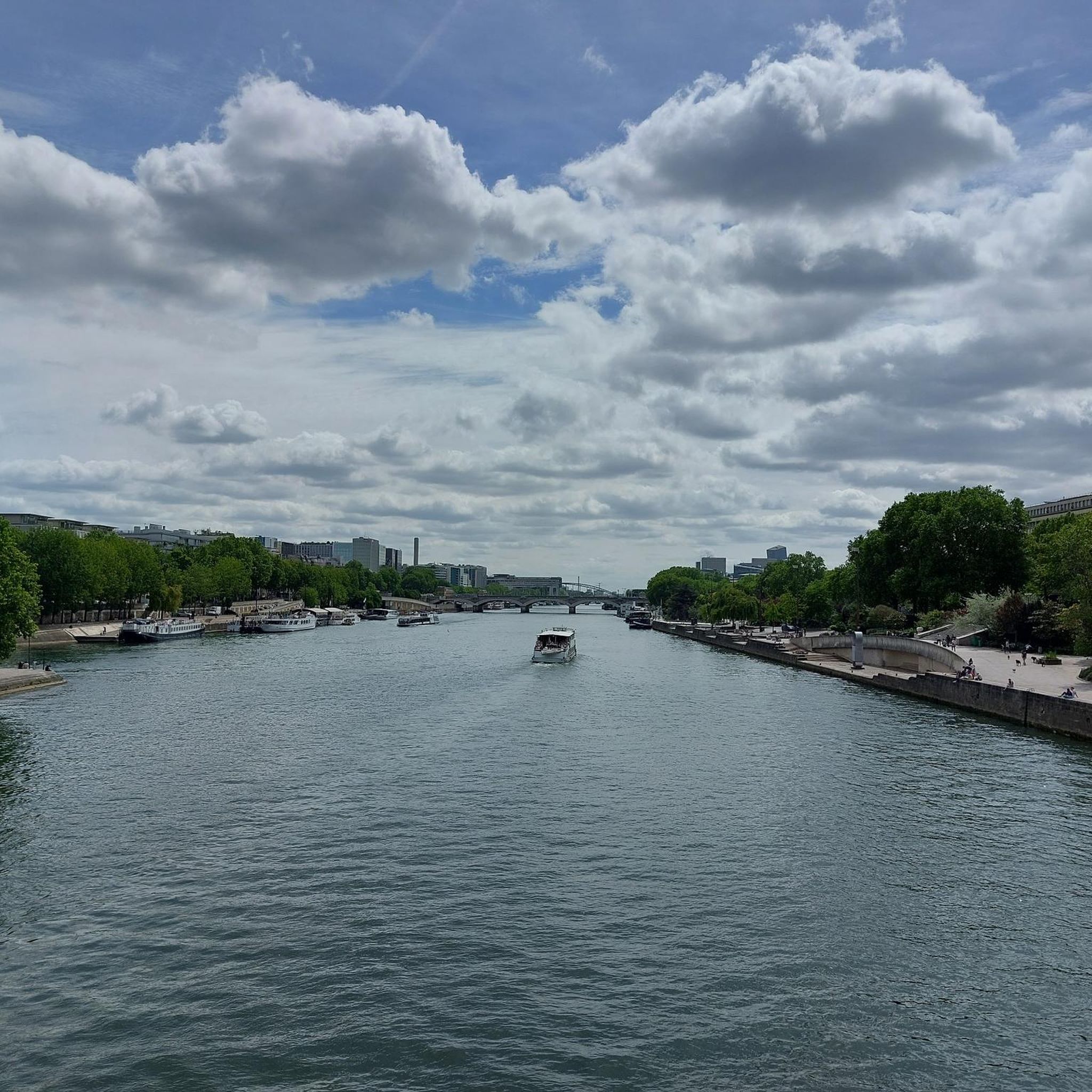
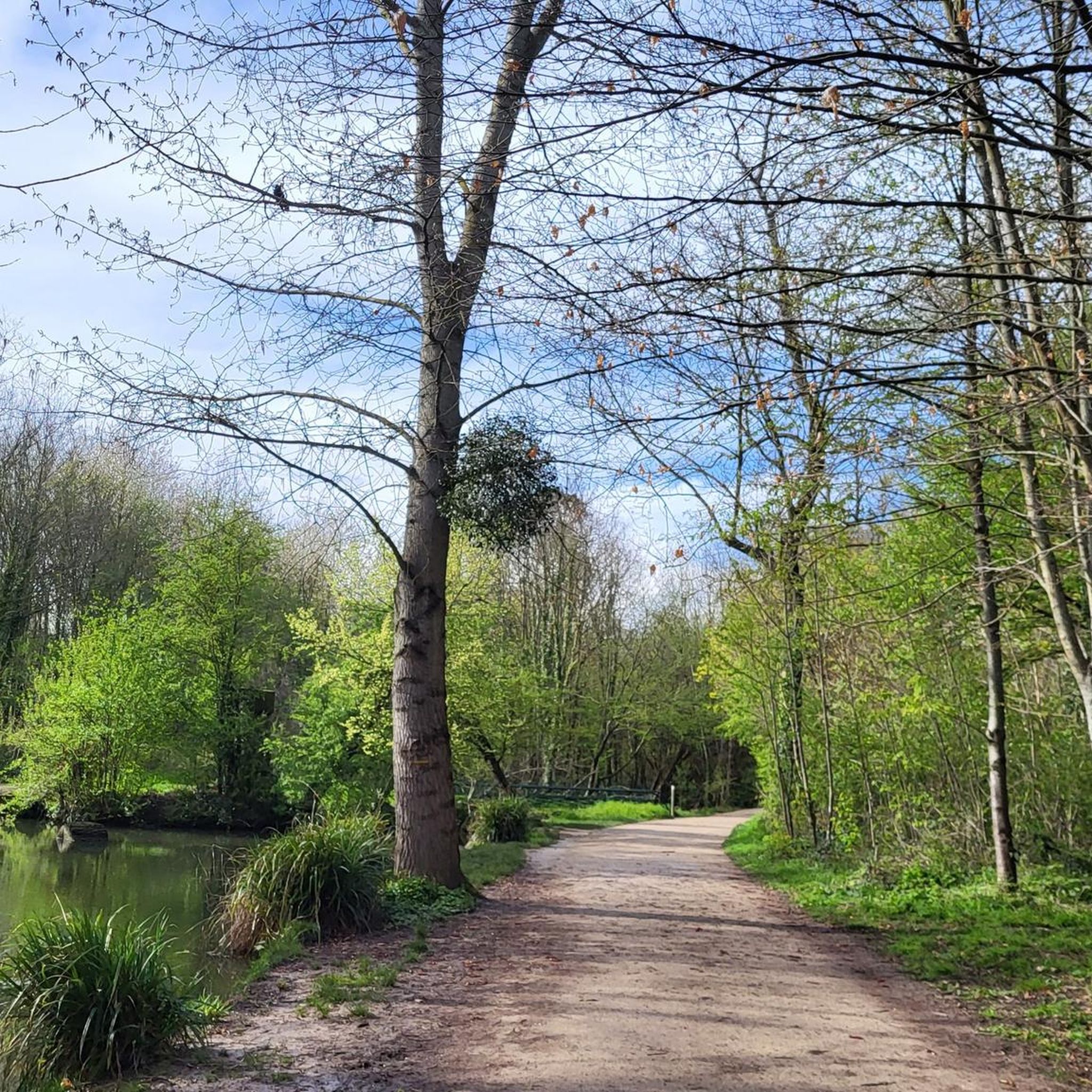
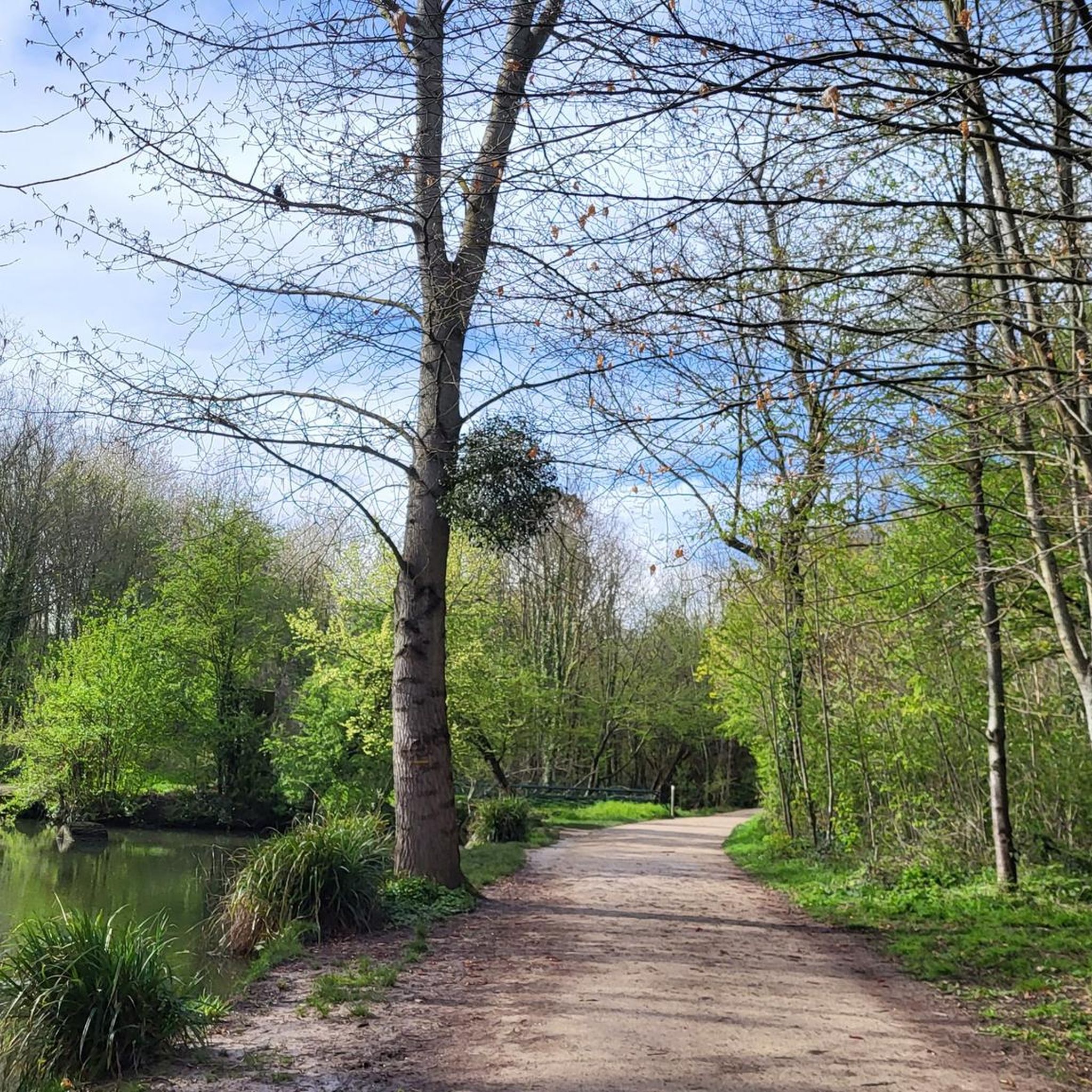
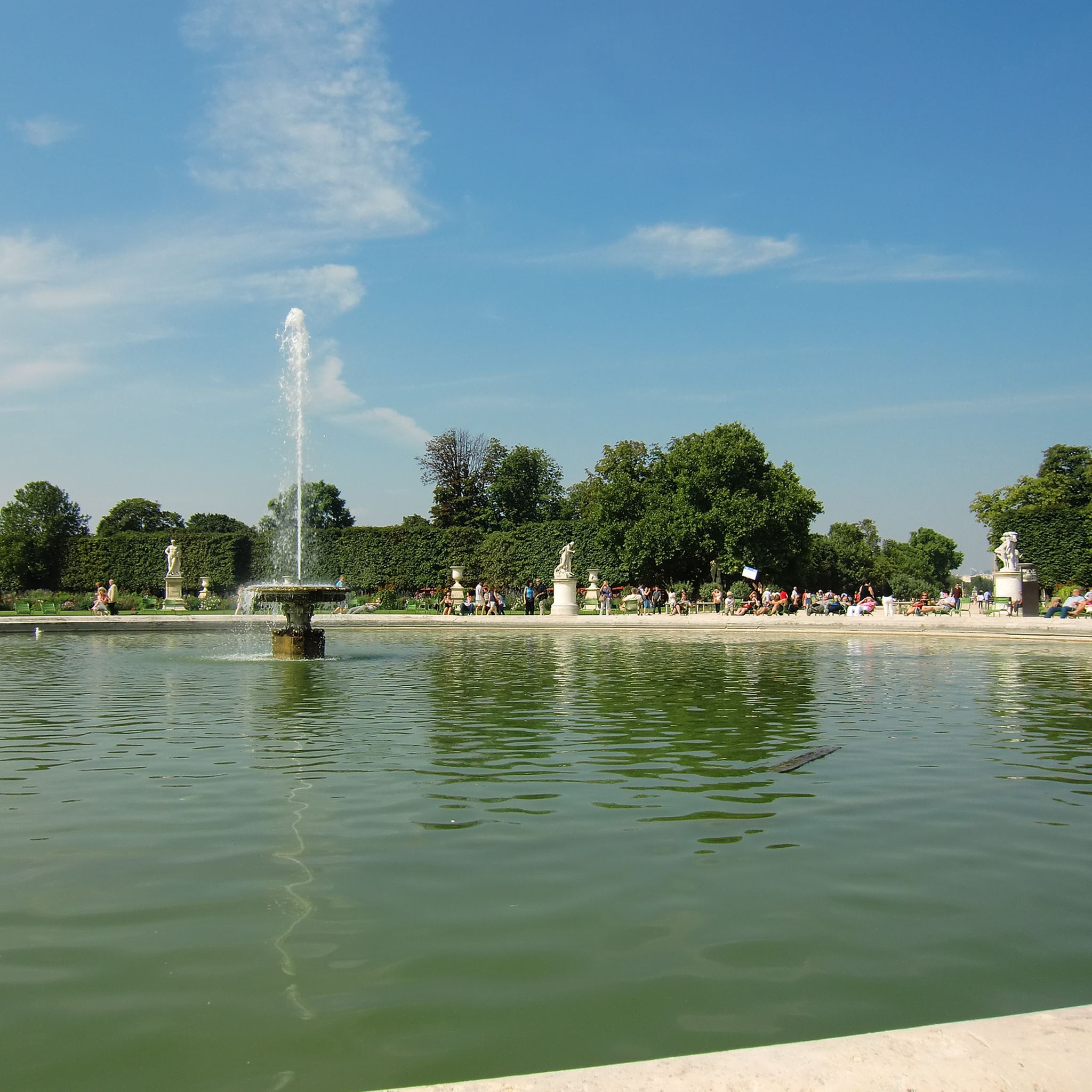

Tips from the Community

📚 The two arches, as well as the vertical connecting elements and the anchoring struts are welded solid web profiles. The substructure of the walkways is formed by a secondary structure. The lateral connections are independent of the main supporting structure. Single-span beams with a span of approx. 35 m bridge the roadways. The supporting structure consists of the compression chord at the deck level, which is under-tensioned by tie rods. The materials The deck surface is made of oak wood. Slip resistance is ensured by epoxy resin inclusions with silex scattering in the wood. The railings are formed by a prestressed stainless steel net. The railing is transparent and at the same time present enough to convey the necessary sense of security. The lighting is integrated into the handrail made of extruded aluminum. It emphasizes the unique silhouette of the bridge. The footbridge, with its innovative construction, takes up the tradition of Parisian bridges, which express the latest technologies of their time - innovation as tradition. https://www.nextroom.at/building.php?id=600 🌐
0
0
📚 It is directly accessible from both the lower street level and the two upper levels of the library and Parc de Bercy. Additionally, there is a glass elevator on each side of the river, providing access for people with physical disabilities. The construction of the main span is formed by two compression arches and two tension bands, arranged in two vertical planes. The distance between the planes is 5.20 meters. The two supporting elements work together and stabilize each other. This structure was chosen for its spatial potential and static efficiency. It allows for maximum stability with simultaneous maximum lightness and elegance. The arch and tension band are connected by elements arranged radially to the arch geometry – four steel tubes converging at one point, so-called “obelisks” – which are clamped into the arch cross-section and form a half Vierendeel girder. The main structure is clamped at the riverbanks in the support area. The arch and tension band cross at the quarter point of the span. A massive cast part creates the continuous connection between the arch and tension band at the crossing point. The static system is similar to a Gerber girder, which allows for a reduction of the span moment. The anchors are formed by 2 compression struts and 2 vertical tension elements. Through the shape of the compression strut, a distribution of forces is achieved: one part is directed to the foundations, one part to the compression arch. Massive steel bands with a width of 100cm and a thickness of 10cm (in the lens area) or 15cm (in the side areas) form the tension bands. https://www.nextroom.at/building.php?id=600 🌐
0
0
📚 The pedestrian is offered a variety of possibilities for crossing the bridge with different perspectives. 3 paths accompany curve and counter-curve. The middle path leads along the pressure arch with an unobstructed view of Notre Dame and historic Paris. The counter-curve, along the tension band, leads close to the water. The superposition of the force lines corresponds to the networking of the paths. In the central area of the bridge, the superposition of the arch and the tension band creates a volume in the shape of a lens. It forms a unique public space over the river, which becomes a grandstand for events on the water. The lower part of the lens forms a square with a length of 65 m and a width of 12 m. Temporary kiosks and cafés are planned here, which are covered by the middle band and thus protected from sun and rain. The square invites the stroller to linger halfway. At the same time, the lens forms the stabilizing element in the urban space through its symmetrical distance from the banks. The supporting structure The bridge consists of three parts – the central main span, which spans the Seine, and two side walkways, which bridge the embankment roads and form the connections to the Bibliothèque de France and the Parc de Bercy. https://www.nextroom.at/building.php?id=600
0
0
📚 The pedestrian bridge, with a total length of 304 m, connects the new eastern districts of Paris, Bercy and Tolbiac, as well as the new French National Library and the Parc de Bercy. The bridge spans the Seine and the adjacent, heavily trafficked riverside roads. Here, too, the Seine plays a central role in the urban space, similar to the centre of Paris. The riverbed of the Seine, compared to its otherwise average width of 100 metres in the city area, is 150 metres wide at this point. The two existing bridges, 700 metres apart, border the « Bassin de Bercy ». To preserve this basin, unique to Paris, in its entirety and to ensure the greatest possible freedom for activities planned on the water, the new bridge is column-free and spans the basin in one go.The footbridge inextricably links architecture and structure. Two curves create the geometry of the bridge, whose soft form is understood as a response to the strictly geometric environment. These curves are simultaneously structure and guidance. They form a wide-span arch and a tension band. The interplay of the two elements allows for a clear span of 194 m. https://www.nextroom.at/building.php?id=600 🌐
0
0

Chez Gaston is a super cozy spot in Paris where you immediately feel welcome. The brunch is worth it: you can choose from sweet and savory dishes like pancakes with Nutella and bananas, avocado toast with eggs, or crispy chicken. The hot drinks (flat white, matcha latte, etc.) are spot-on, and the freshly squeezed juices are a nice bonus. What I really loved: everything is relaxed, the atmosphere is friendly, and you can feel the attention to quality (there's even something gluten-free on the menu). Perfect for a lazy morning with friends or just to unwind.
1
0


Frequently Asked Questions
How many touring cycling routes are available in Vincennes?
Vincennes offers over 30 touring cycling routes, primarily within the expansive Bois de Vincennes. These routes are highly rated by the komoot community, with an average score of 4.1 stars.
What kind of terrain can I expect on touring cycling routes in Vincennes?
The touring cycling routes in Vincennes, particularly within the Bois de Vincennes, are characterized by their relatively flat terrain. You'll cycle through extensive woodlands, past serene lakes like Lac Daumesnil and Lac des Minimes, and along dedicated cycle paths and quiet roads. This makes the area accessible for various cycling abilities.
Are there family-friendly touring cycling routes in Vincennes?
Yes, the Bois de Vincennes is well-suited for family cycling. Its flat topography and network of dedicated cycle paths make it ideal for all ages. Routes like the "Tour of the Bois de Vincennes and its 4 lakes" are specifically mentioned as suitable for families, offering a pleasant 12-kilometer ride.
Can I bring my dog on touring cycling routes in Vincennes?
While the Bois de Vincennes is a large urban park, it's generally permissible to bring dogs on a leash on the cycling paths. Always ensure your dog is under control and respect any specific signage regarding pet access in certain areas of the park.
What historical landmarks or attractions can I see along the cycling routes?
Many touring cycling routes in Vincennes incorporate historical landmarks and attractions. You can cycle past the impressive Vincennes Castle, a 14th-century fortress. Some routes, like the Eiffel Tower and Quai d'Orsay – Alexandre III Bridge loop from Vincennes, even offer views of iconic Parisian landmarks. Other notable sights include the Louvre Museum Square and the Carrousel Triumphal Arch, which can be reached on longer rides.
Are there any circular touring cycling routes in Vincennes?
Yes, many touring cycling routes in Vincennes are designed as loops, allowing you to start and end at the same point. Examples include the Vincennes Castle – Marne Loop loop from Vincennes, which takes you through the Bois de Vincennes and along the Marne River, and the Lake Saint-Mandé – Coulée Verte René-Dumont loop from Bérault.
How can I access the cycling routes in Vincennes using public transport?
The Bois de Vincennes is well-connected to Paris via public transport. You can reach key entry points like Porte Dorée or areas near the Château de Vincennes using the Métro or RER. Bike-sharing stations are also available at these locations, offering a convenient way to start your ride.
Where can I park my car when visiting the Bois de Vincennes for cycling?
While specific parking areas are not detailed, as a large urban park near Paris, the Bois de Vincennes typically has designated parking facilities around its perimeter. It's advisable to check local parking regulations and availability for the specific entry point you plan to use.
What is the best time of year for touring cycling in Vincennes?
The best time for touring cycling in Vincennes is generally during spring (April-May) and autumn (September-October) when the weather is mild and the natural scenery of the Bois de Vincennes is particularly beautiful. Summer can also be pleasant, but it can get warm, especially in July and August.
Are there options for longer touring cycling routes in Vincennes?
Yes, while many routes are shorter, there are options for longer touring cycling experiences. For instance, the Eiffel Tower and Quai d'Orsay – Alexandre III Bridge loop from Vincennes is over 32 km long, extending into central Paris. You can also combine routes within the Bois de Vincennes or connect to routes along the Marne Riverbanks for extended rides.
What do other cyclists say about touring cycling in Vincennes?
The touring cycling routes in Vincennes are highly rated by the komoot community, with an average score of 4.1 stars from over 100 reviews. Cyclists often praise the quiet woodlands, the scenic lakes, and the well-maintained paths that make for an enjoyable ride through this urban green space.
Are there any cafes or places to stop for refreshments along the routes?
Given its popularity and proximity to Paris, the Bois de Vincennes offers various spots for refreshments. You'll find cafes and small eateries within the park, especially near popular attractions like the lakes or the Château. Bike-sharing stations are also available at key entry points, often indicating nearby amenities.
Are there any routes that offer views or viewpoints?
Absolutely. Many routes offer picturesque views, particularly around the several lakes within the Bois de Vincennes, such as Lac Daumesnil and Lac des Minimes. Cycling along the Marne Riverbanks also provides scenic vistas. For a more urban panorama, the Eiffel Tower and Quai d'Orsay – Alexandre III Bridge loop from Vincennes offers iconic views of Parisian landmarks.
What are some easy touring cycling routes suitable for beginners?
For beginners, the relatively flat terrain of the Bois de Vincennes is ideal. An easy option is the Coulée Verte René-Dumont – Passage national loop from Saint-Mandé, which is about 12.6 km long. The "Tour of the Bois de Vincennes and its 4 lakes" is another excellent choice, offering a gentle 12-kilometer ride suitable for those new to touring cycling.
Are there dedicated cycling paths in the Bois de Vincennes?
Yes, the Bois de Vincennes features an extensive network of dedicated cycle paths, making it very cyclist-friendly. These paths, often referred to as 'pistes cyclables,' ensure a safe and enjoyable experience away from heavy traffic. The Vincennes Polygon is also a dedicated bike track within the Bois de Vincennes, popular with both club members and amateurs.
Most popular routes around Vincennes
Most popular attractions around Vincennes

Get inspired with the komoot mobile app


Explore more
Browse the best Cycling routes in other regions.
