The best road cycling routes around Gimeux
4.5
(43)
1,395
riders
427
rides
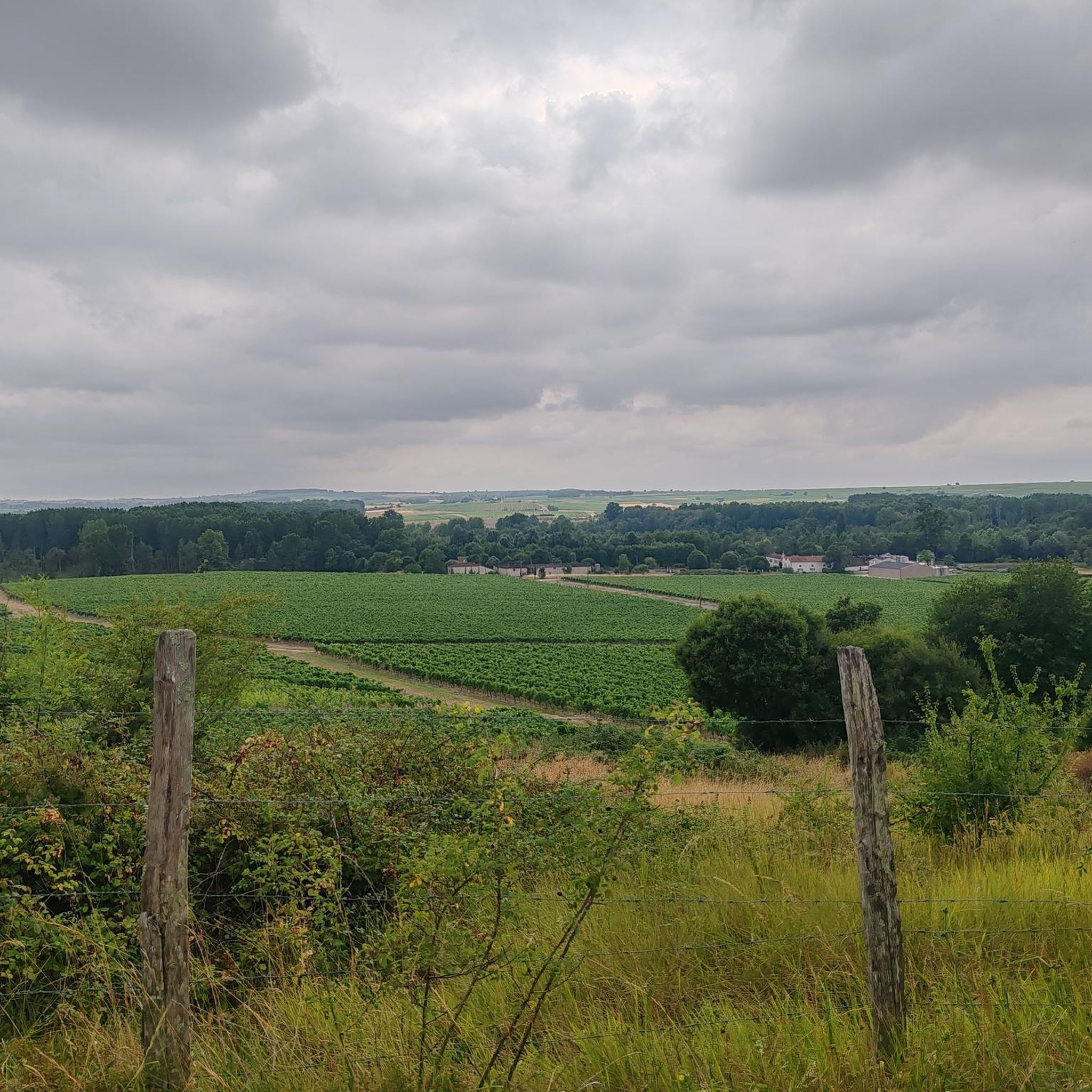
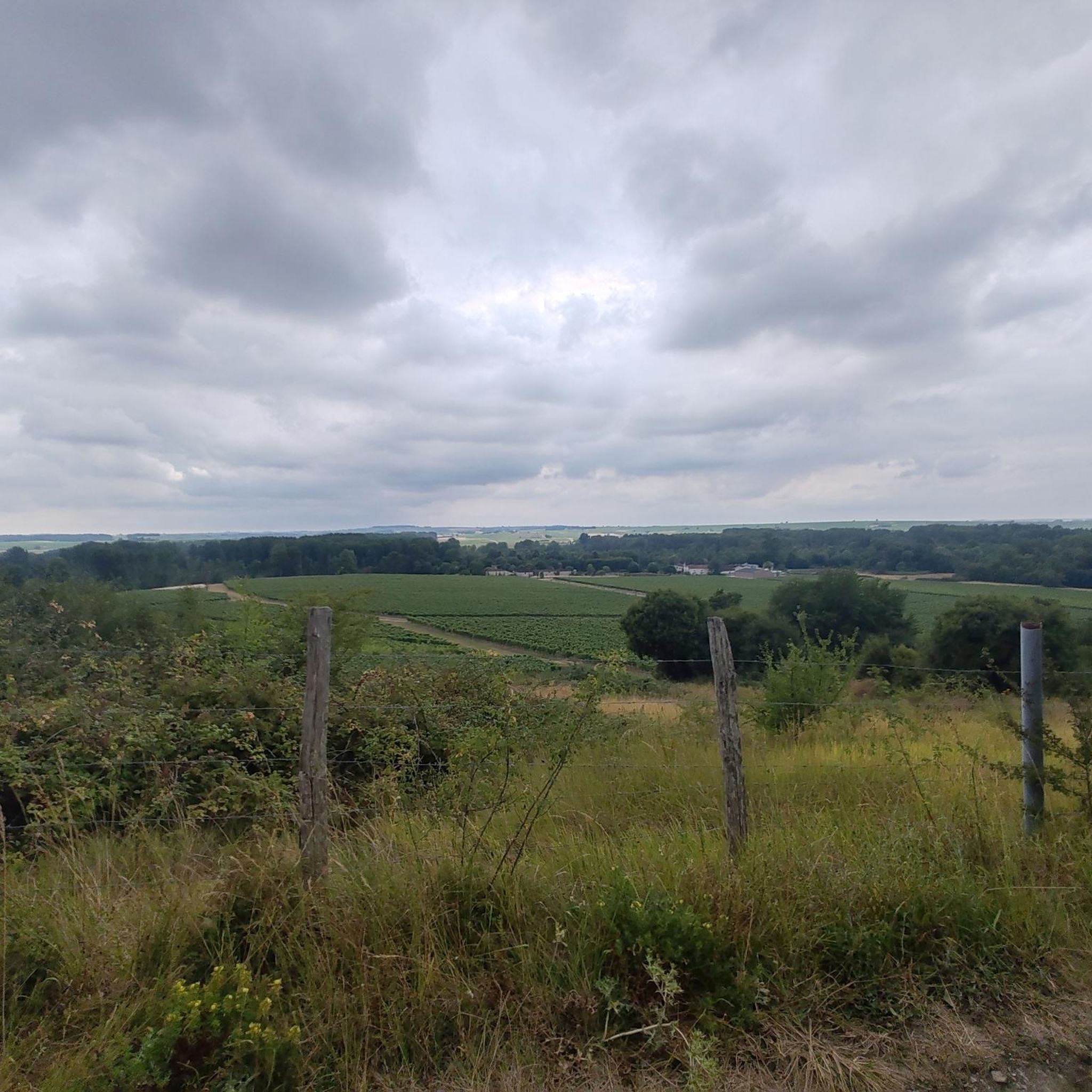
Road cycling around Gimeux is characterized by its location within the Grande Champagne vineyard region of southwestern France. The terrain is generally gentle, with elevations ranging from 6 to 61 meters, making it accessible for various cycling skill levels. Routes often traverse vineyards and follow the Charente River, providing mostly paved surfaces suitable for road bikes. This landscape offers a mix of leisure rides through picturesque countryside and historical hamlets.
Best road cycling routes around Gimeux
- The most popular road…
Last updated: May 20, 2026
9
riders
61.1km
02:28
300m
300m
Moderate road ride. Good fitness required. Mostly well-paved surfaces and easy to ride.
5.0
(2)
8
riders
53.4km
02:13
280m
280m
Moderate road ride. Good fitness required. Some segments of this route may be unpaved and difficult to ride.

Sign up for free
7
riders
41.6km
01:49
260m
260m
Easy road ride. Great for any fitness level. Mostly well-paved surfaces and easy to ride.
5
riders
Moderate road ride. Good fitness required. Some segments of this route may be unpaved and difficult to ride.
5
riders
102km
04:13
450m
450m
Moderate road ride. Good fitness required. Some segments of this route may be unpaved and difficult to ride.
Get access to more routes and recommendations from other explorers.
Sign up for free
Already have an account?
Our route recommendations are based on thousands of hikes, rides, and runs completed by other people on komoot.
Start today with a free account
Your next adventure awaits.
Login or Signup


Tips from the Community

Courcoury is a natural island surrounded by the Charente and Seugne rivers, giving it a unique landscape setting between marshes and waterways, conducive to biodiversity and outdoor activities. It is also the only village in Charente-Maritime to have been awarded 4 stars by the "Villes et villages étoilés" label, recognizing its efforts to reduce light pollution through intelligent and environmentally friendly public lighting.
1
0

A beautiful church with beautiful houses hidden in an ancient but romantic village, it's worth a stop. The Saint-Étienne church in Brives-sur-Charente is recent. It was consecrated in 1868 and reflects the 14th-century Gothic style. It replaced an older church, of which only a baptismal font, listed as a historic object in 1922, and a capital remain. This font, square and made of a single block of siliceous limestone, is a rare specimen of 12th-century sculpture and symbolism. Certain characteristic features, such as the draperies, allow it to be dated to the 1150s. On three sides, we discover the Annunciation made to Mary, then on the main face of the font, Christ officiating in heaven, and finally Christ descending into hell, savior of souls.
0
0

HISTORY OF THE HOUSE OF HINE In 1791, Thomas Hine (1775-1822), then aged 16, left his native land on the south coast of England to go to France… in the middle of the French Revolution. He went to Jarnac, Charente, where he was hired as a clerk in the Ranson et Delamain trading house, which produced his father’s favourite cognac. James Delamain (1738-1800), a Huguenot who had emigrated from Ireland, founded the trading house in 1763 with his father-in-law Jean-Isaac Ranson. On 3 October 1797 (13 Brumaire Year VI), Thomas Hine married Françoise Élisabeth Delamain, daughter of James Delamain and Marie Ranson. In 1817, the Ranson et Delamain house was liquidated, the heirs having been unable to agree on the succession. The eponymous son-in-law founded Thomas Hine & Co, and his cousins Paul Roullet and Henri Delamain (James' grandson) founded the Maison Roullet et Delamain seven years later, which would become Delamain et Cie. The links between the two Protestant Jarnac families remained close, and Thomas Hine's great-granddaughter, Adrienne Hine (1850-1922) married Philippe Delamain (1847-1902) - they had sons Jacques and Robert Delamain. Today, as in Thomas Hine's time, the Hine establishments line the banks of the Charente in Jarnac. The logo is inspired by Hine's speaking arms, hind meaning doe in Old English. He is lying down, his head turned backwards, symbolically looking towards England2. In 1962, Hine was granted the Royal Warrant of Her Majesty Queen Elizabeth II, and became the official supplier of cognac to the Court of England. In 1987, the company was bought by Moët Hennessy. In 2003, it became the property of the CL Financial group, which emerged from the Angostura group. The House was bought in 2013 by the Edv company. TYPOLOGY OF HINE EAUX DE VIE The House of HINE is located on the banks of the Charente, in the heart of the Cognac region. In the cellars, which ensure the protection of the precious vintages under seal, little has changed in more than 260 years. From the neighboring quays once began the journey of HINE cognacs around the world. This house is one of the oldest in Jarnac. Cognacs exclusively from the Grande and Petite Champagne vintages, a distillation with the lees, and an aging in fine grains with a light to moderate heating. Here, every manufacturing detail will be revealed to you. > To find out more: - https://hine.com/fr - Address: 16 quai Orangerie 16200 Jarnac - 05 45 35 59 59 - Visits, Tasting and Purchases possible - Opening periods: From 01/04 to 31/12 Monday, Tuesday, Wednesday, Thursday and Friday from 9 a.m. to 5:30 p.m. Excluding public holidays. Full price: from €20. Free for children under 18. (Subject to change)
0
0

This small town of less than 400 inhabitants is located in a hilly and wooded area. It is part of one of the stages of the GR 360 long-distance footpath. It is worth going past the abbey and the church while crossing the town! Both were built at the beginning of the 12th century.
2
0

A particularity is located in the gallery of arcature which overhangs the portal. Indeed it has three arched windows on one side of the central window and two semicircular on the other. Note that the two bays on the right occupy the same width as the three on the left. The bell tower, like many others in the region, has a pyramidal roof. Simple columns come to partition the two windows which cover each face. Inside the church, archival documents prove that the nave with two bays was originally vaulted with warheads. Unfortunately, this vault was destroyed during religious wars. Still according to archival documents, it would seem that at the beginning of the 20th century, a narthex, where the catechumens were held, leaned on its facade. Today, it has completely disappeared. The church was classified as a historic monument in 1913. The building underwent a complete restoration in 1935. To admire just next to the church a magnificent and majestic period residence.
0
0
The walls of the nave were doubled by means of arcades and it was endowed with a new chevet and a new bell tower. With an elegant silhouette and intact in its southern part, it is openworked with four twin bays on semicircular arches on two floors. The interior has a nave with three bays. A bay separates the nave from the front choir vaulted in blocks of rubble which, very narrow, supports the bell tower. The semi-circular apse is vaulted in cul-de-four. The 19th century side chapel, dedicated to Saint Anthony, is located on the left as you enter. Vaulted in a broken cradle, it has a stucco altar whose base has five broken arch bays. A very beautiful ornate wooden balcony dating from the end of the 19th century is located at the interior entrance of the church. The statue of Notre-Dame de Fontdouce, known as "the Virgin and Child" was sculpted by a monk from the Abbey of Fontdouce around the 15th century. It has been kept in the church of Saint Bris des Bois since the revolution and was once a destination of pilgrimage. On the back wall, a semicircular stained glass window indicates the names of the parish priest, Mr. Hague, and the mayor at the time, Mr. Lévécot (1904). The Priory of St Robert: the chapel destroyed during the wars of religion, the campanile is still in place. Saint Robert once had a great reputation, at the end of the 19th century, children suffering from certain illnesses were still brought there "before sunrise". The church was listed as a Historic Monument in 1973. To visit it you will have to pay your tribute just the price of a slight effort ....... the church is located at the top of the hill overlooking the village and adjoining the cemetery.
0
0

The Church of Saint-Martin de Coucoury was built around the 11th century. It is a pretty example of a Romanesque church.
1
0

Bourg-Charente castle is a 17th century mansion. Nestled on a rocky promontory, it is located a few kilometers from Cognac. It also houses the remains of a medieval fortress. Acquired in the 20th century, this château houses cellars for producing Grand Marnier. It can be visited from Monday to Friday from 8 a.m. to 5 p.m.
0
0
Frequently Asked Questions
How many road cycling routes are available around Gimeux?
There are over 400 road cycling routes around Gimeux, offering a wide variety of options for different skill levels and preferences. The komoot community has explored these routes over 1500 times.
What is the typical terrain like for road cycling in Gimeux?
The terrain around Gimeux is generally gentle, with elevations ranging from 6 to 61 meters. This makes it accessible for various cycling skill levels, offering relatively flat to gently rolling routes. You'll primarily cycle through vineyards and along the Charente River, with mostly paved surfaces.
What are the difficulty levels of road cycling routes in Gimeux?
The routes in Gimeux cater to a range of abilities. There are 88 easy routes, 333 moderate routes, and 6 more difficult routes, ensuring options for beginners to more experienced cyclists.
When is the best time of year for road cycling in Gimeux?
Given its location in southwestern France, the spring and autumn months typically offer the most pleasant weather for road cycling in Gimeux, with comfortable temperatures and beautiful scenery as the vineyards change color. Summer can also be enjoyable, though it may be warmer.
Are there many circular road cycling routes in the Gimeux area?
Yes, many of the road cycling routes around Gimeux are designed as loops, allowing you to start and end your ride in the same location. For example, the popular Le Moulin de la Baine – Saint-Martin Church loop from Merpins is a great circular option.
What historical sites or landmarks can I see along road cycling routes near Gimeux?
While cycling, you can explore several historical sites. The 12th-century Romanesque Saint-Germain Church is within Gimeux itself. Nearby, you might encounter the Logis de Gardépée in Saint-Brice, Gademoulin Castle in Gensac-la-Pallue, or the Saint-Brice Castle. The Historic Center of Cognac is also easily accessible after a ride.
Are there any natural features or scenic viewpoints to enjoy while cycling?
Absolutely. The region is characterized by its extensive vineyards, particularly in the Grande Champagne appellation, offering picturesque views. Many routes also follow the scenic Charente River. You can also find natural monuments like the Chêne de François 1er.
Are there family-friendly road cycling options in Gimeux?
Yes, the generally gentle terrain and mostly paved surfaces make Gimeux suitable for family-friendly road cycling. Many of the 88 easy routes are ideal for families looking for a relaxed ride through the countryside and local hamlets.
Where can I find parking for road cycling in Gimeux?
While specific parking areas for cyclists in Gimeux are not detailed, its proximity to Cognac (approximately 7 km southwest) means you can often find parking in larger towns with more amenities. Many routes also start from nearby villages like Merpins, where local parking might be available.
Is public transport available to access cycling routes in Gimeux?
Information on specific public transport options for cyclists in Gimeux is limited. However, given its rural setting, accessing routes typically involves driving to a starting point or cycling directly from nearby towns like Cognac, which may have more public transport connections.
Are there places to stop for refreshments or accommodation for cyclists in Gimeux?
Gimeux itself is a small commune, but its proximity to Cognac means you'll find a wider range of cafes, pubs, and accommodation options there. Many routes pass through or near other hamlets where local establishments might offer refreshments. It's advisable to plan your stops in advance.
What do other road cyclists enjoy most about the routes around Gimeux?
The road cycling routes around Gimeux are highly rated by the komoot community, with an average score of 4.5 stars. Cyclists often praise the picturesque scenery of the vineyards, the gentle rolling hills, and the well-maintained paved surfaces that make for enjoyable rides.
Are there easy road cycling routes suitable for beginners in Gimeux?
Yes, Gimeux offers 88 easy road cycling routes perfect for beginners or those seeking a relaxed ride. These routes typically feature minimal elevation gain and smooth surfaces, allowing you to enjoy the scenery without significant physical challenge. An example is the Saint-Césaire Church – Saint-Brice Church loop from Merpins.
Most popular attractions around Gimeux

Get inspired with the komoot mobile app


Explore more
Browse the best Road cycling routes in other regions.
