Attractions and Places To See around Javrezac - Top 20
Best attractions and places to see around Javrezac are found in the Charente department of southwestern France, a region characterized by its rural charm and historical significance. The area is primarily known for its picturesque vineyard landscapes, which are central to cognac production. Javrezac is situated on a limestone plateau, with the Antenne river flowing through, offering both natural beauty and historical sites.
Best attractions and places to see around Javrezac
- The most popular attractions is Abbaye de Fontdouce,…
Last updated: July 6, 2026
Abbaye de Fontdouce
Highlight • Historical Site
Translated by Google •
Tip by

Logis de Gardépée in Saint-Brice
Highlight • Other
Translated by Google •
Tip by

Sign up now to discover places like this
Get recommendations on the best single tracks, peaks, & plenty of other exciting outdoor places.
Sign up for free
Garde-Épée Dolmen
Highlight • Other
Translated by Google •
Tip by

Chêne de François 1er
Highlight • Natural Monument
Translated by Google •
Tip by

Gademoulin Castle in Gensac-la-Pallue
Highlight • Castle
Translated by Google •
Tip by
Sign up for free to discover even more attractions around Javrezac.
Sign up for free
Already have an account?
Start today with a free account
Your next adventure awaits.
Login or Signup





Tips from the Community

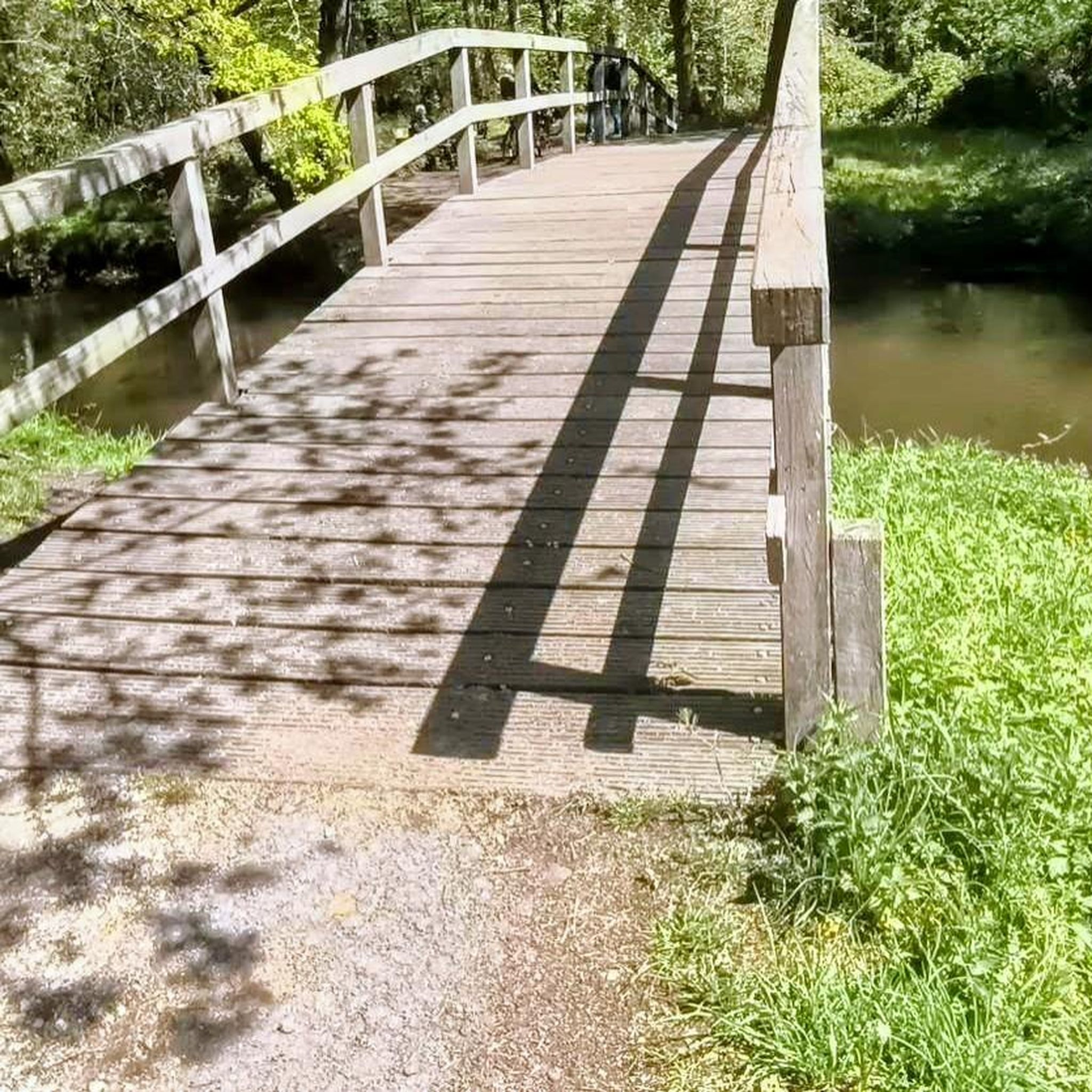
Magnificent We can also have a picnic
0
0

A must-see visit alongside this abbey on a magnificent circuit
0
0

The Garde-Épée dolmen is classified as a historic monument. It is made up of five slabs which delimit the room and slabs which cover it. The dolmen is five meters long and more than two meters high.
0
0
This imposing holm oak is approximately 500 years old. We do not know if it was planted on the occasion of the birth of the future king of France François I in 1494, on the occasion of his coronation in 1515 or on the occasion of his death in 1547. What we do know, however, is that it measures 17 meters high with a trunk circumference of 5.5 meters. Classified as a “remarkable tree”, it was even elected “tree of the year” in 2014 by the National Forestry Office.
0
0

Towards the end of the 12th century, an abbey church was built. At the beginning of the 13th century, attached to the west of the first Romanesque abbey, a Gothic-style cloister was gradually built. The abbey reached its peak from this period: in addition to its priories (la Grainetière in Vendée and la Tenaille near Pons), it owned land within a radius of 100 km, including saltworks on the coast. In the 15th century, Fontdouce obtained the title of royal abbey leading to a profound change in its mode of administration: the abbot was no longer elected by his peers within the community but was appointed by the king. It is often a great layman to whom the king grants the commendation, that is to say 80% of the income of the abbey. Then, the wars of religion, in the 16th century, accelerated its decline. The abbey church is ransacked: it will never be rebuilt. The years following the French Revolution also brought their share of destruction: several buildings, including the refectory, disappeared. The last monks were driven out in 1793 and the following year the site was sold as National Property to serve as agricultural property. The farmer who bought the place then built, on the remains of the conventual buildings, a house in the First Empire style. In the 1820s, Fontdouce entered the family of the current owners who, on December 16, 1986, had the Gothic parts, chapter house and parlor classified as historical monuments2. From 1970, the current owners undertook a series of excavations intended for the restoration of the Abbey of Fontdouce. They are gradually bringing the beautiful chapter house and the Gothic parlor back to life, the two superimposed Romanesque chapels and several other remains. These restoration works earned them third prize in the masterpiece in danger competition in 1979. In 1986, the site was entirely classified as a Historic Monument1. Today, Fontdouce remains a private property, focused on tourist and cultural activities, supported in its development actions by a team of enthusiasts grouped together within the Association Guillaume de Conchamp.
1
0
The Château de Garde-Épée in Saint-Brice is built on the edge of a plateau overlooking the Charente in the distance. In January 1553, Sieur Ancelin, a merchant, bought this fief from the Marquis de Caravaz (the Marquis de Carabas in Perrault's tale) with permission to build a crenellated house there with a gigantic flight, fish pond and warren. Around the middle of the 17th century, Jean Ancelin having died childless, his heirs sold the domain of Garde-Épée to a Mr. Richard, who was still the owner in 1698. Finally the house of Garde-Épée passed into the family of Jarnac de Garde-Épée, which still owns it today with the abbey of Châtre, through a private company, the Société de Garde-Épée, whose main shareholder is Henri de Jarnac. On the right, before the entrance, the imposing round flight has 2600 putlogs. It is covered with a pepperbox roof with three skylights and dates from 1553. The arms of the Ancelins are visible above the door. The entrance is imposing with a carriage entrance surmounted by a long curtain wall crowned with merlons. The buildings form a vast quadrilateral. The house which occupies the north side was rebuilt at the end of the 18th century with two levels under a low roof; it is extended by two single level wings. The courtyard has a curious well covered with a roof. The castle has been listed as a historical monument since October 30, 1973.
0
0

Construction of the second half of the 19th century, the castle of Gademoulin stands proudly in the town of Gensac-la-Pallue. Neo-Gothic in style, it takes place on the remains of an old medieval castle destroyed in the 16th century during the protests against the salt tax. Sold as national property under the French Revolution, it now houses a luxury accommodation space.
0
0
This dwelling was built around the middle of the 16th century (1553), in the form of a crenellated house with a leak. In 1562, nine machicolations were drilled above the entrance gate which once ended, at both ends, with two turrets, only one of which remains. The postern is framed by two pilasters and surmounted by a triangular pediment decorated with fire pots. With this house was built a terrace. The other farm buildings are of recent construction, as well as the chapel in front of the gate.
1
0
Frequently Asked Questions
What historical sites can I visit near Javrezac?
The region around Javrezac is rich in history. You can explore the ancient Abbaye de Fontdouce, founded around 1111, which features Romanesque and Gothic architecture. Also nearby is the Saint-Brice Castle, constructed in the mid-16th century and now owned by the Hennessy Cognac family. Don't miss the Logis de Gardépée in Saint-Brice, a crenellated house dating back to 1553, and the neo-Gothic Gademoulin Castle in Gensac-la-Pallue.
What natural features define the landscape around Javrezac?
Javrezac is situated on a limestone plateau, and its landscape is predominantly characterized by picturesque vineyards dedicated to Cognac production. The Antenne river flows through the commune, offering natural beauty and historical sites like mills and lavoirs along its banks. You can also find the notable Chêne de François 1er, an impressive 500-year-old holm oak.
Are there family-friendly attractions in the Javrezac area?
Yes, several attractions can be enjoyed by families. The Abbaye de Fontdouce is listed as family-friendly and offers a fascinating historical experience. Exploring the charming town of Cognac, just 3 km away, with its old town, riverside walks, and public garden, can also be a great family outing. The vineyard landscapes themselves provide scenic routes for walks and drives.
What outdoor activities, like cycling or running, can I do near Javrezac's attractions?
The area around Javrezac offers various outdoor activities. For cycling, you can explore routes like the 'La Flow Vélo: Cognac Loop' or the 'Saint-Brice Castle – The Jarnac Quays loop from Cognac'. If you prefer running, there are trails such as the 'Cognac Castle loop from Cognac' or a 'Running loop from Javrezac'. You can find more details on these and other routes in the cycling guide, road cycling guide, and running guide for the region.
Can I visit places related to Cognac production near Javrezac?
Absolutely. Javrezac is at the heart of the Cognac region. The town of Cognac itself, only 3 km away, is a major highlight. Here you can visit famous distilleries like Hennessy and Rémy Martin for tours and tastings. The landscape around Javrezac is also dominated by vineyards, offering scenic views of the industry's foundation.
Are there any notable historical mills or lavoirs in Javrezac?
Yes, Javrezac has a rich history of mills along the Antenne river. The Moulin des Angeliers and the Moulin de Javrezac, with buildings dating from the 18th century, are notable examples. Additionally, two historical lavoirs (washhouses) can be found along the Antenne river, one within Javrezac and another downstream at Gade-Chien.
What do visitors particularly enjoy about the attractions around Javrezac?
Visitors appreciate the blend of historical significance and natural beauty. The Abbaye de Fontdouce is highlighted for its history and magnificent circuit. The Saint-Brice Castle is admired for its splendid facade. Generally, the komoot community enjoys the variety of attractions, from ancient abbeys and castles to notable trees and river features, with many upvotes and shared photos.
What is the best time of year to visit Javrezac and its attractions?
The region is beautiful throughout the year, but spring and autumn offer pleasant weather for exploring the vineyards and historical sites. Summer is also popular, especially for river activities and enjoying the vibrant local markets. Winter can be quieter, but still offers opportunities to visit distilleries and experience the charm of the region without the crowds.
Where can I find local markets near Javrezac?
For a taste of local life and regional products, you can visit nearby towns that host markets. Cognac has markets on Tuesdays and Fridays, Jarnac's market is open daily except Monday, and Pons hosts markets on Wednesdays and Saturdays. These are great places to experience the local culture and find fresh produce.
Are there any unique or lesser-known attractions worth exploring around Javrezac?
Beyond the main highlights, consider exploring the smaller religious heritage sites like the Eglise de Saint-Germain in Gimeux or the Eglise de Saint Martin in Gensac-la-Pallue. The historical lavoirs along the Antenne river also offer a glimpse into the region's past. These spots provide a more intimate experience of the local history and charm.
How long should I plan for visiting the main attractions around Javrezac?
To fully appreciate the main attractions like Abbaye de Fontdouce, Saint-Brice Castle, and the town of Cognac, it's advisable to plan at least 2-3 days. This allows for leisurely exploration of historical sites, vineyard tours, distillery visits, and enjoying the natural landscapes without rushing.
What religious heritage sites are there in the vicinity of Javrezac?
Javrezac itself is home to the historic Church of Saint Peter, dating back to the 11th or early 12th century. Further afield, you can visit the significant Abbaye de Fontdouce. Other nearby religious sites include the Eglise de Saint-Germain in Gimeux (7km), the Abbaye Notre Dame de l'Assomption de Châtre in Saint-Brice (8km), and the Eglise de Saint Martin in Gensac-la-Pallue (10km).
Most popular routes around Javrezac

Get inspired with the komoot mobile app


Explore more
Still not found the Highlight you’re looking for? See guides of the top attractions in other regions:
