Attractions and Places To See around Saint-Amand-Magnazeix - Top 9
Best attractions and places to see around Saint-Amand-Magnazeix, a rural community in the Haute-Vienne department of Nouvelle-Aquitaine, France, offers a blend of historical landmarks, natural beauty, and cultural activities. The area provides a tranquil environment with opportunities for exploration. The broader Haute-Vienne department is known for its natural environment, featuring numerous hiking trails and diverse landscapes.
Best attractions and places to see around Saint-Amand-Magnazeix
- The most popular attractions is Church of Our Lady of La Souterraine, a religious building distinguished by its underground crypt. Its style was influenced by pilgrims on the Santiago de Compostela route.
- Another must-see spot is Porte Saint-Jean, a historical site that served as one of the old city gates of La Souterraine. This 13th-14th-century structure was remodeled in the 15th century and features two round turrets.
- Visitors also love Rocherolles viaduct, a railway bridge spanning the Gartempe. Constructed in 1852, it features twelve arches on two levels, with stones sourced and cut from the surrounding area.
- Saint-Amand-Magnazeix is known for its historical landmarks, natural features, and outdoor recreation opportunities. The region offers a variety of attractions to see and explore, including water activities at nearby lakes and extensive hiking trails.
- The attractions around Saint-Amand-Magnazeix are appreciated by the komoot community, with more than 17 upvotes and 5 photos shared.
Last updated: July 6, 2026
Porte Saint-Jean
Highlight • Historical Site
Why it's nice:
This was literally the city's checkpoint. Anyone who wanted to enter was examined here.
The name probably refers to a nearby chapel or hospital of Saint-Jean.
You're essentially walking through a 13th-14th-century section here, without it being ostentatious.
What many people miss:
La Souterraine was an important stop on a side route of the pilgrimage route to Santiago. It's likely that pilgrims, traders, and soldiers passed through here centuries ago.
Translated by Google •
Tip by

Church of Our Lady of La Souterraine
Highlight • Religious Site
Translated by Google •
Tip by

Sign up now to discover places like this
Get recommendations on the best single tracks, peaks, & plenty of other exciting outdoor places.
Sign up for free
Maison 9 Bed and Breakfast
Highlight • Rest Area
The entries in the outdoor pilgrim guide are therefore no longer correct.
Nevertheless, John & Soos gave us a friendly welcome and helped us to find something else.
Translated by Google •
Tip by

Rocherolles viaduct
Highlight (Segment) • Other
fr.wikipedia.org/wiki/Viaduc_de_Rocherolles
haute-vienne.meconnu.fr/le-viaduc-de-rocherolles-de-folles
Translated by Google •
Tip by

The Wolf Stone
Highlight (Segment) • Natural Monument
Translated by Google •
Tip by
Sign up for free to discover even more attractions around Saint-Amand-Magnazeix.
Sign up for free
Already have an account?
Start today with a free account
Your next adventure awaits.
Login or Signup




Tips from the Community

The Porte Saint-Jean is one of the old city gates of La Souterraine. What you see now is modest, but in the Middle Ages it was a serious entrance to the walled city. Why it's nice: This was literally the city's checkpoint. Anyone who wanted to enter was examined here. The name probably refers to a nearby chapel or hospital of Saint-Jean. You're essentially walking through a 13th-14th-century section here, without it being ostentatious. What many people miss: La Souterraine was an important stop on a side route of the pilgrimage route to Santiago. It's likely that pilgrims, traders, and soldiers passed through here centuries ago.
3
0

The Saint-Jean gate is one of the emblems of La Souterraine. It was used to defend the city and was remodeled in the 15th century. We admire the two round turrets visible on the exterior facade. The door can be visited independently. To do this, simply ask for the keys at the Bar du Marché.
0
0

Already passed in 2010, not changed, even the tags. We are always impressed by the work that imposes it. A technical feat achieved in two years, enormous.
0
0
Located in the towns of Folles and Bersac-sur-Rivalier, this railway bridge spans the Gartempe. Its construction dates from 1852, 2000 workers worked there for 2 years. The stones come from the surrounding area and are cut on site. It has twelve arches on two levels. https://fr.wikipedia.org/wiki/Viaduc_de_Rocherolles https://haute-vienne.meconnu.fr/le-viaduc-de-rocherolles-de-folles
1
0
Limousin is always full of surprises and discoveries.
0
0
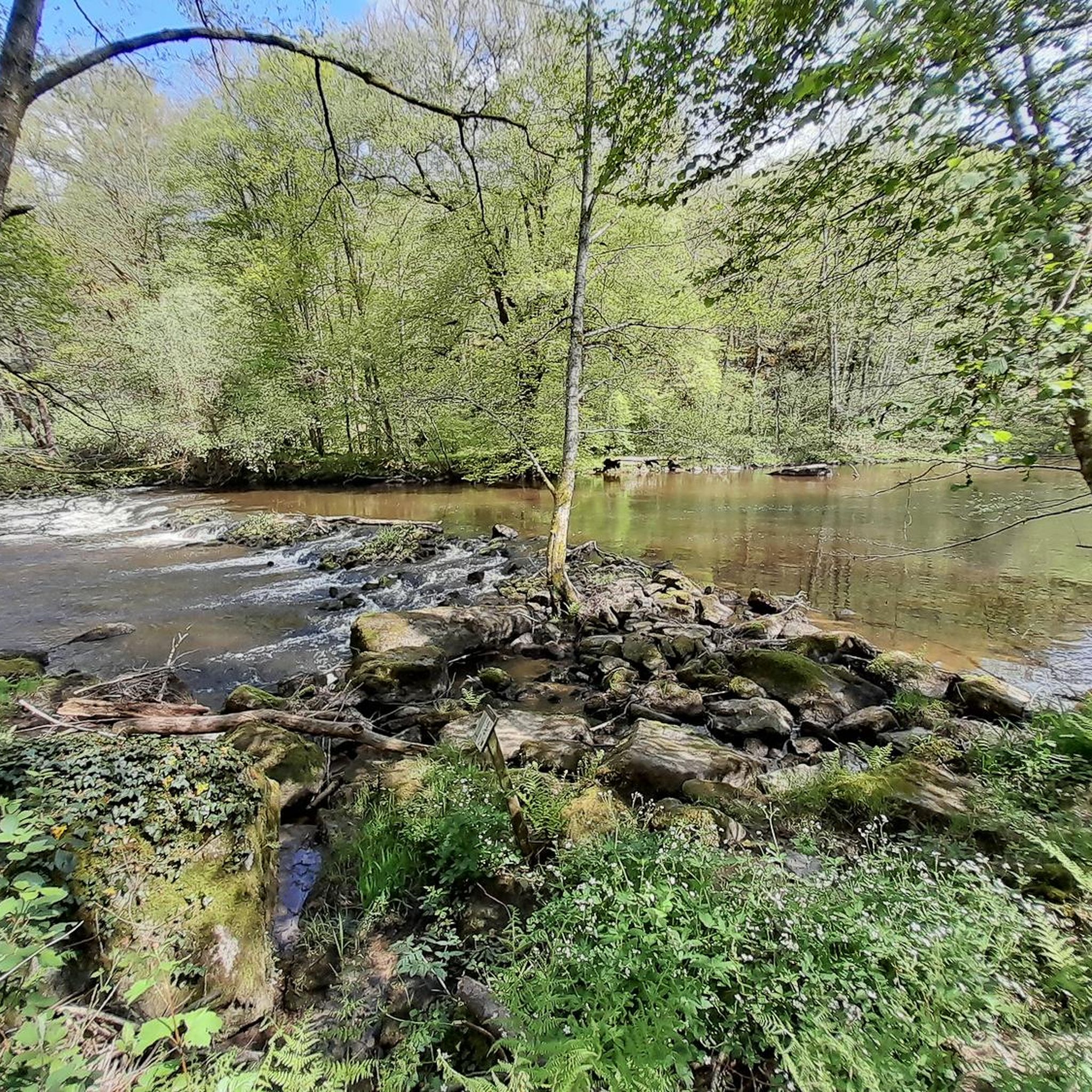
In the town of Bersac-sur-Rivalier, near Puy La Gude. Easy to pass by without seeing it. Below, an ordinary rock pile, slightly overgrown with vegetation. We first notice a "comma" or half basin and a stone with two holes. Necessary to climb on the stones to have the view. When you take a little height the drawing becomes more refined, a head and the body, make you think of a lying animal. Nature still does things well and imagination does the rest.
0
0

The Notre-Dame de la Souterraine church was restored in the 19th century. It is distinguished by its underground crypt. The style of the granite building would have been influenced by the pilgrims of Santiago de Compostela, La Souterraine being on the pilgrimage route.
2
0

The Church of St. James is remarkable because of the crypt that gave the place its name "Souterrain".
0
0
Frequently Asked Questions
What historical landmarks can I explore around Saint-Amand-Magnazeix?
The area is rich in history. You can visit the 13th-century Porte Saint-Jean, one of the old city gates of La Souterraine, or the Church of Our Lady of La Souterraine, known for its underground crypt and influence from the Santiago de Compostela pilgrimage route. Within Saint-Amand-Magnazeix itself, the 13th-century Lantern of the Dead and the Saint Pierre Saint Paul Church, with elements dating back to the 12th century, offer further historical insights.
Are there any unique historical sites beyond the main landmarks?
Yes, you can discover the Wooden Wheel of Les Grandes Magnelles in Bessines-sur-Gartempe, a fascinating 19th-century artifact used to operate a wood lathe. Additionally, The Belzanne Fountains in Bersac-sur-Rivalier offer a glimpse into local heritage with their unique granite structures.
Where can I enjoy water activities near Saint-Amand-Magnazeix?
Approximately 14 kilometers from Saint-Amand-Magnazeix, Lac de Saint-Pardoux is a large leisure lake offering a variety of water activities. You can go swimming, canoeing, water skiing, or windsurfing there.
What kind of hiking opportunities are available in the Haute-Vienne region?
The Haute-Vienne department, where Saint-Amand-Magnazeix is located, is known for its unspoiled natural environment with over 200 hiking trails. These trails traverse rolling and varied landscapes, including forests, peat bogs, and dry heather moors. For specific routes, you can explore the hiking guide around Saint-Amand-Magnazeix, which includes easy loops like the 'Lake With Swimming Area loop from Bessines-sur-Gartempe' and moderate options like the 'Châtaigneraie Trail loop from Châteauponsac'.
Are there cycling routes suitable for different skill levels?
Yes, the area offers a range of cycling routes. For road cycling, you can find easy loops such as the 'La Pierre Percée loop from Saint-Sornin-Leulac' or more challenging ones like the 'Porte Saint-Jean – Bénévent-l'Abbaye loop from Fromental'. For general cycling, there are moderate routes like the 'Old Bridge Path – the roman road loop from Bessines-sur-Gartempe' and difficult ones like the 'Limousin Bike Museum – Chaume Pond loop from Dompierre-les-Églises'. You can find more details in the road cycling guide and the general cycling guide for the area.
What natural parks are accessible from Saint-Amand-Magnazeix?
You can easily reach the Regional Natural Park of Millevaches in Limousin and the Périgord Limousin Regional Natural Park. These parks offer opportunities to explore remarkable natural environments, including ponds, bogs, and unique geological formations. The Monts de Blond, known for their huge granite chaos and legendary stones, are also within reach for picturesque drives.
Are there any scenic viewpoints or natural features to discover?
The Rocherolles viaduct, a railway bridge spanning the Gartempe, offers an impressive sight with its twelve arches on two levels. Beyond man-made structures, the broader Haute-Vienne landscape itself provides scenic views with its rolling hills and diverse natural sites. The Monts de Blond, with their unique granite formations, also offer picturesque drives and natural beauty.
What is the best time to visit Saint-Amand-Magnazeix for outdoor activities?
The region's natural beauty is best enjoyed during the warmer months, typically from spring through early autumn (April to October), when the weather is ideal for hiking, cycling, and water activities at Lac de Saint-Pardoux. The lush landscapes are particularly vibrant during these seasons.
Are there family-friendly attractions around Saint-Amand-Magnazeix?
Many attractions in the area are suitable for families. Historical sites like the Porte Saint-Jean and the Church of Our Lady of La Souterraine can be engaging for older children interested in history. Natural spots like Lac de Saint-Pardoux offer various water sports and recreational activities that families can enjoy together. The numerous easy hiking and cycling routes also provide great options for family outings.
What do visitors enjoy most about the attractions near Saint-Amand-Magnazeix?
Visitors appreciate the blend of historical depth and natural beauty. The historical sites, such as the Porte Saint-Jean, are valued for their authenticity and the sense of stepping back in time. The engineering marvel of the Rocherolles viaduct also impresses many. Overall, the tranquil environment and opportunities for exploration, whether through historical discovery or outdoor recreation, are highly regarded.
Can I find places for horse riding or fishing in the area?
Yes, beyond water sports, the region is suitable for horse riding, with equestrian centers located nearby. Fishing is also a popular activity, with opportunities available in local ponds throughout the area.
What is the historical significance of the Saint Pierre Saint Paul Church in Saint-Amand-Magnazeix?
The Saint Pierre Saint Paul Church, though primarily dating from the 15th century, incorporates elements from an earlier 12th-century structure and was originally built in the 9th century. Its 'rustic' Gothic architecture, typical of lower-Marche churches, includes a massive square bell tower that likely served defensive purposes during medieval conflicts. It also houses reliquaries and a stained-glass window depicting Saint Amand.
Most popular routes around Saint-Amand-Magnazeix

Get inspired with the komoot mobile app


Explore more
Still not found the Highlight you’re looking for? See guides of the top attractions in other regions:
