The best cycling routes around Étaules
4.4
(1834)
15,558
riders
311
rides
Touring cycling around Étaules offers routes through a coastal landscape characterized by the Côte sauvage and proximity to the Atlantic Ocean. The terrain generally features gentle gradients, with paths often following the coastline, estuaries, and rural roads. This area provides a mix of natural scenery and access to local villages and points of interest.
Best touring cycling routes around Étaules
- The most popular touring cycling route is Ocean Path at Les Mathes – Côte sauvage loop from Le Train des…
Last updated: July 3, 2026
4.8
(138)
970
riders
Moderate bike ride. Good fitness required. Mostly paved surfaces. Suitable for all skill levels.
5.0
(23)
34
riders
37.6km
02:10
120m
120m
Moderate bike ride. Good fitness required. Mostly paved surfaces. Suitable for all skill levels.

Sign up for free
4.5
(2)
32
riders
33.9km
01:59
70m
70m
Easy bike ride. Great for any fitness level. Mostly paved surfaces. Suitable for all skill levels.
4.3
(3)
24
riders
Easy bike ride. Great for any fitness level. Mostly paved surfaces. Suitable for all skill levels.
4.0
(6)
25
riders
Moderate bike ride. Good fitness required. Mostly paved surfaces. Suitable for all skill levels.
Get access to more routes and recommendations from other explorers.
Sign up for free
Already have an account?
Our route recommendations are based on thousands of hikes, rides, and runs completed by other people on komoot.
Start today with a free account
Your next adventure awaits.
Login or Signup
Tips from the Community

The carrelets of Saint-Palais-sur-Mer are among the most emblematic elements of the Charente coastline. Their history blends traditional fishing, tourist development, and local heritage. 🐟 Origin of the carrelets Originally, the word "carrelet" referred to a square fishing net used since the 17th century. A precise description can be found as early as 1769, in the writings of the scholar Henri-Louis Duhamel du Monceau, who mentioned this type of fishing on the Saintonge coast. 👉 At that time, these were not yet the current huts, but simply a net operated from rudimentary structures. ⚓ Artisanal fishing structures The first local carrelets were simple wooden platforms, built by the fishermen themselves to stand above the water. They were mainly used to catch shrimp, fish, and crabs near the shore, without going out to sea. 👉 It was a family and coastal fishery, less dangerous than sea fishing. 🏖️ 19th – early 20th century: transition to a leisure activity At the turn of the 20th century, with the rise of seaside resorts like Saint-Palais, the carrelets evolved. Holidaymakers and notable figures adopted this practice: construction of fixed jetties, appearance of huts on stilts. The carrelets then became places for relaxation as much as for fishing. 👉 They already contributed to the postcard image of the coast. 🪵 After 1945: democratization and multiplication After the Second World War, the number of carrelets increased sharply. They became a symbol of popular leisure and conviviality. The transition was gradually made from a means of subsistence to a recreational activity. 🌊 Storms and reconstruction The carrelets are fragile in the face of storms: 1999: massive destruction (up to 90% in some areas) 2010 (Xynthia storm): new damage Many have been rebuilt identically, respecting tradition. 🏛️ Today: protected heritage In Charente-Maritime, there are about 400 carrelets. They are: integrated into the public maritime domain allocated by administrative authorization (often renewed every 5 years) Since 2018, they have been recognized as cultural heritage of the department. 👉 In Saint-Palais, they can be observed in particular: at Pont du Diable at the conche du Concié at the Puits de l’Auture
0
0

A beautiful trail with pine scents. A real treat.
0
0
Splendid beaches all along this magnificent route.
0
0

It's a bike path without cars, but be careful, use Komoot and don't trust the "wise" advice of jokers.
1
0

At the exit of the Coubre national forest, the landscape opens onto the dunes, and you can see the lighthouse. The Coubre lighthouse watches over maritime traffic in the Gironde estuary.
0
0
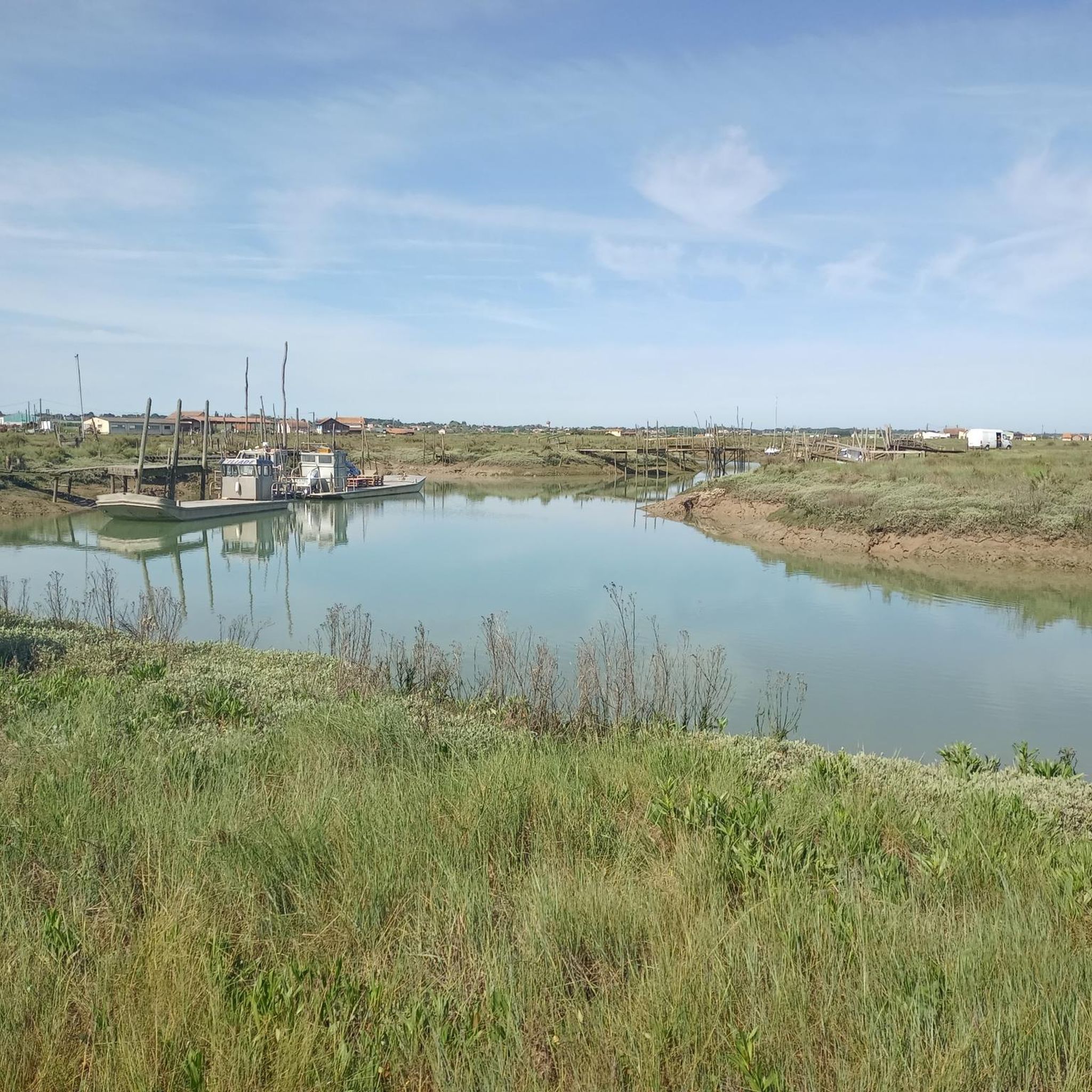
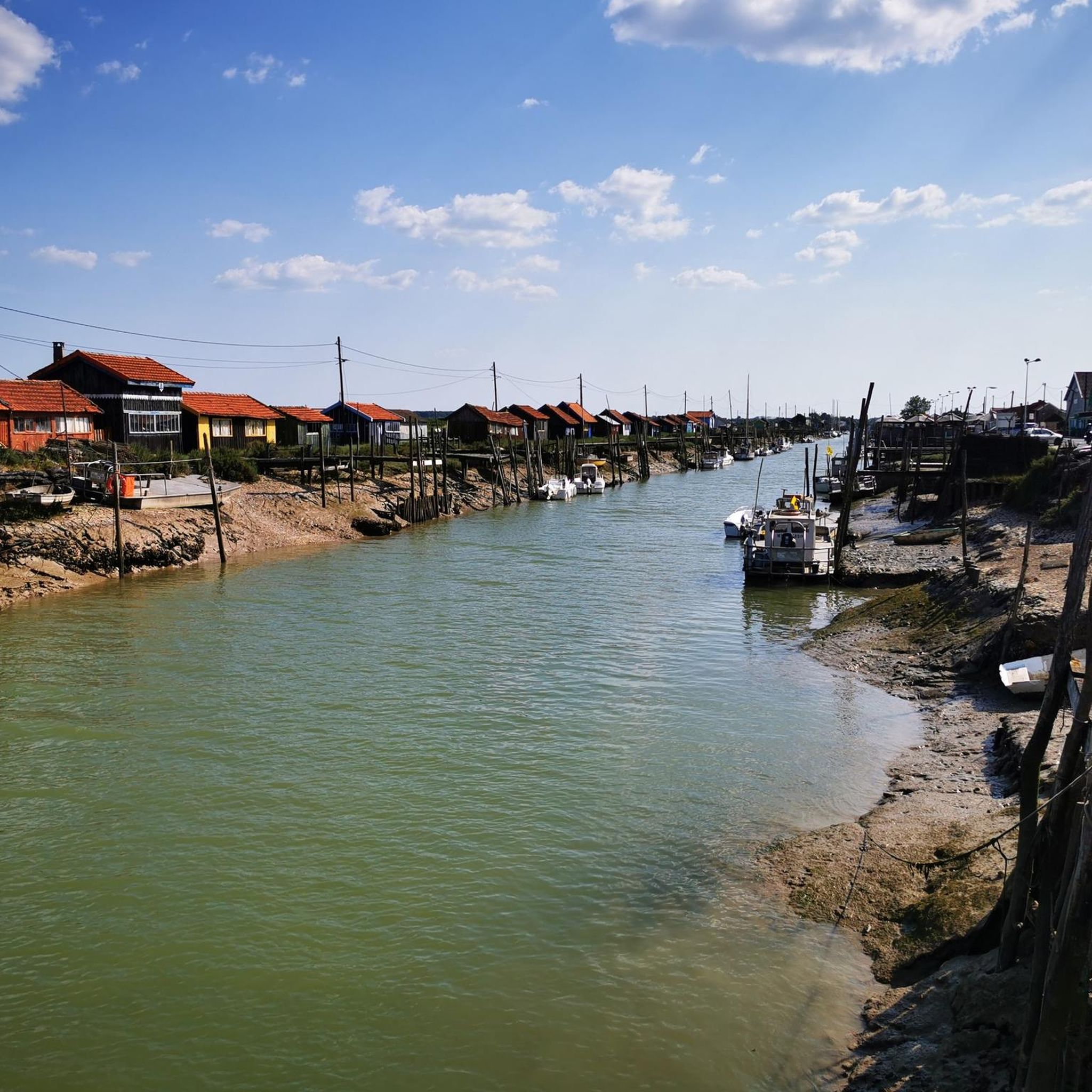
Chaillevette, from the Saintongeais "Chaille" which means "pebble" is a small town in Charente Maritime with 1620 inhabitants, on the Arvert Peninsula. Nestled on the left bank of the Seudre, in a setting of salt marshes, punctuated by "claires" where oysters are refined. The refinement gives them this blue-green color and this typical iodized flavor. Oyster farming by oyster farmers is an essential resource for maintaining two pretty ports: The port of Chatressac, (which almost entered history in the 17th century, having been considered for a time to accommodate the Grand arsenal maritime du Ponant wanted by Louis XIV, which was finally built further north and gave birth to the city of Rochefort), and the port of Chaillevettte. Typical with their oyster huts in various and shimmering colors, bordering the channel and welcoming barges, these two ports have managed to preserve their picturesque character. However, you can enjoy local products in the "tasting huts" and especially the oysters that make our town famous as the "cradle of the oyster". Each of these ports is animated each year by the July 14 festival in Chatressac and the August 15 festival in Chaillevette. In the Chaillevetonne countryside, the cultivation of cereals such as wheat or corn finds its place, without forgetting the vines, which will be used to produce, among other things, the Charente country wine, pineau and cognac.
0
0
The SAINT-PIERRE church dominates the village from its fortified bell tower. Original in many ways, the Romanesque building houses a holy water font made of a real shell. From the side, you reach the small garden of the chevet, well hidden. Stone sarcophagi (Merovingian or Carolingian depending on the source) bear witness to the archaeological excavations that the church has undergone. There are many stories in Mornac but that of the fire of August 2, 1943 marked the identity of the village. Indeed, the bell tower has not always had this appearance. It had the more traditional shape of a spire until lightning struck it. Many young students come to Mornac-sur-Seudre to participate in the clearing and the excavations that follow. Seduced by the local atmosphere, many of them stayed and opened the first craft workshops in the village, some of which are still present, such as pottery and leather.
0
0
Frequently Asked Questions
How many touring cycling routes are available around Étaules?
There are over 300 touring cycling routes recorded around Étaules on komoot, offering a wide variety of options for different skill levels and preferences.
Are there easy touring cycling routes suitable for beginners or families in Étaules?
Yes, Étaules offers a good selection of easy touring cycling routes. Over 220 routes are rated as easy, making them ideal for beginners or family outings. An example is the Ocean Path at Les Mathes – Bicycle Repair Station loop from Le Train des Mouettes - Chaillevette, which is an easy 28.8 km ride.
What kind of scenery can I expect on touring bike trails in Étaules?
Touring cycling routes in Étaules are characterized by coastal landscapes, including the Côte sauvage and views of the Atlantic Ocean. You'll often find paths following estuaries and rural roads, providing a mix of natural beauty and access to local villages.
Are there any circular touring bike routes in the Étaules area?
Many of the touring cycling routes around Étaules are designed as loops, allowing you to start and end at the same point. For instance, the The market halls in Mornac-sur-Seudre loop from Le Train des Mouettes - Chaillevette is an easy 11.4 km circular route.
What are some interesting places to explore or landmarks to see along the touring cycling routes?
Along the routes, you can discover various points of interest. Notable attractions include the historic German Bunkers of La Grande Côte, the serene Our Lady of the Aviators Chapel in Saint-Palais, and the picturesque Saint Palais sur mer lighthouse. You might also encounter natural spots like the Conche de Gilet beach or the Mornac-sur-Seudre Marshes.
What do other touring cyclists say about the routes in Étaules?
The touring cycling routes in Étaules are highly regarded by the komoot community, holding an average rating of 4.4 stars from over 2,400 reviews. Cyclists often praise the scenic coastal paths, gentle gradients, and the variety of routes available.
Are there more challenging touring bike trails for advanced cyclists?
While the terrain generally features gentle gradients, there are routes categorized as difficult for those seeking a greater challenge. There are 14 difficult touring cycling routes available, offering longer distances and more elevation gain compared to the easy or moderate options.
What is the longest touring cycling route available in Étaules?
The longest touring cycling route listed in the guide is the Côte sauvage – Marennes Beach loop from Le Train des Mouettes - Chaillevette, covering 64.5 km and typically taking around 3 hours 48 minutes to complete.
Is Étaules a good destination for touring cycling year-round, or are there specific seasons to consider?
Étaules, with its coastal climate, generally offers pleasant cycling conditions for much of the year. Spring and autumn often provide mild temperatures and fewer crowds. While winter cycling is possible, it's advisable to check local weather forecasts for wind and rain, as coastal areas can be exposed.
Are there any less crowded touring bike trails in Étaules?
To find less crowded routes, consider exploring some of the lesser-known easy or moderate trails that venture slightly away from the most popular coastal sections. Using komoot's route planner can help you discover routes that might be quieter, especially during peak seasons.
What are the typical terrain conditions for touring cyclists in Étaules?
The terrain around Étaules is generally characterized by gentle gradients. Routes often follow paved coastal paths, well-maintained estuary trails, and quiet rural roads, making for a comfortable touring cycling experience.
Most popular attractions around Étaules

Get inspired with the komoot mobile app


Explore more
Browse the best Cycling routes in other regions.
