The best MTB trails around Saint-Palais-Sur-Mer
4.8
(92)
458
riders
21
rides
Mountain biking around Saint-Palais-Sur-Mer offers diverse landscapes, blending the serene natural beauty of France's Atlantic coast with engaging terrain. The region is characterized by its varied coastline, featuring sandy beaches and rocky ledges, alongside extensive forested areas like the Combots and Coubre forests. These natural features provide a mix of coastal paths and shaded forest trails suitable for mountain biking.
Best mountain bike trails around Saint-Palais-Sur-Mer
- The most popular mountain bike trail is La Coubre Lighthouse – Ronce-les-Bains mountain bike…
Last updated: August 21, 2026
4.5
(39)
207
riders
Moderate mountain bike ride. Good fitness required. Suitable for all skill levels.
4.6
(20)
123
riders
Easy mountain bike ride. Great for any fitness level. Suitable for all skill levels.

Sign up for free
4.5
(15)
44
riders
32.1km
01:56
120m
120m
Easy mountain bike ride. Great for any fitness level. Suitable for all skill levels.
4.5
(6)
19
riders
Moderate mountain bike ride. Good fitness required. Advanced riding skills necessary.
5.0
(1)
5
riders
Moderate mountain bike ride. Good fitness required. Suitable for all skill levels.
Get access to more routes and recommendations from other explorers.
Sign up for free
Already have an account?
Our route recommendations are based on thousands of hikes, rides, and runs completed by other people on komoot.
Start today with a free account
Your next adventure awaits.
Login or Signup

Tips from the Community

The Halles of Mornac first appeared in the Middle Ages. It was only in 1664 that the first written proof attested to their existence. They are likely older and could date back to the 1550s. The Halles are generally timber-framed shelters supported by stone pillars and covered with tiles. It can be assumed that, like those of Cozes and Pisany, they suffered the vicissitudes of the Wars of Religion and were damaged, or even destroyed, then rebuilt when peace returned. The site of the Halles of Mornac was a renowned fairground and allowed the inhabitants to sell their products in exchange for a fee paid to the Lord. It was an important source of income for him, which also obliged him to maintain these Halles in perfect condition. An act engaging the Lord and the seller sealed a contract signifying the rights to sell unpacked goods and the maintenance of the said Halles.
0
0

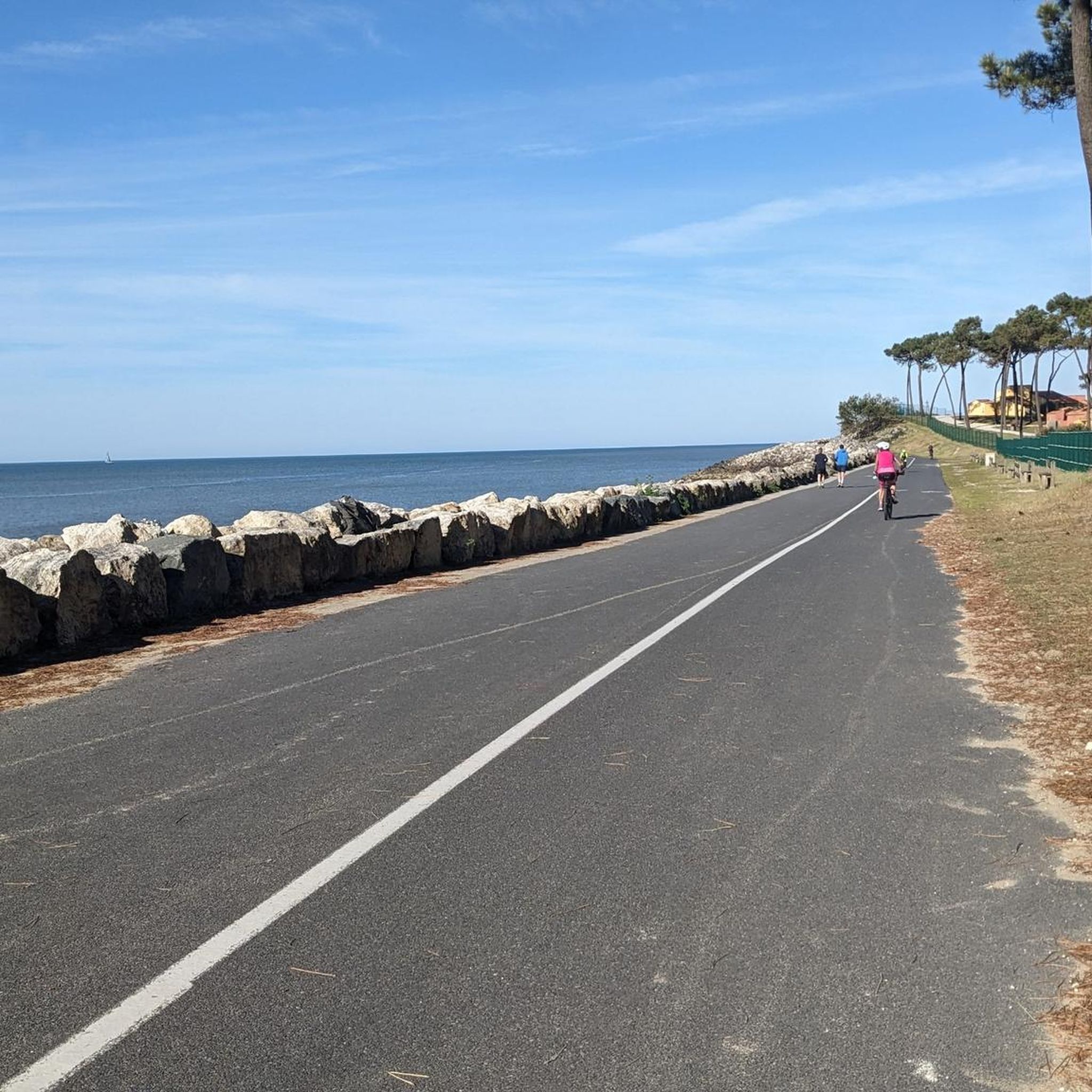
Nice quiet little road that offers some shade on hot days.
0
0
Located on the commune of St-Palais-sur-Mer, at the tip of Terre-Nègre, it is intended to mark the southern passage of the Gironde estuary and to signal the presence of a dangerous sandbank, the la barre à l'Anglais.
0
0

Here you'll find a romantic little lighthouse, and behind it lies a garden with a bench overlooking the sea, a lovely place to stop for a break. Afterwards, you can continue along the cliff to the right until you reach Euro Velo 1 again.
0
0

Easily accessible place, only the last meters are prohibited for cyclists.
0
0

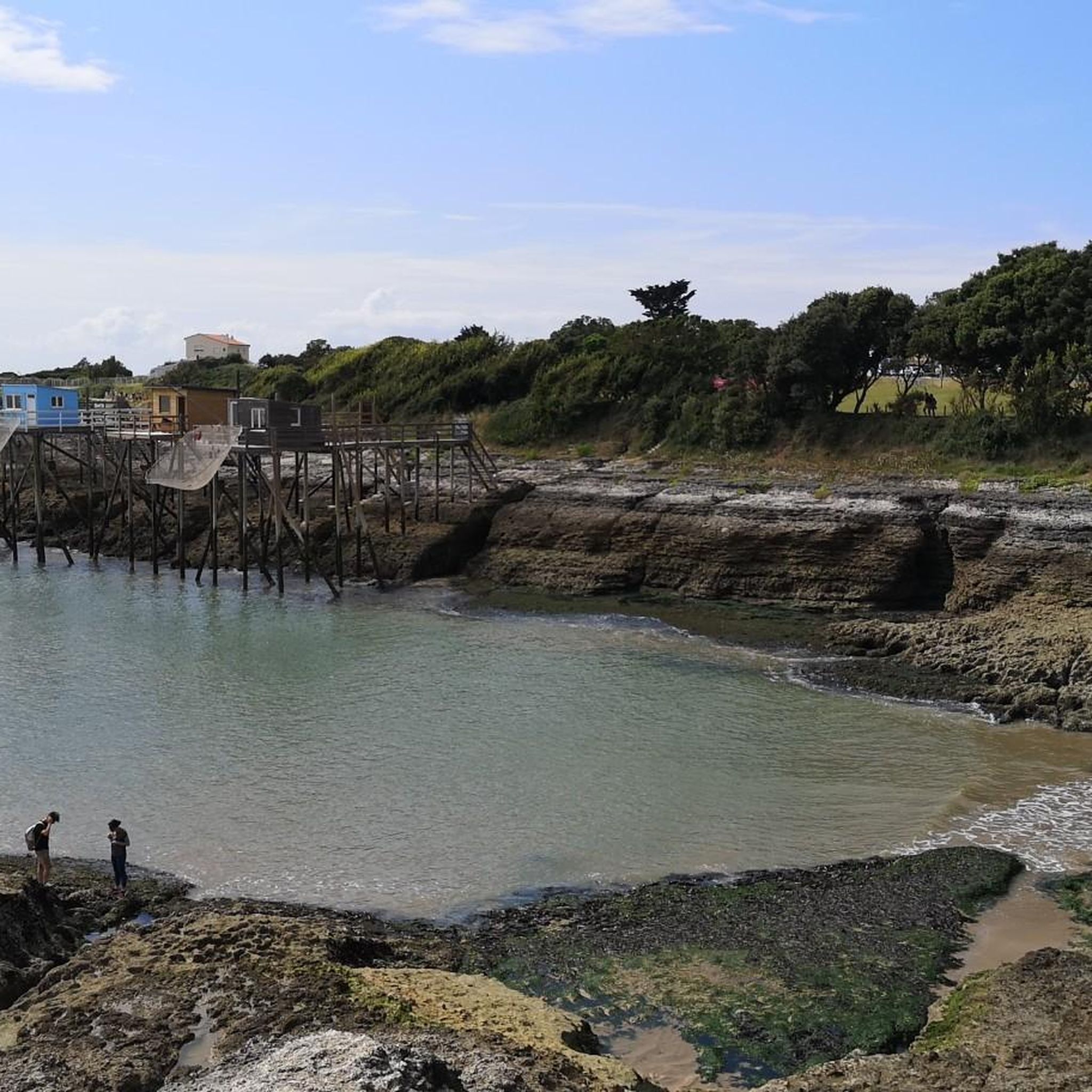
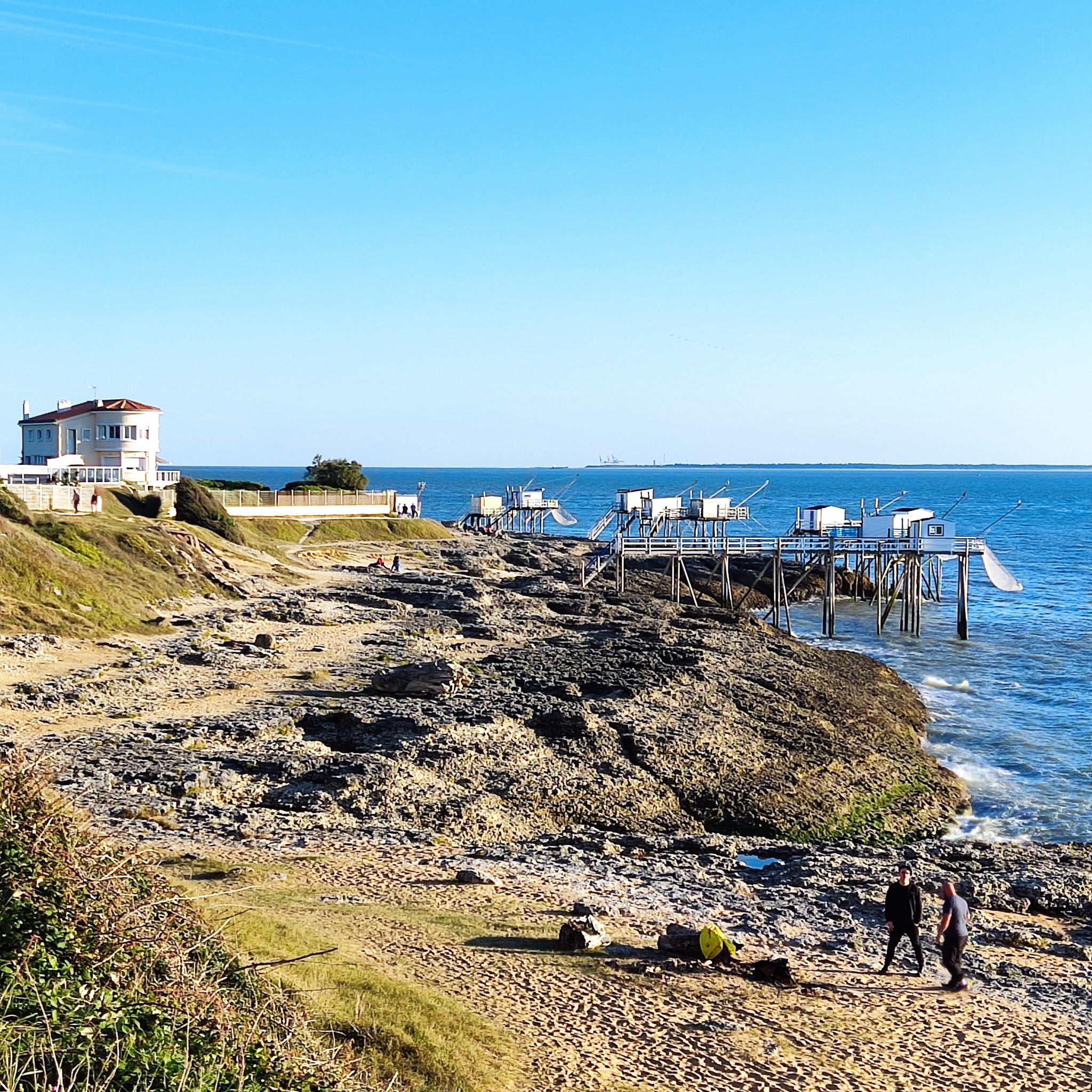
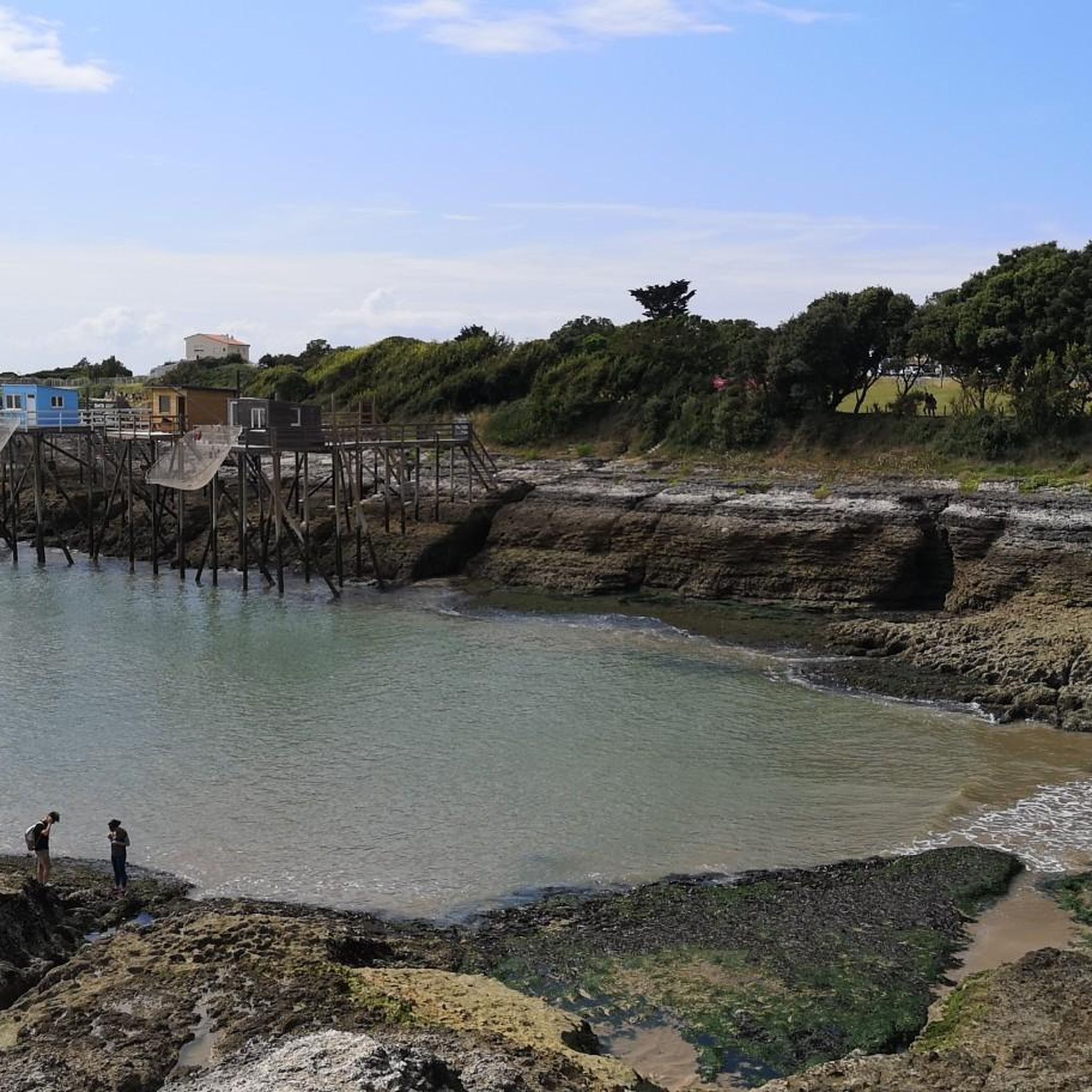
The tides are constantly changing the landscape.
0
0

The Terre-Nègre lighthouse is a landmark forming a cylindrical tower a little over 26 meters high. Located on the tip of Terre-Nègre, in the commune of Saint-Palais-sur-Mer, in Charente-Maritime, it is intended to mark the southern pass of the Gironde estuary and to signal the presence of a dangerous sandbank, the "Anglais bar". This building forms a tower-column 3.16 meters in diameter and 26.60 meters high. A spiral staircase with a central core of 143 steps leads to a summit platform equipped with a directional light. The tower is painted in two different colors to make it more visible: the upper part is red, the lower part is white. The base of the lighthouse is hidden by a building that once served as the keeper's accommodation. The installation of a beacon at this location was considered as early as 1763. De Kearney took over the beaconing plan four years later. Construction work on the tower began in 1770 and was completed in 1773, probably under the supervision of the Bordeaux engineer Claude Tardy. In 1807, the tower was raised. However, this work was considered insufficient by some of the estuary's navigators. In 1834, sailors from the nearby port of Royan sent a request to the Ministry of the Navy to study the possibility of equipping the tower with a light. However, this request was postponed the following year due to lack of sufficient funds. A new request from sailors prompted the lighthouse commission to experiment with a first light in 1836. Finally, on October 15, 1838, a fixed white 4th order light was permanently installed. The latter was replaced in 1856 by a fixed white light of the 4th order of a small dioptric model with a reinforced sector of the 5th order catoptric. It was equipped with new lights in 1899 and 1904. In 1939, it was electrified. During the German occupation, the lighthouse served as an observatory for the soldiers of the Wehrmacht. Damaged during the fighting of 1945 (presence of breaches at the top of the tower), it was restored in the immediate post-war period. In March 1947, the lighthouse was operational again. A light with 3 occultations — changing every 12 seconds — was installed. Its colors are white, red and green. Its current range is 18 miles. Listed as a Historic Monument since 2011, the lighthouse is not open to visitors. However, it can be admired from the outside and a pretty passage provides direct access to the coastal path.
0
0
The SAINT-PIERRE church dominates the village from its fortified bell tower. Original in many ways, the Romanesque building houses a holy water font made of a real shell. From the side, you reach the small garden of the chevet, well hidden. Stone sarcophagi (Merovingian or Carolingian depending on the source) bear witness to the archaeological excavations that the church has undergone. There are many stories in Mornac but that of the fire of August 2, 1943 marked the identity of the village. Indeed, the bell tower has not always had this appearance. It had the more traditional shape of a spire until lightning struck it. Many young students come to Mornac-sur-Seudre to participate in the clearing and the excavations that follow. Seduced by the local atmosphere, many of them stayed and opened the first craft workshops in the village, some of which are still present, such as pottery and leather.
0
0
Frequently Asked Questions
How many mountain bike trails are available around Saint-Palais-Sur-Mer?
Saint-Palais-Sur-Mer offers a diverse network of over 20 mountain bike trails. These routes cater to various skill levels, with 8 easy and 13 moderate trails available to explore.
Are there easy mountain bike trails suitable for beginners or families?
Yes, Saint-Palais-Sur-Mer has 8 easy mountain bike trails perfect for beginners or families. A great option is the Beautiful track – White Sand Path to the Beach loop from Moulin de la Brunette, an easy 32.2 km path that leads towards the beach through varied landscapes and is suitable for all fitness levels.
Can I find circular mountain bike routes in the area?
Many of the mountain bike trails around Saint-Palais-Sur-Mer are circular, offering convenient loop experiences. For example, the La Coubre Lighthouse – Ronce-les-Bains mountain bike circuit loop from Parking Le Flandre is a moderate 59.3 km loop traversing the Coubre forest and coastline. Another popular loop is the Seaside – Promenade des Deux Phares loop from Saint-Palais-sur-Mer, a 36.2 km coastal route.
What kind of landscapes can I expect to see while mountain biking in Saint-Palais-Sur-Mer?
Mountain biking in Saint-Palais-Sur-Mer offers a blend of diverse landscapes. You'll encounter varied coastlines with sandy beaches and rocky ledges, extensive forested areas like the Combots and Coubre forests, and unique geological formations. Many trails provide scenic views of the Atlantic coast and the Gironde Estuary.
Are there any challenging mountain bike trails for experienced riders?
While there are no trails explicitly rated as 'difficult' in the immediate vicinity, the region offers 13 moderate mountain bike trails that provide a good challenge for experienced riders. These routes often feature longer distances and more elevation gain, such as the La Coubre Lighthouse – Ronce-les-Bains mountain bike circuit loop, which covers nearly 60 km with over 180 meters of elevation.
What are some notable natural attractions or landmarks I can see along the mountain bike trails?
The area around Saint-Palais-Sur-Mer is rich in natural beauty and landmarks. You might encounter unique geological formations like Le Pont du Diable (Devil's Bridge) and the Rock of Vergnes. Coastal trails often pass by beautiful beaches such as Saint-Georges-de-Didonne Beach or Chay Beach. The Terre-Nègre Lighthouse – Seaside loop from Vaux-sur-Mer offers views of the Terre-Nègre lighthouse, a beautiful landmark on the Atlantic coast.
What do other mountain bikers enjoy the most about mountain biking in Saint-Palais-Sur-Mer?
The mountain biking experience in Saint-Palais-Sur-Mer is highly rated by the komoot community, with an average score of 4.7 stars from over 150 reviews. Riders often praise the diverse coastal paths, dense forests, and the variety of options available for different ability levels. The blend of serene natural beauty with engaging terrain is a common highlight.
Are there any mountain bike routes that pass through forests?
Absolutely. Saint-Palais-Sur-Mer is known for its extensive forested areas. Many mountain bike routes, including sections of The Vélodyssée, traverse the Combots and Coubre forests, providing shaded and scenic trails. The La Coubre Lighthouse – Ronce-les-Bains mountain bike circuit loop is a prime example, taking you through the heart of the Coubre forest.
Can I find mountain bike trails that offer sea views?
Yes, the region's diverse coastline means many mountain bike trails offer stunning sea views. Routes often follow coastal paths, providing breathtaking vistas of the Atlantic. The Seaside – Promenade des Deux Phares loop from Saint-Palais-sur-Mer is specifically designed to showcase the coastal areas.
What is the typical duration for mountain bike trails in Saint-Palais-Sur-Mer?
Trail durations vary depending on the route's length and your pace. Easy trails like the Beautiful track – White Sand Path to the Beach loop (32.2 km) typically take around 2 hours. Moderate routes, such as the La Coubre Lighthouse – Ronce-les-Bains circuit (59.3 km), can take approximately 3.5 hours.
Are there any routes that connect to nearby towns or villages?
Yes, some routes extend to or pass through nearby towns and villages, offering opportunities to explore beyond Saint-Palais-Sur-Mer. For instance, The market halls in Mornac-sur-Seudre – Les Mathes – La Palmyre Loop is a moderate 42.3 km route that connects Saint-Palais-sur-Mer with these charming locations.
Most popular routes around Saint-Palais-Sur-Mer
Most popular attractions around Saint-Palais-Sur-Mer

Get inspired with the komoot mobile app


Explore more
Browse the best MTB trails in other regions.
