The best cycling routes around Montferrand-Le-Château
4.5
(884)
9,570
riders
383
rides
Touring cycling around Montferrand-Le-Château offers routes through the Doubs department of Bourgogne-Franche-Comté, characterized by its scenic Doubs River and varied hilly landscapes. The region features a network of cycling paths, including dedicated routes and canal-side trails, many of which are paved. Cyclists can explore both gentle river valleys and more challenging elevated terrain.
Best touring cycling routes around Montferrand-Le-Château
- The most popular touring cycling route is Citadel of Besançon – The Doubs loop from Montferrand - Thoraise, a 22.0…
Last updated: August 16, 2026
4.9
(9)
89
riders
Hard bike ride. Very good fitness required. Mostly paved surfaces. Suitable for all skill levels.
5.0
(1)
9
riders
11.9km
00:45
120m
120m
Easy bike ride. Great for any fitness level. Mostly paved surfaces. Suitable for all skill levels.

Sign up for free
5.0
(1)
14
riders
80.6km
05:28
1,300m
1,300m
Hard bike ride. Very good fitness required. Mostly paved surfaces. Suitable for all skill levels.
8
riders
31.3km
02:06
270m
270m
Moderate bike ride. Good fitness required. Mostly paved surfaces. Suitable for all skill levels.
5
riders
14.1km
00:54
150m
150m
Easy bike ride. Great for any fitness level. Mostly paved surfaces. Suitable for all skill levels.
Get access to more routes and recommendations from other explorers.
Sign up for free
Already have an account?
Our route recommendations are based on thousands of hikes, rides, and runs completed by other people on komoot.
Start today with a free account
Your next adventure awaits.
Login or Signup
Tips from the Community

Imposing complex which is worth a visit.
0
0

The Saint-Jean Cathedral of Besançon, also called Saint-Jean Saint-Étienne Cathedral of Besançon, is a Carolingian church, basilica, and cathedral in Franche-Comté in Besançon, built in the 3rd century and then rebuilt several times, notably in the 9th and 11th centuries; it includes Romanesque, Gothic, and Baroque parts. The building is one of the few in France to have two opposing choirs; it houses about thirty paintings classified as historical monuments, an astronomical clock considered a masterpiece of its kind, as well as the Rose of Saint-Jean, a circular altar dating from the 11th century and entirely made of white marble. The cathedral is nestled at the foot of Mont Saint-Étienne near the citadel of Besançon, behind the Gallo-Roman Black Gate and facing the former episcopal palace of the Archbishopric of Besançon, on the road leading up to the citadel of Besançon.
0
0
Its foundation is attested as early as the 6th century. The church was demolished and rebuilt several times; the current Jesuit-style building dates from the early 18th century. During the Revolution, after the church was deconsecrated, all of its interior furnishings were sold at auction. Then, the church itself met the same fate.
0
0
Founded in the 4th century, the current church was built from 1782 to 1786 according to the plans of architect Claude-Joseph-Alexandre Bertrand. The significant height of the bell tower is explained by its role as the town hall's belfry, thus carrying the municipal bell high up, and as a watchman's lodge.
0
0

A few benches with tables under a tree for shade, ideal for a short break
0
0


Another of the beautiful religious buildings of the place.
1
0
Located in an ideal place to see it from afar as well.
1
0
Frequently Asked Questions
How many touring cycling routes are available around Montferrand-Le-Château?
There are over 400 touring cycling routes available around Montferrand-Le-Château. These routes cater to various skill levels, with 76 easy, 172 moderate, and 165 difficult options to explore.
What kind of terrain can I expect on touring cycling routes around Montferrand-Le-Château?
The terrain around Montferrand-Le-Château is quite varied. You'll find many routes following the scenic Doubs River, often on paved surfaces, offering gentle rides. However, the region is also characterized by charming hilly landscapes, especially on routes leading to and from Montferrand-le-Château, providing more challenging excursions with significant elevation changes. Historic canal paths are also a prominent feature.
Are there any circular touring cycling routes available?
Yes, many touring cycling routes in the area are circular. For example, you can try the Citadel of Besançon – The Doubs loop from Montferrand - Thoraise, a 35.5 km moderate route, or the Rhine-Rhone Canal – Thoraise Lock loop from Montferrand - Thoraise, which is 39.1 km long and also moderate in difficulty.
What historical landmarks or attractions can I see along the touring cycling routes?
The region offers several historical and natural attractions. You can cycle past the impressive Citadel of Besançon, a UNESCO World Heritage site. Other points of interest include the ruins of Montferrand Castle, perched above the Doubs, and the Thoraise Tunnel, an interesting historical site related to the waterways.
Are there any easy touring cycling routes suitable for beginners or families?
Yes, there are several easy routes. A good option for beginners or families is the Chemin de Halage – Thoraise Lock loop from Grandfontaine, which is 11.9 km long and takes about 44 minutes to complete, following riverside paths. Another easy route is the Thoraise Lock – Rhine-Rhone Canal loop from Thoraise, also around 12 km.
What are the best routes for scenic viewpoints?
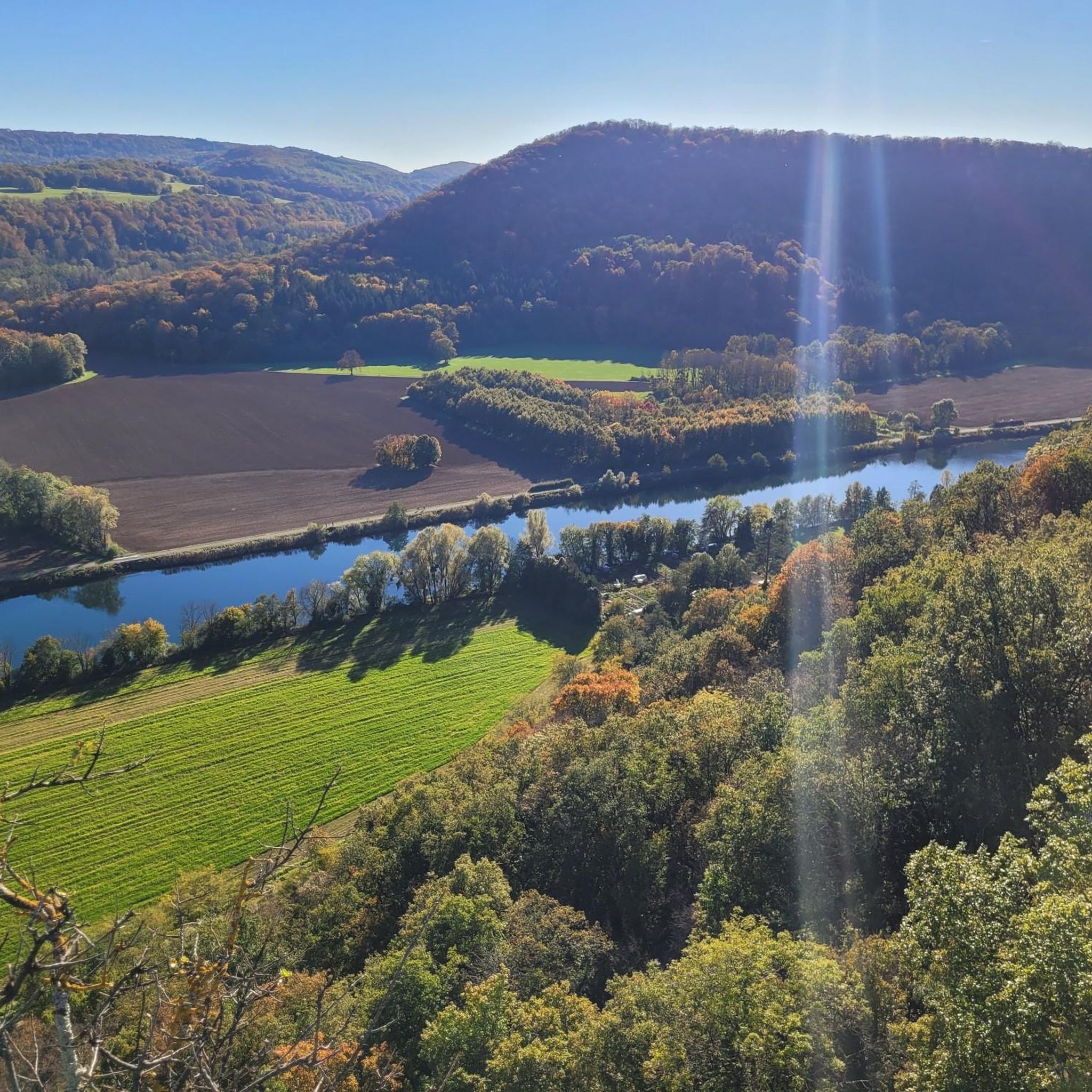
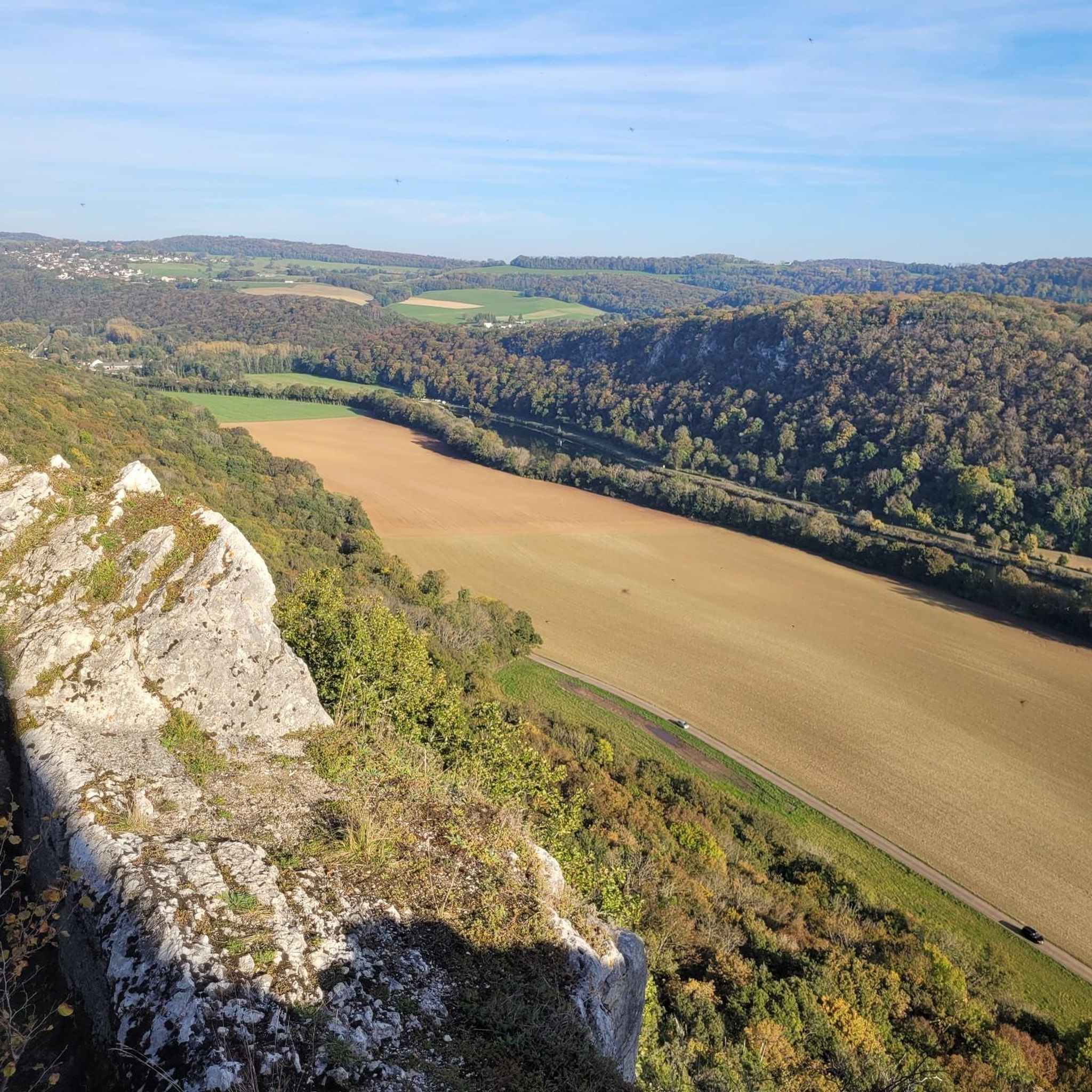
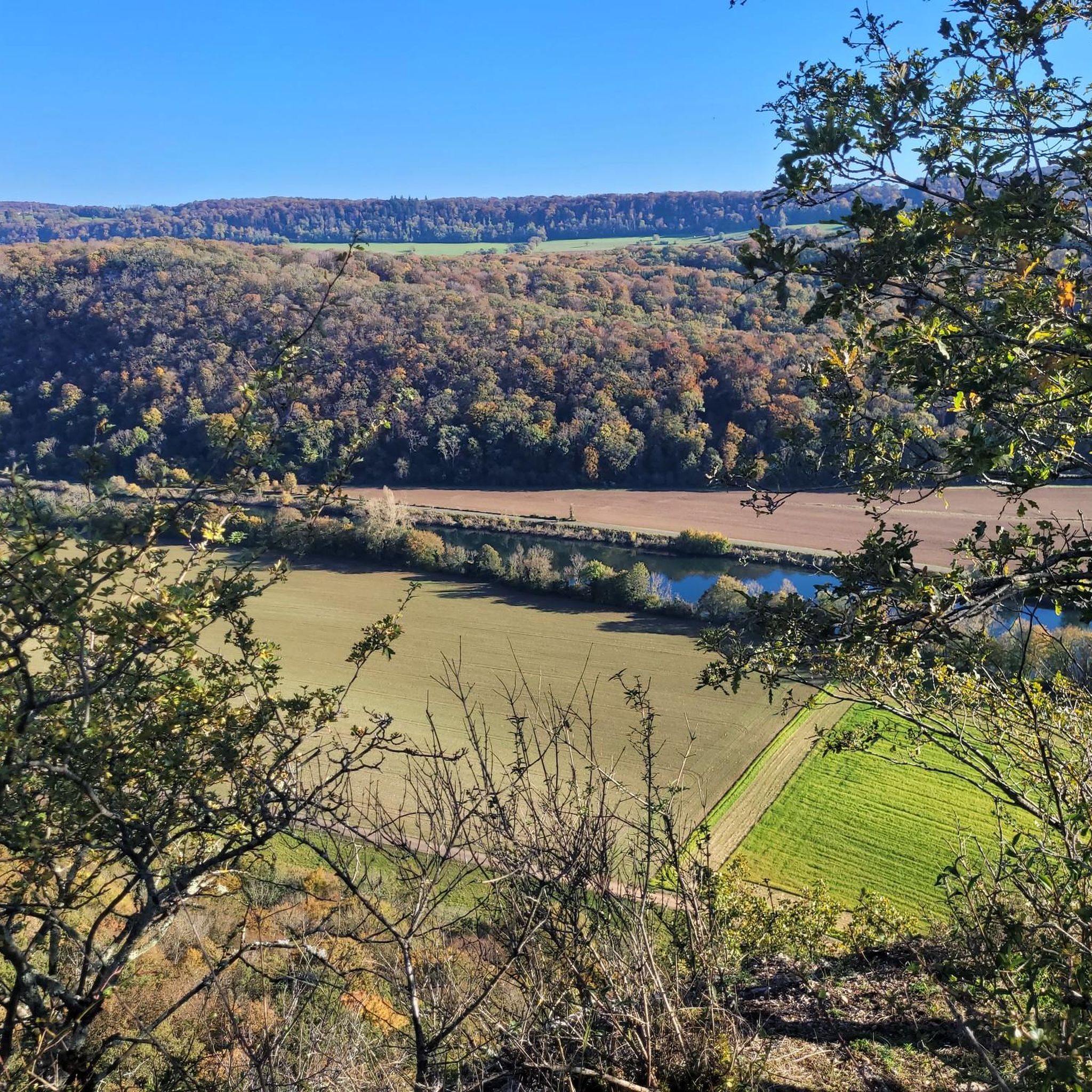
Many routes along the Doubs River offer captivating views. The Citadel of Besançon – The Doubs loop from Montferrand - Thoraise provides views of the Doubs and the historic city of Besançon. Elevated vantage points, particularly around the castle ruins of Montferrand-Le-Château, also offer sweeping views of the Doubs valley.
What do other touring cyclists say about the routes in Montferrand-Le-Château?
The touring cycling routes in Montferrand-Le-Château are highly rated by the komoot community, with an average score of 4.5 stars from over 1100 reviews. Cyclists often praise the varied terrain, the scenic beauty of the Doubs River, and the well-maintained paths, including dedicated cycling routes and canal-side trails.
Are there any routes that specifically follow the Doubs River?
Absolutely. The Doubs River is a central feature of the region's cycling. Many routes are designed to follow its scenic course, offering continuous river views. A significant development is the dedicated route connecting Besançon to Montferrand-le-Château, which largely follows the river and is expected to be fully completed in 2024, emphasizing paved surfaces for a smooth experience.
Are there any longer, more challenging touring cycling routes for experienced riders?
Yes, for experienced riders seeking a challenge, there are more difficult routes with significant elevation changes. An example is the Thoraise Canal Tunnel – The Doubs loop from Montferrand - Thoraise, a demanding 59.3 km route with over 800 meters of elevation gain.
What natural features can I explore while cycling in the region?
The majestic Doubs River is the primary natural feature, shaping many of the cycling trails. You'll encounter charming hilly landscapes and the rich natural environment of the Doubs department. The region also features the intriguing Doubs cave, which is highlighted as a point of interest on some tours.
Is it possible to cycle to Besançon from Montferrand-Le-Château?
Yes, it is possible to cycle to Besançon. A dedicated route connecting Besançon to Montferrand-le-Château is largely completed and expected to be fully finished in 2024. This route provides a smooth, paved connection, allowing cyclists to easily reach the historic city and its famous Citadel.
Most popular routes around Montferrand-Le-Château
Most popular attractions around Montferrand-Le-Château

Get inspired with the komoot mobile app


Explore more
Browse the best Cycling routes in other regions.
