The best walks and hikes around Biedermannsdorf
4.7
(793)
5,834
hikers
17
hikes
Hiking around Biedermannsdorf offers diverse outdoor experiences, situated at the edge of the Vienna Woods (Wienerwald) and near the Fischa nature reserve. The region features varied terrain, including extensive forest paths and tranquil routes along the Fischa river. The Wiener Neustädter Canal also provides a historically interesting route for walkers. These geographical features create a picturesque landscape suitable for nature enthusiasts.
Best hiking trails around Biedermannsdorf
- The most popular hiking route is Klosterpark Wiener Neudorf – Anna Chapel Wiener Neudorf…
Last updated: April 26, 2026
5.0
(2)
27
hikers
Easy hike. Great for any fitness level. Easily-accessible paths. Suitable for all skill levels.
5.0
(4)
20
hikers
5.19km
01:20
20m
20m
Easy hike. Great for any fitness level. Easily-accessible paths. Suitable for all skill levels.

Sign up for free
4.0
(4)
18
hikers
10.1km
02:35
30m
30m
Moderate hike. Good fitness required. Easily-accessible paths. Suitable for all skill levels.
18
hikers
6.28km
01:36
20m
20m
Easy hike. Great for any fitness level. Easily-accessible paths. Suitable for all skill levels.
5.0
(1)
14
hikers
4.89km
01:15
20m
20m
Easy hike. Great for any fitness level. Easily-accessible paths. Suitable for all skill levels.
Get access to more routes and recommendations from other explorers.
Sign up for free
Already have an account?
Our route recommendations are based on thousands of hikes, rides, and runs completed by other people on komoot.
Start today with a free account
Your next adventure awaits.
Login or Signup
Tips from the Community

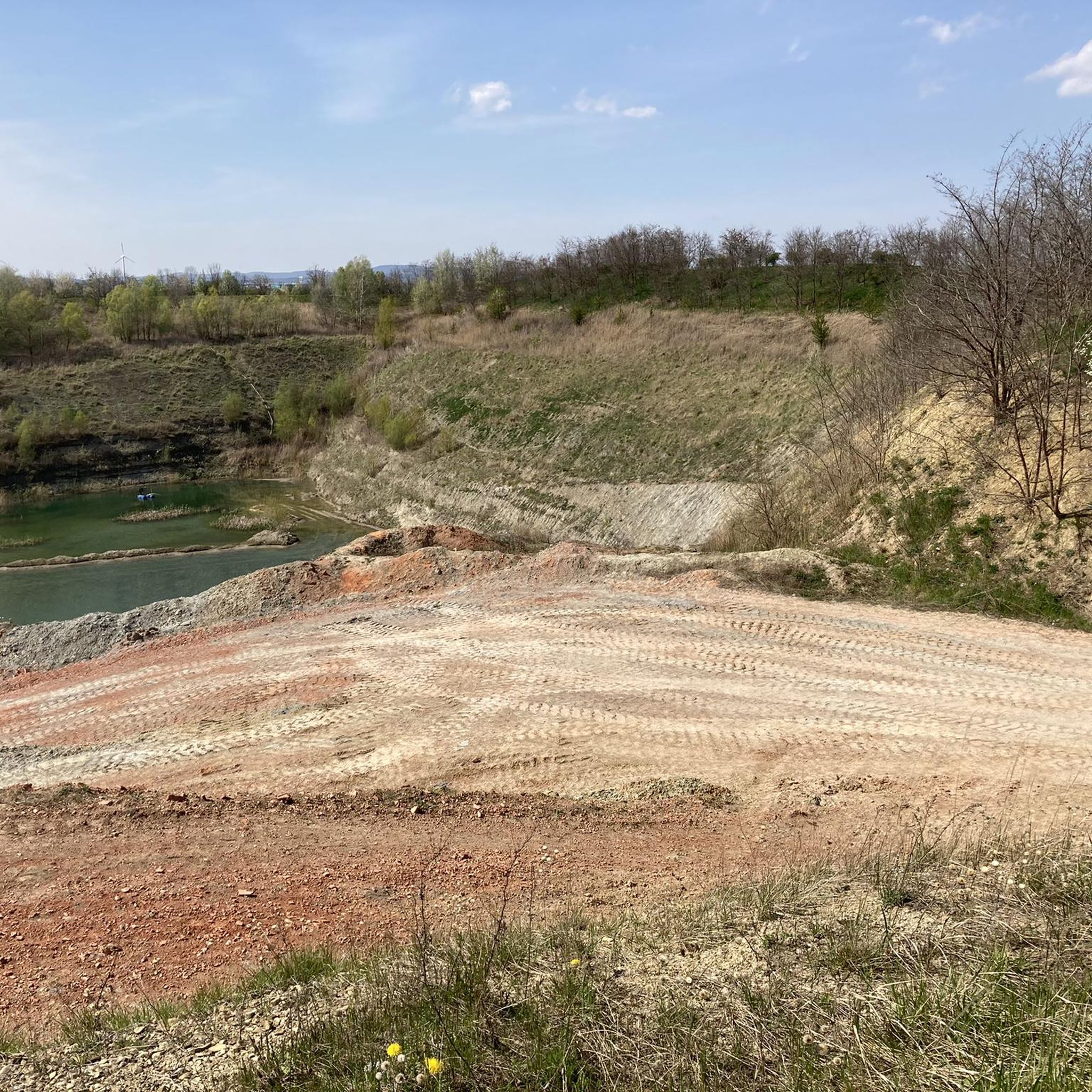
The ecologically oriented care and design of the monastery park are a great help to animal and plant species, as suitable habitats are not always easy to find within settlement areas. As diverse green spaces as possible are particularly important for biodiversity in densely built-up areas.
0
0

The enclosure is right on the side of the road, the alpacas are beautiful to look at :-)
0
1


Biedermannsdorf Church is a Roman Catholic parish church dedicated to Saint John the Baptist. It is in the municipality of Biedermannsdorf in the district of Mödling in Lower Austria and belongs to the Deanery of Mödling in the Vicariate Unter den Wienerwald of the Archdiocese of Vienna. The church has a long and checkered history, dating back to the 13th century. The first church on this site was mentioned in a document in 1308. It was badly damaged during the Turkish sieges of 1529 and 1683 and has been rebuilt several times. Today's church was built in Baroque style in 1727 by master builder Franz Jäckl and consecrated in 1728 by Archbishop Sigismund Graf Kollonitz of Vienna. The interior and the tower were not completed until later. The church has a rectangular hall with a flat ceiling and a recessed chancel with a semicircular apse. The tower stands on the south side of the chancel and has an onion dome with a lantern. The facade is divided by pilasters and cornices and has a portal with a broken segment gable. The church houses some works of art, such as the high altar by Josef Tallmann from 1760, which features an altarpiece of St. John the Baptist. The side altars are dedicated to Saint Joseph and Saint Anne and date from the 18th century. The pulpit is decorated with reliefs of the four evangelists and has a soundboard with a dove of the Holy Spirit. The organ was built in 1892 by Franz Capek and has 14 registers on two manuals and pedal. The church also has a number of statues, paintings and votive tablets from different eras. The Biedermannsdorf Church is an important monument and a place of faith and community. It is part of the parish of Biedermannsdorf, which offers various activities and events for parishioners.
1
0
Biedermannsdorf Church is a Roman Catholic parish church dedicated to Saint John the Baptist. It is in the municipality of Biedermannsdorf in the district of Mödling in Lower Austria and belongs to the Deanery of Mödling in the Vicariate Unter den Wienerwald of the Archdiocese of Vienna. The church has a long and checkered history, dating back to the 13th century. The first church on this site was mentioned in a document in 1308. It was badly damaged during the Turkish sieges of 1529 and 1683 and has been rebuilt several times. Today's church was built in Baroque style in 1727 by master builder Franz Jäckl and consecrated in 1728 by Archbishop Sigismund Graf Kollonitz of Vienna. The interior and the tower were not completed until later. The church has a rectangular hall with a flat ceiling and a recessed chancel with a semicircular apse. The tower stands on the south side of the chancel and has an onion dome with a lantern. The facade is divided by pilasters and cornices and has a portal with a broken segment gable. The church houses some works of art, such as the high altar by Josef Tallmann from 1760, which features an altarpiece of St. John the Baptist. The side altars are dedicated to Saint Joseph and Saint Anne and date from the 18th century. The pulpit is decorated with reliefs of the four evangelists and has a soundboard with a dove of the Holy Spirit. The organ was built in 1892 by Franz Capek and has 14 registers on two manuals and pedal. The church also has a number of statues, paintings and votive tablets from different eras. The Biedermannsdorf Church is an important monument and a place of faith and community. It is part of the parish of Biedermannsdorf, which offers various activities and events for parishioners.
2
0
The monastery park is a beautiful place to enjoy nature and history. It was opened to the general public in 1995 and offers a large children's playground as well as a vitality and fitness course. The park lies west of the monastery buildings, which originally served as a penal institution for women and later as a monastery of the Order of the Good Shepherd. The park also contains the monastery cemetery, which was surrounded by a hedge and redesigned in 2000, where three anonymous rows of graves and three individual graves can be seen. Two neo-Gothic chapels are connected to the monastery area by walnut avenues. There is a statue of the Sacred Heart in the northern chapel. The monastery park is part of the Wiener Neudorf adventure trail, which shows you the most important sights and historical places in the market town. Wiener Neudorf has a long and exciting history that goes back to the 11th century, when the oldest Neudorf was built with its castle located in what is now the monastery park. The community was once a farming village that lived from agriculture and viticulture, but also benefited from the large country road from Vienna to the south. Over time, Wiener Neudorf developed into an important location for brick production, beer brewing and industry. Today Wiener Neudorf is a modern and livable community with many cultural and sporting offerings.
3
0
The history of the Church of St. Andrew in Hennersdorf is very interesting. The church was originally built as a Romanesque hall in the 12th century and was a branch of St. Stephen in Vienna. In the 14th century it was elevated to the status of a parish church and received a Gothic east tower. In the 18th century the church was remodeled in Baroque style and oriented to the west, with the Romanesque choir becoming the entrance and a new Baroque choir with sacristies added. The Romanesque south portal with a tympanum relief was walled up in 1758 and only uncovered again in 1941. The church has been restored several times, most recently in 20123. The church also has some wall paintings from the 12th and 13th centuries, as well as a memorial to the fallen of both world wars and the bomb victims of 1944.
1
0
The Romanesque church of St. Andrew in Hennersdorf was built around 1150 and is a simple building with a round apse and ridge turret. It is one of the few preserved Romanesque churches in Austria. It is located on a hill above the village and has a secluded forecourt.
1
0
Frequently Asked Questions
How many hiking trails are there in Biedermannsdorf?
Biedermannsdorf offers a selection of nearly 20 hiking trails, catering to various preferences and fitness levels. These routes explore the diverse landscapes at the edge of the Vienna Woods and near the Fischa nature reserve.
What is the best time of year to go hiking in Biedermannsdorf?
The most enjoyable seasons for hiking in Biedermannsdorf are spring and autumn. During these times, the weather is mild, and the natural scenery is particularly vibrant, making for pleasant outdoor experiences. Even in summer, many shady forest paths offer a refreshing escape from the heat.
Are there easy hiking trails suitable for beginners in Biedermannsdorf?
Yes, Biedermannsdorf is well-suited for beginners and those looking for relaxed strolls. Out of the nearly 20 trails, 14 are rated as easy. An example is the Schönbrunner Allee Parking Lot – Haidweg loop from Vösendorf, which is an easy 5.2 km path providing access to local green spaces.
Can I find family-friendly hiking routes in Biedermannsdorf?
Absolutely. The region offers routes perfect for families, such as the Biedermannsdorf Adventure Trail. This trail is designed for playful exploration of nature and includes interactive stations like a barefoot path and a climbing wall, making it engaging for children.
Are dogs allowed on the hiking trails around Biedermannsdorf?
Many trails in the Biedermannsdorf area, particularly those within the Vienna Woods, are generally dog-friendly. However, when hiking near the Fischa nature reserve, it's advisable to keep dogs on a leash to protect local wildlife and plant life. Always check local signage for specific regulations.
Are there any circular hiking routes in Biedermannsdorf?
Yes, many of the trails around Biedermannsdorf are designed as circular routes, offering convenient starting and ending points. For instance, the Hennersdorf Parish Church – Alpaca Farm loop from Laxenburg is a 10.1 km circular trail that takes you through the local countryside.
What kind of natural features or landmarks can I expect to see on a hike?
The hiking trails in Biedermannsdorf offer a variety of natural and historical sights. You can explore the tranquil Fischa river, walk along the historic Wiener Neustädter Canal, or enjoy the extensive forests of the Vienna Woods. Nearby, you can also visit beautiful lakes like Kaltenleutgeben Quarry Lake or Wienerberg Pond.
Where can I park when hiking in Biedermannsdorf?
Parking is generally available at common starting points for trails. For example, the Schönbrunner Allee Parking Lot – Haidweg loop from Vösendorf indicates a parking facility at its trailhead, providing convenient access to the paths.
What do other hikers say about the trails in Biedermannsdorf?
The hiking routes in Biedermannsdorf are highly regarded by the komoot community, with an average score of 4.7 stars from over 35 reviews. Hikers often praise the varied terrain, the peaceful atmosphere, and the accessibility of the trails for different ability levels.
Are there any historical sites to explore while hiking?
Yes, the region is rich in history. The Liechtenstein Castle and the Ruins of Mödling Castle are notable historical landmarks in the vicinity. Within Biedermannsdorf itself, the Schlosspark-Rundweg guides visitors past the 16th-century Biedermannsdorf Castle, offering scenic views and a glimpse into the past.
How long do hikes typically take in Biedermannsdorf?
Hikes in Biedermannsdorf vary in length and duration. Many easy routes, like the Klosterpark Wiener Neudorf – Anna Chapel Wiener Neudorf loop from Laxenburg (5.0 km), can be completed in about 1 hour 17 minutes. Longer, moderate trails, such as the Haidweg – Bauernheuriger Taschler loop from Laxenburg (6.3 km), might take around 1 hour 36 minutes.
What kind of wildlife might I encounter on the trails?
The Fischa nature reserve and the Vienna Woods provide habitats for diverse flora and fauna. Hikers often have the chance to observe local wildlife and a variety of plant species, especially along the tranquil routes that follow the Fischa river.
Most popular routes around Biedermannsdorf
Most popular attractions around Biedermannsdorf

Get inspired with the komoot mobile app


Explore more
Browse the best Hikes in other regions.
