Attractions and Places To See around Vanzac - Top 14
Attractions and places to see around Vanzac offer a diverse range of historical, cultural, and natural sites within the Charente-Maritime department. This region in Nouvelle-Aquitaine provides access to significant landmarks and natural landscapes. Visitors can explore ancient fortifications, historic churches, and serene forests. The area is characterized by its blend of heritage sites and opportunities for outdoor activities.
Best attractions and places to see around Vanzac
- The most popular attractions is La voie verte, a cycle way that offers…
Last updated: June 23, 2026
La voie verte
Highlight (Segment) • Cycleway
Surprising but …
Translated by Google •
Tip by

Blue Lake of Touvérac
Highlight • Lake
Translated by Google •
Tip by

Sign up now to discover places like this
Get recommendations on the best single tracks, peaks, & plenty of other exciting outdoor places.
Sign up for free
Saint Martin Church of Fontaine-d'Ozillac
Highlight • Religious Site
Translated by Google •
Tip by
An abbey turned parish church
Highlight • Other
Translated by Google •
Tip by
Saint-Christophe Church of Léoville
Highlight • Religious Site
Translated by Google •
Tip by

Sign up for free to discover even more attractions around Vanzac.
Sign up for free
Already have an account?
Start today with a free account
Your next adventure awaits.
Login or Signup

Tips from the Community

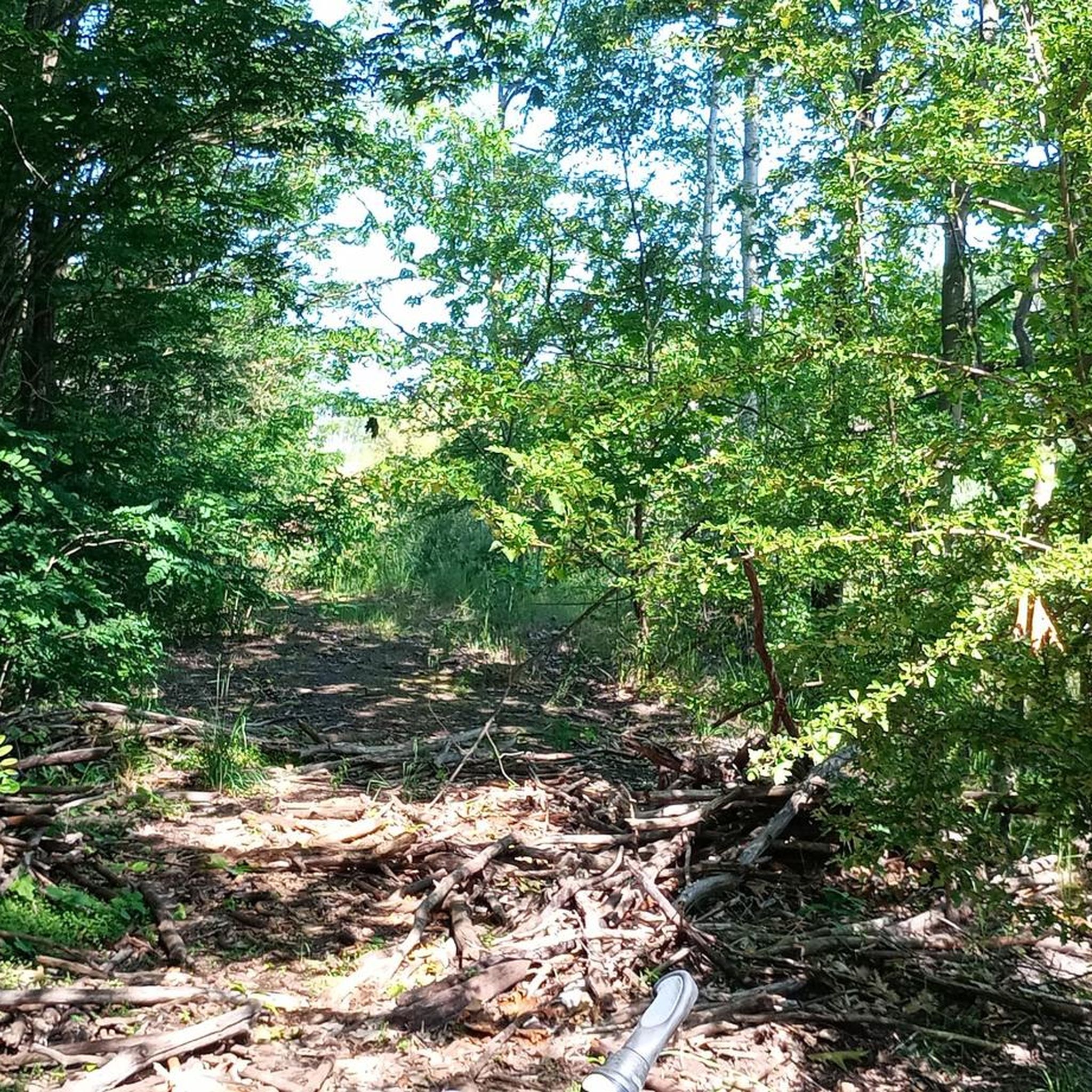
You have to be very careful with the roots of the acacias which lift the bitumen in places as well as the thorns of these trees. Otherwise very pleasant.
0
0

Consider deviating from the cycle path for a few minutes. Church your real the detour
1
0

Some sections of the track are damaged by tree roots and dangerous on a road bike. I often prefer to go by road.
1
0

The church is in the form of a rectangle thirty meters long and ten meters wide, flanked by 4 buttresses, one of which is located on the north wing and the 3 others on the south wing, a bell tower and a small extension on the south west part housing a chapel dedicated to the Virgin Massive building, reinforced by buttresses, low and poorly lit, it has a facade with a Romanesque portal surmounted by a large rose window. This gate is made up of 2 straight legs, and a projecting coving made up of 3 semicircular rollers with a keystone. The oculus rose is surrounded by a frieze with a sawtooth motif. The porch opens onto a single nave 22 m long by 9 wide without side aisles. It is made up of 4 bays with semi-circular vaults. The south wall is pierced under the 1st bay with a large semi-circular arch giving access to the chapel. The north wall has a pulpit which bears a monogram which would be that of Louis XIV. The choir of the church, raised from the nave by 3 steps, consists of a flat chevet and a span of semi-circular vaults. The bedside wall is pierced at each end with a rectangular door allowing access to the sacristy. The old sacristy has just been refurbished and has a very modern look with paneling on the floor and ceiling. The chapel of the Virgin is located on the southern extension of the church. It measures 13.50 m long by 7 wide, and consists of a small single nave 10 m long by 7 wide and a choir with a flat apse. The floor of this chapel is 1.25 m lower than the floor of the church corresponding to the initial floor of the old abbey. Access to the bell tower is through a door located on the east wall of the nave of the chapel. It consists of 4 floors and a vaulted ground floor. The facing is made up of medium-sized cut stone for the ground floor and the 1st floor and rubble stone coated with brown lime for the 2nd and 3rd floors.
0
0

Remains of old white clay quarries, these blue lakes constitute a locally protected habitat with its flaura and forna. You have to go slowly and leave no traces. Swimming is prohibited in these lakes.
2
0
Remains of old white clay quarries, these blue lakes constitute a locally protected habitat with its flaura and forna. You have to go slowly and leave no traces. Swimming is prohibited in these lakes.
6
1
In the second half of the 12th century, a long nave (32 x 8 m) was built, with a west facade with blind arcades and a flat chevet. In the 13th century, the west portal was rebuilt up to date and the nave received perhaps its first ribbed vaults. A Gothic bell tower-porch was built in front of the nave in the 15th century, which lengthened the church by some five metres. The floor surmounted by a spire is pierced with twin bays, underlined by a cord. Its base forms a marthex. On each side of this closed porch are two small chapels with vaults decorated with coats of arms and reproducing corner consoles sculpted with grotesque characters. The 12th century facade is pierced by an ogival portal. The arches fall on the 3 capitals of the torus columns. The door is flanked by 2 blind arched bays with a zigzag band and diamond points. Around the portal, an inscription: “The French recognize the existence of the supreme being and the immortality of the soul”. In the 15th century, the nave was doubled to the north. This vaulting was destroyed during the wars of religion and the ribbed vaults were redone in 1872. The large broken arches which separate the 2 vessels from the nave fall into penetration on large cylindrical piles. On the south wall, a group of 3 columns decorated with large foliage receives the ribs of the vaults. The south side wall from the nave to the chevet was rebuilt with old materials, some of which are carved stones. The large tracery canopy is followed by 3 Romanesque windows decorated with billets and diamond points. The choir with a flat apse is lit by a Romanesque triplet with small columns and polylobed arches. It is a provision that we find rather outside the churches. Outside, these 3 windows have no columns and are surmounted by a cornice shaped like a whistle on brackets and a large half-moon opening. In 1996-1998, a restoration campaign brought to light mural paintings and a funerary liter, a striking portrait of death. Special features to see also: a very beautiful stone pulpit and wrought iron railing from the 19th century as well as an oil on canvas, "Crucifixion", from the beginning of the 19th century.
0
0
A bike path, only for bikes and in the countryside! 35 kms from Barbezieux to Clérac in complete peace of mind on a paved road, a real pleasure! Surprising but very pleasant especially for families with children who can walk there in peace.
1
0
Frequently Asked Questions
What types of attractions can I find around Vanzac?
The area around Vanzac offers a diverse range of attractions, including historical sites like ancient fortifications and castles, religious monuments such as churches and abbeys, and natural features like forests, lakes, and gardens. You can also find dedicated cycle paths for outdoor activities.
What are some notable historical sites near Vanzac?
You can explore several significant historical sites. The Saint Martin Church of Fontaine-d'Ozillac, a 12th-century religious building, features a curious Romanesque facade. Further afield, the UNESCO World Heritage site of Blaye Citadel and the historic Pons Ancien Hôpital des Pèlerins offer insights into the region's past. Jonzac Castle, a 16th-century fortress, is also nearby.
Are there any significant religious monuments to visit around Vanzac?
Yes, the region is rich in religious heritage. Besides the Saint Martin Church of Fontaine-d'Ozillac, you can visit An abbey turned parish church in Baignes, which has a history dating back to the 11th century. The Saint-Christophe Church of Léoville also offers a glimpse into medieval architecture with its 12th-century origins and later Gothic additions.
What natural attractions are there around Vanzac?
Nature lovers can enjoy the Blue Lake of Touvérac, formed from old white clay quarries, which is a protected habitat for local flora and fauna (swimming is prohibited). The Forêt de la Lande and Forêt de Pons offer serene natural beauty, and the Jardin du Chaigne is a remarkable garden to explore.
Are there family-friendly activities or attractions near Vanzac?
Families can enjoy the La voie verte, a 35 km paved cycle path perfect for peaceful cycling in the countryside. The banks of the river Seugne near Jonzac also provide leisure activities such as a manmade beach, zip lines, canoeing, and biking, making it a great spot for family outings.
What outdoor activities can I do near these attractions?
The area around Vanzac is excellent for outdoor activities. You can find numerous options for road cycling, hiking, and mountain biking. For detailed routes, explore the Road Cycling Routes around Vanzac, Hiking around Vanzac, and MTB Trails around Vanzac guides.
Are there hiking trails near Vanzac?
Yes, there are several hiking opportunities. You can find trails around the Blue Lake of Touvérac, with options like the 'Blue Lakes of Touvérac Loop' (moderate, 8.7 km) or shorter, easier routes. The vineyard landscapes around Jonzac also offer pleasant hikes. More hiking routes are available in the Hiking around Vanzac guide.
What do visitors enjoy most about the attractions around Vanzac?
Visitors particularly appreciate the peaceful experience offered by the La voie verte cycle path, especially for families. The unique natural beauty of the Blue Lake of Touvérac is also highly regarded for its protected habitat. The historical and architectural details of sites like the Saint Martin Church of Fontaine-d'Ozillac also receive positive feedback.
Can I find markets or local shopping experiences near Vanzac?
Yes, several nearby towns host vibrant markets. Montendre has a market on Thursdays (approx. 11 km), Jonzac on Tuesdays and Saturdays (approx. 14 km), and Barbezieux-Saint-Hilaire on Tuesdays, Saturdays, and Fridays (approx. 17 km). These markets are great for experiencing local culture and finding regional products.
What are some unique viewpoints or hidden gems in the Vanzac area?
The Blue Lake of Touvérac, with its striking blue waters from old clay quarries, offers a unique natural viewpoint. While not a hidden gem, the historic town of Cognac, with its old town and riverside walks, provides a charming experience slightly further afield.
What is the best time to visit Vanzac for outdoor activities?
The Nouvelle-Aquitaine region generally enjoys pleasant weather from spring through autumn, making these seasons ideal for outdoor activities like cycling and hiking. Summers are warm, perfect for enjoying the river activities near Jonzac, while spring and autumn offer milder temperatures and beautiful scenery for exploring historical sites and natural parks.
Are there any attractions suitable for dog walking around Vanzac?
Many natural areas and trails around Vanzac are suitable for dog walking. The La voie verte cycle path and the various hiking trails mentioned in the Hiking around Vanzac guide are generally dog-friendly, though it's always advisable to keep dogs on a leash and clean up after them.

Get inspired with the komoot mobile app


Explore more
Still not found the Highlight you’re looking for? See guides of the top attractions in other regions:
