The best walks and hikes around Sémézies-Cachan
4.6
(57)
246
hikers
26
hikes
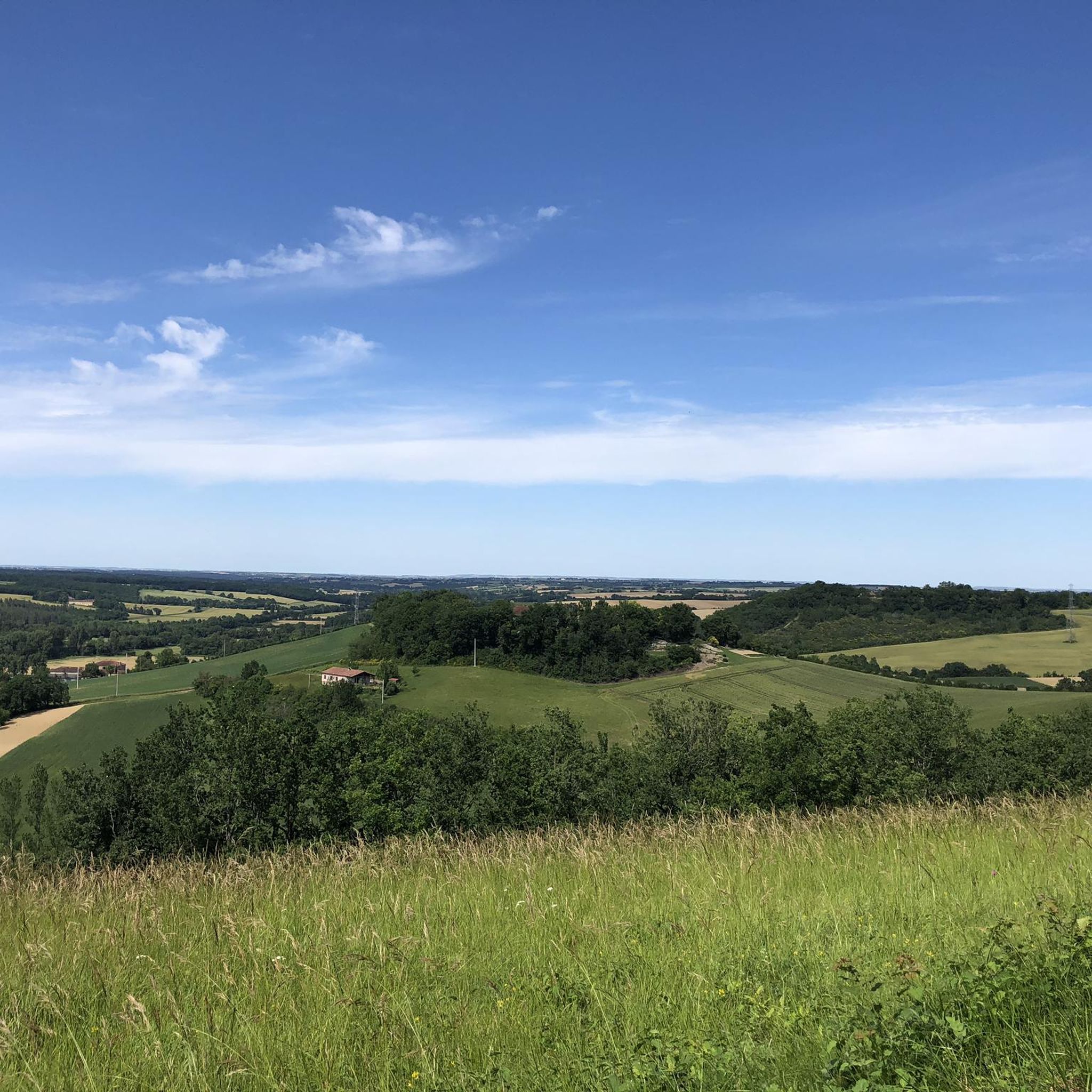
Hiking around Sémézies-Cachan offers varied landscapes within the Gers department of southwestern France. The region is characterized by its hilly terrain and clay soil, with elevations ranging from 177 to 281 meters. A notable feature is the Natura 2000 site, "valley and hillsides of the Lauze," which includes hedgerow landscapes and unique orchid environments along its alluvial valley floors. The area is also traversed by the Lauze river and smaller waterways, contributing to its natural beauty.
Best hiking trails around…
Last updated: July 3, 2026
5.0
(5)
23
hikers
4.04km
01:07
70m
70m
Hike the moderate 2.5-mile "The trail to p'Art — loop from Simorre" to discover unique Land Art installations amidst scenic French countrysi
5.0
(1)
10
hikers
3.66km
00:59
40m
40m
Easy hike. Great for any fitness level. Easily-accessible paths. Suitable for all skill levels.

Sign up for free
4.4
(5)
27
hikers
15.5km
04:17
260m
260m
Moderate hike. Good fitness required. Easily-accessible paths. Suitable for all skill levels.
4.2
(5)
22
hikers
12.1km
03:15
150m
150m
Moderate hike. Good fitness required. Easily-accessible paths. Suitable for all skill levels.
5.0
(2)
16
hikers
8.42km
02:20
140m
150m
Moderate hike. Good fitness required. Easily-accessible paths. Suitable for all skill levels.
Get access to more routes and recommendations from other explorers.
Sign up for free
Already have an account?
Our route recommendations are based on thousands of hikes, rides, and runs completed by other people on komoot.
Start today with a free account
Your next adventure awaits.
Login or Signup

Tips from the Community

Simorre is located in the Astarac region, a very hilly area in the south of Gers, with clay soil, which runs along the Lannemezan plateau. You will be dazzled by this small medieval village and especially by the Notre-Dame-de-l'Assomption church which sits majestically in the middle of the village. As it is fortified, it looks as much like a church as a fortified castle. It is surprising.
1
0

Magnificent
0
0

A former abbey, this church is fascinating with its unusual rampart-like fortifications. Inside, it is indeed a church.
0
0
A former abbey, this church is fascinating with its unusual rampart-like fortifications. Inside, it is indeed a church.
3
1
An artistic journey in the middle of nature. Art installations by local artist Coline Vergez make this trail a fantastic and interesting hike.
2
0

It is actually a work of art by Japanese artist Suzuki. The work was erected in 2013. The artist was born on March 5, 1956. He graduated from the Tokyo School of Fine Arts. He lives and works in Ermont, France. The man is known the world over for his "ephemeral" art produced in the great outdoors using natural materials found on site or recovered. He uses them to create his works, bringing out the character of them and their environment. His works have notably been produced in Japan, France, the Netherlands, and Greece. A tornado… in memory of the Klaus storm of 2009 which devastated 160 trees The production is called "Kazé" which means "wind" in Japanese. The sculpture of braided branches evokes a cyclone trapped in the forest. Light and majestic, it symbolizes all the strength and power of the wind. It is a memorial work, aiming to remember the terrible Klaus storm of January 24, 2009 which devastated more than 160 trees in this forest of St Elix. Since the materials are natural, the work gradually degrades over time. Seven years after her erection, she remains in generally stable condition. However, the degradation process will be the reason for this construction in the coming years. So the curious are invited to come and see her soon.
3
1
Frequently Asked Questions
What kind of terrain can I expect when hiking around Sémézies-Cachan?
The region is characterized by its very hilly terrain within the "Pays d'Astarac," featuring clay soil and elevations ranging from 177 to 281 meters. You'll encounter green, rolling hills, hedgerow landscapes, and river valleys, particularly within the Natura 2000 site of the "valley and hillsides of the Lauze."
Are there easy hiking trails suitable for beginners or families in Sémézies-Cachan?
Yes, Sémézies-Cachan offers several easy routes perfect for beginners or families. For instance, the Sentier Dessin du Kazé — loop from Saint-Élix is an accessible 3.7 km path that provides a pleasant walk through the area's green spaces.
How many hiking routes are available in the Sémézies-Cachan area?
There are over 25 hiking routes available around Sémézies-Cachan, catering to various skill levels. These include 6 easy routes, 19 moderate routes, and 1 more challenging option.
What are some notable natural features or landscapes to look out for on the trails?
Hikers can explore the Natura 2000 site, "valley and hillsides of the Lauze," known for its unique hedgerow landscapes and remarkable orchid environments along its alluvial valley floors. The area is also drained by the Lauze river and smaller waterways, adding to the picturesque scenery.
Are there any circular hiking routes in Sémézies-Cachan?
Yes, many of the trails around Sémézies-Cachan are circular loops. Examples include the popular The trail to p'Art — loop from Simorre, which is a moderate 4.0 km route, and the longer Land Art Sculpture loop from Le Faubourg, covering 12.1 km.
What are some interesting places or attractions to see near the hiking trails?
While hiking, you can discover several points of interest. Consider visiting Simorre, a charming village, or the historic Saint Cérase Church. For art enthusiasts, there's the Spiral Wooden Sculpture by Coline Vergez and the Kazé - artwork by Japanese artist Teruhisa Suzuki.
How long do hikes typically take in this region?
Hiking durations vary depending on the route and your pace. Shorter, easy trails like the Sentier Dessin du Kazé — loop from Saint-Élix can be completed in under an hour. Longer moderate routes, such as the Simorre – Saint Cérase Church loop from Simorre (15.5 km), may take around 4 hours and 17 minutes.
What do other hikers say about the trails in Sémézies-Cachan?
The trails in Sémézies-Cachan are highly regarded by the komoot community, holding an average rating of 4.7 out of 5 stars from over 50 reviews. Hikers frequently praise the region's quiet, rolling landscapes and well-maintained paths.
Are there any longer, more challenging hikes for experienced hikers?
While most routes are easy to moderate, there is at least one difficult trail available for those seeking a greater challenge. The Simorre – Saint Cérase Church loop from Simorre, at 15.5 km, offers a good moderate challenge with significant elevation changes.
Is Sémézies-Cachan part of any larger hiking networks or famous trails?
Yes, the broader Gers department, where Sémézies-Cachan is located, is traversed by sections of the famous Chemins de Compostelle (Ways of St. James). This indicates a well-established walking culture and potentially well-marked paths in the wider region.
What is the best season for hiking in Sémézies-Cachan?
Given the region's green, rolling hills and diverse flora, spring and autumn are generally ideal for hiking, offering pleasant temperatures and vibrant natural scenery. Summer can also be enjoyable, but it's advisable to start early to avoid the midday heat.
Are there any routes that pass by historical or cultural sites?
Yes, some routes offer a blend of nature and culture. For example, the Boulaur Abbey loop from Boulaur takes you past the historic Boulaur Abbey, providing a cultural highlight amidst the natural beauty.
Most popular attractions around Sémézies-Cachan

Get inspired with the komoot mobile app


Explore more
Browse the best Hikes in other regions.
