The best road cycling routes around Plassay
4.6
(39)
997
riders
222
rides
Road cycling routes around Plassay traverse a landscape characterized by gentle undulations and open rural roads. The region features a network of paths, including routes along canals and through agricultural areas. Elevations are generally low, with most routes involving gradual ascents rather than steep climbs. The terrain is suitable for various road cycling experiences, connecting smaller towns and historical sites.
Best road cycling routes around Plassay
- The most popular road cycling route is Pont-l'Abbé-d'Arnoult, Trizay et Geay – loop via…
Last updated: July 2, 2026
9
riders
54.1km
02:20
240m
240m
Moderate road ride. Good fitness required. Mostly well-paved surfaces and easy to ride.
109km
04:24
440m
440m
Moderate road ride. Good fitness required. Mostly well-paved surfaces and easy to ride.

Sign up for free
19
riders
42.9km
01:48
230m
230m
Easy road ride. Great for any fitness level. Mostly well-paved surfaces and easy to ride.
14
riders
43.5km
01:52
320m
320m
Moderate road ride. Good fitness required. Mostly well-paved surfaces and easy to ride.
9
riders
40.6km
01:40
240m
240m
Easy road ride. Great for any fitness level. Mostly well-paved surfaces and easy to ride.
Get access to more routes and recommendations from other explorers.
Sign up for free
Already have an account?
Our route recommendations are based on thousands of hikes, rides, and runs completed by other people on komoot.
Start today with a free account
Your next adventure awaits.
Login or Signup



Tips from the Community


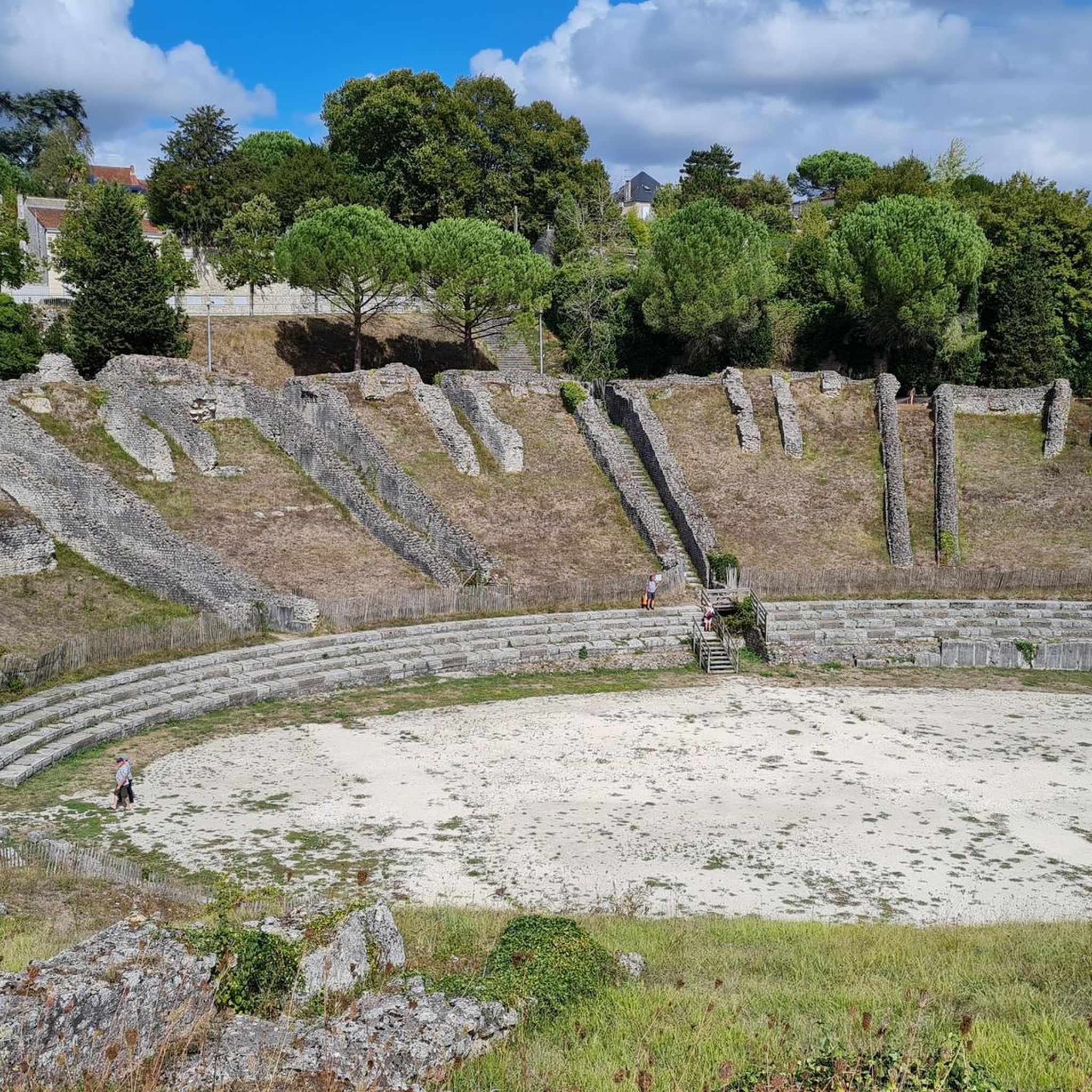
The Santons people occupied Saintonge during the Gallic era. The Romans conquered the region and settled on the banks of the Charente. The town of Saintes (then designated Mediolanum), located at the western end of the Via Agrippa which linked Lyon (capital of the Three Gauls) to the Atlantic coast, quickly became monumental. At the time of Augustus (27 BC – 14 AD), the city probably became the capital of the province of Greater Aquitaine (Aquitania). This then extended from the Loire to the Pyrenees. Mediolanum is endowed with important public monuments: the amphitheater, the arch of Germanicus, the thermal baths and the aqueduct are still partially visible today. At the time of its peak (end of the 1st century – beginning of the 2nd century), the city must have had several thousand inhabitants. The amphitheater of Mediolanum is one of the earliest in Gaul. It is estimated that its construction began during the reign of Tiberius (14 – 37 AD), and was completed during the reign of Claudius (41 – 54 AD). Like many amphitheaters of the Roman Empire, that of Saintes was located on the outskirts of the ancient city in a chosen and developed site: the “vallon des Arènes”. Thanks to a favorable topography, the builders were relieved of part of their work, the amphitheater resting on the slope of the valley. This elliptical monument, with imposing dimensions (126 meters long and 102 meters wide), made it possible to accommodate several thousand spectators around bloody and violent representations such as gladiator fights (munera) or animal hunts (venationes ). In the 3rd century, the city declined and was entrenched within an impressive rampart, built from the remains of public and funerary monuments from previous decades. The amphitheater is then no longer used. Since the Middle Ages, it has been used, among other things, as a stone quarry. It was classified as a Historic Monument in 1840. It was from this moment that it was gradually restored. Today, despite the disappearance of the superstructures, the remains provide a faithful image of what this monument could have been at the time of its splendor. The site welcomes visitors all year round. Certain objects found during various excavations in the amphitheater district are visible at the archaeological museum.
1
0

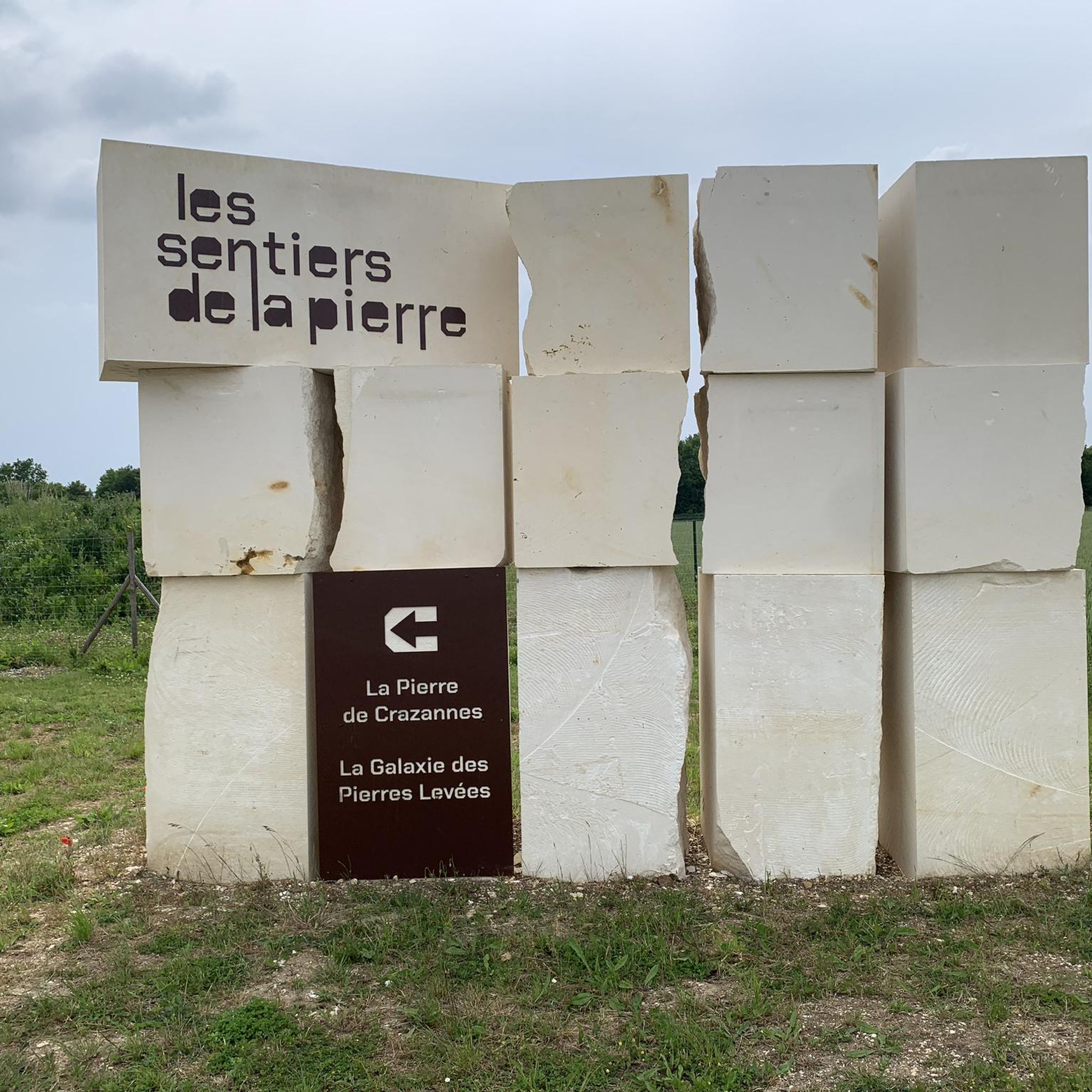
Crazannes Castle is a castle located in the commune of Crazannes in the Charente-Maritime department of France. It is known for its medieval watchtower, which was built in the 12th century. Crazannes Castle was built in the 12th century and has been owned by several noble families over the centuries. It has been expanded and modified over time, and its architecture is a mix of medieval, Renaissance and classical styles. Crazannes Castle is also home to underground caves dug into the limestone rock, which have been used as wine cellars and to store food supplies over the centuries. Visitors can explore the caves and learn about their history through guided tours. Crazannes Castle is open to the public during the summer season and offers guided tours, contemporary art exhibitions and cultural events throughout the year. It is also possible to rent rooms for private events such as weddings or receptions.
0
0

This very small town of 300 inhabitants has very pretty little roads crossing large fields and often shaded by trees.
1
0
Quiet and partially shaded cycle path along the Canal du Freussin à la Charente which flows into the Charente at Houmé.
0
0
Saint-Vivien is a 12th century Saintonge Romanesque church typical of this part of France. It has been classified as a historical monument since 1907 and can also be visited from the inside.
0
0
Charming little town remarkable for its church, having undergone numerous alterations including its facade, but the oldest part of which dates back to the beginning of the 12th century; and by its castle of the provostship. You will notice that the weather vane of its bell tower is a French flag. Indeed, under the 2nd Republic (1848-1852), a patriotic impulse resulted, with the agreement of the religious authorities, in the installation of flags on the bell towers of the churches. The St Saturnin church is one of the rare towns in the department to have kept this symbol.
1
0
Listed as a Historic Monument, the Château de Crazannes was built in the 14th century to replace an old feudal castle. Its nickname of “Château du Chat Botté” dates back to the 17th century, when it was the property of Jules Gouffier, Count of Caravaz. An eminent character who inspired Charles Perrault to create the Marquis de Carabas, Master of Puss in Boots in his famous tale. A park with century-old trees surrounds the castle and runs along the Charente. It has been included in the pre-inventory of remarkable gardens. The castle is open to visitors all year round for an entrance fee.
1
0
Frequently Asked Questions
How many road cycling routes are available around Plassay?
There are over 230 road cycling routes around Plassay, offering a wide range of options for different skill levels and preferences. The region is well-suited for exploring by bike.
What kind of terrain can I expect when road cycling around Plassay?
The terrain around Plassay is characterized by gentle undulations and open rural roads. You'll find routes along canals and through agricultural areas. Elevations are generally low, with most routes featuring gradual ascents rather than steep climbs, making it suitable for various road cycling experiences.
Are there easy road cycling routes suitable for beginners in Plassay?
Yes, Plassay offers a good selection of easy road cycling routes. There are 84 routes classified as easy. An example is the Saint-Nazaire Church – Porche de Pont l'Abbé loop from Rulon, which is 26.3 miles (42.3 km) long and leads through rural areas.
Are there challenging road cycling routes for experienced cyclists?
While the region is known for its gentle terrain, there are routes that offer a longer distance and moderate elevation gain for more experienced cyclists. For instance, the Saintes and Gémozac from Crazannes – loop covers 67.6 miles (108.8 km) with over 430 meters of elevation, providing a more demanding ride.
What is the typical duration of road cycling routes in Plassay?
Route durations vary, but many popular routes range from 1.5 to 4 hours. For example, the Pont-l'Abbé-d'Arnoult, Trizay et Geay – loop via the canal takes approximately 2 hours 20 minutes, while longer routes like the Saintes and Gémozac loop can take over 4 hours.
What do other road cyclists enjoy most about the routes in Plassay?
The road cycling routes in Plassay are highly rated by the komoot community, with an average score of 4.6 stars from over 40 reviews. Cyclists often praise the open rural roads, scenic canal paths, and the ability to connect historical towns, making for enjoyable and varied rides.
Are there any interesting landmarks or attractions along the road cycling routes?
Yes, several routes pass by historical sites and attractions. For example, you can explore Crazannes Castle or the Sainte-Madeleine Church of Crazannes. The Amphitheatre of Saintes loop from Les Quatre Chemins will take you near the ancient Roman amphitheater in Saintes, as well as the Abbaye aux Dames de Saintes and Saint-Pierre Cathedral.
Can I find circular road cycling routes in Plassay?
Most of the road cycling routes around Plassay are designed as loops, allowing you to start and end at the same point. This includes popular options like the Pont-l'Abbé-d'Arnoult, Trizay et Geay – loop via the canal and the Saintes and Gémozac from Crazannes – loop.
Are there any routes that feature scenic viewpoints?
While Plassay's landscape is generally gently rolling, many routes offer picturesque views of the Charente countryside, agricultural fields, and charming villages. Routes along the canal, such as the Pont-l'Abbé-d'Arnoult, Trizay et Geay – loop via the canal, provide pleasant waterside scenery.
What is the best time of year for road biking in Plassay?
The region is generally pleasant for road cycling from spring through autumn. Spring offers blooming landscapes, while autumn provides comfortable temperatures and beautiful colors. Summers are typically warm, making early mornings or late afternoons ideal for rides. Winters are mild but can be damp, so check local weather conditions.
Are there road cycling routes that connect to other towns or villages?
Yes, many routes are designed to connect smaller towns and historical sites. For example, the Saintes and Gémozac from Crazannes – loop connects these two significant towns, allowing you to explore more of the local area during your ride.
Most popular attractions around Plassay

Get inspired with the komoot mobile app


Explore more
Browse the best Road cycling routes in other regions.
