The best cycling routes around Grézac
4.3
(216)
1,496
riders
136
rides
Touring cycling routes around Grézac traverse the serene rural environment of the Saintongeais countryside, characterized by diverse natural beauty. The landscape features vast agricultural lands, interspersed with charming forests and groves. The region is also defined by its proximity to the Seudre and Charente rivers, offering unique wetland environments and lush green banks. Cyclists will encounter rolling Cognac vineyards and varied terrain suitable for different skill levels.
Best touring cycling routes around Grézac
- The most popular touring cycling route is…
Last updated: June 30, 2026
4.0
(3)
3
riders
43.1km
02:38
230m
220m
Moderate bike ride. Good fitness required. Mostly paved surfaces. Suitable for all skill levels.
11
riders
33.6km
02:21
220m
220m
Moderate bike ride. Good fitness required. Mostly paved surfaces. Suitable for all skill levels.

Sign up for free
3
riders
28.1km
01:40
140m
140m
Easy bike ride. Great for any fitness level. Mostly paved surfaces. Suitable for all skill levels.
3.0
(1)
4
riders
34.9km
02:00
130m
130m
Moderate bike ride. Good fitness required. Mostly paved surfaces. Suitable for all skill levels.
4.0
(2)
3
riders
29.5km
01:41
110m
110m
Easy bike ride. Great for any fitness level. Mostly paved surfaces. Suitable for all skill levels.
Get access to more routes and recommendations from other explorers.
Sign up for free
Already have an account?
Our route recommendations are based on thousands of hikes, rides, and runs completed by other people on komoot.
Start today with a free account
Your next adventure awaits.
Login or Signup
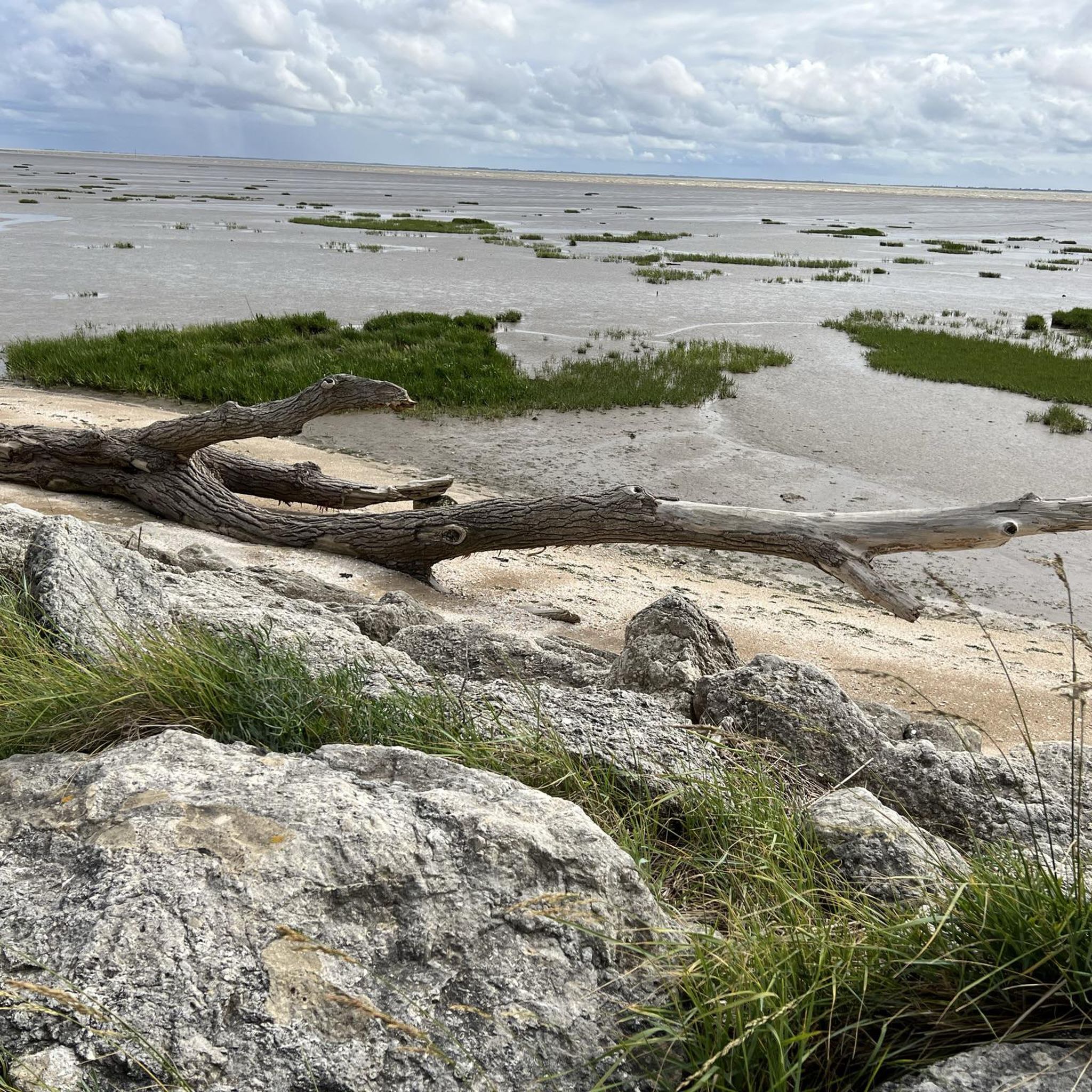
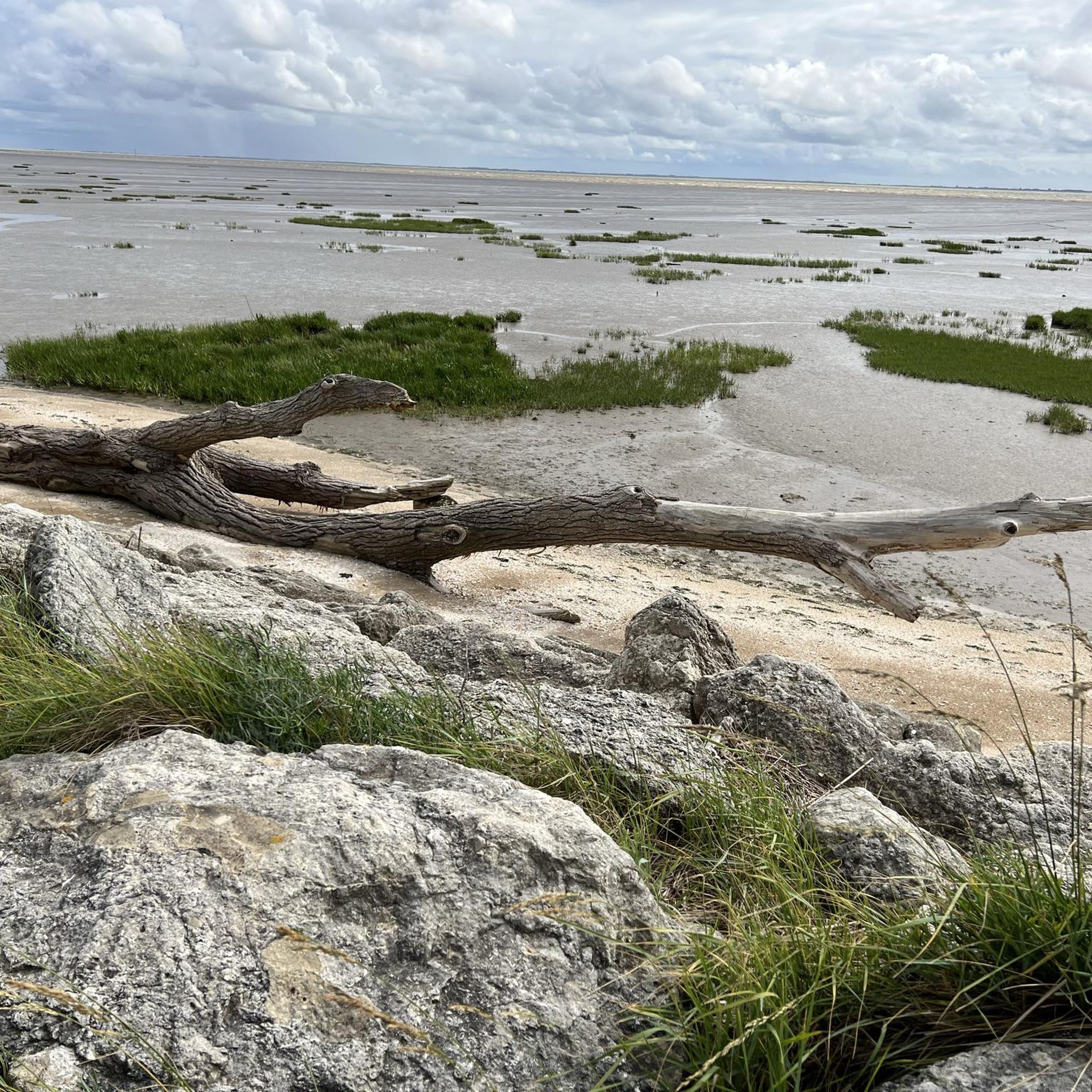
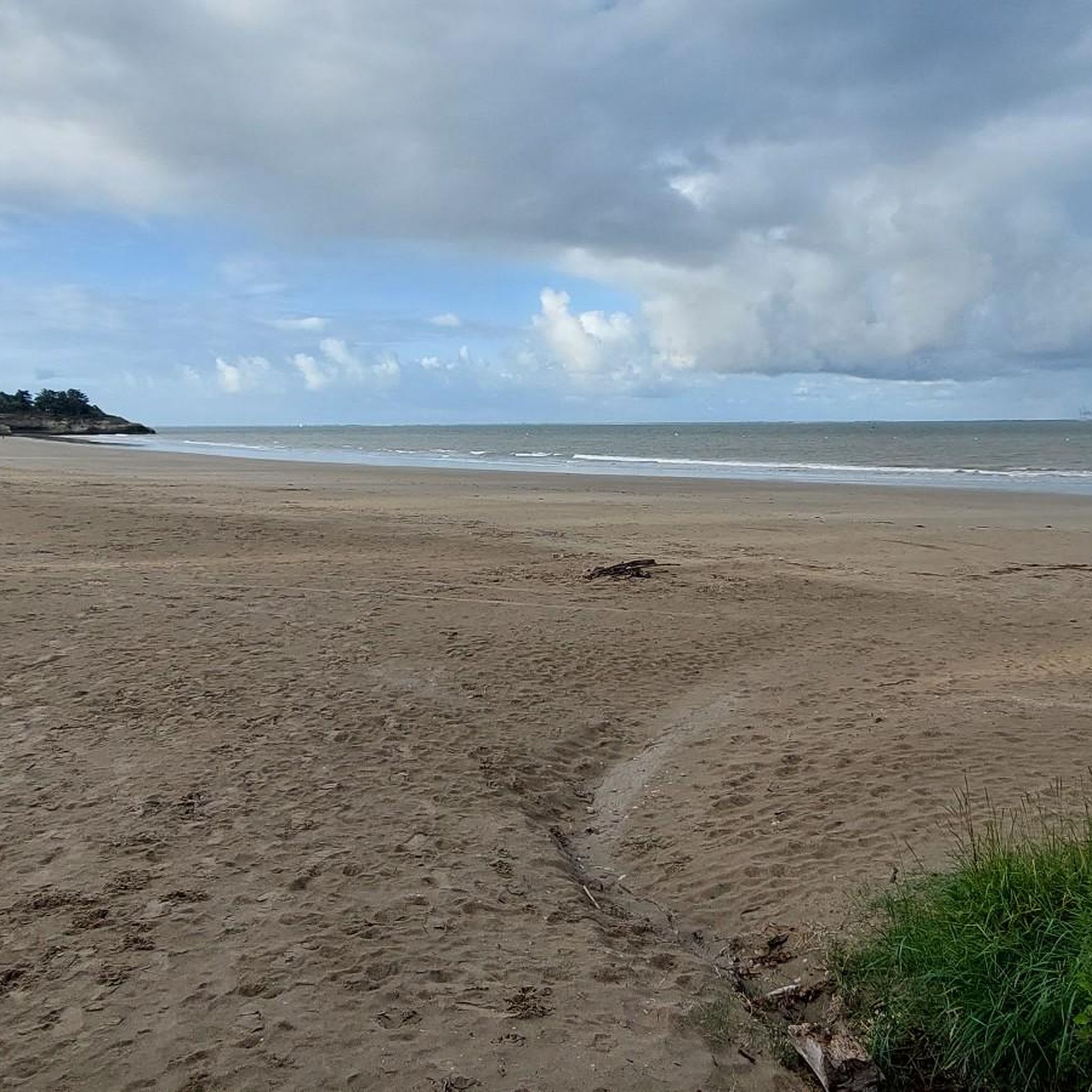

Tips from the Community

Very nice walk or bike ride
0
0

The Marquis de Sénectère at Semussac In the 18th century, the Didonne / La Touche estate in Semussac passed to Marie de Béchillon, then to her son, the Marquis de Sénectère. It was he who is said to have had the château rebuilt or largely transformed around 1730, giving rise to the residence we know today. He made Semussac an important country residence and developed his possessions in the Royan and Saintonge region. A prestigious family The Marquis de Sénectère, linked to the château of Semussac, belongs to an old French noble family: the house of Sénecterre (or Sénectère), originally from Forez and known since the Middle Ages. The Sénectère family included several renowned figures: - Henri de Senneterre (16th century), Marshal of France - François de Senneterre, a man of war under Louis XIII - Several marquises and dukes close to the royal court The name is sometimes written Senneterre, Sénectère, or Sénecterre depending on the era. End of family presence During the French Revolution, many noble properties were sold or seized, and the château of Semussac subsequently left this family. Legacy in Semussac The memory of the Marquis de Sénectère remains attached to: - the reconstruction of the château - the organization of the agricultural estate - local seigneurial prestige before 1789
0
0
Architectural features - Large residence in the classic Saintongeais style - Significant agricultural outbuildings - Preserved old cylindrical dovecote - 19th-century tree-lined park History of Semussac Castle (Château de Didonne) - Medieval origins The estate already existed in the 15th century under the name of La Touche, belonging to the lordship of Didonne. It then belonged to various local noble families before passing through alliances and sales into several hands. - Reconstruction in the 18th century The current castle was essentially built in the first half of the 18th century, around 1730, probably by Marie de Bechillon or her son, the Marquis de Sénectère. The latter made it his main country residence. He considerably enlarged his lands throughout the Royan and Saintonge region. - 19th century: transformation of the estate After the French Revolution, the property was sold as national property. It then passed to Count Alfred de La Grendière, mayor of Semussac and then mayor of Royan, who modified the castle and gave it its current appearance, with an English-style landscaped park. - 20th century: agricultural and tourist vocation In 1979, the estate was bought by the agricultural cooperative Cozes-Saujon to promote local productions, particularly wine. In 1981, a museum of agricultural equipment opened in the outbuildings and remained active until 2006. Subsequently, the site was converted into a charming hotel-restaurant. Completely renovated in 2019, the Château de Didonne opens its doors to welcome you between the charm of the old and the comfort of the modern. It has 10 air-conditioned rooms, 7 of which offer a breathtaking view of the park, allowing you to immerse yourself in a soothing natural setting from the moment you wake up. Local importance The castle bears witness to the agricultural and noble role of Semussac in old Saintonge, between Royan and the Gironde estuary.
0
0
Notre Dame de Nazareth Middle School is a private Catholic school under a state partnership agreement...and on a human scale, with 142 students and seven classes (two sixth-form, two fifth-form, one fourth-form, and two ninth-form), whose main focuses are student support and monitoring, valuing all achievements, and welcoming all. Depending on the families' schedules and needs, two statuses exist at Notre Dame de Nazareth Middle School: - Status 1: Children enter and exit NDN according to the school's hours: 8:55 a.m. - 5:10 p.m. They cannot enter later or leave earlier. - Status 2: Children can enter and leave the school at the first and last class times on their schedule. They have the option of entering later and leaving earlier than the school's hours, particularly in the event of a teacher's absence during the first and/or last class times of the day. 1865 The school was founded by three nuns from the Congregation of the Holy Family of Bordeaux at the "Château" in Sorlut. 1873 The sisters purchased land on the Route de Talmont in the hope of constructing a building there. 1875 The Château de Sorlut was put up for sale, and the school was relocated near the church on Rue Traversière. 1878 The building on the Route de Talmont was constructed, and the school was relocated there. 1902-1905 Despite the new secularization laws, the sisters continued their mission. 1914 The Red Cross flag flew over the school. 1923 The house was put up for sale by the estates. With some friends of the school, Father du Boulet placed a bid of 100 francs; no one else came forward, and the school was saved! 1940 The Red Cross flag flies over the house again, and the sisters carry out charitable works there. 1958 The school welcomes 70 children. 1959 The school is named "Our Lady of Nazareth." 1960 First expansion, installation of prefabricated classrooms, and opening of a complementary course. The school has 120 students. 1965 With 180 students, the school expands its enrollment to the surrounding towns: Cravans, Tesson, Montpellier, Corme Ecluse, Saint André de Lidon, etc. The classrooms and dormitories are modernized, and a refectory and a covered playground are built. 1983 The nuns hand over management to lay people while retaining supervision. 1987 A new building replacing the prefabricated buildings was constructed for the middle school students, with classrooms, a science laboratory, a technology room, and a computer room. The old building was completely renovated: the administrative area and a primary classroom were housed on the ground floor; the primary classrooms were housed on the first floor; and the library and chapel were located on the second floor. The entire school building, including the classrooms, courtyards, and grounds, underwent a complete renovation. 1989 Construction and development of the dining area: kitchen and refectories. 2008 Expansion of the middle school: new restrooms, 3 classrooms, and 1 study room. 2010 Creation of a nap and motor skills room for kindergarten students. 2012 Expansion of the refectory and construction of 3 additional classrooms at the middle school. 2015-2016 Nazareth celebrates its 150th anniversary! 2020 Opening of the flexible timetable (CHA) football classes, in partnership with the Cozes club. 2021 Interior renovation of the administrative building 2022 Opening of the CHA dance and table tennis classes Summer 2023 Renovation of the chapel and meeting room. Attic insulation. March 2025 Restoration underway
0
0
This vast building was originally owned by the Augustinian Abbey of Saint-Étienne de Mortagne (now defunct). Built beginning in the 13th century, the current church was supplemented with a flat chevet pierced by a triplet in the following century. The bell tower, set on a powerful square stump, extends into an octagonal floor, built in the 15th century. At that time, it housed seven bells. As in many parishes in the region, the bells of Cozes were taken down and taken to Royan Castle in 1548 as punishment for ringing the alarm bells of revolt during the Pitauds Jacquerie. The nave vaults collapsed in 1756 and were economically rebuilt in the 19th century. The five bays of the nave are covered with a very simple basket-handle ceiling, while the side chapels, on either side of the choir, are covered with groin vaults. The church has retained its 13th-century capitals with plant or historiated motifs, and part of its exterior ornamentation (cords, frieze, small columns, and an allusion to Aesop's fable, The Fox and the Stork). The façade contrasts sharply with the rest of the building. Neoclassical in inspiration, with its triangular pediment, it was redone in the 19th century. The furnishings include elements from all periods. The church nevertheless retains an 18th-century pulpit. Assembled by a cabinetmaker from Burie, it was intended for the Sainte-Colombe church in Saintes. It was later sold to the parish priest of Cozes. In 2000, the stained-glass windows were restored. An access ramp was installed for the disabled. Until the winter of 1862-1863, the church was surrounded by a cemetery. It was moved to La Grande Herbaude, and the square surrounding the church was then The area was leveled and planted with trees. In 1877, five bells were reinstalled. The bell tower houses a peal of five swinging bells, cast in 1877 by the Guillaume d'Angers foundry: Claire-Louise: F3 - approximately 950 kilos, Marie-Thérèse: A3 - approximately 450 kilos, Marie-Louise: C4 - approximately 250 kilos, Louise-Georgette: F4 - approximately 100 kilos, Marie-Madelaine: A4 - approximately 50 kilos. This peal is exceptional for several reasons. Peals composed of five bells are very rare in the Charente-Maritime department: there are fewer than five. It is rare for four or more bells to be cast simultaneously. Often, over time, one bell is recast, another is added, and often the different bells do not come from the same foundry. In Cozes, the five bells were cast together by a single founder. This is the only case in Charente-Maritime. Since these bells were cast at the same time, this guarantees the same homogeneity of the metal and therefore a much better sound when the five bells chime together. They form the perfect chord of F major.
0
0
The project: Save the medieval church of Cozes Support this restoration project for the Saint-Pierre church in Cozes, built from the 12th century onwards. Listed as a historic monument, this building is in a worrying state of preservation. In 2018, the building, which was suffering from a sagging roof and water infiltration, was closed; the rehabilitation work, estimated at €2.5 million, will have to be spread over several years. In 2020, the church was one of twelve sites in Nouvelle-Aquitaine selected to benefit from the Heritage Lottery and will receive €140,000 from Stéphane Bern's Heritage Mission. A first round of urgent work on the south aisle took place in 2020-2021. Thanks to donations, this initial preservation work has raised over €61,000. A second phase of work will begin in September 2024 for the restoration of the bell tower and staircase turret. "I am delighted to welcome you back for our sponsorship campaign for the restoration of the Saint-Pierre de Cozes church. Since 2020, your generosity has enabled significant progress in the preservation of this historic monument. Thanks to the support of over 200 donors (individuals, local and national businesses, foundations, etc.), we have achieved exceptional work together. After the first urgent phase of work carried out in 2020-2021 on the south aisle, we must now focus our efforts on the second and third phases of work relating to the exterior restoration of the bell tower and staircase turret." This work, estimated to last approximately 18 months, starting in September 2024, requires a total budget of €1,017,500. Our goal is to raise €100,000 in donations to supplement local government grants and ensure the completion of this crucial work. I would also like to acknowledge the ephemeral works of art that have marked our sponsorship campaign: beach art by Jben, the Elise Bachour concert, the ice sculpture by the Lopez confectionery, and many other initiatives have attracted an ever-growing audience. The 7th grade students from Les Vielles Vignes middle school in Cozes also joined our cause: each of them created a drawing inspired by the fable of the Fox and the Stork to illustrate our fundraising campaign, and they created a large collective mural on the wall of their middle school, thus demonstrating their commitment to our heritage. As a local business, your participation is of paramount importance. By supporting our project, you strengthen your corporate social responsibility (CSR) and your civic image while developing a meaningful partnership with the municipality of Cozes. Join us in this noble adventure that contributes to the preservation of our heritage, the local economy, and the attractiveness of our region! With my sincere thanks. Grazielle Bordage Mayor of Cozes
1
0
The current church replaces a Romanesque church that occupied the same site. Poorly maintained and dilapidated over the centuries, it was in danger of falling into ruin when the Count of Sénectère, Lord of Didonne and Semussac, proposed to the parish community that a new building be built. The issue was clearly not a priority for the inhabitants, who, meeting in assembly in February 1771, were barely more than ten people deliberating, and agreed that a simple repair of the old sanctuary would be just as suitable. A chapter assembly, held on Sunday, April 2 of the same year, resolved the situation, and it was ultimately decided to rebuild the parish church, on the condition that as many materials as possible be reused to limit costs. Work began quickly, and just three years later, on November 22, 1774, the church was blessed and opened for worship during a solemn ceremony attended by Mr. Étienne de la Sale, Prior of Semussac, Mr. Vanson, Archpriest-Parish Priest of Arvert, and the Count of Sénectère, Lord of Didonne. However, signs of weakness quickly appeared in the bell tower, which the parish trustee, Jacques Guillot, proposed be demolished in 1788 and replaced with a simple pinnacle. The growth of the Catholic population during the 19th century necessitated an expansion of the church, and a campaign of renovations began in 1877 under the direction of the architect Eustase Rullier, also the master builder of the Church of Our Lady of the Angels in Pontaillac, in Royan. The nave was extended and the current bell tower-porch was built, giving the church the appearance it retains today. The interior, very simple, consists of a single nave flanked by two small transepts and a choir covered with lowered barrel vaults. The rear of the façade houses a neo-Gothic gallery. The former presbytery, built in 1729 and which became the town hall in 1980, retains a carved stone on its façade from the old Romanesque church, which appears to date from the 11th century.
0
0
February 1771: Count de Senecterre, owner of the Château de Didonne, proposed to the people of Semussac the reconstruction of the church. Few people showed interest, and the ten who remained to deliberate thought it would be better to repair the parish church while keeping it as it was. However, they agreed to demolish it entirely, along with the bell tower, and rebuild everything from scratch according to a plan to be agreed upon. Entremondit, Lord Count de Senecterre, the said prior, and four notables from Bemuses, to whom they gave full powers for this purpose, provided that it be within the boundaries of the old church and the adjoining cemetery and that the said church could accommodate the same number of people as the current church... and that, furthermore,...usable materials from the old one would be used first. (Departmental Archives of Charente-Maritime) The Count of Senecterre considered that a decision taken by such a small number of people was unacceptable. The inhabitants gathered in a chapter assembly on Sunday, April 2, 1771, agreed that the church be demolished and replaced by a new building, which would be completed in 1774. Etienne la Sale notes in the parish registers: Today, November 22, 1774, the blessing of the new church of Saint Etienne de Semussac was held, built with the care and expense of Mr. Etienne de la Sale, Prior of Semussac, the Count of Senecterre, and the inhabitants and tenants of the said parish. This blessing was performed by Mr. Vanson, parish priest and archpriest of Arvers, and the ecclesiastical curates, who attended and signed. for a mission, having been granted by the Bishop of Saintes on November 14, 1774. (Excerpt from Frédéric Chasseboeuf's book, Le Château de Didonne)
0
0
Frequently Asked Questions
How many touring cycling routes are available around Grézac?
There are over 130 touring cycling routes around Grézac, catering to various skill levels. You'll find a wide selection of paths to explore the region's diverse landscapes.
Are there easy touring cycling routes suitable for beginners in Grézac?
Yes, Grézac offers a good selection of easy touring cycling routes. Approximately 75 of the routes are classified as easy, perfect for beginners or those looking for a relaxed ride through the rural countryside and agricultural fields. An example is the Boulevard du Marais – Saint-Pierre Church of Cozes loop from Grézac, which is 17.5 miles (28.1 km) long and takes about 1 hour 40 minutes.
What kind of landscapes will I encounter on touring cycling routes near Grézac?
The routes around Grézac offer a rich tapestry of landscapes. You'll cycle through serene rural countryside with vast agricultural lands, charming forests, and groves. The region is also characterized by its proximity to the Seudre and Charente rivers, providing unique wetland environments and lush green banks. Expect to see rolling Cognac vineyards and varied terrain.
Are there any challenging touring cycling routes around Grézac?
While many routes are easy to moderate, there are some more challenging options. The region features 6 difficult routes for experienced cyclists looking for a greater physical test. The varied terrain, including some elevation changes, can provide a good workout.
What notable landmarks or attractions can I see along the touring cycling routes?
Many routes pass by charming villages and heritage sites. You can explore natural features like the Saint-Georges-de-Didonne Beach, the Grottes de Matata, or the dramatic Caillaud cliff at Talmont sur Gironde. The Suzac Forest also offers a pleasant natural escape. Some routes might also lead you past the Boulevard du Marais or the Marsh Cycle Path in Meschers-sur-Gironde.
Are there circular touring cycling routes available in Grézac?
Yes, many touring cycling routes around Grézac are designed as loops, allowing you to start and end in the same location. For example, the Boulevard du Marais – View of the La Roche cliff loop from Cozes is a moderate 22.2 miles (35.8 km) path offering scenic views of the Saintonge countryside.
When is the best time of year to go touring cycling in Grézac?
Grézac is an excellent destination for outdoor activities, particularly touring cycling, due to its serene rural environment. Spring and early autumn generally offer the most pleasant weather for cycling, with mild temperatures and beautiful scenery. Summer can also be enjoyable, though it might be warmer, making early morning or late afternoon rides ideal.
What do other touring cyclists say about the routes in Grézac?
The touring cycling routes in Grézac are highly rated by the komoot community, with an average score of 4.3 stars from over 300 reviews. Cyclists often praise the quiet rural roads, the picturesque Cognac vineyards, and the diverse natural beauty, including riverine landscapes and agricultural fields.
Are there any long-distance cycling routes that pass through or near Grézac?
Yes, Grézac benefits from its proximity to several significant national and European cycling paths. These include La Scandibérique (EuroVelo 3), which traverses the Charente region, Flow Vélo, connecting Périgord to the Atlantic coast along the Charente river, and La Vélodyssée (EuroVelo 1), offering a coastal experience with 80% traffic-free paths.
Can I find places to eat or stay near the cycling routes in Grézac?
The region around Grézac features charming villages and towns where you can find cafes, pubs, and accommodation options. While specific establishments aren't listed for each route, the area is well-equipped to cater to visitors, especially in larger communes like Cozes or nearby towns along the major cycling routes.
Is there parking available for cyclists in Grézac?
While specific parking locations for each route are not detailed, Grézac and its surrounding communes are generally accommodating for visitors. You can typically find parking in village centers or near popular starting points for cycling routes. It's advisable to check local signage upon arrival.
Are there any routes that offer views of the coast or estuaries?
Yes, some routes provide views towards the coast and the unique wetland environments of the Seudre and Gironde estuaries. For instance, the Tour de Cozes on the coast - with pump track deviation offers views towards the coast and varied terrain.
Most popular attractions around Grézac

Get inspired with the komoot mobile app


Explore more
Browse the best Cycling routes in other regions.
