Attractions and Places To See around Saint-Chef - Top 20
Best attractions and places to see around Saint-Chef offer a blend of historical, cultural, and natural elements. This village is known for its rich history, particularly its Benedictine abbey and unique rammed earth architecture. The surrounding landscape provides panoramas of the Alps and features charming natural spots like hidden ponds. Visitors can explore centuries of heritage and diverse outdoor experiences.
Best attractions and places to see around Saint-Chef
- The most popular attractions is Crémieu, medieval town, a historical site known for its sumptuous architectural heritage. Visitors can explore its narrow streets, the Delphinal castle, a 16th-century hall, and an Augustinian convent.
- Another must-see spot is Chateau de Chapeau Cornu, a historic fortified house built on the site of an ancient Roman camp. Its origins trace back to the 12th and 13th centuries, offering a glimpse into feudal history.
- Visitors also love Étang de la Rosière, a lake offering a relaxing natural setting. This pond, fed by the Loudon stream, was built in the 18th century and is now a protected natural area with hiking trails.
- Saint-Chef is known for its historical sites, traditional architecture, and natural landscapes. The area offers a variety of attractions to see and explore, from ancient abbeys to scenic ponds.
- The attractions around Saint-Chef are appreciated by the komoot community, with 4 highlights and 8 photos contributing to 55 upvotes.
Last updated: July 2, 2026
Étang de la Rosière
Highlight • Lake
Translated by Google •
Tip by

Chateau de Chapeau Cornu
Highlight • Other
Translated by Google •
Tip by

Sign up now to discover places like this
Get recommendations on the best single tracks, peaks, & plenty of other exciting outdoor places.
Sign up for free
Château de Bienassis
Highlight • Castle
Translated by Google •
Tip by
Crémieu, medieval town
Highlight • Historical Site
Translated by Google •
Tip by

Greenway from Crémieu to Arandon-Passins
Highlight (Segment) • Cycleway
Translated by Google •
Tip by

Sign up for free to discover even more attractions around Saint-Chef.
Sign up for free
Already have an account?
Start today with a free account
Your next adventure awaits.
Login or Signup


Tips from the Community

Found somewhat by chance and at a very affordable price, this hotel restaurant is a superb stopover for a bike ride!
0
0

Beautiful little town, quite touristy, but worth the detour
0
0

Lovely view of the pond. A little cool spot when it's hot.
0
0

The Bienassis fortified house, built by the Vallin family at the end of the 14th century, was organized around an enclosed courtyard and included a pavilion surrounded by watchtower turrets. The current building was completed in 1897 for Casimir Gournet, who wanted to give the old feudal residence the appearance of a medieval castle. Alphonse de Lamartine made several stays in Bienassis with his friend Nicolas Prosper Guichard, between 1804 and 1808. The castle, built of limestone rubble, consists of an L-shaped building covered with a long-pitched roof covered with mechanical tiles extended to the south by a high quadrangular tower with a porch in the work. The north wing has four levels of elevation: three cellars on the basement floor, a square floor and an attic floor. The tower rises on three levels: a ground floor with ribbed vaults and two square floors, the buildings are crowned with false machicolation. The corner turrets are covered with conical slate roofs. The stained glass windows of the ground floor living room are decorated with two bust-length women and two bust-length men in rondels. The coat of arms of the Joubert de Montlevon family can be found on one of the windows of the first living room on the ground floor. In the library, two shields with scrolling scroll motifs, a shield decorated with three female heads, a shield decorated with a passing griffin, and a shield decorated with two hammers with the initials C G for Casimir Gournet adorn the windows. Source: Châteaux de France
0
0
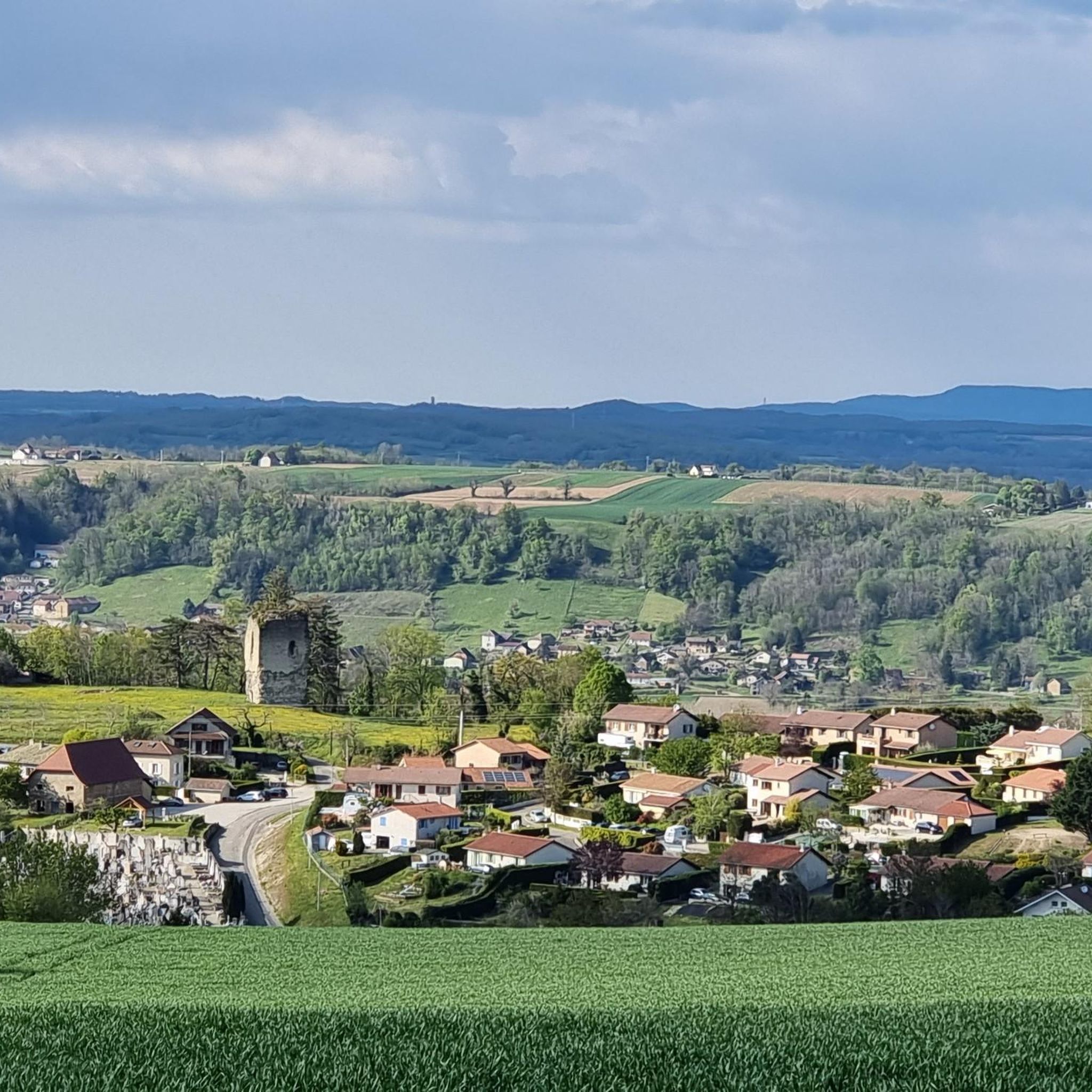
Chapeau Cornu Castle was originally a fortified house built on the site of an ancient Roman camp. Between 800 and 1100, feudalism took hold. The sovereigns of Vienna and the Bishop created “rear fiefdoms” to ensure security and repel attackers. In the 12th and 13th centuries, there were two allied families: the Capellas and the Cornutis. It is by derivative of these 2 Latin names that “Chapeau Cornu” was born. In 1300, Amédée de Rossilon was governor of Chapeau Cornu. He left this property to his nephews Pierre and Louis Chapel. After Pierre's death in 1358, Louis succeeded him. Pierre will leave 2 daughters, one of whom Antonia marries the Knight Etienne Laure, Lord of Veyssillieu. The latter was killed by the English while fighting under Duguesclin. His son Jacquemont Laure avenged him and his daughter Béatrice married Imbert de Groslée, Seneschal of the King, in 1413. His sons and descendants remained in Chapeau Cornu until 1650. It was in 1601 that Chapeau Cornu took the name Château. But in 1638, the Castle fell into disuse. The last occupants, the Matthieu de Rame couple, left no children and in 1693, the property passed to Aymard Micha de Burcin. He expanded the estate through multiple purchases and died in 1755, donating all his property to his cousin Philippe Guillaume de Grammont. After the storming of the Bastille on the night of July 25 to 26, 1789, “the great fear” began. A band of rioters, determined to destroy the property of the squires, arrived in Chapeau Cornu at 1 a.m. The steward at the time had the idea of treating them as guests and opened the doors of the wine cellars to them. The damage underground is impressive: the undrinked wine is emptied but the castle remains intact. After the Revolution, the castle was purchased by Jean André Barge from the de Certeau family. He diverted the bed of the stream coming from the hill which then passed into the castle. He had the large buildings to the south-east and east built on the vault. Ruined, he sold part of the land to people from Vignolles. In 1855, the castle and 80 hectares surrounding it were bought by his son Ferdinand de Certeau. The estate remained in the family until 1891. The Bourgoin Court then ordered a judicial liquidation and had the property sold in several lots. Source: Vignieu website
1
0
Nice view of the Chapeau Cornu castle from the road.
0
0
Rosière Pond NATURAL HERITAGE Rosière Pond BACK TO THE LIST Rosière Pond© Martial-Couderette The Rosière pond is located to the north-east of the town of Bourgoin-Jallieu on the edge of the town of Ruy-Montceau and offers an ideal relaxing setting. The association “Les Amis de Rosière et de la Nature” manages the pond made available by the city. The Rosière pond, fed by the Loudon stream, was built in the 18th century to power a hemp mill (the current restaurant). This pond was the property of the GENIN family for a long time before being bought by the town of Bourgoin-Jallieu in 1978. Since then, the town of Bourgoin-Jallieu has done everything possible to make this site a protected natural place, walks and hikes and a fishing spot. Many hiking trails start from the pond. Source: Isère Tourism
1
0
left a little too late to see the sunrise on the heights of Plan Bourgoin
1
0
Frequently Asked Questions
What historical and cultural sites can I explore in Saint-Chef?
Saint-Chef is rich in history. You can visit the monumental Abbey Church of Saint-Chef, a benchmark in French religious heritage. The village also features the medieval town of Crémieu, known for its architectural heritage including the Delphinal castle and a 16th-century hall. Don't miss the Saint-Chef Museum for local history, and the Historic Circuit of Saint-Chef, a self-guided tour through 15 centuries of the village's past. For a glimpse into feudal history, consider visiting Chateau de Chapeau Cornu.
Can I see the famous Romanesque frescoes in the High Chapel?
Yes, the High Chapel (Chapel of the Angels) within the Abbey Church of Saint-Chef houses exceptionally well-preserved 12th-century Romanesque frescoes. These depict Saint John's vision of Heavenly Jerusalem. Due to strict conservational measures, the High Chapel can only be visited by booking a guided tour. You can find more information about visiting the Upper Chapel of Saint-Chef and its Romanesque frescoes on the Balcons du Dauphiné tourism website: balconsdudauphine-tourisme.com. A virtual tour is also available at the Saint-Chef Museum.
What natural attractions are there around Saint-Chef?
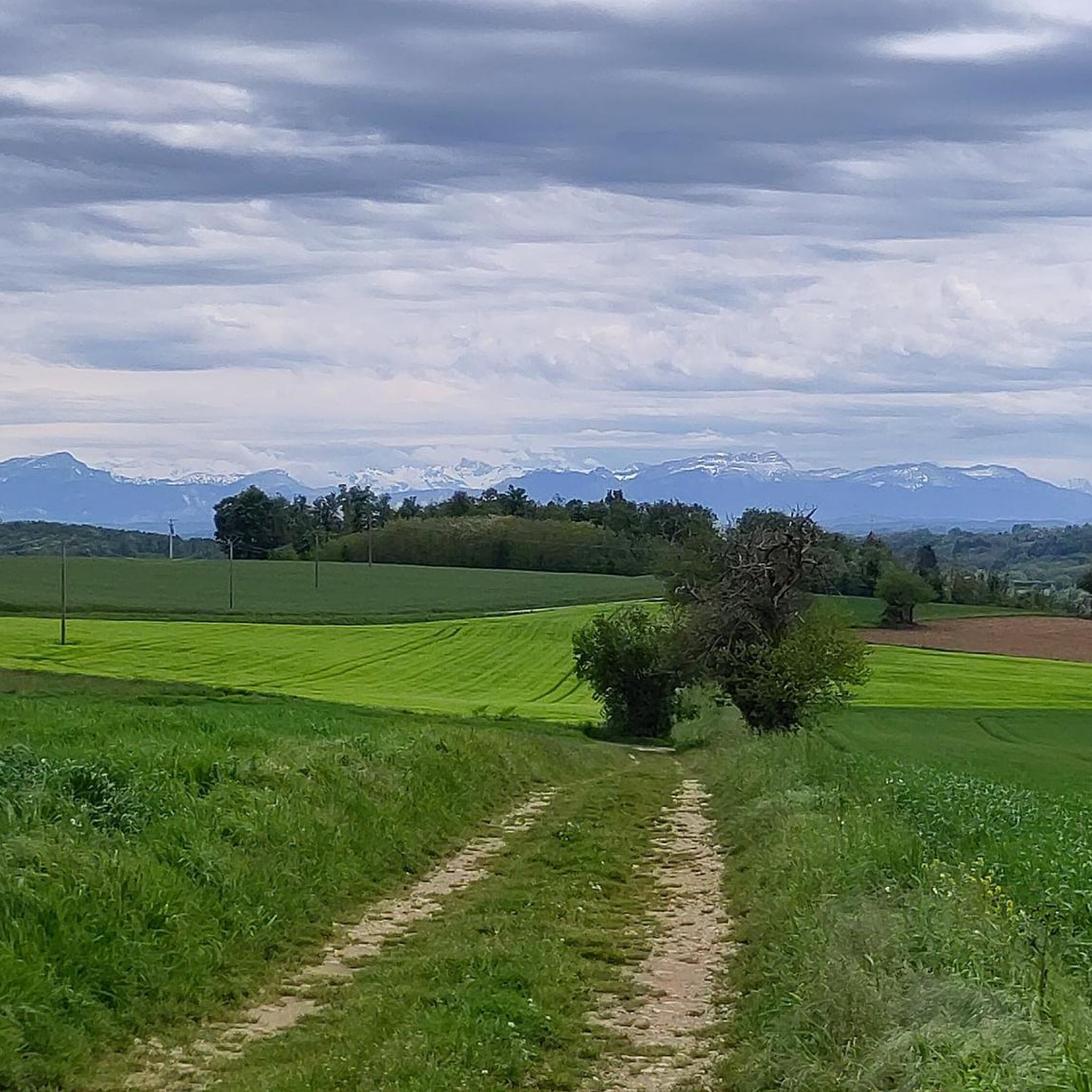
The area around Saint-Chef offers charming natural spots and scenic views. You can visit Étang de la Rosière, a protected natural area with hiking trails, fed by the Loudon stream. The surrounding landscapes also feature the Rupéen Valley, hidden Ponds of Crucilleux, and offer beautiful panoramas of the Alps from various walking paths.
Are there any unique architectural styles to observe in Saint-Chef?
Yes, Saint-Chef is notable for its traditional rammed earth (pisé) architecture. This unique building technique, utilizing local limestone and alluvial geology, is a significant part of the local heritage. The Historic Circuit of Saint-Chef highlights these traditional Dauphiné houses.
What outdoor activities can I do near Saint-Chef's attractions?
Beyond exploring the historical sites, you can enjoy various outdoor activities. There are numerous routes for gravel biking, mountain biking, and running. For example, you can find gravel biking routes like the 'Crémieu–Morestel Greenway' or mountain biking trails such as the 'Verclos descent'. Running enthusiasts can explore routes like the 'Étang de la Rosière loop'. You can find more details on these activities and specific routes on the respective guide pages: Gravel biking around Saint-Chef, MTB Trails around Saint-Chef, and Running Trails around Saint-Chef.
Are there family-friendly attractions in Saint-Chef?
Yes, several attractions are suitable for families. The Étang de la Rosière is a relaxing natural setting perfect for walks and picnics. The Medieval Garden offers a peaceful and educational experience where visitors can learn about plants used in the Middle Ages. The medieval town of Crémieu also provides an engaging historical exploration for all ages.
Where can I learn about the local history of Saint-Chef?
The Saint-Chef Museum is an excellent place to delve into the local history and heritage. Located in an old 18th-century building, it features various media, models, films, and interactive terminals. The museum also includes an 'Espace Frédéric Dard' dedicated to the famous writer who had strong ties to the town. Additionally, the Historic Circuit of Saint-Chef provides 25 explanatory panels guiding visitors through 15 centuries of history across the village's districts.
What is the best time of year to visit Saint-Chef for outdoor activities?
While specific data for the 'best time to visit' is not provided, the region's 'charming village atmosphere and surrounding natural beauty' suggest that spring, summer, and early autumn would be ideal for enjoying the walking paths, cycling routes, and natural sites like the Ponds of Crucilleux and Étang de la Rosière. These seasons generally offer pleasant weather for exploring both historical sites and the scenic landscapes.
Are there any easy walks or trails suitable for everyone?
Yes, the area offers easy walks. The Medieval Garden is a free-access, peaceful walk. The Étang de la Rosière has protected natural areas with walking trails suitable for a relaxing stroll. The Historic Circuit of Saint-Chef is a self-guided tour that can be enjoyed at a leisurely pace, covering the village's historical points.
What are some lesser-known spots or 'hidden gems' to discover in the area?
Beyond the main attractions, you might enjoy discovering the Ponds of Crucilleux, which are mentioned as hidden ponds contributing to the natural beauty of the area. The Château Teyssier de Savy, listed in the Supplementary Inventory of Historical Monuments, is another elegant architectural testament worth noting. For a spiritual and scenic experience, the Our Lady of La Salette Chapel, nestled on a promontory, offers lovely views of the Isère plain.
Where can I find information about the heritage trail in Saint-Chef?
You can find detailed information about the heritage trail, also known as the Historic Circuit of Saint-Chef, which guides visitors through 15 centuries of the village's history. This self-guided tour features 25 explanatory panels. More details are available on the Balcons du Dauphiné tourism website: balconsdudauphine-tourisme.com.
Most popular routes around Saint-Chef
Most popular attractions around Saint-Chef

Get inspired with the komoot mobile app


Explore more
Still not found the Highlight you’re looking for? See guides of the top attractions in other regions:
