The best road cycling routes around Champigny-Le-Sec
4.0
(14)
540
riders
35
rides
Road cycling around Champigny-Le-Sec, located in the Vienne department of Nouvelle-Aquitaine, offers routes through picturesque agricultural landscapes. The terrain is characterized by expansive fields of wheat and rapeseed, providing open views and a mildly undulating profile. This rural setting includes numerous "chemins blancs," or white lanes, which are gravelled roadways suitable for cycling away from heavy traffic. The region's commitment to green spaces and its position within the cycling-friendly Vienne department make it a suitable area for road cyclists.
Best road cycling routes around Champigny-Le-Sec
- The most popular road cycling route is Château de Montreuil Bonnin – Jazeneuil Church loop from Champigny en Rochereau, a 46.9 miles (75.5 km) trail that takes 3 hours 10 minutes to complete. This moderate route traverses the agricultural landscape, connecting historical sites.
- Another top favourite among local road cyclists is Béruges – Jazeneuil Church loop from Champigny en Rochereau, a moderate 63.2 miles (101.7 km) path. This route offers extensive views across the open countryside and passes through charming local villages.
- Local road cyclists also love the Château de Coussay – Our Lady of the Angels Chapel loop from Champigny en Rochereau, a 63.5 miles (102.2 km) trail leading through agricultural vistas and past historical landmarks, often completed in about 4 hours 16 minutes.
- Road cycling around Champigny-Le-Sec is defined by agricultural fields, "chemins blancs," and gently rolling terrain. The network offers options for different ability levels, from moderate to more challenging rides.
- The routes in Champigny-Le-Sec are highly rated by the komoot community with an average score of 3.9 stars from over 10 reviews. More than 500 road cyclists have used komoot to explore Champigny-Le-Sec's varied terrain.
Last updated: August 30, 2026
18
riders
Moderate road ride. Good fitness required. Mostly well-paved surfaces and easy to ride.
8
riders
104km
04:22
660m
660m
Moderate road ride. Good fitness required. Some segments of this route may be unpaved and difficult to ride.

Sign up for free
7
riders
Moderate road ride. Good fitness required. Mostly well-paved surfaces and easy to ride.
6
riders
Moderate road ride. Good fitness required. Mostly well-paved surfaces and easy to ride.
5
riders
54.5km
02:14
270m
270m
Moderate road ride. Good fitness required. Mostly well-paved surfaces and easy to ride.
Get access to more routes and recommendations from other explorers.
Sign up for free
Already have an account?
Our route recommendations are based on thousands of hikes, rides, and runs completed by other people on komoot.
Start today with a free account
Your next adventure awaits.
Login or Signup


Tips from the Community

The Church of Notre-Dame de La Peyratte was built in the early 12th century by the monks of the Abbey of Sainte-Croix de Talmont in the Diocese of Luçon. Its austerity, simplicity, and choice of building materials make it a fine example of the churches of Gâtine. The work involves the general restoration of the church in five phases, beginning with the exterior and then the interior. The project management was entrusted to the Marie-Pierre Nigués agency, a heritage architect. A diagnostic study conducted in 2016 by the Niguès firm estimated the total cost of the work at €1,619,783 excluding tax. Prior to the start of work, the church underwent an archaeological assessment in 2018 and a study of the painted decorations in September 2019. The Nouvelle-Aquitaine Regional Directorate of Cultural Affairs is subsidizing the first phase of exterior work, 45% in 2017, 50% in 2021, and 40% in 2022. The municipality is benefiting from an exceptional Local Investment Support Grant of €120,000 for the entire exterior work. The Nouvelle-Aquitaine Region and the Deux-Sèvres Departmental Council are financial partners in the project. A subscription is also open on the Heritage Foundation's website. The Regional Conservation of Historic Monuments – Poitiers site and the Deux-Sèvres Departmental Architecture and Heritage Unit of the DRAC are providing scientific and technical oversight for this restoration.
0
0
A church dedicated to Saint Peter is documented in the 9th century in the village. A Romanesque church was then built in the 11th century on the site of the current Saint-Honoré church, but with a different orientation. Initially dedicated to Saint Mathias, it was renamed Saint Honoré in the 15th century, a martyr from the Thénezay area, and houses the relic of his skull. The church was remodeled several times, notably in 1685, 1753, and 1784. The church was closed from 1791 to 1802. Its poor condition forced its complete demolition at the end of the 19th century. It was rebuilt between 1901 and 1903 in the neo-Romanesque style with a tall bell tower, according to plans by the architect Girard de Niort. It was consecrated on October 17, 1903, by Bishop Pelgé. It has three naves lit by richly colored stained-glass windows. The choir stalls, dating from the 18th century, were purchased in 1825 by Abbot de la Roche, parish priest; they came from the deconsecrated Cistercian abbey of Pin de Béruges. They were replaced in the current church in 1903. Two years later, the church was confiscated by law from the diocese and became the property of the municipality, which is now responsible for its maintenance. The white marble high altar with columns, donated in 1903 by the Countess of Talhouët-Roy, was sold in the 1970s and replaced with a wooden table facing the people. The stained-glass windows in the choir come from the Touan house in Paris and depict medallions depicting the life of Jesus. In 2003, the main bell collapsed; A new bell was recast from the old one by the Bollée d'Orléans firm and financed by subscription. The Bishop of Poitiers blessed it on October 11, 2003. Today, the parish of Thénezay no longer exists, and its former territory is part of the parish group of Saint-Jacques-en-Gâtine (comprising about sixty bell towers). Sunday Mass is now celebrated only occasionally in this village of nearly 1,400 inhabitants. The church is open for weddings and funerals.
0
0
Well-lit by stained-glass windows by Lux Fournier, this neo-Romanesque church exudes a certain intimacy. There was a church in Amberre at the beginning of the 11th century; it disappeared, replaced in the 19th century by the current building. Well-lit by stained-glass windows by Lux Fournier, this neo-Romanesque church is very pleasant, even warm. The single nave, with its barrel vault and transverse arches, opens onto a five-sided apse, exuding a certain intimacy.
0
0

Very nice ascent by road bike on the highest pass in the department
0
0

The Château de Coussay, inspired by the Italian Renaissance, is one of the first examples of the French Renaissance. Armand-Jean Duplessis, then bishop of Luçon, lived there before becoming the famous Cardinal de Richelieu in 1622.
2
0

Small town built in an eagle's nest and overlooking the Mirebel plain. You can see beautiful houses from the 15th and 16th centuries as well as the collegiate church of Notre-Dame and the calvary of Gâtines. There is a market on Wednesdays and Saturdays.
1
0
Renaissance style priory castle which was built for Bishop Briçonnet in the 16th century. The exterior of the castle can be visited freely and for free. Rare guided tours. Contact: 05 49 50 43 48
1
0
Impressive convent complex built in the 12th century. The magnificent rose garden has no less than 700 roses.
2
0
Frequently Asked Questions
What kind of terrain can I expect on road cycling routes around Champigny-Le-Sec?
The road cycling routes around Champigny-Le-Sec primarily feature picturesque agricultural landscapes, characterized by expansive fields of wheat and rapeseed. The terrain is generally mildly undulating, offering open views. You'll also encounter many "chemins blancs," which are gravelled roadways suitable for cycling away from heavy traffic.
How many road cycling routes are available around Champigny-Le-Sec?
There are over 35 road cycling routes available around Champigny-Le-Sec. These routes cater to various skill levels, with 8 easy, 22 moderate, and 5 difficult options to explore.
Are there routes suitable for beginners or families in Champigny-Le-Sec?
Yes, Champigny-Le-Sec offers 8 easy road cycling routes, which are generally suitable for beginners or families looking for a more relaxed ride. The flat terrain along rivers like the Vienne also makes for easy and enjoyable cycling.
What are some of the longer road cycling routes available?
For those seeking longer rides, routes like the Béruges – Jazeneuil Church loop from Champigny en Rochereau (101.7 km) and the Château de Coussay – Our Lady of the Angels Chapel loop from Champigny en Rochereau (102.2 km) offer extensive distances through the countryside.
What kind of historical or natural attractions can I see along the routes?
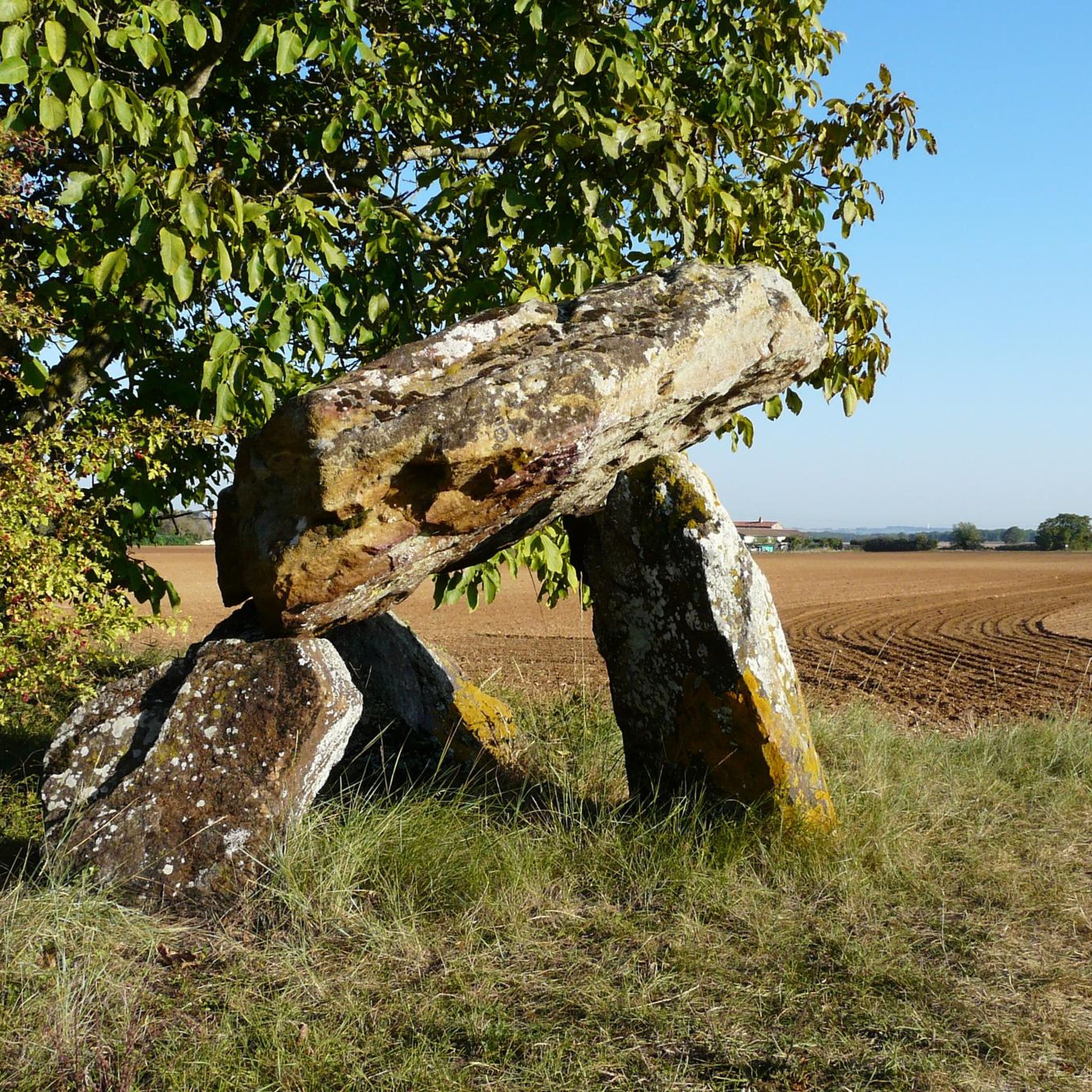
While cycling, you can discover various points of interest. The region features historical sites like the Notre-Dame de Champigny-le-Sec church and ancient monuments such as the Dolmen of Fontenaille. You might also pass by the Cherves windmill or the tranquil Fleix Lake. The natural spring of Gely, with its walled public washhouse, is another remarkable architectural and natural ensemble.
Are the road cycling routes typically circular?
Many of the popular road cycling routes around Champigny-Le-Sec are designed as loops, offering convenient circular journeys. Examples include the Château de Montreuil Bonnin – Jazeneuil Church loop from Champigny en Rochereau and the Vasles – Village of Sheep – Église de Menigoutte loop from Champigny en Rochereau.
When is the best time of year for road cycling in Champigny-Le-Sec?
The region's agricultural landscapes, with fields of wheat and rapeseed, are particularly beautiful in spring and early summer. The Vienne department generally offers good cycling conditions from spring through autumn, with pleasant temperatures and scenic views. For more regional cycling insights, you can check resources like Tourisme Vienne's cycling webzine.
What do other road cyclists enjoy most about cycling in Champigny-Le-Sec?
The area is highly rated by the komoot community, with an average score of 3.9 stars from over 10 reviews. Cyclists often praise the open views across the agricultural landscapes, the quiet "chemins blancs" that allow for rides away from heavy traffic, and the charming local villages encountered along the routes.
Are there places to stop for refreshments or breaks along the routes?
The wider Vienne region is known for its cyclist-friendly environment, including the obligatory cafés for coffee and cake stops. While specific cafes on every route aren't listed, the presence of charming local villages along many routes suggests opportunities for breaks and refreshments.
Is public transport an option for accessing road cycling routes in the Vienne department?
The Vienne department has a well-developed regional cycling network, and while specific public transport options for bikes directly to Champigny-Le-Sec trailheads are not detailed, the region's commitment to cycling suggests that public transport connections to larger towns might offer possibilities for cyclists. It's advisable to check local transport schedules and bike policies.
Where can I park my car when starting a road cycling route in Champigny-Le-Sec?
Champigny en Rochereau, as a commune, likely offers various public parking options within the village center or near local amenities. For specific trailheads, parking availability may vary, but the leisure area in the commune, a hub for recreational activities, could be a good starting point with potential parking facilities.
Most popular attractions around Champigny-Le-Sec

Get inspired with the komoot mobile app


Explore more
Browse the best Road cycling routes in other regions.
