The best cycling routes around Fontaine-Le-Comte
4.5
(101)
794
riders
33
rides
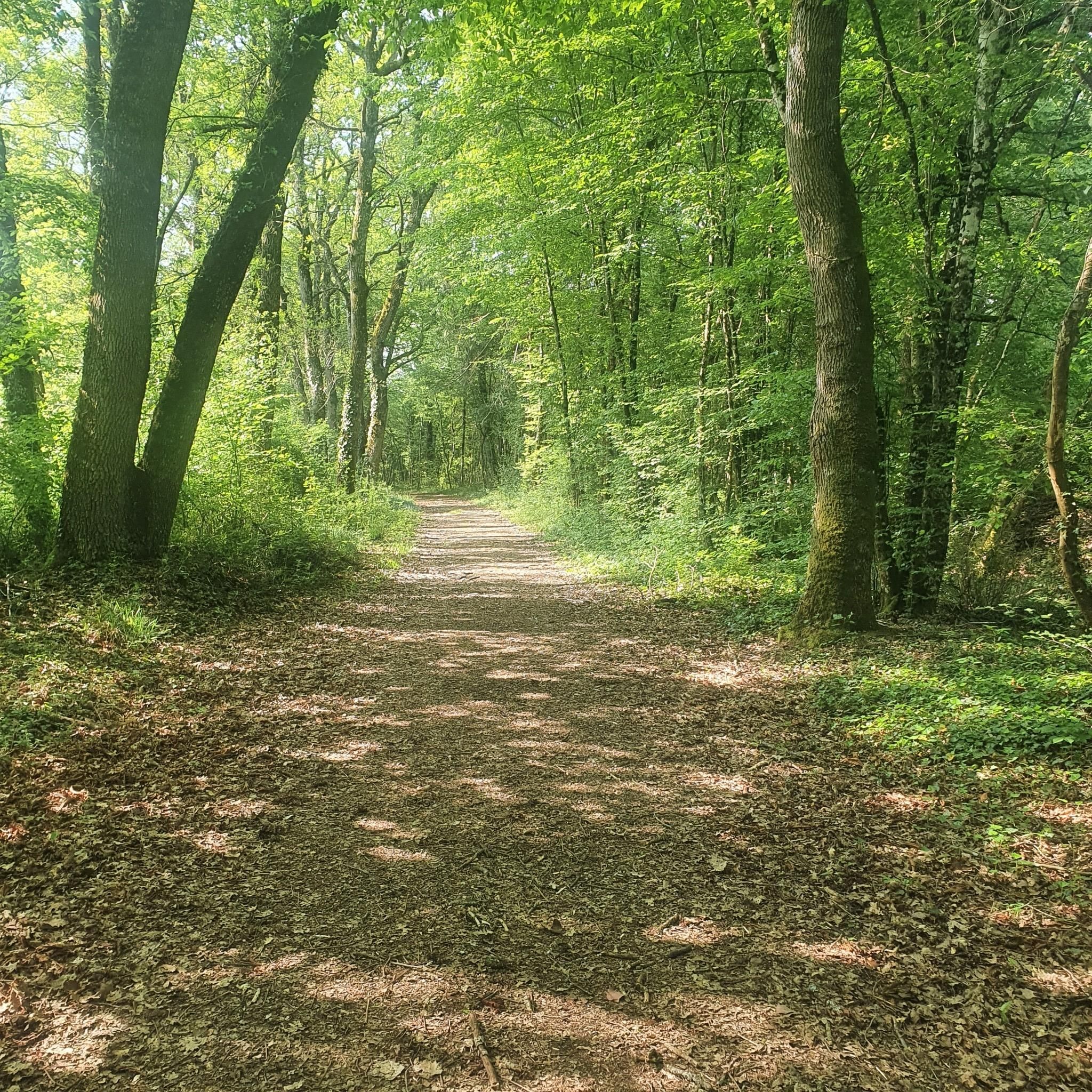
Touring cycling around Fontaine-Le-Comte offers routes through a varied landscape southwest of Poitiers in Nouvelle-Aquitaine, France. The area features a hilly and wooded terrain, characterized by significant agricultural and forest areas, including the Bois des Feuillants. Cyclists can explore quiet roads and the green, meandering valleys of the Feuillante river. The region's diverse geography provides a range of environments for outdoor enthusiasts.
Best touring cycling routes around Fontaine-Le-Comte
- The most popular touring cycling route is Aqueduc de la Prêle –…
Last updated: May 21, 2026
4.5
(2)
24
riders
35.7km
02:51
240m
240m
Moderate bike ride. Good fitness required. Mostly paved surfaces. Suitable for all skill levels.
5.0
(2)
13
riders
Moderate bike ride. Good fitness required. Mostly paved surfaces. Suitable for all skill levels.

Sign up for free
14
riders
16.9km
01:01
120m
120m
Easy bike ride. Great for any fitness level. Mostly paved surfaces. Suitable for all skill levels.
8
riders
64.0km
03:55
420m
420m
Moderate bike ride. Good fitness required. Mostly paved surfaces. Suitable for all skill levels.
6
riders
46.5km
02:47
310m
310m
Moderate bike ride. Good fitness required. Mostly paved surfaces. Suitable for all skill levels.
Get access to more routes and recommendations from other explorers.
Sign up for free
Already have an account?
Our route recommendations are based on thousands of hikes, rides, and runs completed by other people on komoot.
Start today with a free account
Your next adventure awaits.
Login or Signup



Tips from the Community


Giant picture 👍👍
0
0

There were two reasons why the ancient Roman Empire had already laid underground the pipes necessary for the water supply to cities, and why later centuries also followed this construction method: firstly, there was no sunlight that would have caused the precious liquid to evaporate; and secondly, the water was protected against any kind of pollution (even if it was just the leaves from the trees in autumn).
1
0
There were two reasons why the ancient Roman Empire laid the necessary underground pipes for the water supply to cities, and why later centuries followed this method of construction: firstly, there was no sunlight that would have caused the precious liquid to evaporate; and secondly, the water was protected from any kind of pollution (even if it was just the leaves from the trees in autumn).
0
0

The Béruges aqueduct, near Poitiers, is a Roman vestige dating from the 1st or 2nd century. Built to supply water to the ancient city of Poitiers (Limonum), it extends over several kilometers. Today, it remains visible in segments, testifying to the ingenious know-how of Roman engineers. This one dates from the 19th century. However, walkers do not always know that under their feet is sometimes one of the oldest and most exceptional French aqueducts. Built in the first century by the Romans, it carried water from the Fleury spring, located in Lavausseau, to the ancient "Limonum", today's Poitiers, after a 25 km route with a cleverly calculated but extremely low slope of only 12 cm per kilometer. A work so well thought out that a large part of its route served as a model for another aqueduct, built in 1884, which is still in service. Between Vaugirard and La Raudière, there are several more or less secret and private places where it can be seen, sometimes in very good condition with its entire lower part masonry which surprises by its very smooth and regular trapezoidal appearance and its upper part vaulted with large stones covered with a screed.
2
0
Frequently Asked Questions
How many touring cycling routes are available around Fontaine-Le-Comte?
There are over 30 touring cycling routes around Fontaine-Le-Comte, catering to various skill levels. You'll find 5 easy routes, 16 moderate routes, and 9 more challenging options to explore the region's diverse landscapes.
What kind of terrain can I expect on touring cycling routes in Fontaine-Le-Comte?
The terrain around Fontaine-Le-Comte is characterized by a hilly and wooded landscape, with significant agricultural and forest areas. You can expect to cycle on quiet roads, through open fields, traditional hedged farmland (bocages), and along the green, meandering valleys of the Feuillante river. The broader Poitou region also offers routes following waterways, providing a generally level and bucolic cycling experience.
Are there any easy touring cycling routes suitable for beginners or families?
Yes, there are several easy touring cycling routes. One option is the Poitiers – Saint-Hilaire Le Grand Church loop from Croutelle, which is 16.9 km long and takes about 1 hour to complete. This route offers a gentle introduction to the area's scenery.
What historical landmarks or natural attractions can I see along the cycling routes?
Fontaine-Le-Comte and its surroundings are rich in historical and natural attractions. You can visit the impressive Roman aqueduct at Beruges, which once supplied Poitiers with water. Other points of interest include the Le Moulin de la Norée, the Beauvoir Cliffs, and various historic lavoirs and fountains like Basse-Fontaine. The Abbaye Notre-Dame de Fontaine-le-Comte is also a notable historical site.
Are there any longer touring cycling routes for experienced cyclists?
For those looking for a longer ride, the Roman aqueduct at Beruges – Lusignan loop from Fontaine-le-Comte is a moderate 64.0 km route that takes approximately 3 hours 55 minutes. This route offers an extended journey through varied landscapes, including the historic Roman aqueduct.
What is the best time of year to go touring cycling in Fontaine-Le-Comte?
The region's diverse geography and wooded areas make it pleasant for cycling during spring, summer, and early autumn. The presence of the Bois des Feuillants and the Feuillante river valley offers shaded sections, which can be particularly enjoyable during warmer months. Always check local weather conditions before heading out.
Are there any circular touring cycling routes around Fontaine-Le-Comte?
Yes, many routes in the area are designed as loops. For example, the La Cyclerie-Café – Chemin des Près de la Fontaine loop from Fontaine-le-Comte is a 32.0 km circular route that takes you through local paths and agricultural areas, typically completed in about 2 hours 22 minutes.
What do other touring cyclists say about the routes in Fontaine-Le-Comte?
The touring cycling routes around Fontaine-Le-Comte are highly regarded by the komoot community, holding an average rating of 4.5 stars from over 100 reviews. Cyclists often praise the varied terrain, the quiet roads, and the scenic beauty of the wooded and agricultural landscapes.
Can I find routes that pass through Poitiers from Fontaine-Le-Comte?
Yes, you can find routes that connect Fontaine-Le-Comte with the nearby city of Poitiers. The Poitiers – Poitiers Town Hall loop from Fontaine-le-Comte is a moderate 46.7 km route that allows you to cycle towards the city and explore its surroundings, taking about 2 hours 47 minutes.
Are there any specific cycling paths or infrastructure in Fontaine-Le-Comte?
Fontaine-Le-Comte has a commitment to cycling infrastructure, indicated by the 'cartographie des pistes cyclables fontenoises' (mapping of Fontaine-le-Comte cycling paths). This suggests dedicated cycle paths and well-marked roads, making for a pleasant and safe touring experience.
Where can I find parking if I drive to Fontaine-Le-Comte to start a cycling tour?
While specific parking locations for each route are not detailed, Fontaine-Le-Comte is a commune with various public parking options, especially near its main attractions or village center. It's advisable to check local signage upon arrival for the most convenient parking for your chosen starting point.
Are there any routes that highlight the Roman history of the area?
Absolutely. The region has a rich Roman history, particularly concerning its ancient water sources. The Aqueduc de la Prêle – Roman aqueduct at Beruges loop from Fontaine-le-Comte is a moderate 35.4 km route that specifically explores the area's historical aqueduct and wooded sections, offering a glimpse into its past.
Most popular routes around Fontaine-Le-Comte
Most popular attractions around Fontaine-Le-Comte

Get inspired with the komoot mobile app


Explore more
Browse the best Cycling routes in other regions.
