Attractions and Places To See around Saint-Bris-Des-Bois - Top 20
Best attractions and places to see around Saint-Bris-Des-Bois include historical sites and natural landscapes in the Charente-Maritime department of southwestern France. This peaceful village is situated in the heart of Saintonge, known for its blend of historical charm and natural beauty. The area features the picturesque Vallée du Coran, characterized by vineyards and forests, offering opportunities for outdoor activities. Visitors can explore significant religious buildings and enjoy the tranquil environment.
Best attractions and places to see around Saint-Bris-Des-Bois
- The most…
Last updated: July 2, 2026
Abbaye de Fontdouce
Highlight • Historical Site
Translated by Google •
Tip by

Saint-Martin Church
Highlight • Other
Translated by Google •
Tip by

Sign up now to discover places like this
Get recommendations on the best single tracks, peaks, & plenty of other exciting outdoor places.
Sign up for free
Saint-Césaire Church
Highlight • Religious Site
Translated by Google •
Tip by
Château de La Dixmerie
Highlight • Other
Translated by Google •
Tip by

Saint-Brice Church
Highlight • Other
Translated by Google •
Tip by
Sign up for free to discover even more attractions around Saint-Bris-Des-Bois.
Sign up for free
Already have an account?
Start today with a free account
Your next adventure awaits.
Login or Signup


Tips from the Community

Magnificent We can also have a picnic
0
0

A must-see visit alongside this abbey on a magnificent circuit
0
0
The La Dixmerie estate was once owned by the Brémond d'Ars family. The tradition wants that there would have been then, in this place, a barn with the tithes and a castle. This family seems to have succeeded each other in La Dixmerie for almost two centuries. On the eve of the Revolution, this land would have belonged to Pierre-René-Auguste, knight, lord and baron of Saint-Fort-sur-le-Né, Dompierre and Orlac. Born in 1759, he was the son of Pierre de Brémond d'Ars. Pierre-René-Auguste was deputy of the nobility of Saintonge to the Estates General of 1789. He emigrated in 1792, after having served for some time in the army of the Princes. Defender of the monarchy and religion, he had signed, in 1790 and 1791, the protests against the decrees on the nobility and the clergy and on the forfeiture of the King. Returning to France at the beginning of the 19th century, he would have retired to the Dixmerie where he devoted himself to work in history and numismatics. He had published in 1778, Literary Amusements. Pierre-René-Auguste de Brémond d'Ars married Jeanne-Marie-Élisabeth de La Taste in 1785. In 1809, the La Dixmerie estate belonged to Paul Letors de Larray, former infantry captain, husband of Suzanne Billard. In 1923, La Dixmerie was owned by the Comte de Brémond d'Ars; then it passed to the Comte de Pressac de Lioncel, married in second marriage to Jeanne-Marie-Caroline Goudenoue d'Aldenhove. The latter died there on May 17, 1936. The current castle, dating back to the 1880s, was built near an old mansion. It is a residence of harmonious proportions adopting a rectangular plan and flanked on either side by short slightly projecting wings. Despite a certain architectural unity, it is nonetheless provided with a few decorative fantasies, such as the segmented pediments topped with a ball and surmounting the dormers of each wing, and more particularly the richly worked dormer window which dominates the central bay of the building. Château de la Dixmerie 17100 La Chapelle-des-Pots, private property, cannot be visited.
2
0

A particularity is located in the gallery of arcature which overhangs the portal. Indeed it has three arched windows on one side of the central window and two semicircular on the other. Note that the two bays on the right occupy the same width as the three on the left. The bell tower, like many others in the region, has a pyramidal roof. Simple columns come to partition the two windows which cover each face. Inside the church, archival documents prove that the nave with two bays was originally vaulted with warheads. Unfortunately, this vault was destroyed during religious wars. Still according to archival documents, it would seem that at the beginning of the 20th century, a narthex, where the catechumens were held, leaned on its facade. Today, it has completely disappeared. The church was classified as a historic monument in 1913. The building underwent a complete restoration in 1935. To admire just next to the church a magnificent and majestic period residence.
0
0
The walls of the nave were doubled by means of arcades and it was endowed with a new chevet and a new bell tower. With an elegant silhouette and intact in its southern part, it is openworked with four twin bays on semicircular arches on two floors. The interior has a nave with three bays. A bay separates the nave from the front choir vaulted in blocks of rubble which, very narrow, supports the bell tower. The semi-circular apse is vaulted in cul-de-four. The 19th century side chapel, dedicated to Saint Anthony, is located on the left as you enter. Vaulted in a broken cradle, it has a stucco altar whose base has five broken arch bays. A very beautiful ornate wooden balcony dating from the end of the 19th century is located at the interior entrance of the church. The statue of Notre-Dame de Fontdouce, known as "the Virgin and Child" was sculpted by a monk from the Abbey of Fontdouce around the 15th century. It has been kept in the church of Saint Bris des Bois since the revolution and was once a destination of pilgrimage. On the back wall, a semicircular stained glass window indicates the names of the parish priest, Mr. Hague, and the mayor at the time, Mr. Lévécot (1904). The Priory of St Robert: the chapel destroyed during the wars of religion, the campanile is still in place. Saint Robert once had a great reputation, at the end of the 19th century, children suffering from certain illnesses were still brought there "before sunrise". The church was listed as a Historic Monument in 1973. To visit it you will have to pay your tribute just the price of a slight effort ....... the church is located at the top of the hill overlooking the village and adjoining the cemetery.
0
0
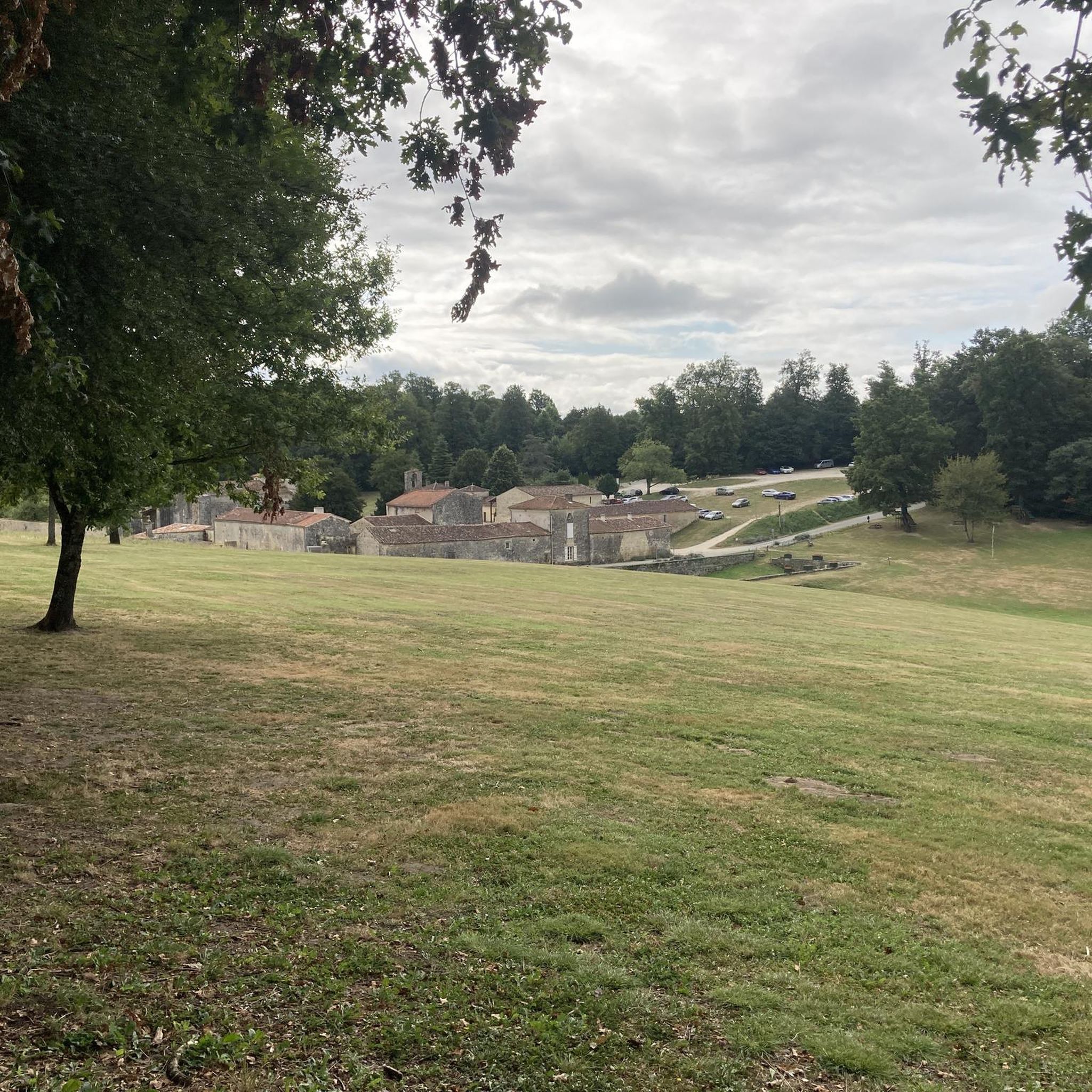
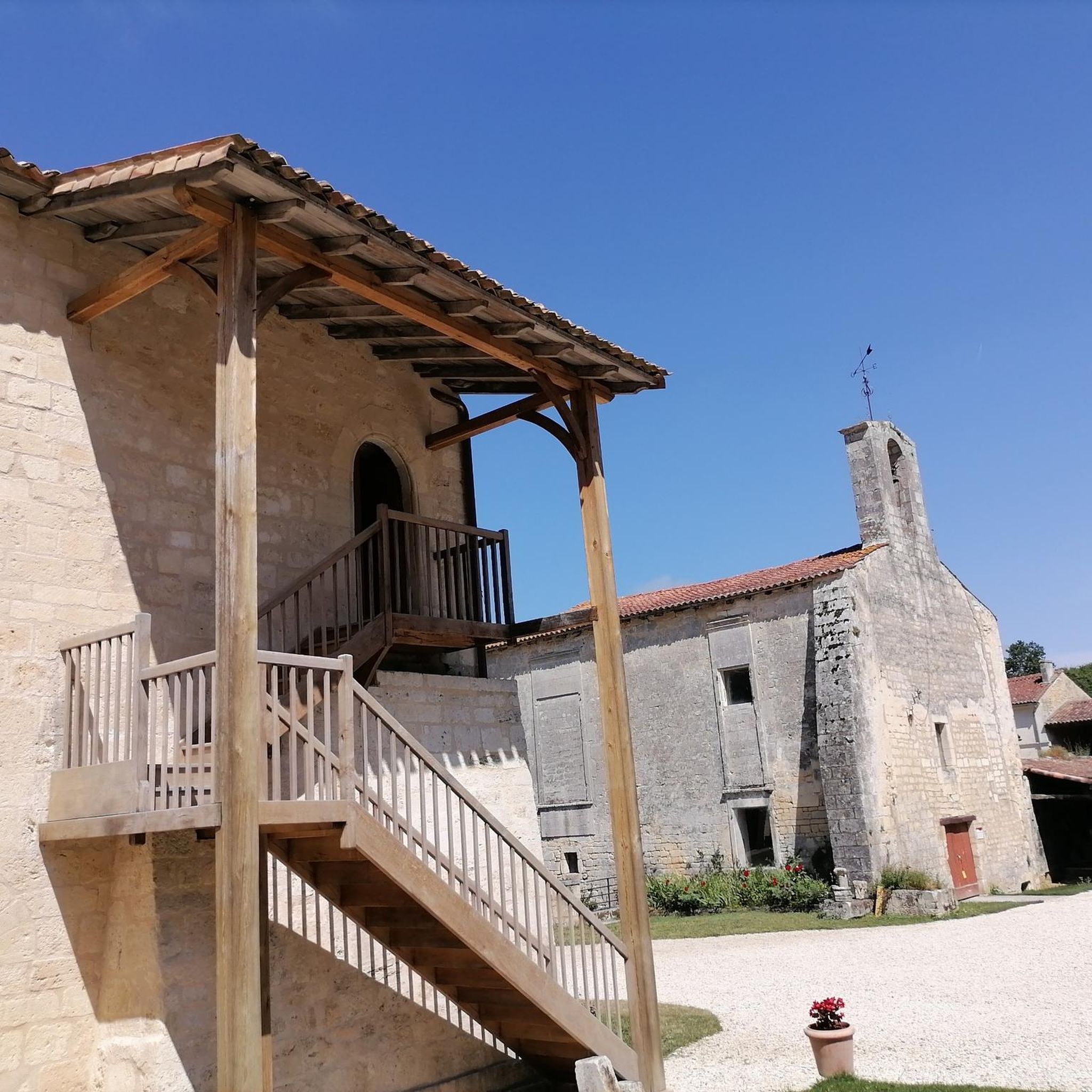
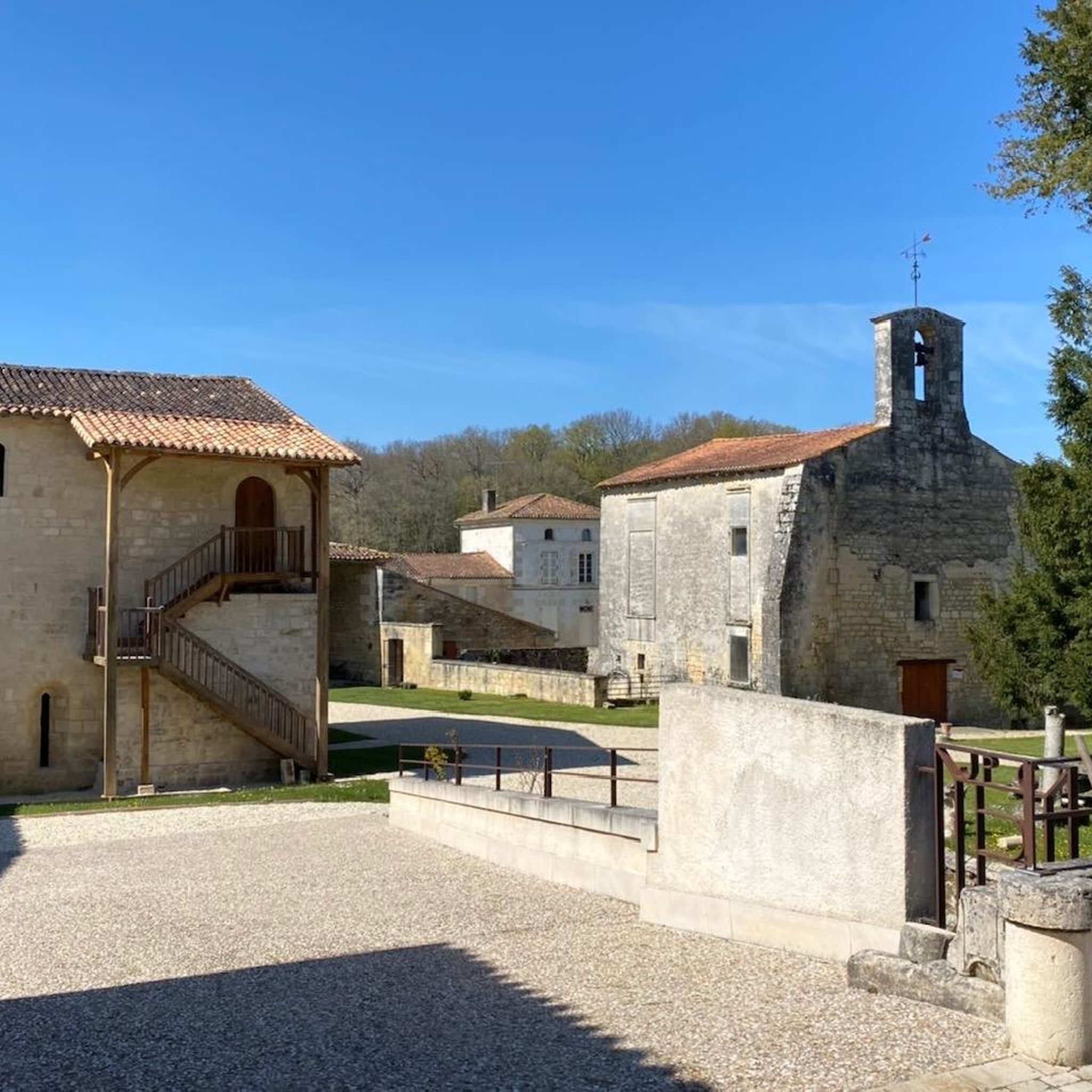
Towards the end of the 12th century, an abbey church was built. At the beginning of the 13th century, attached to the west of the first Romanesque abbey, a Gothic-style cloister was gradually built. The abbey reached its peak from this period: in addition to its priories (la Grainetière in Vendée and la Tenaille near Pons), it owned land within a radius of 100 km, including saltworks on the coast. In the 15th century, Fontdouce obtained the title of royal abbey leading to a profound change in its mode of administration: the abbot was no longer elected by his peers within the community but was appointed by the king. It is often a great layman to whom the king grants the commendation, that is to say 80% of the income of the abbey. Then, the wars of religion, in the 16th century, accelerated its decline. The abbey church is ransacked: it will never be rebuilt. The years following the French Revolution also brought their share of destruction: several buildings, including the refectory, disappeared. The last monks were driven out in 1793 and the following year the site was sold as National Property to serve as agricultural property. The farmer who bought the place then built, on the remains of the conventual buildings, a house in the First Empire style. In the 1820s, Fontdouce entered the family of the current owners who, on December 16, 1986, had the Gothic parts, chapter house and parlor classified as historical monuments2. From 1970, the current owners undertook a series of excavations intended for the restoration of the Abbey of Fontdouce. They are gradually bringing the beautiful chapter house and the Gothic parlor back to life, the two superimposed Romanesque chapels and several other remains. These restoration works earned them third prize in the masterpiece in danger competition in 1979. In 1986, the site was entirely classified as a Historic Monument1. Today, Fontdouce remains a private property, focused on tourist and cultural activities, supported in its development actions by a team of enthusiasts grouped together within the Association Guillaume de Conchamp.
1
0

The Church of Saint-Martin de Coucoury was built around the 11th century. It is a pretty example of a Romanesque church.
1
0
It was in the 12th century that the church of Saint Césaire was built. It is a Saintonge Romanesque style church.
0
0
Frequently Asked Questions
What historical and cultural sites can I explore in Saint-Bris-des-Bois?
Saint-Bris-des-Bois is rich in history, primarily known for the significant Abbaye de Fontdouce. Founded in 1111, this abbey showcases Romanesque origins with Gothic additions, offering cloisters, a chapter house, and a cellar to explore. Other notable religious buildings include Saint-Césaire Church, a 12th-century Saintonge Romanesque church, and Saint-Martin Church, an 11th-century Romanesque structure with a distinctive apse and bell tower. The village's own Église Saint-Brice also contributes to the area's serene historical atmosphere.
Where can I find natural beauty and hiking opportunities around Saint-Bris-des-Bois?
The most prominent natural feature is La Vallée du Coran, a picturesque valley bordering the Coran river. It's characterized by vineyards and forests, offering numerous natural springs and trails that are ideal for hikers. The landscape around Saint-Bris-des-Bois is perfect for tranquil walks amidst nature. You can find various routes for outdoor activities in the area, including those for mountain biking, cycling, and running, by exploring the MTB Trails around Saint-Bris-Des-Bois, Cycling around Saint-Bris-Des-Bois, and Running Trails around Saint-Bris-Des-Bois guides.
Are there family-friendly activities available near Saint-Bris-des-Bois?
Yes, families will find several engaging options. The Abbaye de Fontdouce offers activities specifically for children, such as treasure hunts and game booklets. Additionally, located near the abbey, Parc Aventure Fontdouce provides adventure activities like accrobranche (tree-top adventure), laser tag, and an escape game, ensuring fun for all ages.
What is the best time of year to visit Saint-Bris-des-Bois?
The Abbaye de Fontdouce is open to the public from April to October, making this period ideal for exploring its historical grounds. The warmer months also allow for full enjoyment of the outdoor activities in La Vallée du Coran, such as hiking and cycling, amidst the vineyards and forests.
Can I find local produce and culinary experiences in the area?
Absolutely. The landscape surrounding Saint-Bris-des-Bois is characterized by extensive vineyards, providing opportunities to meet local producers of Pineau des Charentes and Cognac. This allows visitors to discover and taste the region's rich viticultural heritage directly from the source.
What types of outdoor activities are popular in the Saint-Bris-des-Bois area?
The region around Saint-Bris-des-Bois is excellent for various outdoor pursuits. You can explore numerous trails for hiking, enjoy scenic cycling routes through vineyards and forests, or tackle dedicated mountain biking trails. For detailed routes and difficulty levels, refer to the MTB Trails around Saint-Bris-Des-Bois, Cycling around Saint-Bris-des-Bois, and Running Trails around Saint-Bris-des-Bois guides.
Are there any cultural events or festivals held in Saint-Bris-des-Bois?
Yes, the Abbaye de Fontdouce is a hub for cultural activities. It hosts events such as the "Contes et Concerts" festival, which typically takes place in early August, offering a blend of storytelling and music in a historic setting.
What is the significance of the Vallée du Coran?
The Vallée du Coran is a key natural feature of Saint-Bris-des-Bois, described as a "true setting between vineyards and forests." It's where the Coran river, an affluent of the Charente, flows, and is known for its numerous natural springs and trails. It provides a tranquil environment and is a paradise for hikers and nature lovers.
Is Saint-Bris-des-Bois a good destination for those seeking tranquility?
Yes, Saint-Bris-des-Bois is particularly known for its peaceful and authentic village atmosphere. It's an ideal destination for visitors seeking tranquility and a deeper connection with nature and history, away from bustling tourist crowds.
What is the history behind the Abbaye de Fontdouce?
The Abbaye de Fontdouce was founded around 1111 by Benedictine monks. It reached its peak in the 13th century, becoming a royal abbey in the 15th century. Despite partial destruction during the Wars of Religion and further damage after the French Revolution, it has been extensively restored by its current owners since the 1970s and is now classified as a Historic Monument.
Are there any specific viewpoints or scenic spots in the area?
While specific named viewpoints are not detailed, the village's own Église Saint-Brice dominates the valley from its elevated position, offering scenic views of the surrounding vineyards and forests. The entire Vallée du Coran itself is considered a picturesque setting, providing many opportunities for scenic appreciation during walks and hikes.
What is the architectural style of the churches in the region?
The churches around Saint-Bris-des-Bois predominantly feature Romanesque architecture, characteristic of the Saintonge region. For example, Saint-Césaire Church and Saint-Martin Church are excellent examples of 11th and 12th-century Romanesque design, often with later Gothic additions or modifications, showcasing unique elements like arcature galleries and pyramidal bell towers.
Most popular routes around Saint-Bris-Des-Bois

Get inspired with the komoot mobile app


Explore more
Still not found the Highlight you’re looking for? See guides of the top attractions in other regions:
