Attractions and Places To See around Saint-Malo-Des-Trois-Fontaines - Top 20
Best attractions and places to see around Saint-Malo-Des-Trois-Fontaines, a commune in Brittany's Morbihan department, include a blend of historical landmarks and natural features. The region is characterized by its proximity to the River Oust and Lac au Duc, Brittany's largest inland lake. Visitors can explore centuries-old castles and picturesque towns, offering insights into the area's rich heritage. This area provides opportunities to experience both cultural sites and diverse natural habitats.
Best attractions and places to see around Saint-Malo-Des-Trois-Fontaines
- The most…
Last updated: July 7, 2026
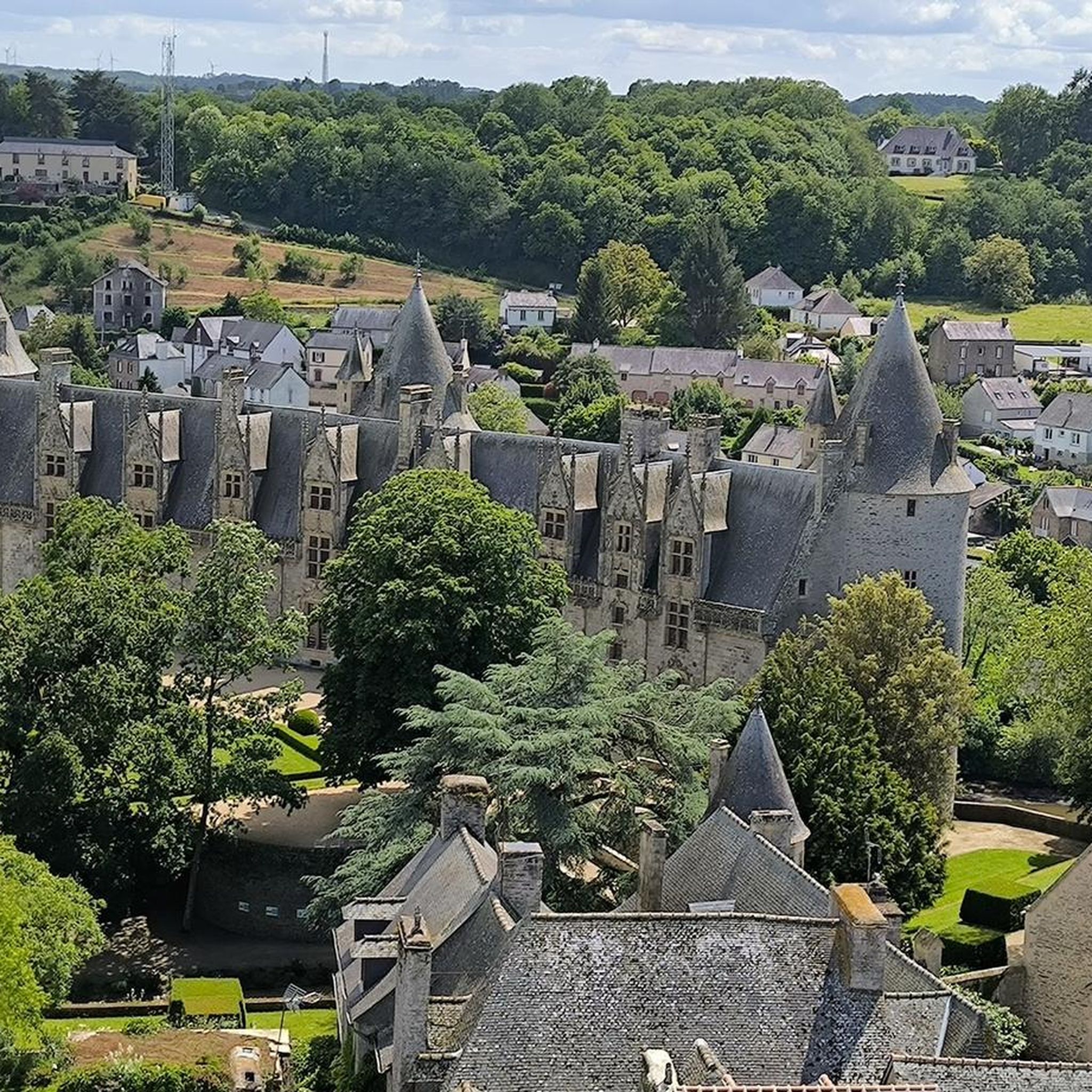
Château de Josselin seen from the Sainte-Croix bridge
Highlight • Castle
Translated by Google •
Tip by

Josselin Castle
Highlight • Religious Site
Translated by Google •
Tip by

Sign up now to discover places like this
Get recommendations on the best single tracks, peaks, & plenty of other exciting outdoor places.
Sign up for free
Lac au Duc
Highlight • Lake
Measuring approximately 5.5 km …
Translated by Google •
Tip by

Lock-keeper's house
Highlight • Other
Translated by Google •
Tip by

Josselin Washhouse
Highlight • Structure
Translated by Google •
Tip by

Sign up for free to discover even more attractions around Saint-Malo-Des-Trois-Fontaines.
Sign up for free
Already have an account?
Start today with a free account
Your next adventure awaits.
Login or Signup
Popular around Saint-Malo-Des-Trois-Fontaines



Tips from the Community

Magical town with a fairytale castle. (however, I recommend you swerve the Logis Hotel-Restaurant du Chateau). Or if you can find no other accommodation, at least avoid eating in the restaurant, which was one of the few outright poor places to eat I've found in France.
0
0

Very beautiful castle on the canalized Oust
0
0

Beautiful picturesque town with a spectacular castle and old half-timbered houses
1
0

It looks beautiful when you come along the bike path along the canal.
0
0

From this point, you have a superb view of the Josselin castle. There are opportunities for free and guided tours. The annual closure is from November 1 to April 8. The Castle dates from the beginning of the 11th century, when the nearby Viscount of Porhoët had a palisade built on this rocky promontory overlooking the Oust valley. In 1370, Olivier de Clisson, constable of France, had the fortress built.
0
0
Created by monks in the 12th century, Lac au Duc is the largest of Brittany's inland lakes. Its 250 hectares extend between Ploërmel, Taupont and Loyat. Measuring approximately 5.5 km by 500-900 m, Lac au Duc is surrounded by a variety of different natural habitats and wetlands. If you look carefully, you might be lucky enough to see otters, frogs or deer.
0
0

The Château de Josselin is a two-faced building whose architectural details tell a thousand-year-old story. Standing on a rocky outcrop, it overlooks the Oust valley. On the river side, an austere facade evokes the feudal struggles of the Middle Ages. On the courtyard side, a more refined sculpted granite facade offers a particularly well-preserved example of Breton architecture from the end of the 15th century and the beginning of the 16th century.
1
0

Gite belonging to the town hall but is no longer open this year. No stop possible for the night.
0
0
Frequently Asked Questions
What historical sites can I visit near Saint-Malo-Des-Trois-Fontaines?
The region is rich in history. You can explore the impressive Josselin Castle, a thousand-year-old fortress owned by the Rohan family, which overlooks the River Oust. The nearby town of Josselin itself is a picturesque 'petite cité de caractère' with charming streets and a basilica. Another historical point of interest is the Josselin Washhouse, a covered public wash house from the late 19th century.
Are there any natural attractions or features to see?
Yes, Lac au Duc is a significant natural feature. Created by monks in the 12th century, it is Brittany's largest inland lake, spanning 250 hectares. It's surrounded by diverse natural habitats and wetlands, offering opportunities to spot wildlife like otters, frogs, or deer.
What are the best viewpoints in the area?
For a superb view of the iconic Josselin Castle, head to the Sainte-Croix bridge. From this vantage point, you can see the castle's imposing structure reflected in the River Oust.
Are there family-friendly activities or attractions?
Many attractions in the area are suitable for families. Both Josselin Castle and Château de Josselin seen from the Sainte-Croix bridge are listed as family-friendly. The castle also houses a museum of dolls and toys, which can be engaging for children. Additionally, Lac au Duc offers a natural setting for family outings, with opportunities for wildlife spotting.
What outdoor activities can I do near Saint-Malo-Des-Trois-Fontaines?
The region offers various outdoor activities, particularly cycling. You can find numerous routes for touring bicycles, road cycling, and gravel biking. For example, there are routes around Lac au Duc, and routes that pass by Josselin Castle. You can explore detailed cycling guides for the area, such as the Cycling around Saint-Malo-Des-Trois-Fontaines guide.
Are there cycling routes suitable for different skill levels?
Yes, the cycling routes around Saint-Malo-Des-Trois-Fontaines cater to various skill levels. For instance, the Cycling around Saint-Malo-Des-Trois-Fontaines guide includes easy loops like the 'View of Lac au Duc loop from Loyat' (14.3 km) and more challenging options such as the 'View of Lac au Duc – Josselin Castle loop from Évriguet' (88.5 km).
What do visitors particularly enjoy about the attractions in this area?
Visitors frequently praise the magnificent Josselin Castle and the charming, picturesque town of Josselin. The castle's unique architecture, with its austere river-facing facade and refined courtyard side, is often highlighted. The natural beauty of Lac au Duc, as Brittany's largest inland lake, is also a popular draw for its serene environment and wildlife.
Can I visit the interior of Josselin Castle?
Yes, Josselin Castle is open for visits and also houses a museum of dolls and toys. There are opportunities for both free and guided tours. Please note that the castle typically has an annual closure from November 1 to April 8.
Where can I find facilities like bicycle repair or water refills near the attractions?
Near some routes, you might find useful facilities. For example, the Lock-keeper's house offers a bicycle repair area and a tap to refill water bottles, which can be very convenient for cyclists exploring the area.
What is the significance of Lac au Duc?
Lac au Duc holds historical and ecological significance. It was created by monks in the 12th century and is recognized as the largest of Brittany's inland lakes. Its 250 hectares are home to a variety of natural habitats and wetlands, making it an important area for local wildlife.
Are there any specific road cycling routes I should consider?
For road cycling enthusiasts, the Road Cycling Routes around Saint-Malo-Des-Trois-Fontaines guide offers several options. You can find routes like the 'Lac au Duc – Menhirs of Monteneuf loop from Taupont' (62.4 km) or the 'Lake au Duc – Historic centre of Malestroit loop from Taupont' (87.2 km), providing diverse scenery and distances.
What kind of architecture can I expect to see at Josselin Castle?
Josselin Castle is notable for its 'two-faced' architecture. On the river side, it presents an austere facade, reflecting its medieval feudal origins. In contrast, the courtyard side features a more refined, sculpted granite facade, showcasing Breton architecture from the late 15th and early 16th centuries.
Most popular routes around Saint-Malo-Des-Trois-Fontaines

Get inspired with the komoot mobile app


Explore more
Still not found the Highlight you’re looking for? See guides of the top attractions in other regions:
