The best cycling routes around Thuré
4.2
(152)
1,171
riders
155
rides
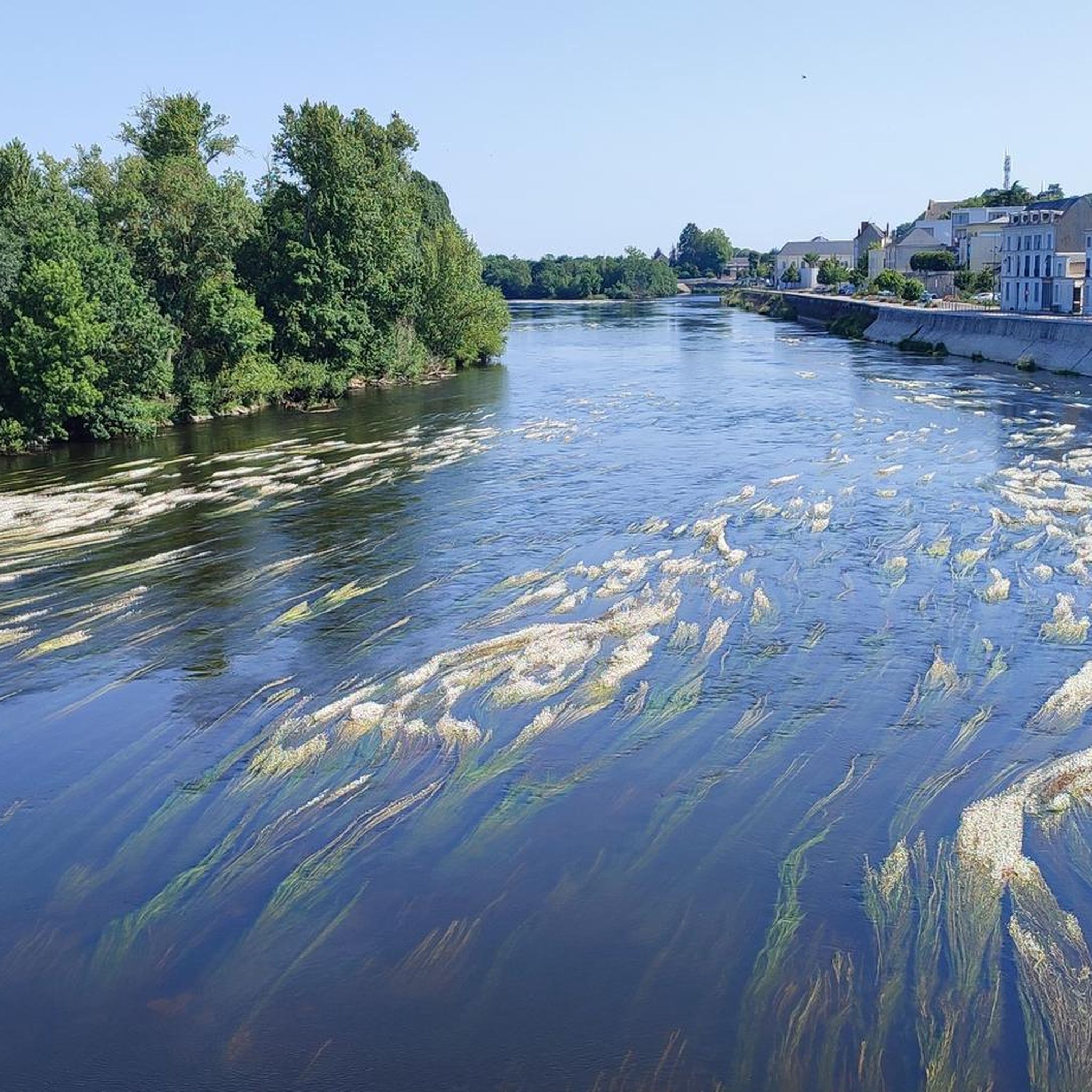
Touring cycling around Thuré offers routes through the scenic Vienne River valley and the expansive Loire-Anjou-Touraine regional natural park. The landscape is characterized by gentle rolling terrain, riverine paths, and agricultural areas, providing a generally accessible environment for cyclists. Routes often follow waterways and explore local valleys, with moderate elevation changes.
Best touring cycling routes around Thuré
- The most popular touring cycling route is Châtellerault: Ligne Verte and Vienne River Loop, a 18.9 miles (30.35 km) trail that takes…
Last updated: October 22, 2026
3.9
(11)
20
riders
30.3km
01:51
120m
120m
Easy bike ride. Mostly paved surfaces.
4.6
(8)
15
riders
30.8km
01:58
280m
280m
Moderate bike ride. Good fitness required. Mostly paved surfaces.

4.7
(3)
6
riders
30.5km
02:03
280m
280m
Moderate bike ride. Good fitness required. Mostly paved surfaces.
53.4km
03:29
320m
320m
Moderate bike ride. Good fitness required. Mostly paved surfaces.
4.6
(8)
52
riders
118km
06:54
530m
530m
Hard bike ride. Very good fitness required. Mostly paved surfaces.
Get access to more routes and recommendations from other explorers.
Already have an account?
Our route recommendations are based on thousands of hikes, rides, and runs completed by other people on komoot.
Start today with a free account
Your next adventure awaits.



Tips from the Community

The "Tours" at the beginning of the Henri IV bridge in Châtellerault are indeed a historic complex linked to the city's old fortifications. However, they must be distinguished from the three brick towers of the former Weapons Factory. The towers are located at the end of the Henri IV bridge, on the town side, and are a remnant of the defensive system that protected the crossing of the Vienne. Two round towers remain, on the Châteauneuf side. They once framed a monumental central pavilion, which may explain the name or the impression of a set of three towers. 🏰 The history of the Henri IV bridge towers 1. Towers already existed before the current bridge The crossing of the Vienne at Châtellerault is very old. In the Middle Ages, the bridge had a major strategic and economic function. At the end of the 15th century, a document already mentions two towers built on the Châteauneuf side and connected by a vault or a central structure. They were preceded by a drawbridge. It was therefore a true monumental gate giving access to the bridge. 🏛️ But there was much more than the two current towers This is probably the point that interests us. Originally, the entrance to the bridge on the Châteauneuf side comprised: - a round tower to the north; - a round tower to the south; between them, a central pavilion with - a monumental gate; - and a drawbridge allowing access to be closed. The central pavilion was demolished in 1824. The two towers, however, were preserved. Recent archaeological research has indeed made it possible to find the foundations of the central pavilion. 🔎 And there were also two other towers! The bridge was designed in a much more monumental way than we see today. At the other end of the bridge, on the town side, there were also two square towers. They disappeared later, notably because they hindered traffic. So originally there were four towers, two at each end, to which the central pavilion on the Châteauneuf side was added. 📷 A particularly interesting old photograph The Ministry of Culture holds an old photograph titled "Tour d’entrée" (Entrance Tower), taken by Georges-Louis Arlaud (1869-1944). It shows the complex at a time when both towers still existed with their ancient appearance. See the old photograph from the Ministry of Culture https://pop.culture.gouv.fr/notice/memoire/APHF002200?utm_source=chatgpt.com And here is an old postcard of the southern entrance tower, which allows us to see the towers at the beginning of the 20th century. https://www.geneanet.org/cartes-postales/view/7912977 📍 What can be seen today The two current towers are impressive: cylindrical stone towers, topped with conical slate roofs. They belong to the City of Châtellerault, while the bridge itself is under the jurisdiction of the Department of Vienne. Interesting point: contrary to what their military appearance might suggest, these towers did not primarily have a military defense function. They were notably used for controlling entrances and, at certain periods, for sanitary control or the collection of passage tolls.
0
0
On 30/08/2026, the Francois Mitterand space, right in front of the kiosk, welcomed almost 1400 clarinettists to break the world record held by Hong Kong and entered in the Guinness Book. This has been done and recorded by an official member of the organization who came specifically for this purpose. The objective announced for months by the Poitiers conductor Emmanuel Boulanger has been largely achieved. The old record, set in Hong Kong with 448 clarinettists, has been smashed. Amateurs, music school students and professionals played together, in front of a large audience. The performance should now feature in the Guinness Book of Records. Below is the press article and video published locally. https://share.google/KJQ2WCRdVkkB0aF61
0
0
🏭 1. A museum set up in the former “Manu” Le Grand Atelier - Museum of Art and Industry is located on the site of the former Châtellerault Arms Factory ("Manufacture d’armes"). The Manufacture was created by royal ordinance on July 14, 1819, under Louis XVIII. Construction began in 1820. Its location in Châtellerault was notably due to the presence of the Vienne river, which allowed for the use of hydraulic energy, and the existence of a significant local tradition of cutlery and metallurgy. Initially, it mainly produced edged weapons: sabers, swords, lances, and cuirasses. From the 1830s onwards, production also turned to firearms. The Manufacture gradually became a huge industrial complex, employing several thousand people. It played a considerable role in the economic and social history of Châtellerault. 🔧 2. The museum building The building now occupied by the Grand Atelier is particularly interesting. It is part of the former assembly and finishing workshop, built between 1886 and 1887, notably in the context of the production of the Lebel rifle. It is a characteristic industrial building from the late 19th century, with vast spaces, large glass bays, and saw-tooth roofs allowing for significant natural light. It is now protected as heritage. The Manufacture closed permanently in 1968. 🚗 3. The birth of the automobile museum After the closure of the Manufacture, part of the buildings was reused for cultural purposes. As early as 1969, the site hosted a museum, notably stemming from Bernard de Lassée's vehicle collection. It was first named Musée de la Technique et de l’Automobile, then became Musée Auto-Moto-Vélo. The town of Châtellerault acquired part of Bernard de Lassée's collection and gradually developed the museum. The collections include, in particular, vintage cars, motorcycles, bicycles, engines, posters, and accessories, featuring prestigious brands such as Panhard-Levassor, Delahaye, Talbot, Darracq, or Bugatti. 🏛️ 4. The merger with the former Sully museum This is an important step in understanding why the museum today bears the name “museum of art and industry”. Châtellerault also had another museum, located in the Hôtel Sully, dedicated to the history and heritage of the town: archaeology, fine arts, weapons, cutlery, ethnology, local artists, etc. Gradually, the collections of the two institutions were brought together on the site of the former Manufacture. The Ministry of Culture thus indicates that the collections were regrouped on the Manufacture site, first under the name Musée de la technique et de l’automobile, then Musée Auto-Moto-Vélo, and finally Grand Atelier. 🎭 5. The transformation into “Grand Atelier” After significant renovations, the museum was reorganized and took its current name in 2019: Le Grand Atelier – Musée d’art et d’industrie. It is therefore no longer just a museum dedicated to automobiles. It now offers three main tours: 🚗 Auto-Moto-Vélo: the evolution of transport from the 19th century to the 2000s; 🔫 Manufacture d’armes: the industrial and social history of the “Manu” and its workers; 🎭 Cabaret du Chat Noir: dedicated to Rodolphe Salis, born in Châtellerault and founder of the famous Montmartre cabaret. The museum now covers over 3,000 m² of exhibition space. An important clarification It is therefore necessary to distinguish: - The Arms Factory (“La Manufacture d’armes”) → the large industrial site created in 1819, closed in 1968. - The Grand Atelier building → a former workshop of the Manufacture, built in 1886-1887. - Le Grand Atelier – Museum of Art and Industry → the museum gradually created on this site, whose current name dates from 2019. - And the former Sully museum → a historic museum institution in Châtellerault, part of whose collections have been integrated into the Grand Atelier.
0
0


View of Chauvigny with its impressive building.
0
0
Frequently Asked Questions
How many touring cycling routes are available around Thuré?
There are over 160 touring cycling routes around Thuré, offering a wide variety of options for different skill levels and preferences. You'll find routes ranging from easy riverside paths to more challenging loops through the countryside.
Are there easy touring cycling routes suitable for beginners or families?
Yes, Thuré offers a good selection of easy touring cycling routes, with nearly 50 options available. An excellent choice for a relaxed ride is the Châtellerault: Ligne Verte and Vienne River Loop, which follows the Vienne River and its greenway, featuring gentle terrain.
What is the typical length of touring cycling routes around Thuré?
The routes around Thuré vary in length. Many popular routes are around 18-20 miles (30-32 km), such as the Lac du Gros Caillou Loop. However, you can also find longer options, like the challenging Châtellerault – Château de Dissay loop from Thuré, which spans over 70 miles (117 km).
Are there challenging touring cycling routes for experienced cyclists?
Yes, for experienced cyclists seeking a challenge, there are 30 difficult routes around Thuré. The Châtellerault – Château de Dissay loop from Thuré is a notable difficult route, covering a significant distance and elevation.
When is the best time of year to go touring cycling in Thuré?
The region around Thuré, with its temperate climate, is generally pleasant for touring cycling from spring through autumn. Spring offers blooming landscapes, while autumn provides comfortable temperatures and beautiful fall colors. Summer is also suitable, especially for rides along the river, but be mindful of warmer temperatures during midday.
Can I find places to stop for refreshments along the touring cycling routes?
Many routes in the Thuré area pass through or near villages and towns, offering opportunities to stop for refreshments. Châtellerault, for instance, is a larger town that many routes pass through, providing various cafes and restaurants. Exploring routes that connect these settlements will increase your chances of finding suitable stops.
Which touring cycling routes offer the most scenic views?
The region's landscape is characterized by river valleys and natural parks, offering many scenic routes. The Châtellerault - loop in the Ozon valley is known for its picturesque valley views. Routes following the Vienne River also provide beautiful riverside scenery.
Are there circular touring cycling routes available?
Yes, many touring cycling routes around Thuré are designed as circular loops, making them convenient for starting and ending at the same point. Examples include the Lac du Gros Caillou Loop and the Richelieu – loop via the Loire-Anjou-Touraine regional natural park.
What interesting places can I explore near the touring cycling routes?
The Thuré area is rich in history and natural beauty. You can explore the town of Châtellerault, visit the historic Haut-Clairvaux Keep, or discover the unique troglodyte dwellings. The St-Cyr Lake Loop also offers a pleasant natural attraction.
What do other touring cyclists enjoy the most about touring cycling in Thuré?
The touring cycling routes in Thuré are highly rated by the komoot community, with an average score of 4.4 stars from over 100 reviews. Cyclists often praise the region's gentle rolling terrain, the scenic riverine paths, and the opportunities to explore the Loire-Anjou-Touraine regional natural park.
Is it possible to spot wildlife while touring cycling in Thuré?
Given that many routes traverse the Vienne River valley and the Loire-Anjou-Touraine regional natural park, there are opportunities for wildlife spotting. Cyclists might encounter various bird species, small mammals, and local flora, especially on quieter sections of the trails away from urban areas.
Most popular attractions around Thuré

Get inspired with the komoot mobile app


Explore more
Browse the best Cycling routes in other regions.
