The best road cycling routes around Saint-Porquier
4.4
(43)
1,407
riders
207
rides
Road cycling around Saint-Porquier offers a diverse landscape, ranging from flat, tranquil canal paths to routes with significant elevation gains through valleys and forests. The region is characterized by the historic Canal des Deux Mers, which provides extensive greenways, and fertile plains along the Tarn and Garonne rivers. For those seeking more challenging terrain, areas like the Forêt Domaniale de Grésigne and the Aveyron Gorges present invigorating climbs and descents. This blend of environments caters to various road cycling preferences.
…Last updated: July 9, 2026
15
riders
72.5km
03:31
890m
890m
Moderate road ride. Good fitness required. Mostly well-paved surfaces and easy to ride.
23
riders
72.3km
03:05
440m
440m
Moderate road ride. Good fitness required. Mostly well-paved surfaces and easy to ride.

Sign up for free
15
riders
Moderate road ride. Great for any fitness level. Some segments of this route may be unpaved and difficult to ride.
4
riders
112km
05:01
990m
990m
Hard road ride. Very good fitness required. Mostly well-paved surfaces and easy to ride.
15
riders
61.3km
02:36
360m
360m
Moderate road ride. Good fitness required. Mostly well-paved surfaces and easy to ride.
Get access to more routes and recommendations from other explorers.
Sign up for free
Already have an account?
Our route recommendations are based on thousands of hikes, rides, and runs completed by other people on komoot.
Start today with a free account
Your next adventure awaits.
Login or Signup
Tips from the Community

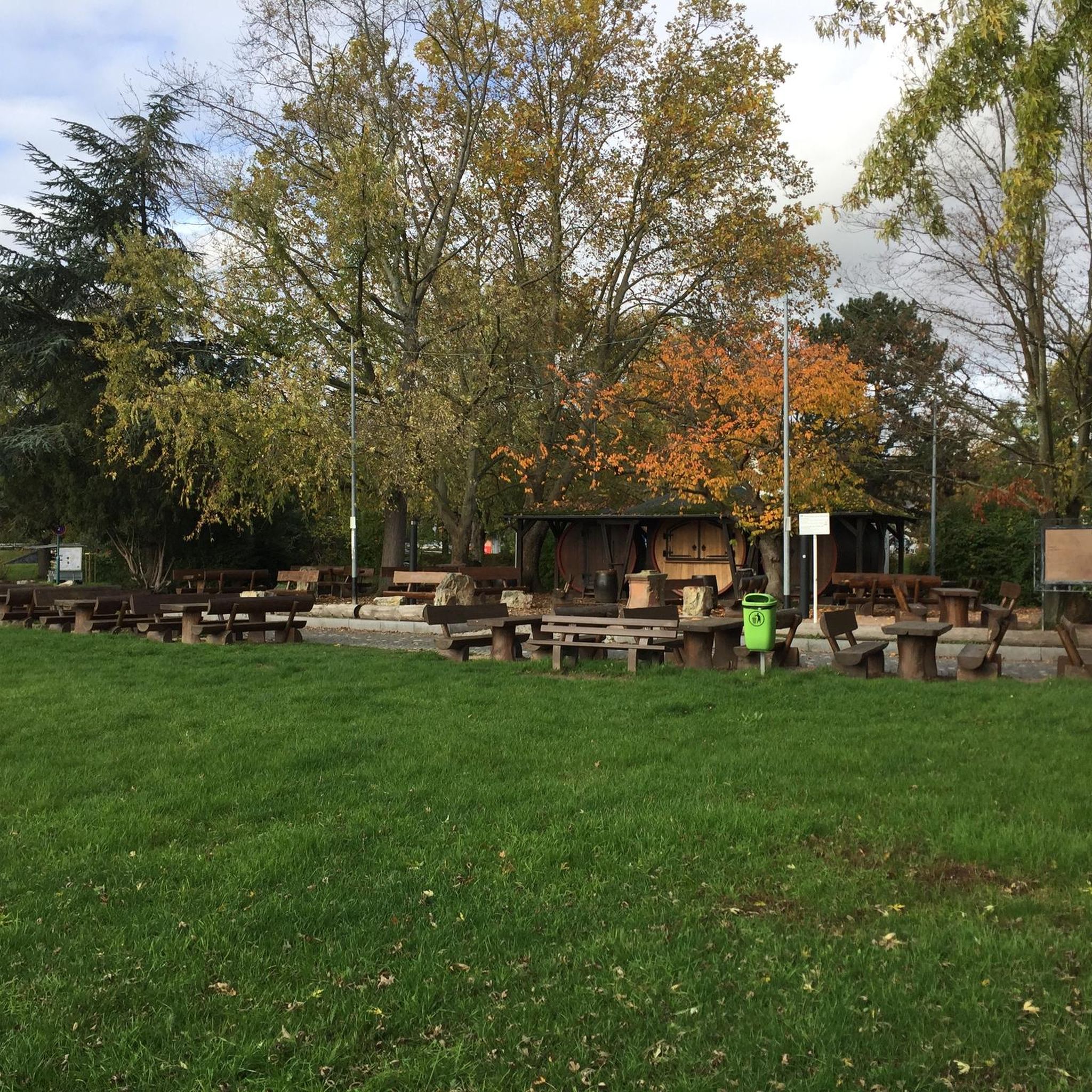
The toilets are large, you can take your bike inside but you have to disinfect it completely afterwards.
0
0

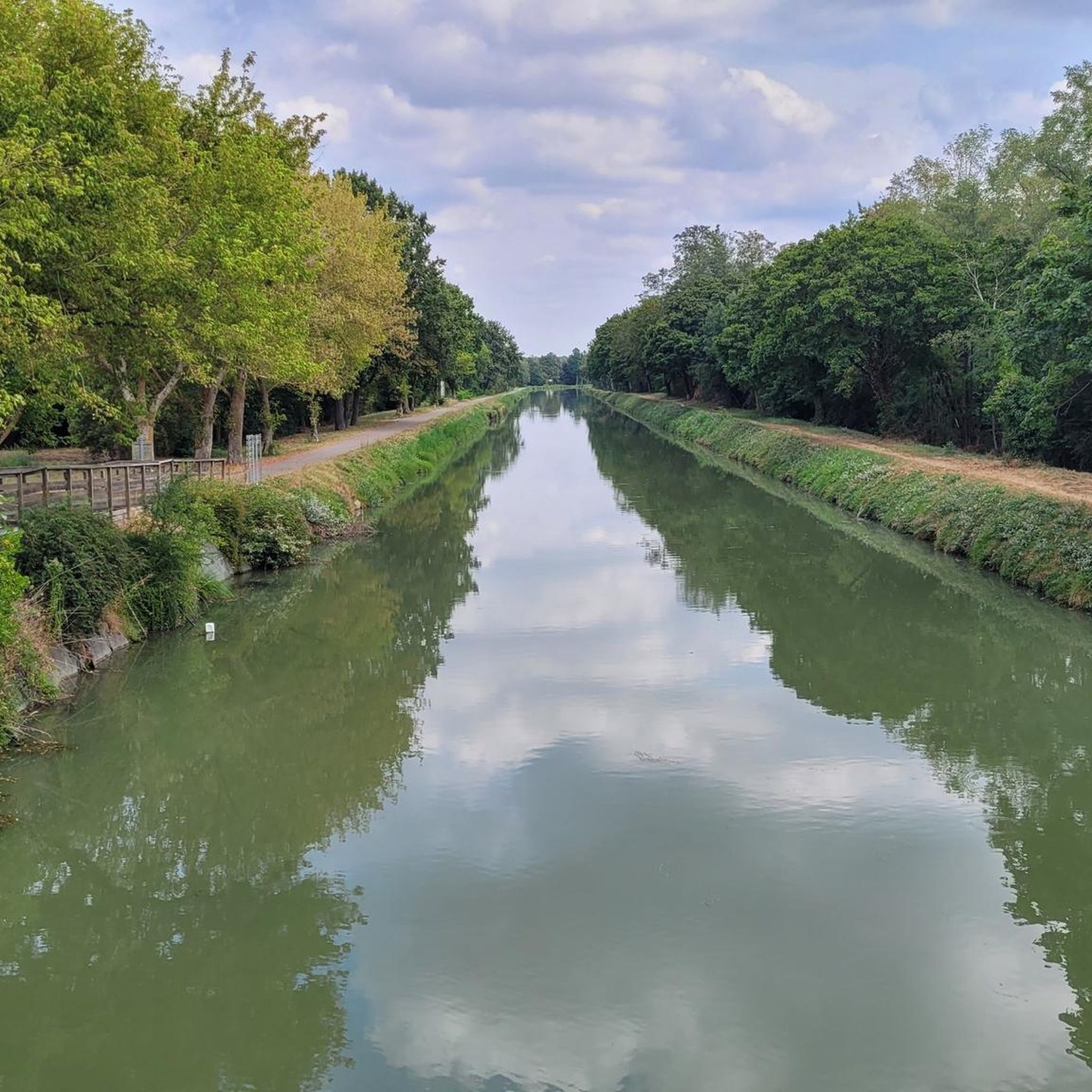
Gîte in a lock-keeper's house, between the two canals. The owner is lovely and attentive, making it a great place to spend the night on the Canal des Deux Mers.
0
0


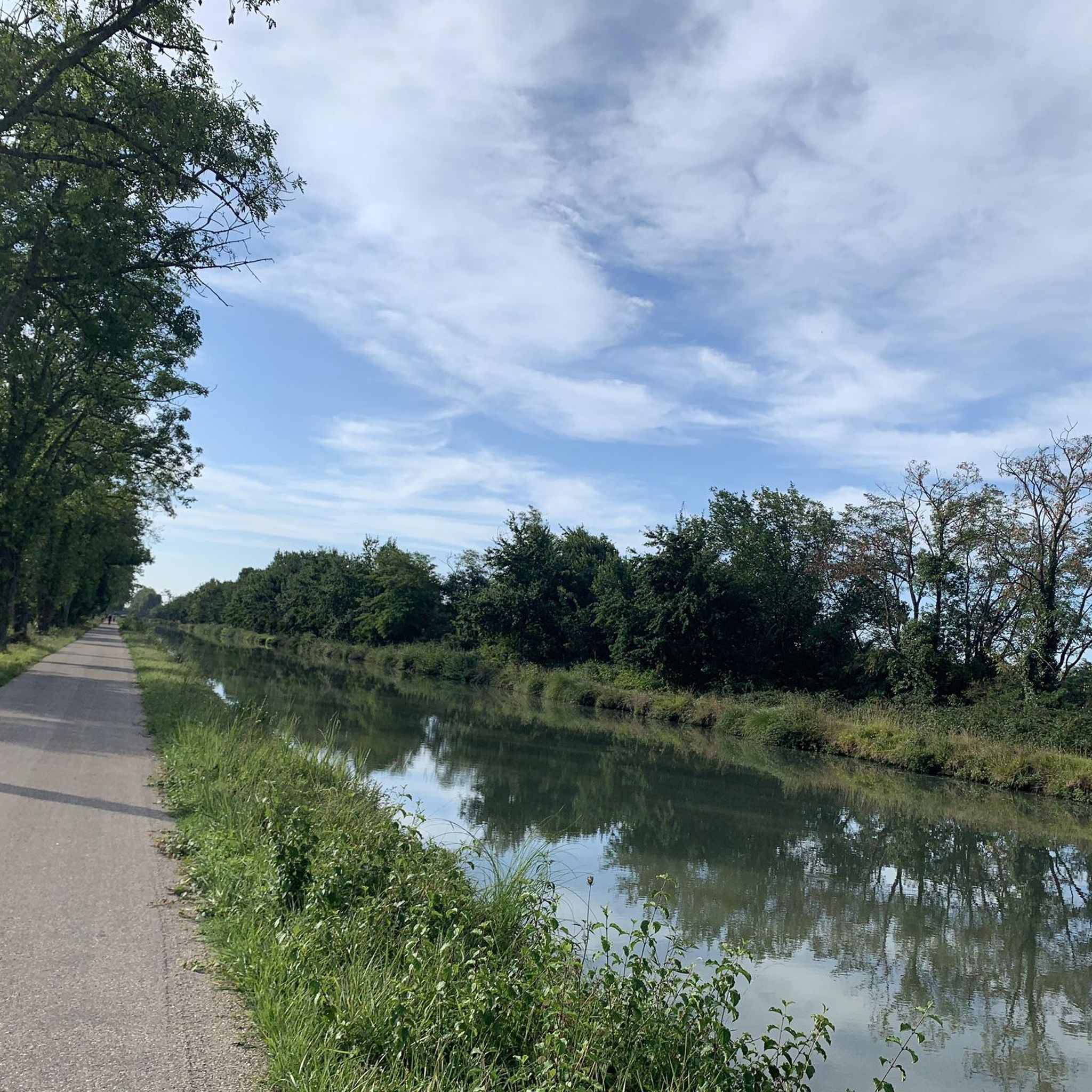
Useful water point when going up the canal. Free public toilets are also available. (cleanliness leaves something to be desired)
1
0


At the beginning of the 17th century, after the assassination of Henri IV (1610), the France of Louis XIII launched an attack on the republic of parpaillots. The Edict of Nantes (1598) allowed them to obtain a certain number of freedoms such as the practice of religion but also political advantages: places of security, assemblies, deputies representing the Protestant party at court. Supported by his mother Marie de Medici, the young Louis XIII did not intend to maintain this situation which defied the royal authority which, for its part, could only be Catholic. Tensions between the two religious communities were now such that the royal army mobilized to face Huguenot resistance. Protestant strongholds which deny the religion of the King of France are systematically besieged. Refractory to this authority, Montauban must therefore suffer the wrath of the canons of the Catholic King. At that time, Montauban was a place of safety like La Rochelle. The Quercy stronghold was then called Little French Geneva. Entirely Huguenot, its population of approximately 15,000 inhabitants includes 10,000 Calvinists. The management of the city is in the hands of consuls (elected by 25 inhabitants representing all the city's corporations) who enjoy great autonomy. Since 1600, there has been a college and an academy there which recruit students from all the provinces of the kingdom and abroad. It is for all these reasons that Montauban-la-Protestante gives the image of a true Huguenot republic where Catholics no longer have the right to live. Louis XIII, after subduing Agen, decided on August 10, 1621 to put an end to the Montalbanese revolt. On August 17, the king moved to the castle of Montbeton and began the siege. The latter only stopped four months later with the victory of the Montalbanais. Effective resistance to modify It is a fact that the Montalbanais were able to resist thanks to a small number of men against the plethoric royal army. It is also true that the city's first Consul, Jacques Dupuy (1591-1621) had taken care to prepare the city for the siege by building up large reserves of food. Throughout the siege, the Montalbanais did not suffer from hunger at any time. The royal army suffered dramatic losses. Louis XIII would have called on an Aragonese Discalced Carmelite, a very well-known alchemist. He would have meditated for a long time before giving the following recommendation to the King: “we must scare the inhabitants of the city. A great fear that will make them surrender.” The cannonade was mentioned by Marshal de Bassompierre in his Memoirs where he wrote that the king, incited by the Discalced Carmelite to bombard the city with 400 cannon shots, “sent for me on Sunday September 20 to fire the 400 cannon fire; as I did.” There were more than 650 shots that day, according to another witness... The expression "400 shots" recalls the violence of the cannonades, but these 400 shots could not be fired at the same time as legend has it. In total, there have been nearly 16,000 shots in two and a half months. In vain… Let us add for the sake of understanding, that until then the cannonades were mainly aimed at the ramparts to create breaches... The Carmelite's idea was to fire 400 shots into the city, to frighten the population, which was actually without effect. Decimated by purple fever, a serious epidemic which caused bright red spots on the body, Louis XIII's army capitulated at the beginning of November and the king lifted the siege.
1
0

Montech is worth a stop and a visit for its rehabilitated industrial site and the historic center of Montauban is remarkable. Between the Toulouse-Bordeaux and Montauban-Auch axes, Montech has experienced industrial growth. The site has been rehabilitated and equipped for the visit, from the Site House and the Intercommunal Tourist Office. Signs have been installed to guide your visit. The water slope is a unique site at its creation. It operated from 1974 to 2009 and saved time without going through the 5 historic locks of the lateral canal. A concrete slope more than 400 m long, 6 m wide and more than 4 m deep was built parallel to the canal. A mobile shield pushed by two locomotives on wheels made it possible to push a large volume of water where a barge floated.
0
0

Montech is a municipality of 5,546 inhabitants located in the department of Tarn and Garonne in the Occitanie region. Worth visiting is the Church of Notre Dames de la Visitasion.
2
0
Frequently Asked Questions
What kind of terrain can I expect when road cycling around Saint-Porquier?
The Saint-Porquier region offers a diverse range of terrain for road cyclists. You'll find tranquil, flat paths, particularly along the Canal des Deux Mers, which includes the Canal de Garonne. For those seeking more challenge, there are routes with significant elevation gains through picturesque valleys and forests, such as those found in the Forêt Domaniale de Grésigne and the Aveyron Gorges.
Are there many road cycling routes available in Saint-Porquier?
Yes, Saint-Porquier is a popular destination for road cycling. There are over 220 road cycling routes available, catering to various skill levels. This includes 69 easy routes, 142 moderate routes, and 9 more difficult options for experienced cyclists.
What are some scenic natural features I can experience on a road bike near Saint-Porquier?
Road cycling routes around Saint-Porquier often feature the historic Canal des Deux Mers with its shaded towpaths. You can also explore the fertile plains and valleys of the Tarn and Garonne rivers, characterized by orchards, agricultural fields, and vineyards. For dramatic landscapes, the Aveyron Gorges offer steep cliffs and a preserved natural environment, while the Forêt Domaniale de Grésigne provides dense woodland scenery.
Are there any family-friendly road cycling routes in the Saint-Porquier area?
Yes, the region offers several options suitable for families, particularly along the Canal des Deux Mers. These routes are often flat, traffic-free, and shaded, making them ideal for leisurely rides. The Church of Montech – Montech Canal loop from Saint-Porquier is a moderate 30.9-mile path that offers a flatter profile, perfect for exploring the peaceful Montech Canal.
What kind of challenging road cycling routes are available near Saint-Porquier?
For experienced road cyclists seeking a challenge, routes through areas like the Forêt Domaniale de Grésigne and the Aveyron Gorges offer invigorating climbs and descents. An example is the Pontalaman waterfall bridge – Lauzerte loop from La Ville-Dieu, a 45-mile trail with over 2,900 feet of elevation gain, featuring varied terrain.
What landmarks or attractions can I see along road cycling routes in Saint-Porquier?
Many routes offer opportunities to visit cultural and historical attractions. You might encounter the impressive Montech Water Slope, an engineering marvel on the canal, or the remarkable Cacor Canal Bridge in Moissac. The region is also dotted with picturesque medieval villages like Montricoux and Bruniquel, which can be incorporated into your rides.
What do other road cyclists think about the routes in Saint-Porquier?
The road cycling routes in Saint-Porquier are highly regarded by the komoot community, with an average rating of 4.4 stars from over 30 reviews. Over 1,300 road cyclists have used komoot to explore the varied terrain, often praising the blend of tranquil canal paths and challenging hilly sections.
When is the best time of year to go road cycling in Saint-Porquier?
The region is generally pleasant for cycling from spring through autumn. The spring offers lush landscapes and comfortable temperatures, while autumn provides beautiful colors and cooler weather. Summer can be warm, but routes along the Canal des Deux Mers often provide shade from century-old plane trees, making them enjoyable even during hotter months.
Are there any circular road cycling routes around Saint-Porquier?
Yes, many road cycling routes in the area are designed as loops. For example, the Mortarieu Lock - Montauban – Montech Water Slope loop from La Ville-Dieu is a 42.6-mile trail that takes you through river plains and past canal engineering marvels. Another option is the Montech Canal – Cacor Canal Bridge loop from Montech, covering 33.2 miles.
Can I find cafes or restaurants along the road cycling routes in Saint-Porquier?
The region is known for its charming villages and towns, many of which are situated along or near popular cycling routes. You'll often find cafes, restaurants, and local shops in these areas, providing convenient stops for refreshments and meals. Towns like Montech and Moissac, accessible from canal routes, offer various amenities for cyclists.
What are the options for parking when starting a road cycling route in Saint-Porquier?
Many towns and villages that serve as starting points for cycling routes, especially those along the Canal des Deux Mers, offer public parking facilities. It's advisable to check specific village or town websites for detailed parking information, but generally, you can find convenient spots to park your vehicle before heading out on your ride.
Is it possible to combine road cycling with public transport in Saint-Porquier?
While specific public transport options for cyclists can vary, the region's main towns and cities are connected by regional train services. Some trains may allow bicycles, though it's always best to check the specific operator's policy and any potential restrictions or fees beforehand. This can be useful for reaching starting points or returning from longer one-way rides.
Most popular attractions around Saint-Porquier

Get inspired with the komoot mobile app


Explore more
Browse the best Road cycling routes in other regions.
