Attractions and Places To See around Saint-Didier - Top 20
Best attractions and places to see around Saint-Didier, a village in Provence-Alpes-Côte d'Azur, offers a mix of historical sites, natural beauty, and cultural experiences. Nestled among rolling hills, vineyards, and lavender fields, it provides an authentic Provençal setting. The area is characterized by charming streets, medieval architecture, and natural features like nearby Mont Ventoux and the source of the Sorgue River. It serves as a base for exploring the Comtat Venaissin region.
Best attractions and places to see around Saint-Didier
- The most popular attractions is Tunnel de la Diane (Voie PLM), an old railway tunnel converted into a greenway. It offers a unique mountain route for pedestrians and cyclists with a moderate gradient.
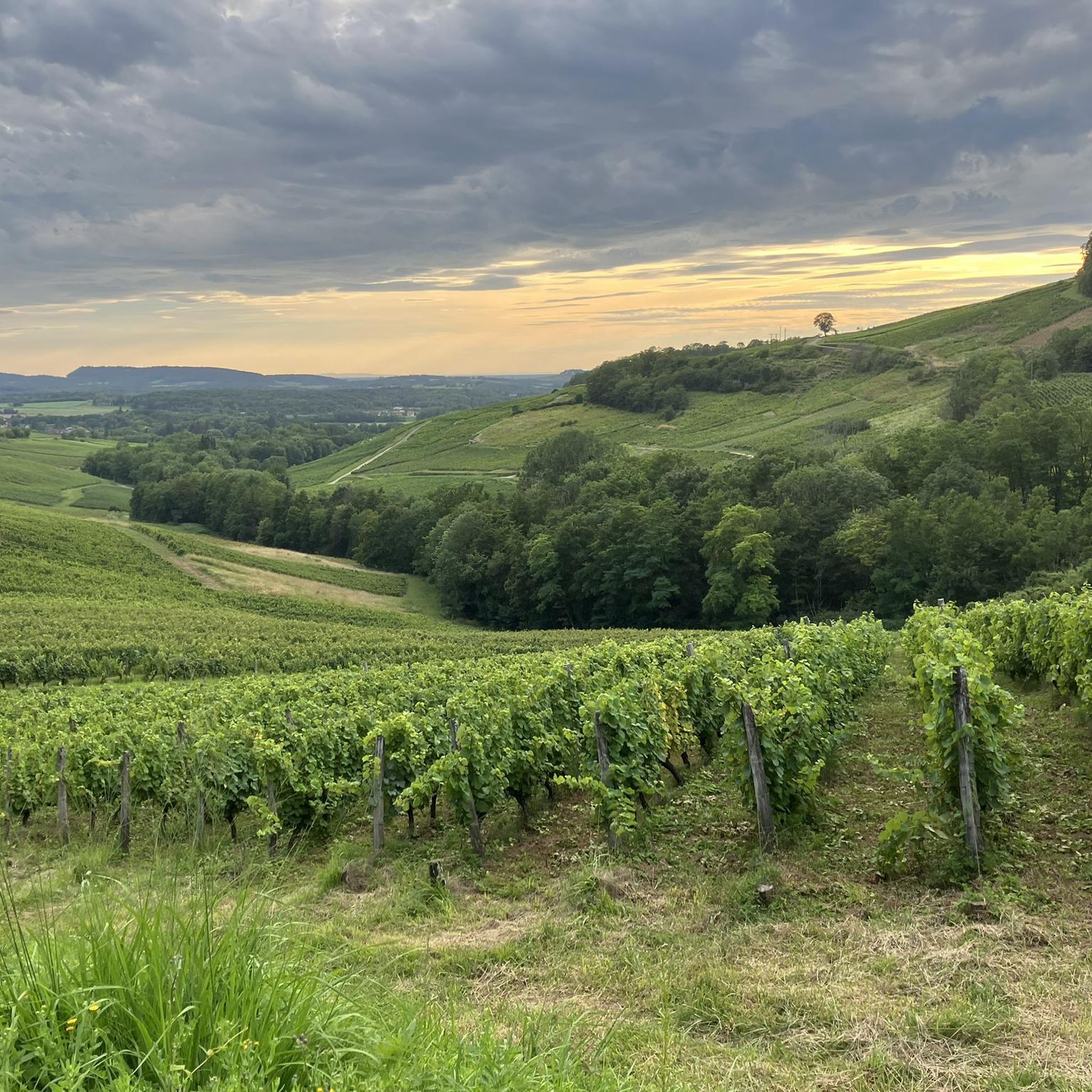
- Another must-see spot is Château-Chalon Village, a settlement classified as one of the Most Beautiful Villages of France. Visitors can explore this village surrounded by vineyards, known for its yellow wines.
- Visitors also love Baume-les-Messieurs Tufa Waterfall, a natural monument. This waterfall flows over tufa and offers a photo motif, accessible without paying for cave entrance.
- Saint-Didier is known for its waterfalls, historical settlements, and religious sites. The region offers a variety of attractions to see and explore, from natural wonders to cultural landmarks.
- The attractions around Saint-Didier are appreciated by the komoot community, with 442 upvotes and 185 photos shared by visitors.
Last updated: June 22, 2026
Baumes-les-Messieurs Waterfall
Highlight • Waterfall
Translated by Google •
Tip by

Saint-Pierre Abbey, Baume-les-Messieurs
Highlight • Other
The caves have been frequented by man since prehistoric times, but it was not until 869 that the name of Baume appeared in the texts: Lothair II, king of Burgundy, then entrusted the archbishop of Besançon with the cellula of Baume and the abbatiola of Chateau-Chalon. In fact, recent archaeological research carried out in Baume reveals that the conventual buildings of the High Middle Ages were already of importance, with windows decorated with stained glass with geometric patterns: was the monastery founded, like Gigny and Cluny, in a pre-existing domain? In any case, Bernon, abbot of Gigny, brought Baume into history when he received the cellula from it in 890. According to tradition, it was with six monks from Gigny and six from Baume that he left to found Cluny in 910.
The abbey of Baume has always sought to mark its independence from Cluny: powerful, well-endowed, it passed into commendation in the 15th century. Its successive abbots carried out numerous construction campaigns and embellishments: the current state of the abbey gives a good idea of the articulation of the spaces necessary for the life of the monks and the vestiges of a sumptuous decoration, a statuary of high quality, a remarkable altarpiece offered by the City of Ghent around 1525 recalls the past splendor of this abbey secularized in 1759. The buildings are now shared between various owners, public and private.
Around the abbey, the buildings of the village preserve the memory of agricultural activities which have long been essential to human life. For centuries, the peasants of the plateau took the very steep path of the Échelles de Crançot to bring their cereals to the communal mill of the abbey. Tourists now use this steep path to reach the belvederes from where the gaze plunges into the remoteness traversed by the Dard which springs from the caves in cascades and formerly operated many mills.
Translated by Google •
Tip by

Sign up now to discover places like this
Get recommendations on the best single tracks, peaks, & plenty of other exciting outdoor places.
Sign up for free
Château-Chalon Village
Highlight • Settlement
Translated by Google •
Tip by

Grottes de Baumes — Waterfall and Cave
Highlight • Cave
Translated by Google •
Tip by

Tunnel de la Diane (Voie PLM)
Highlight (Segment) • Other
Translated by Google •
Tip by

Sign up for free to discover even more attractions around Saint-Didier.
Sign up for free
Already have an account?
Start today with a free account
Your next adventure awaits.
Login or Signup


Tips from the Community

The Baume-les-Messieurs cave was first explored by Paul Vernier in 1610, but he only explored the first quarter of the cave. It wasn't until more than two centuries later, in 1893, that exploration resumed, thanks in part to the French speleologist Alfred Martel (who discovered the Gouffre de Padirac). The first guided tours took place at the beginning of the 20th century, around 1903.
6
0
Located at the end of the Baume-les-Messieurs valley, one of the most famous in the Jura, the waterfall is remarkable for many reasons. Its water originates from the underground river, the Dard, which emerges from the earth after a turbulent journey through the caves. The water that gushes forth here is pure and crystal-clear, emerging from a bright, green setting, creating magnificent colors.
7
0
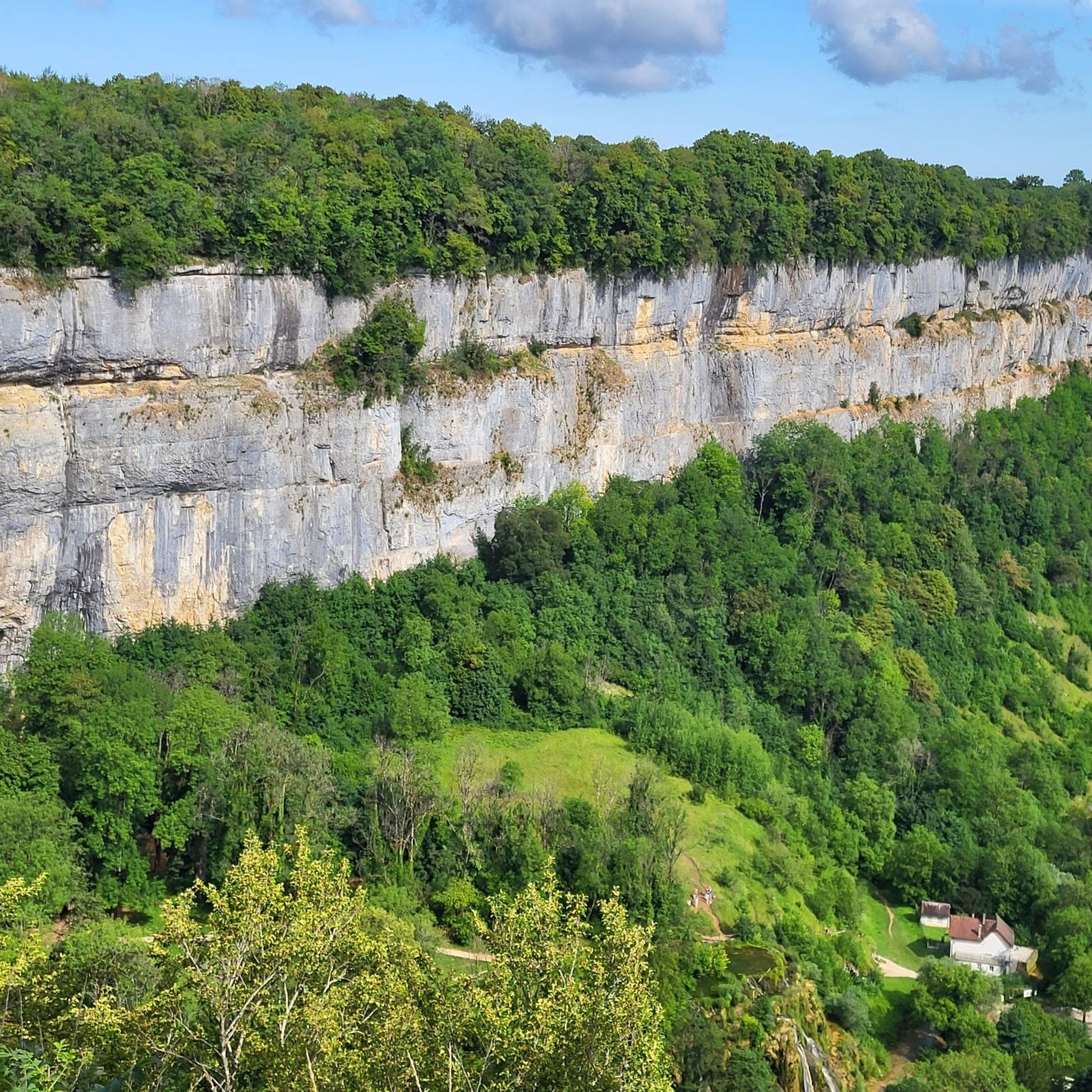
Magnificent view of Baume-Les-Messieurs and the surrounding rocky landscape.
7
0
In Baume-Les-Messieurs, time seems to stand still, as this village has managed to preserve its charm so well. It's no coincidence that it has been awarded two labels, "Plus Beaux Villages de France" (Most Beautiful Villages in France) and "Cités de Caractère de Bourgogne-Franche-Comté" (Towns of Character in Burgundy-Franche-Comté).
6
0
Founded in the 6th century and expanded by Bernon at the end of the 9th century, the building became a famous abbey, from which the monks who founded Cluny originated. The Abbey of Baume les Messieurs' prosperity began in the 11th century. In the 12th century, it assumed the title of "Imperial Abbey." In 1147, Baume was placed under the authority of Cluny. From this point on, its decline began. At the end of the 18th century, the last monks were converted into secular canons. During the French Revolution, the monks left the abbey, and part of the abbey was privatized. This Benedictine abbey today boasts an impressive architectural ensemble, some of which are typical of early Romanesque architecture in the Jura. The abbey church of Saint-Pierre dates back to the 11th century and has been a listed historic monument since 1849.
5
0

Impressive and beautiful, the still young Dard flows over this majestic tuff waterfall.
6
0
An impressive place with over 1,000 years of history, whose origins date back to the 6th century. It's impressive to walk through these ancient walls.
4
0
A beautiful little town with a former Benedictine monastery, nestled in an imposing valley surrounded by high cliffs and magnificent nature. It's definitely worth a visit.
4
1
Frequently Asked Questions
What historical or cultural sites can I visit in Saint-Didier?
Saint-Didier offers several historical and cultural sites. You can explore the 12th-century Église Saint-Didier with its Romanesque architecture, or visit the Château de Thézan, a 15th-century castle built on Roman foundations. The Musée des Arts et Traditions Populaires provides insights into traditional Provençal crafts, and the Chemin des Oratoires offers a historical walking trail with panoramic views.
What natural attractions and scenic viewpoints are there around Saint-Didier?
The region around Saint-Didier is rich in natural beauty. You can enjoy the serene Lac des Salettes for picnicking, or visit Fontaine-de-Vaucluse, the captivating source of the Sorgue River. While not directly in Saint-Didier, Mont Ventoux is a prominent nearby feature offering breathtaking views and challenging paths. For a stunning seasonal spectacle, the lavender fields near Sault are a short drive away in summer. The village itself is known for its charming streets, fountains, and surrounding landscapes of rolling hills and vineyards.
Are there opportunities for hiking or walking around Saint-Didier?
Yes, Saint-Didier is an excellent base for hiking and walking. The Chemin des Oratoires offers a 90-minute stroll with historical significance and views. For more extensive options, the nearby Luberon Natural Park provides numerous trails. You can also find various running trails, including moderate to difficult routes like the 'Grotte de Montard loop from L'Étoile' or 'Château de Quintigny loop from L'Étoile'. For more detailed routes, explore the Running Trails around Saint-Didier guide.
Where can I find trails for mountain biking or gravel biking near Saint-Didier?
Saint-Didier offers several options for mountain biking and gravel biking enthusiasts. You can find routes that incorporate the unique Tunnel de la Diane (Voie PLM), an old railway tunnel converted into a greenway. For specific routes and difficulties, check out the MTB Trails around Saint-Didier guide or the Gravel biking around Saint-Didier guide.
Are there family-friendly activities or attractions in Saint-Didier?
Saint-Didier and its surroundings offer several family-friendly options. The village's charming streets and fountains are pleasant for a stroll. The Lac des Salettes is ideal for a family picnic. For active families, the greenway through the Tunnel de la Diane (Voie PLM) is a unique and accessible route for pedestrians and cyclists of all skill levels. The region also offers opportunities for outdoor activities like paragliding and tree climbing.
What is the best time of year to visit Saint-Didier for outdoor activities?
The summer months are particularly vibrant, especially for seeing the lavender fields in full bloom near Sault. However, spring and autumn offer milder temperatures, which are ideal for hiking, cycling, and exploring the natural landscapes without the peak summer heat. The region's sunny Provençal climate makes it enjoyable for outdoor activities for much of the year.
What are some unique natural wonders to see near Saint-Didier?
Beyond the well-known Mont Ventoux and lavender fields, you can discover the Baume-les-Messieurs Tufa Waterfall, a natural monument where water flows beautifully over tufa formations. Nearby, the Grottes de Baumes offer an active water cave experience with stalactite formations, though there is an entrance fee.
Can I experience local culture and markets in Saint-Didier?
Absolutely. The vibrant Marche Provençal is typically held on Monday mornings in Saint-Didier. Here, you can immerse yourself in local culture, purchase regional products, and savor authentic Provençal flavors. The village itself, with its colorful houses and medieval architecture, provides an authentic Provençal experience.
Are there any notable villages or settlements to visit near Saint-Didier?
Yes, Saint-Didier serves as an excellent base for exploring other charming Provençal villages. One highly recommended spot is Château-Chalon Village, classified as one of the Most Beautiful Villages of France, known for its vineyards and yellow wines. Other easily accessible villages include Venasque and Pernes-les-Fontaines, each offering unique charm.
What do visitors enjoy most about the attractions around Saint-Didier?
Visitors particularly appreciate the blend of historical charm and natural beauty. The Tunnel de la Diane (Voie PLM) is loved for being a unique, friendly, and affordable route for all skill levels. The Château-Chalon Village is praised for its stunning setting amidst vineyards and opportunities for wine tasting. The Baume-les-Messieurs Tufa Waterfall is noted as a very nice photo motif, offering great cooling on hot days.
Are there any religious sites of interest in the area?
Yes, the region has significant religious heritage. The 12th-century Église Saint-Didier in the village itself is a notable example of medieval and Romanesque architecture. Further afield, the Saint-Pierre Abbey, Baume-les-Messieurs, is a powerful historical site nestled in a valley, offering a glimpse into monastic life and impressive architecture. The Chemin des Oratoires also provides insights into popular religious practices through its historical shrines.
Most popular routes around Saint-Didier
Most popular attractions around Saint-Didier

Get inspired with the komoot mobile app


Explore more
Still not found the Highlight you’re looking for? See guides of the top attractions in other regions:
