The best road cycling routes around Huêtre
4.1
(58)
569
riders
86
rides
Road cycling around Huêtre is characterized by the flat landscapes of the Beauce region, offering extensive agricultural plains and open views. The terrain features minimal elevation gain, making it suitable for various cycling paces. The area also includes small pockets of woods and streams, alongside the distinctive presence of wind turbines. Huêtre's proximity to the Orléans Forest provides opportunities for rides bordering wooded areas.
Best road cycling routes around Huêtre
- The most popular road cycling route is Route Forestière des…
Last updated: May 20, 2026
3.0
(1)
33
riders
Easy road ride. Great for any fitness level. Mostly well-paved surfaces and easy to ride.
4.9
(7)
19
riders
28.9km
01:07
60m
60m
Easy road ride. Great for any fitness level. Mostly well-paved surfaces and easy to ride.

Sign up for free
10
riders
47.5km
01:48
110m
110m
Easy road ride. Great for any fitness level. Mostly well-paved surfaces and easy to ride.
7
riders
20.8km
01:01
50m
50m
Easy road ride. Great for any fitness level. Mostly well-paved surfaces and easy to ride.
1.0
(1)
8
riders
59.2km
02:17
140m
140m
Moderate road ride. Good fitness required. Mostly well-paved surfaces and easy to ride.
Get access to more routes and recommendations from other explorers.
Sign up for free
Already have an account?
Our route recommendations are based on thousands of hikes, rides, and runs completed by other people on komoot.
Start today with a free account
Your next adventure awaits.
Login or Signup



Tips from the Community

Please note, road condition is very poor for road bikes.
0
0

The Saint-Martin church dates from the 11th century. It was ravaged and burned by the Protestants, then restored at the end of the 16th century. It still retains remains of the Romanesque style, particularly in the nave which was rebuilt on the same plan, with stones and other debris from the fire.
0
0
After an unrealized project by the architect Plisson in 1861, church built in 1866, based on plans by Ricard, diocesan architect; with reuse of the previous 13th century building (bell tower)
0
0

The Moulin de Lignerolles is one of the last pivotal windmills in the Loiret department. Built in 1848, this wooden mill belonged to Louis-Joseph Soulas, famous painter and director of the Orléans School of Fine Arts. You can admire the restored mill and its ingenious mechanism, as well as the panoramic view of the plain. The mill is open to the public on Sundays from 2:30 p.m. to 6 p.m., and also hosts various events throughout the year, such as a flea market, concerts and exhibitions. Visiting the Moulin de Lignerolles is an excellent way to discover the heritage and charm of the Beauceron countryside.
1
0

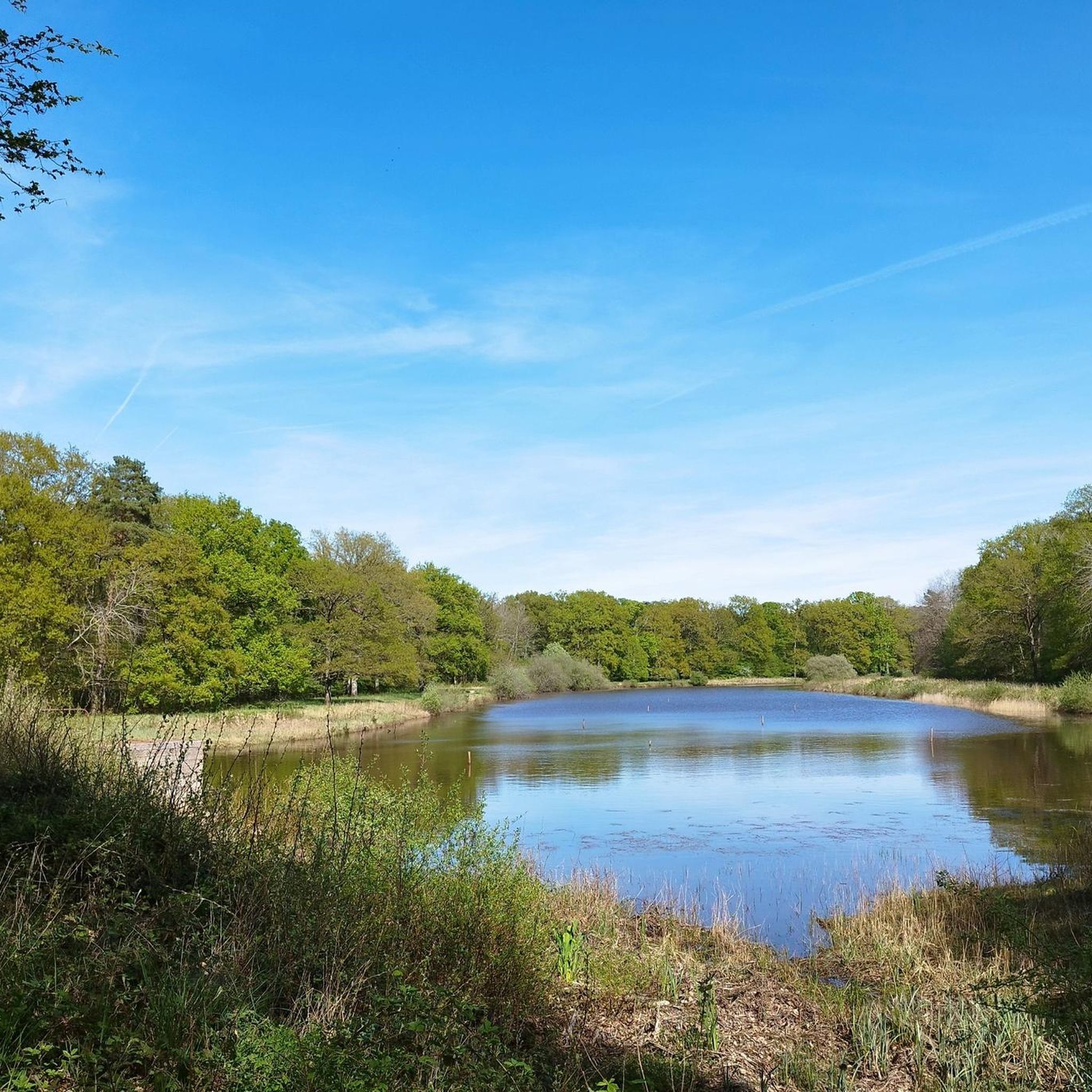
Pretty, quiet forest road, without traffic, in the middle of oak and pine forests.
0
0
The Saint André church (13th-15th-16th centuries) In the 7th century, the Benedictine abbey of Bonneval created a priory-curate. Its existence is confirmed by a bull from Pope Gregory second half of the 16th century. In 1793 the church was desecrated and transformed into wine and spirits warehouses. In 1801, the church was returned to worship and changed diocese: from the diocese of Chartres, to which it belonged before the Revolution, it passed to the diocese of Orléans, notably for reasons of distance: Chartres is 48 km from Patay then that Orléans is only 27 km away. The church is 30 m long and 17 m wide. The oldest parts are located near the large porch (13th century). One of the pillars of the nave is decorated with a vestige of Danse Macabre from the mid-15th century. A small masonry door on the right communicated with the old priory, of which ruins remain to the south of the church. The choir dates from the 14th century; the apse wall was decorated with paintings at the end of the 19th century, the chapels were then redeveloped and equipped with new stained glass windows. The keystones of the large nave were made from casts taken from the figurines which adorn the Thesis Room of the University of Orléans, built in 1411. The bell tower, located to the north of the choir, would be an old watchtower. Its pinnacles and eight openings were made after the Wars of Religion. The four bells were melted in 1868. The largest was cracked by a Prussian shell in 1870 and was recast in 1871. Since that year, Ernestine (809 kg, 1 m 12 in diameter at the base, sounding the F), Gabrielle (550 kg, 0.981 m in diameter, sounding the ground), Anne (398 kg, 0.573 m in diameter) and Marie (222 kg, 0.724 m in diameter, sounding the C) give rhythm to the daily life of the small town of Patay, old Beauceron railway junction. On August 15, 1944, an ammunition train was blown up at Patay station. The station was blown up, except for the carriage shed, and all the windows in the town were shattered. Luckily, a providential storm limited the damage. The only two stained glass windows that survived the explosion are those on the right side aisle which date from 1930 and relate the communion of Joan of Arc in the Patay church in 1429. The church was listed as a Historic Monument in 1925 by decree of October 6, 1925.
0
0
Frequently Asked Questions
How many road cycling routes are available around Huêtre?
There are over 80 road cycling routes available around Huêtre, catering to various skill levels. This includes approximately 33 easy routes, 45 moderate routes, and a few more challenging options for experienced cyclists.
What kind of terrain can I expect when road cycling around Huêtre?
Road cycling around Huêtre is primarily characterized by the flat landscapes of the Beauce region. You'll experience extensive agricultural plains with open views, minimal elevation gain, and the distinctive presence of wind turbines. Some routes may also border or delve into small pockets of woods and streams, especially near the vast Orléans Forest.
Are there any particularly easy road cycling routes for beginners around Huêtre?
Yes, many routes are suitable for beginners due to the generally flat terrain. An excellent easy option is the Saint-Sulpice Church loop from Sougy, which is about 17.9 miles (28.9 km) long and offers expansive views of the rural French countryside.
What historical landmarks or points of interest can I discover along road cycling routes near Huêtre?
You can incorporate several historical and cultural attractions into your rides. Notable landmarks include the impressive Artenay Mill and the Lignerolles Mill, both historic windmills. You might also encounter the unique Aerotrain test track, a striking piece of engineering history, and the ancient Saint-André Church of Patay.
Does Huêtre connect to any major long-distance cycling routes?
While Huêtre itself is not directly on a major long-distance route, its location in the Loiret department means you're close to significant cycling infrastructure. The broader region features over 400 kilometers of round-trip cycle trails, including 155 kilometers of the prominent "Loire à Vélo" route. Major routes like "La Scandibérique" and "La Véloroute du Canal d'Orléans" also traverse the area, offering diverse and well-maintained pathways. For more information on cycling in the Loiret, you can visit tourismeloiret.com.
What is the best time of year for road cycling in Huêtre?
The generally flat terrain makes road cycling enjoyable for much of the year. Spring and autumn typically offer pleasant temperatures and beautiful scenery, with the agricultural fields in full bloom or harvest. Summer can also be great, though it's wise to start earlier in the day to avoid the midday heat. Winter cycling is possible, but be prepared for cooler temperatures and potentially wet conditions.
Are there any circular road cycling routes around Huêtre?
Yes, many of the routes around Huêtre are designed as loops, allowing you to start and end at the same point. For example, the Route Forestière des Chapelles – Saint-Sulpice Church loop from Boulay-les-Barres is a popular circular route covering about 27.6 miles (44.3 km).
What do other road cyclists enjoy most about road cycling in Huêtre?
The area is highly rated by the komoot community, with an average score of 4.0 stars from over 50 reviews. Reviewers often praise the quiet country roads, the expansive and unobstructed views of the Beauceron countryside, and the minimal elevation gain, which makes for enjoyable and accessible rides.
Are there any routes that pass by the unique Aerotrain test track?
Yes, the Aerotrain test track – Saint-Sulpice Church loop from Bricy is a great option. This 30.8-mile (49.6 km) route leads through the flat plains and directly past the striking, decommissioned Aerotrain test track viaduct, offering a unique historical sight during your ride.
Is Huêtre a good destination for family-friendly road cycling?
Absolutely. The predominantly flat terrain and the presence of asphalted greenways and quiet country roads make Huêtre an excellent choice for family-friendly road cycling. The minimal elevation gain ensures that rides are accessible and enjoyable for cyclists of all ages and abilities. You can find many easy routes that are perfect for a leisurely family outing.
Where can I find more information about the Huêtre region itself?
For more general information about Huêtre and its surroundings, you can visit the local tourism website. A good starting point is the page on tourismeloiret.com, which provides details about the town and its local attractions.
Are there any road cycling routes that offer a change from the open plains?
While the Beauce region is known for its open plains, Huêtre's proximity to the vast Orléans Forest, one of the largest national forests in metropolitan France, provides opportunities for rides that border or delve into wooded areas. These routes offer a change of scenery with cooler, shaded paths, contrasting with the expansive agricultural landscapes.
Most popular attractions around Huêtre

Get inspired with the komoot mobile app


Explore more
Browse the best Road cycling routes in other regions.
