The best cycling routes around Cheuge
4.3
(88)
491
riders
65
rides
Touring cycling routes around Cheuge are characterized by largely flat terrain, often following canals and rivers through agricultural landscapes. The region provides accessible paths suitable for various skill levels, with minimal elevation changes. These routes offer a tranquil experience, traversing open fields and riverside environments.
Best touring cycling routes around Cheuge
- The most popular touring cycling route is Pontailler-sur-Saône – Apremont Dam loop from Mirebeau-sur-Bèze, a 76.2 miles (122.6 km) trail that takes 7 hours 14 minutes to complete.…
Last updated: May 20, 2026
4.1
(10)
68
riders
76.4km
04:23
200m
200m
Moderate bike ride. Good fitness required. Mostly paved surfaces. Suitable for all skill levels.
4.3
(8)
43
riders
121km
07:12
540m
540m
Hard bike ride. Very good fitness required. Mostly paved surfaces. Suitable for all skill levels.

Sign up for free
5.0
(1)
18
riders
10.8km
00:37
20m
20m
Easy bike ride. Great for any fitness level. Mostly paved surfaces. Suitable for all skill levels.
3.0
(1)
14
riders
28.1km
01:36
40m
40m
Easy bike ride. Great for any fitness level. Mostly paved surfaces. Suitable for all skill levels.
8
riders
24.2km
01:25
80m
80m
Easy bike ride. Great for any fitness level. Mostly paved surfaces. Suitable for all skill levels.
Get access to more routes and recommendations from other explorers.
Sign up for free
Already have an account?
Our route recommendations are based on thousands of hikes, rides, and runs completed by other people on komoot.
Start today with a free account
Your next adventure awaits.
Login or Signup


Tips from the Community

The Palais des Ducs et des États de Bourgogne is one of Dijon's most striking buildings and reflects the rich history of the Burgundian Dukes. The complex originated in the Middle Ages and was expanded in later centuries with elements of classical style, including the stately façade with columns and wrought-iron balconies. Strategically located on the Place de la Libération, the palace forms the historical and administrative heart of the city. Inside, you'll find the Musée des Beaux-Arts, with one of the oldest and most important art collections in France. The combination of architecture, culture, and historical significance makes this palace an essential visit when exploring Dijon.
1
0

In place of an old gate in the 12th-century city wall, the architect Jean-Philippe Maret had this monument built between 1786 and 1788 in homage to the Prince of Condé, governor of Burgundy. The building was then named Porte Condé. The monument was connected by walls to the ramparts that still existed, and its gate was closed by a gate, traces of which can still be seen. During the Revolution in 1791, the gate was named the Arc de la Liberté; in the 19th century, it became Porte Guillaume, in reference to Guillaume de Volpiano, abbot of the Abbey of Saint-Bénigne.
1
0

The Church of Saint Maurice was built between 1834 and 1839 according to plans by the Dijon architect Fénéon-Damotte. It follows the traditions of neoclassical churches built in the first half of the 19th century. A façade bell tower is preceded by a peristyle with a pediment supported by four Doric columns. The church has the unique feature of being built on submerged oak trees, as it is actually located in the old branch of the Saône, which was diverted.
0
0

Restaurants in central squares often cater to tourists. Here in Dijon, some of the establishments on Place de la Libération are highly recommended, such as Le Pré au Clercs.
4
0

Formerly Place Royale, then Place d'Armes, Place de la Libération is a must-see in the city of Dijon. Located in its heart, just above the town hall stands the Philippe le Bon tower. Beautiful illuminations in the evening, and, in the summer, a few fountains and numerous terraces for dining or enjoying a drink.
4
0

Ducal courtyard representative of the elaborate architecture of the old town of Dijon
2
0
Gate of the old city located on a Place Darcy renovated thanks to the arrival of the Tramway. Emblematic cinema 'Le Darcy' as well as the prestigious hotel la Cloche and other buildings in the Haussmann style.
1
0
Heart of Dijon. It is also the town hall, superb colors in the evening thanks to the new illuminations inaugurated in October 2024. Be careful, slippery ground in case of rain.
2
0
Frequently Asked Questions
What is the general terrain like for touring cycling in Cheuge?
Touring cycling routes around Cheuge are predominantly flat, often following canals and rivers through scenic agricultural landscapes. This makes them accessible for various skill levels with minimal elevation changes, offering a tranquil experience through open fields and riverside environments.
How many touring cycling routes are available around Cheuge?
There are over 60 touring cycling routes available around Cheuge, catering to a range of abilities. This includes 35 easy routes, 26 moderate routes, and 8 more difficult options for experienced cyclists.
What do other cyclists say about the touring routes in Cheuge?
The touring cycling routes in Cheuge are highly rated by the komoot community, with an average score of 4.3 stars from over 100 reviews. More than 600 touring cyclists have used komoot to explore the varied terrain, often praising the quiet canal-side paths and accessible nature of the routes.
Are there easy touring cycling routes suitable for beginners or families?
Yes, Cheuge offers numerous easy touring cycling routes perfect for beginners or families. For example, the Pontailler-sur-Saône loop from Maxilly-sur-Saône is a gentle 6.7-mile path that provides a pleasant ride through the local countryside.
Are there more challenging routes for experienced touring cyclists?
For experienced touring cyclists seeking a challenge, Cheuge offers several difficult routes. One such option is the Pontailler-sur-Saône – Apremont Dam loop from Mirebeau-sur-Bèze, a substantial 76.2-mile trail that explores the wider river and canal network.
What kind of natural features can I expect to see along the cycling routes?
The routes often follow canals and rivers, providing views of agricultural fields and riverside environments. The broader region, particularly the Canal des Vosges, is known for diverse landscapes including forests and lakes, with the Vosges Mountains providing a beautiful backdrop.
Are there any circular touring cycling routes around Cheuge?
Yes, many routes around Cheuge are designed as loops, offering convenient circular tours. An example is the Pontailler-sur-Saône – Swing Bridge on the Canal loop from Renève, which is a 17.5-mile trail leading through canal-side paths and open fields.
What are some interesting landmarks or attractions near the cycling routes?
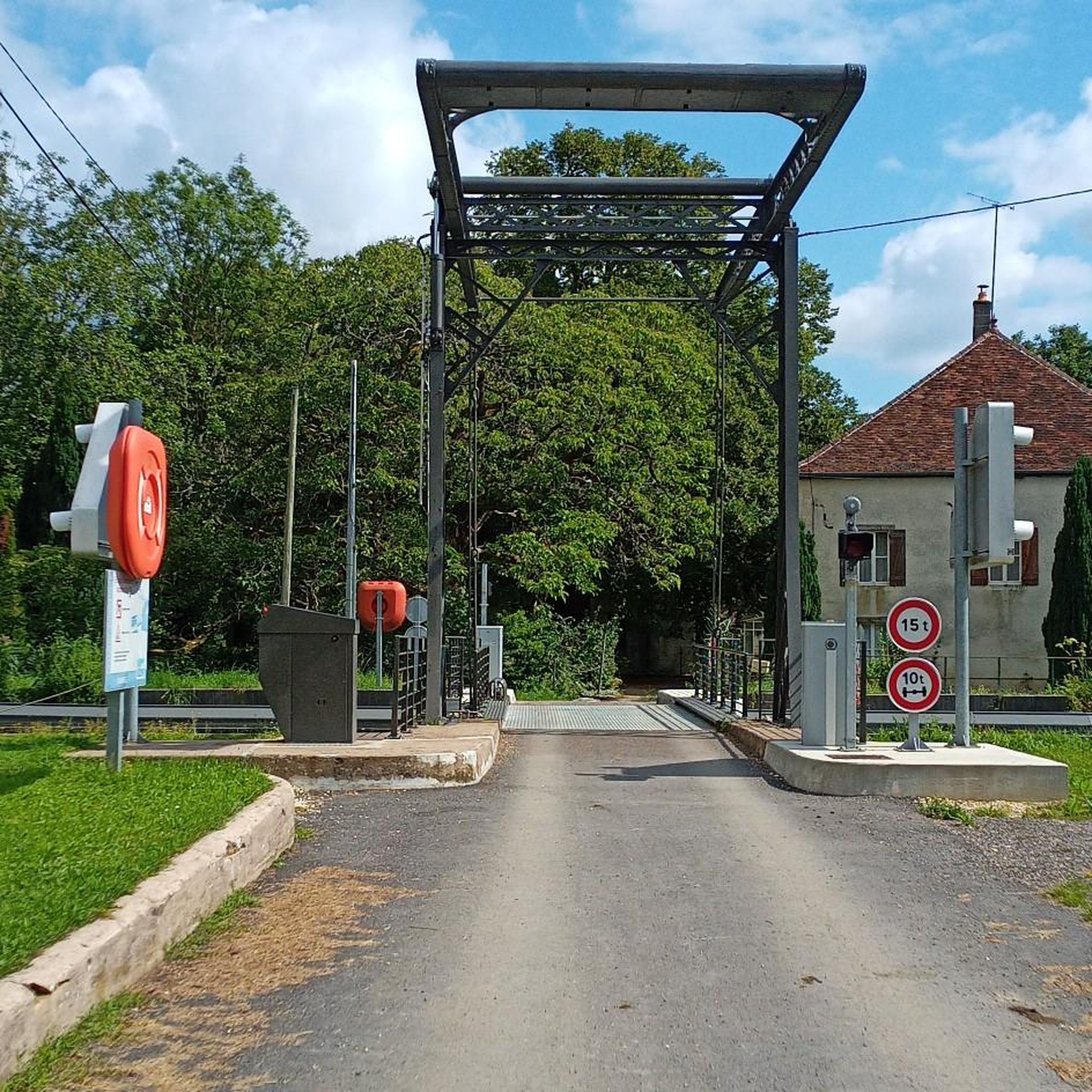
Near the cycling routes, you can explore several interesting landmarks. These include the charming settlement of Pontailler-sur-Saône, the natural wonder of Bèze Spring, and the historic Château de Talmay. You can also see the Stone Bridge and Canal in Cheuge itself.
Is Cheuge a good destination for touring cyclists who enjoy exploring historical sites?
While Cheuge itself offers local historical points like the Stone Bridge and Canal, the wider region, particularly along the Canal des Vosges, provides opportunities to discover historical monuments such as the medieval Fortress of Châtel-sur-Moselle and cultural sites in Épinal.
What is the best time of year for touring cycling in Cheuge?
Given the region's agricultural landscapes and canal-side paths, spring and autumn generally offer pleasant temperatures and beautiful scenery for touring cycling. Summer can also be enjoyable, though it's advisable to cycle earlier or later in the day to avoid peak heat.
Are there routes that offer viewpoints or scenic overlooks?
While the terrain around Cheuge is largely flat, the routes along canals and rivers offer continuous scenic views of the agricultural landscapes and waterways. For broader panoramic views, exploring the nearby Vosges Mountains or visiting places like the castle in Épinal (a short distance from the wider cycling network) would be recommended.
Can I find routes that are suitable for a full day of cycling?
Yes, there are routes designed for longer excursions. For instance, the Gray – Apremont Dam loop from Mirebeau-sur-Bèze is a challenging 67.9-mile route that would make for a substantial full-day touring adventure.
Most popular attractions around Cheuge

Get inspired with the komoot mobile app


Explore more
Browse the best Cycling routes in other regions.
