Attractions and Places To See around Boisredon - Top 20
Best attractions and places to see around Boisredon, a commune in Charente-Maritime, Nouvelle-Aquitaine, France, offer a tranquil setting with various points of interest. The area features a mix of historical, cultural, and natural sites. Visitors can explore religious monuments, ancient fortifications, and significant natural landscapes, including forests and the Gironde Estuary.
Best attractions and places to see around Boisredon
- The most popular attraction is The Belt – canals and wet meadows, an area of wetlands and drainage canals. This…
Last updated: May 10, 2026
Market and Saint-Saturnin Church of Braud-et-Saint-Louis
Highlight • Religious Site
Translated by Google •
Tip by

Saint-Séverin Church, Nieul-lès-Saintes
Highlight • Religious Site
Translated by Google •
Tip by

Sign up now to discover places like this
Get recommendations on the best single tracks, peaks, & plenty of other exciting outdoor places.
Sign up for free
Blaye-Etauliers - Cycle path 🚴
Highlight (Segment) • Other
Tip by

A surprising church name
Highlight • Other
Translated by Google •
Tip by
The Belt – canals and wet meadows
Highlight • Natural
Tip by
Sign up for free to discover even more attractions around Boisredon.
Sign up for free
Already have an account?
Start today with a free account
Your next adventure awaits.
Login or Signup


Tips from the Community

Opposite the church, you'll find a small supermarket, public restrooms, and drinking water. Always interesting.
0
0

The Saint-Saturnin Church was built in 1898 after the previous church was destroyed during the French Revolution. Near the church stands the Column of the Shipwrecked, an ex-voto erected by Nordic sailors who survived a shipwreck in the early 17th century. Located on the right bank of the Gironde River, Europe's largest estuary, the town owes its wealth of infrastructure and sports facilities to the presence of the Blayais National Park. In the heart of the marshland, its territory boasts typical wetland landscapes, home to exceptional flora and fauna. Discover it on bike rides or by visiting the "Terres d'oiseaux" bird park, next to the port of Callonges. A major producer of asparagus from Blayais, but also a wine-growing commune located in one of the largest vineyards in the world, Bordeaux, Braud-et-Saint-Louis also borders the appellations of cognac and pineau des Charentes.
0
0

Beautiful railway track cycle path between Blaye and Etauliers.
2
1

This church is quite recent (19th century) because it was built following the destruction of the village parish during the Revolution. However, its architecture is worthy of interest when passing through the charming town of Braud-et-Saint-Louis.
1
0

This cycle path was completely renovated in 2019. The old railway line leads to the entrance to the citadel of Blaye.
1
1

The only downside not a single bench or picnic table
1
0

Sanctus Saturninus de Brau is the name found in the 14th century. Braud would be an abbreviation of Beraud, Saintonge form of the Germanic name Beroald, which means Old Lord. Based on the form "Embrand" which formerly would have designated this locality. Several possible etymologies of Braud The name Braud could also come from the Gascon Braou which means Bull, a sign that this form of cattle was raised in the swamps. Commune formed from the union of two former parishes: Braud, from old French "Brai", mud, marshy place and St Louis, parish founded by the Duke of St Simon in 1656 and included in the commune of Braud in 1802. Origin of the name of the municipality of Braud and Saint Louis Braud would come from beraud, Saintonge form of the Germanic name berard, old lord" or from the Gascon braou, "bull", a sign that these cattle were raised in the swamps or even from the old French brai, "mud", "swampy place". The parish of Braud is cited under the name of Sanctus Saturninus (Saint Saturnin) of Braud. The drying out of the marshes, in the 17th century, on the initiative of the Duke Claude de Saint Simon, governor of Blaye, was to make it possible to transform the marshes into "good nature of arable land" and create villages. The draining finished, the plots are allocated, the smallholdings appear. The number of inhabitants encouraged the Duke of Saint Simon to found two parishes: the parish of Saint Louis (all the part of the large marsh located between the Gironde and the ring canal, between the Clonges canal and that of Fréneau), in l honor of the King of France and that of Saint Simon. The church, the presbytery and the cemetery built between 1665 and 1667 were destroyed during the Revolution of 1789. Rebuilt in 1895 in a neo-Gothic style and on a new north-south orientation, it is located north of the town of Braud -and-Saint-Louis. The spire of the bell tower culminates at 37 meters in height. After the Revolution, the parish of Saint Saturnin de Braud and the parish of Saint Louis des Marais were united to form the municipality of Braud and Saint Louis. THE CROSS OF SAINT LOUIS A cross found in the attic of the presbytery of Braud was erected at a place called "La Chapelle", near Fréneau, during a procession in June 1915, thus indicating the location of the disappeared church. This cross is visible from the road leading to the nuclear power plant, on the left, 4 km from the Paillerie roundabout.
1
0
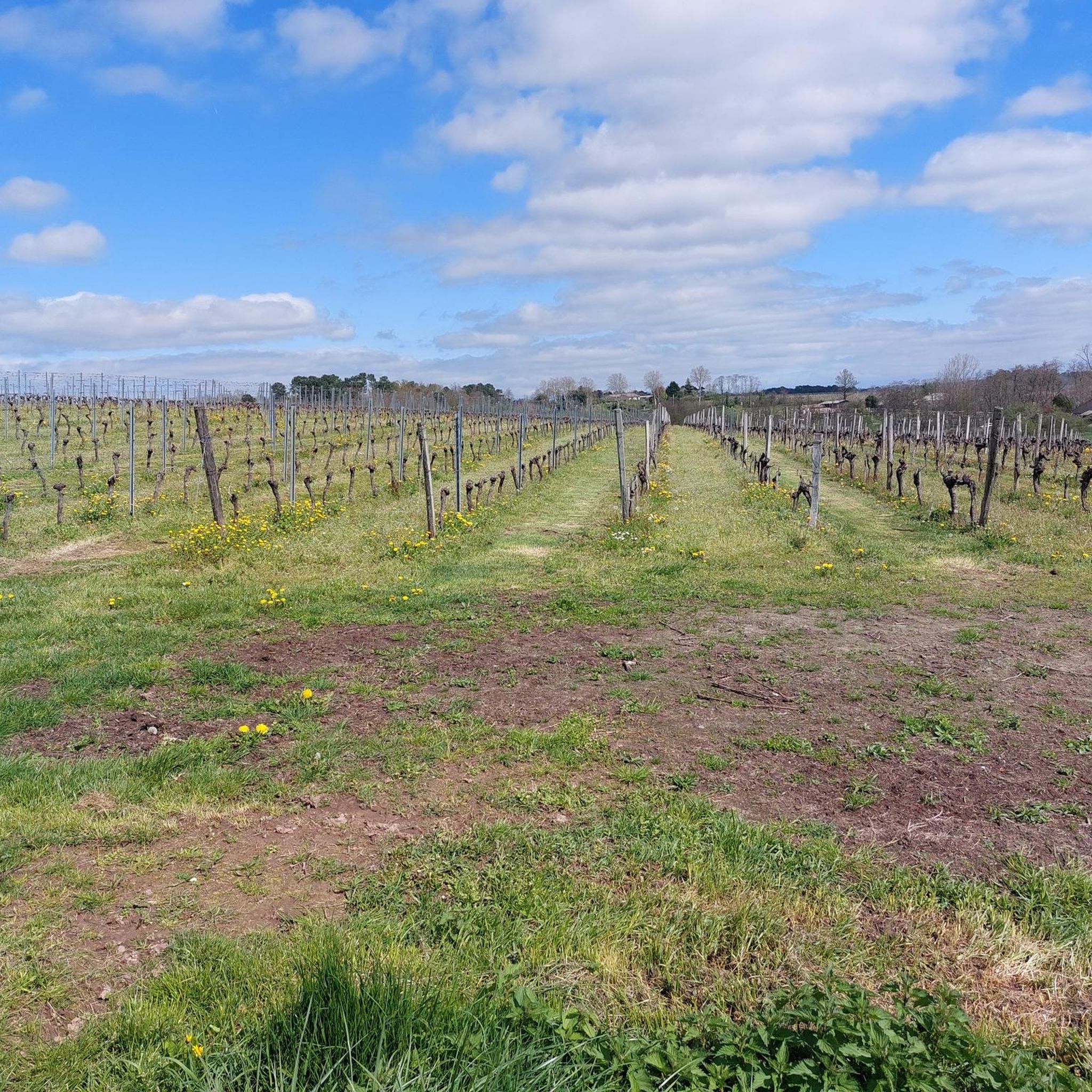
The cycle path leaves from Blaye and crosses the vineyard of Blaye Côtes de Bordeaux to Etauliers (or the reverse) for about 13 km (26 km round trip). It is part of the V80 or the Canal des Deux Mers à Vélo route. An excellent way for adults and children to discover the heritage of our region in peace. A real greenway (with lots of shaded parts) it is suitable for learning to ride a bike with small children. .. the ideal family outing by definition! Note that pilgrims to Santiago de Compostela often take it before stopping at Blaye…. and enjoy a good glass of wine (from Blaye, of course) to recover from the fatigue of the day!!!
0
0
Frequently Asked Questions
What historical and cultural sites can I explore near Boisredon?
The region around Boisredon is rich in history. You can visit the impressive 17th-century Vauban Fortifications, including the Blaye Citadel, Fort Paté, and Fort Médoc, all UNESCO World Heritage sites. Other notable historical sites include the ancient pilgrims' hospital in Pons, the Abbaye de la Tenaille, and the Château de Favières. For religious architecture, consider visiting Saint-Séverin Church, Nieul-lès-Saintes, with elements dating from the 11th and 12th centuries, or the Market and Saint-Saturnin Church of Braud-et-Saint-Louis, built in 1898.
Are there natural areas or wildlife spotting opportunities near Boisredon?
Yes, the area offers several natural attractions. The most popular is The Belt – canals and wet meadows, a wetland area that provides a habitat for diverse birds and other wildlife, especially along the Gironde estuary. You can also explore the Forêt de la Lande or the Forêt de Pons for nature walks. The Bec d'Ambès, at the confluence of the Dordogne and Garonne rivers, is another significant natural site.
What are some family-friendly activities available around Boisredon?
Families can enjoy exploring The Belt – canals and wet meadows, which is suitable for all ages and offers opportunities for wildlife observation. The Market and Saint-Saturnin Church of Braud-et-Saint-Louis is also categorized as family-friendly. For a more recreational experience, Les Antilles de Jonzac, a popular water park and thermal baths, is located about 16 km from Boisredon.
Where can I go hiking near Boisredon?
There are several hiking opportunities around Boisredon. You can find routes like the 'Our Lady of the Assumption – Château de Mirambeau loop' (moderate, 8.4 km) or the 'Étang d'Allas loop from Agudelle' (easy, 5.8 km). For more options, explore the full selection of trails in the Hiking around Boisredon guide.
Are there cycling routes available around Boisredon?
Yes, the region is great for cycling. A notable route is the Blaye-Etauliers - Cycle path, a renovated rail-to-trail section leading to the Blaye Citadel. Other options include the 'Vitrezay Nature Centre – Port de Vitrezay loop' (easy, 27.8 km) or the 'Gironde Shores – Nice track on the dikes loop' (moderate, 37 km). Discover more routes in the Cycling around Boisredon guide.
What kind of churches can I visit in the Boisredon area?
The area features several historically significant churches. The Saint-Séverin Church, Nieul-lès-Saintes, showcases Romanesque elements from the 11th and 12th centuries and a unique stone dome bell tower. The Market and Saint-Saturnin Church of Braud-et-Saint-Louis, though built in 1898, has notable architecture. You can also find the Eglise Saint Pierre de Boisredon within the commune and the Eglise de l'Assomption de Soubran nearby.
Can I find mountain biking trails near Boisredon?
Absolutely. There are various MTB trails, such as the 'Église Notre-Dame de Donnezac loop' (easy, 26.5 km) or the 'Château de Montendre – View of the Lac de la Blanche loop' (moderate, 59.3 km). For a comprehensive list of trails, refer to the MTB Trails around Boisredon guide.
What is the Gironde Estuary like, and how can I experience it?
The Gironde Estuary, the largest in Western Europe, is a significant natural feature near Boisredon. It stretches over 70 km and is characterized by wild coves, small beaches, forests, marshes, and picturesque fishing huts. You can experience it by visiting natural sites like the Bec d'Ambès or by following cycling routes along its shores, such as those found in the Cycling around Boisredon guide.
Are there any picturesque villages or towns to visit nearby?
Yes, Talmont-sur-Gironde, recognized as one of France's 'Most Beautiful Villages,' is about 38 km away. It's famous for its imposing Sainte-Radegonde Church, a Roman-style church from the 12th century. Nearby towns like Montendre, Jonzac, Blaye, and Pons also offer vibrant local markets and a glimpse into regional life.
What are some unique historical monuments in the area?
Beyond the Vauban Fortifications, you can discover the Pons Ancien Hôpital des Pèlerins, an ancient pilgrims' hospital on French pilgrim routes. Another unique site is the Cave Pair-non-Pair, a national monument located about 31 km from Boisredon, known for its prehistoric significance.
Can I explore vineyards or wine-related attractions?
The region is renowned for its wine production. While specific vineyard tours are not detailed, several châteaux and vineyards, such as Château Paty-Claune and Château Haut-Grelot, offer opportunities for discovery. Château Lafite Rothschild is also about 21 km away. Bike rides through vineyards are a popular activity in the area.
What do visitors enjoy most about the attractions around Boisredon?
Visitors particularly appreciate the tranquility and natural beauty of areas like The Belt – canals and wet meadows, noting the diverse birdlife. The historical significance and architectural details of churches like Saint-Séverin Church, Nieul-lès-Saintes, are also highly valued. The blend of historical sites, natural landscapes, and cultural experiences makes the region appealing.

Get inspired with the komoot mobile app


Explore more
Still not found the Highlight you’re looking for? See guides of the top attractions in other regions:
