Attractions and Places To See around Allas-Bocage - Top 20
Best attractions and places to see around Allas-Bocage include historical sites and serene natural landscapes in the Charente-Maritime department of Nouvelle-Aquitaine, France. The commune is characterized by its distinctive "bocage" terrain, featuring small fields delineated by hedges and groves, alongside natural features like the Étang d'Allas and local rivers. This region offers a blend of historical architecture and opportunities for outdoor exploration within its picturesque countryside.
Best attractions and places to see around Allas-Bocage
- The most popular attractions is Jonzac Castle, a castle that was transformed into a stately home and now houses the town hall and a cultural center. This medieval fortress, located approximately 8.3 km from Allas-Bocage, has a history dating back to the 12th century and features a postern and an archaeological museum.
- Another must-see spot is Saint Paul Chapel, a Templar chapel built in the 12th century and renovated in 1706. This private property is known for its historical significance and is a remarkable site in the region.
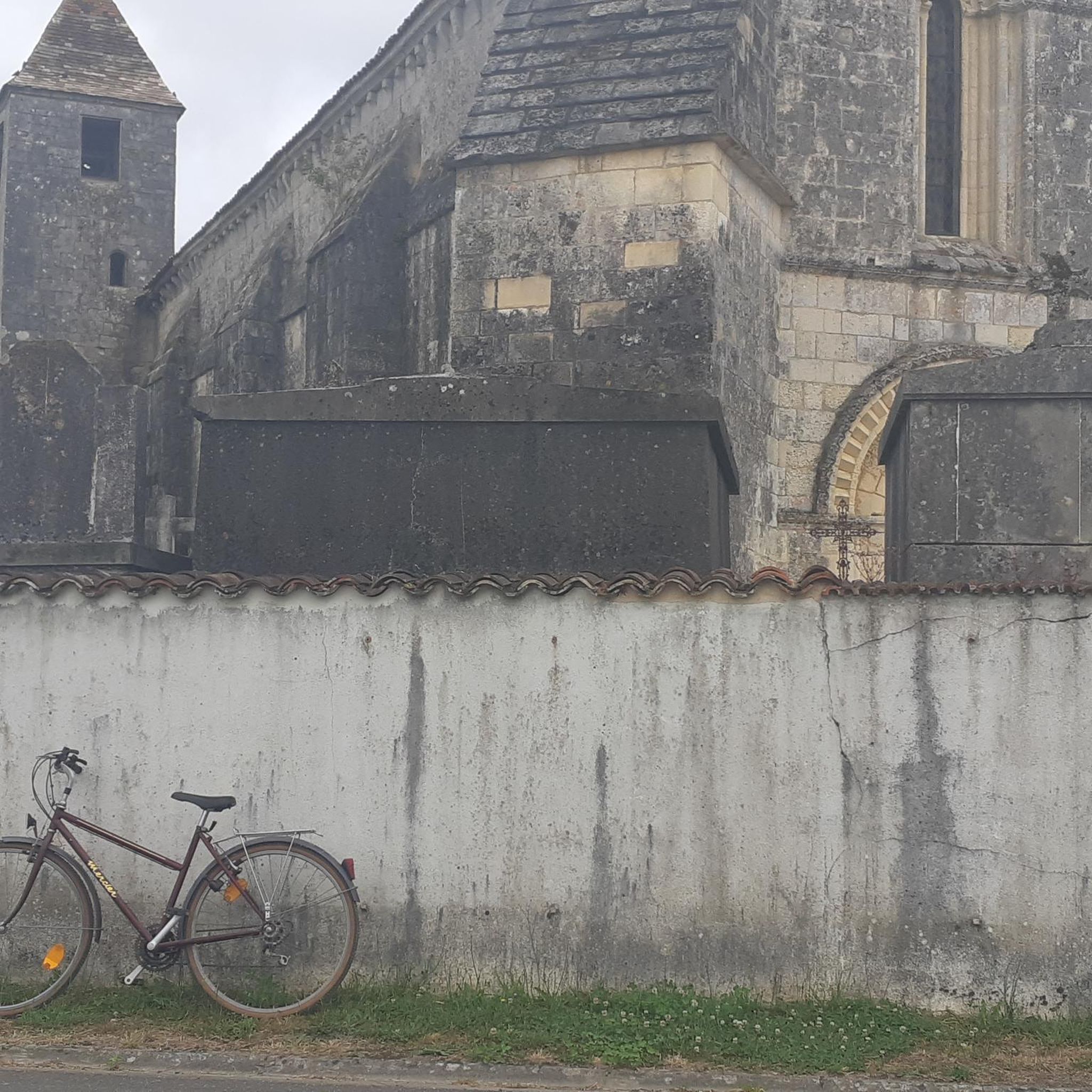
- Visitors also love Saint-André Church of Clion, a Romanesque religious building from the 12th century. Only its bell tower remains from the original construction, with later modifications in the 15th and 16th centuries, and its apse and bell tower were listed as historical monuments in 1909.
- Allas-Bocage is known for its historical churches, castles, and natural ponds. The area offers a variety of attractions to see and explore, from ancient religious sites to scenic landscapes.
- The attractions around Allas-Bocage are appreciated by the komoot community, with 26 upvotes and 20 photos shared by visitors.
Last updated: May 26, 2026
Jonzac Castle
Highlight • Castle
Currently the north wing of the castle houses the buildings of the Town Hall (restored in the 19th century), and the south wing, those of the sub-prefecture. The cloister was restored between 1976 and 1978, and now houses a cultural center, with exhibition halls and an archaeological museum.
The towers, postern and fountain in the basement date from the 12th century. Of the old feudal castle, only the postern and an isolated tower remain, connected to the main body by a large hall.
The moat in front of the drawbridge was filled was filled in the 19th century. It was reopened at the beginning of the 21st century.
The imposing gatehouse is marked 1549 and therefore dates from the 16th century, a period of work including the north-west tower, while the south-west tower, of a smaller diameter, is from the 17th century. The towers flanking the postern have retained their defenses. At each, the loopholes have been retained or enlarged. Stone stairs serve each floor and access the walkway. This passage seems to have been discovered, as evidenced by the gargoyles. The crenellation includes machicolations with archers in the middle of the merlons. The slate roofs are high pepperboxes on the towers, and a curious set with two sides connecting two pepperboxes for the gatehouse
The fountain located in the basement of the sub-prefecture, has a niche and a niche frame decorated with sculptures imitating stalactites. Carved mask. The fountain was probably built by Léon de Sainte-Maure, Count of Jonzac, who enlarged and embellished the castle in the middle of the 12th century.
In a former courtyard of the castle, a theater was built in the 19th century. It is a round building with approximately 300 seats.
Translated by Google •
Tip by

Saint Paul Chapel
Highlight • Other
Translated by Google •
Tip by

Sign up now to discover places like this
Get recommendations on the best single tracks, peaks, & plenty of other exciting outdoor places.
Sign up for free
Saint-André Church of Clion
Highlight • Religious Site
Translated by Google •
Tip by
Saint-Séverin Church, Nieul-lès-Saintes
Highlight • Religious Site
The main portal of the church, as well as the two false doors, are crowned by ogival arcades with a few rare ornaments borrowed from the Romanesque period, such as saw teeth, diamond points, etc. These gantries have been the subject of a subconstruction.
The nave is made up of three recently vaulted bays in brick and plaster, without ribs; each span is separated by groups of four small columns, only two meters and fifty high, and appearing to date from the 14th century. The apse has two bays in the 15th century ogival style.
The Saint-Joseph chapel, to the north, has kept its original Romanesque style; it is dominated by a semi-circular vault, and offers the example of an apsidion of which no advantage is currently being taken. It is adorned with a small apse which housed the baptismal font. The chapel of the Virgin, to the south, was remodeled in the 17th century; it has the character of a 15th century restorer; it was then lengthened, and consists of three spans. There is, it is said, an ossuary under the choir.
The bell tower with a cone or "pine cone" spire, placed above the transept, and about 24 meters high (54 steps lead to its summit), is worthy of attention. This is the oldest part of the church. It is covered with a stone dome carved in tortoiseshell called the pine cone bell tower, similar examples of which can be found in Saintonge (Abbaye aux Dames de Saintes, Notre-Dame-de-l'Assomption church in Fenioux)3 but which recalls above all the domes of Byzantine inspiration observed in Poitou, Angoumois and Périgord (church of N.-D.-la-Grande in Poitiers, cathedral of Saint-Pierre in Angoulême, cathedral of Saint-Front in Périgueux). The foreground includes five Romanesque windows on each side, oriented as usual, on the upper level there are only two; the tower ends in a cut of stone, formed of small somewhat deformed cubes and forming a slightly rounded cone, but deformed by time. Inside, this bell tower offers a quadrangular vault, with cut sides, of very good taste. The bell, weighing 430 kilograms, was cast by Guillaume Besson, from Angers, and blessed in 1859, under the name of Marie. The godfather was Mr. Blanc Fontenille, former lawyer and notary, mayor of Nieul, and the godmother Mrs. Marie Belloteau, born Babin; parish priest M.Antoine Lanson.
Translated by Google •
Tip by
A surprising church name
Highlight • Other
12th century church, enlarged in the 15th and 16th centuries. Dependent on the priory of St-Thomas-de-Conac in the 12th century, it retains a Romanesque structure and a western portal with arches and sculpted capitals. The right apse choir was covered with ribbed vaults in the 13th century. Existence of a solid square bell tower. New enlargement in the 19th century, with the construction of two chapels adjoining the collateral.
Building built in the 12th century. At the end of the 15th-beginning of the 16th century, the western bays of the nave are doubled by a second vessel to the south, and a square bell tower is high. To face the Wars of Religion, an upper chamber was built; presence of an underground refuge. In the 19th century, the late collateral was divided by a longitudinal shear wall, and received a slight vault; the apse is pierced with a twin neo-Romanesque window.
A sign at the entrance (and pictured in the must-see) explains the church's noteworthy features.
Translated by Google •
Tip by
Sign up for free to discover even more attractions around Allas-Bocage.
Sign up for free
Already have an account?
Start today with a free account
Your next adventure awaits.
Login or Signup
Tips from the Community

This Templar chapel was built in the 12th century and renovated in 1706. It was acquired in 1949 by Mr. and Mrs. Frédéric, the current owners, who completely restored it. Since 1986, on August 15 of each year, a mass has been celebrated there.
2
0
This Romanesque church was built in the 12th century, but all that remains of the original building is the bell tower. It was modified in the 15th and 16th centuries. A Renaissance style facade replaces the original facade and the square bell tower was built in the 12th century.
2
0

Charming little piece of nature. The chapel (above) can be visited when it is open. A skeleton welcomes you but don't worry, it is very discreet!
0
0

The church, built in the shape of a Latin cross, the first construction elements of which date from the 11th and 12th centuries, with later additions and alterations (15th and 19th centuries to the beginning of the 13th century then modified in the 15th and 16th centuries, is dedicated to Saint Séverin, alias Seurin, bishop of Bordeaux in the 5th century, and whose feast day takes place on October 21. However, the solemn patronal feast is that of Saint Blaise, martyr bishop of the 4th century, fixed on February 3, and for which there is great veneration in the country. The main portal of the church, as well as the two false doors, are crowned by ogival arcades with a few rare ornaments borrowed from the Romanesque period, such as saw teeth, diamond points, etc. These gantries have been the subject of a subconstruction. The nave is made up of three recently vaulted bays in brick and plaster, without ribs; each span is separated by groups of four small columns, only two meters and fifty high, and appearing to date from the 14th century. The apse has two bays in the 15th century ogival style. The Saint-Joseph chapel, to the north, has kept its original Romanesque style; it is dominated by a semi-circular vault, and offers the example of an apsidion of which no advantage is currently being taken. It is adorned with a small apse which housed the baptismal font. The chapel of the Virgin, to the south, was remodeled in the 17th century; it has the character of a 15th century restorer; it was then lengthened, and consists of three spans. There is, it is said, an ossuary under the choir. The bell tower with a cone or "pine cone" spire, placed above the transept, and about 24 meters high (54 steps lead to its summit), is worthy of attention. This is the oldest part of the church. It is covered with a stone dome carved in tortoiseshell called the pine cone bell tower, similar examples of which can be found in Saintonge (Abbaye aux Dames de Saintes, Notre-Dame-de-l'Assomption church in Fenioux)3 but which recalls above all the domes of Byzantine inspiration observed in Poitou, Angoumois and Périgord (church of N.-D.-la-Grande in Poitiers, cathedral of Saint-Pierre in Angoulême, cathedral of Saint-Front in Périgueux). The foreground includes five Romanesque windows on each side, oriented as usual, on the upper level there are only two; the tower ends in a cut of stone, formed of small somewhat deformed cubes and forming a slightly rounded cone, but deformed by time. Inside, this bell tower offers a quadrangular vault, with cut sides, of very good taste. The bell, weighing 430 kilograms, was cast by Guillaume Besson, from Angers, and blessed in 1859, under the name of Marie. The godfather was Mr. Blanc Fontenille, former lawyer and notary, mayor of Nieul, and the godmother Mrs. Marie Belloteau, born Babin; parish priest M.Antoine Lanson.
1
0
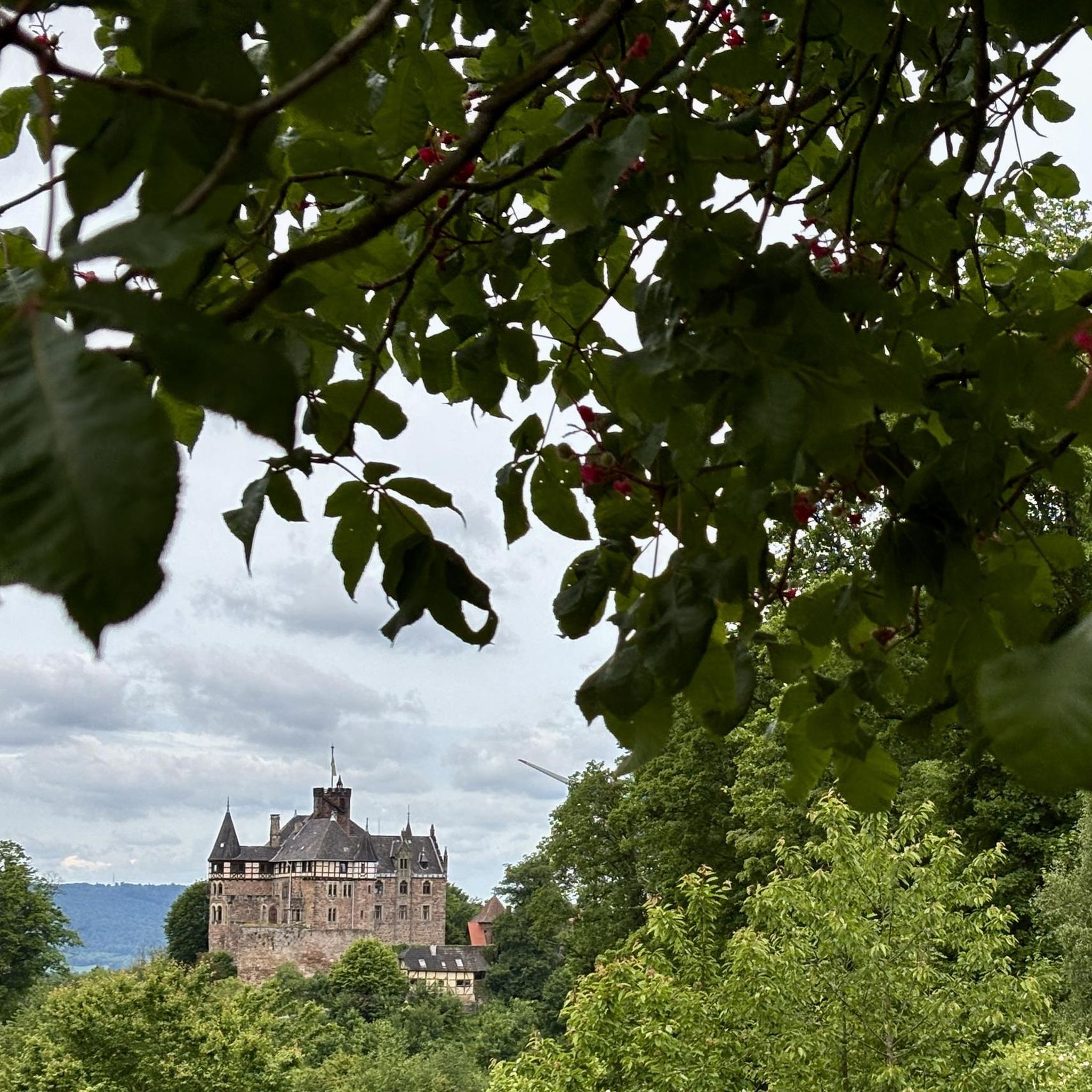
In 1073, the castle already exists; the first known lord was Guillaume de la Rochandry at the beginning of the 12th century. The 1449 inscription on the castle attests to its reconstruction following the destruction caused by the Hundred Years War. In 1505, Jean de Sainte-Maure, lord of Jonzac, founded the Carmelite monastery on the remains of an old chapel dedicated to Saint Nicolas. The cloister was built in 1657. The young Louis XIV, the Queen Mother and Mazarin stayed at the castle in 1659. The castle remained at Sainte-Maure until the end of the 17th century, then passed through marriage to Espardes de Lussan, which transformed the fortress in beautiful stately home with neat ornamentation and guard until the Revolution. Currently the north wing of the castle houses the buildings of the Town Hall (restored in the 19th century), and the south wing, those of the sub-prefecture. The cloister was restored between 1976 and 1978, and now houses a cultural center, with exhibition halls and an archaeological museum. The towers, postern and fountain in the basement date from the 12th century. Of the old feudal castle, only the postern and an isolated tower remain, connected to the main body by a large hall. The moat in front of the drawbridge was filled was filled in the 19th century. It was reopened at the beginning of the 21st century. The imposing gatehouse is marked 1549 and therefore dates from the 16th century, a period of work including the north-west tower, while the south-west tower, of a smaller diameter, is from the 17th century. The towers flanking the postern have retained their defenses. At each, the loopholes have been retained or enlarged. Stone stairs serve each floor and access the walkway. This passage seems to have been discovered, as evidenced by the gargoyles. The crenellation includes machicolations with archers in the middle of the merlons. The slate roofs are high pepperboxes on the towers, and a curious set with two sides connecting two pepperboxes for the gatehouse The fountain located in the basement of the sub-prefecture, has a niche and a niche frame decorated with sculptures imitating stalactites. Carved mask. The fountain was probably built by Léon de Sainte-Maure, Count of Jonzac, who enlarged and embellished the castle in the middle of the 12th century. In a former courtyard of the castle, a theater was built in the 19th century. It is a round building with approximately 300 seats.
0
0
"Agout" is an old Saintonge word meaning "sewer" which is here applied to the flow of water from the region to the marshes of the Gironde. The location of the church, on sloping ground on the edge of the road, may explain the addition of this word to its name, which gave St Georges d'Agout. 12th century church, enlarged in the 15th and 16th centuries. Dependent on the priory of St-Thomas-de-Conac in the 12th century, it retains a Romanesque structure and a western portal with arches and sculpted capitals. The right apse choir was covered with ribbed vaults in the 13th century. Existence of a solid square bell tower. New enlargement in the 19th century, with the construction of two chapels adjoining the collateral. Building built in the 12th century. At the end of the 15th-beginning of the 16th century, the western bays of the nave are doubled by a second vessel to the south, and a square bell tower is high. To face the Wars of Religion, an upper chamber was built; presence of an underground refuge. In the 19th century, the late collateral was divided by a longitudinal shear wall, and received a slight vault; the apse is pierced with a twin neo-Romanesque window. A sign at the entrance (and pictured in the must-see) explains the church's noteworthy features.
0
0


Remarkable site, known throughout the region, owned by private individuals. The Templar Chapel was built in the 12th century, renovated in 1706. The will of Louis de La Rochandry "escuyer, lord of Croyignac, Clyon and Saint Antoine" was written on July 14, 1587 in this chapel. It was sold in 1792 as "national property". It was acquired by Mr. and Mrs. Frédéric, the current owners, in 1949. It has been restored and the site is maintained today. Two rock-cut burials were found there. A skeleton is on display in the chapel. Since 1986, every August 15, a mass is celebrated there.
0
0
Frequently Asked Questions
What historical sites can I visit around Allas-Bocage?
The region boasts several historical sites. You can explore the impressive Jonzac Castle, a medieval fortress transformed into a stately home, which now houses the town hall and a cultural center. Other notable sites include the 12th-century Saint Paul Chapel, and the Romanesque Saint-André Church of Clion, known for its original bell tower. The Saint-Séverin Church, Nieul-lès-Saintes, with its unique pine cone spire, and the intriguing A surprising church name are also worth a visit.
What natural features can I explore near Allas-Bocage?
The area is rich in natural beauty, characterized by its distinctive 'bocage' landscape of small fields, hedges, and groves. A prominent natural highlight is the tranquil Étang d'Allas (Allas Pond), which is popular for fishing and surrounded by lush woodlands. The Maine and Tarnac Rivers also contribute to the scenic landscape, offering picturesque spots for exploration.
Are there opportunities for outdoor activities like hiking and cycling?
Yes, Allas-Bocage and its surroundings are ideal for outdoor enthusiasts. The 'bocage' terrain is crisscrossed with numerous hiking and cycling trails. You can find various routes that incorporate the Étang d'Allas, vineyards, and woodlands. For specific cycling routes, explore the Cycling around Allas-Bocage guide, which includes options like the 'Jonzac and Archiac Loop'. For mountain biking, check out the MTB Trails around Allas-Bocage guide, featuring routes such as 'Climbing spots – Challenging trail area. loop from Guitinières'.
What is the best time of year to visit Allas-Bocage for outdoor activities?
The spring and autumn months are generally considered the best time to visit for outdoor activities. The weather is mild and pleasant, making it ideal for hiking, cycling, and exploring the natural landscapes without the intense heat of summer. The 'bocage' scenery is particularly beautiful during these seasons with vibrant foliage or blooming flora.
Are there family-friendly attractions or activities in the area?
While specific family-focused attractions are not highlighted, the natural landscapes and historical sites can be enjoyed by families. The Étang d'Allas offers a peaceful setting for a stroll or a picnic. Exploring the grounds of Jonzac Castle and its archaeological museum can also be an engaging experience for older children. Many of the hiking and walking trails are suitable for families looking for an active day out.
Can I bring my dog on trails around Allas-Bocage?
Generally, dogs are welcome on many outdoor trails in the region, especially in rural areas like the 'bocage' landscape. However, it's always advisable to keep dogs on a leash, especially near livestock or in nature reserves, and to clean up after them. Specific rules might apply to certain protected areas or private properties, so look for local signage.
How can I get to attractions like Jonzac Castle using public transport or find parking?
Allas-Bocage is a smaller commune, and public transport options directly to all attractions might be limited. For Jonzac Castle, located in the larger town of Jonzac, you will likely find more public transport connections. Parking is generally available in Jonzac town center near the castle. For natural sites like Étang d'Allas, driving and parking in designated areas or along rural roads is often the most convenient option.
What do visitors enjoy most about the Allas-Bocage area?
Visitors appreciate the blend of historical charm and serene natural landscapes. The historical churches and castles offer a glimpse into the region's past, while the 'bocage' countryside, with its lush woodlands and tranquil ponds, provides a peaceful escape. The opportunity for outdoor activities like hiking and cycling through picturesque scenery is also a major draw, as evidenced by the 26 upvotes and 20 photos shared by the komoot community.
Are there any easy walking trails suitable for all fitness levels?
Yes, the region offers various walking trails, including easier options that allow visitors of all fitness levels to enjoy the 'bocage' landscape. Many routes around the Étang d'Allas are relatively flat and pleasant for a leisurely stroll. You can find running trails, which often include easier walking sections, in the Running Trails around Allas-Bocage guide, such as the 'Jonzac Castle – Wooden Boardwalks loop from Jonzac'.
Are there any hidden gems or lesser-known spots worth discovering?
Beyond the main highlights, the charm of Allas-Bocage lies in its rural character and the quiet beauty of its 'bocage' landscape. Exploring the smaller, less-frequented paths through the fields and groves can lead to delightful discoveries. The various small Romanesque churches scattered throughout the surrounding villages, like the A surprising church name, often hold unique architectural details and a sense of local history, offering a more intimate experience away from larger crowds.
What kind of wildlife can I spot in the Allas-Bocage area?
The diverse 'bocage' landscape, with its mix of woodlands, hedges, and wetlands like the Étang d'Allas, supports a variety of wildlife. Birdwatchers might spot various waterfowl around the pond, as well as woodland birds in the surrounding forests. Mammals such as deer, foxes, and smaller creatures are also present, though often more elusive. The natural environment provides a rich habitat for local flora and fauna.

Get inspired with the komoot mobile app


Explore more
Still not found the Highlight you’re looking for? See guides of the top attractions in other regions:
