The best cycling routes around Boufféré
4.2
(146)
663
riders
176
rides
Touring cycling routes around Boufféré are characterized by the verdant countryside and a relatively flat terrain, making the area suitable for cycling. The region is shaped by several waterways, including the rivers Maine, Sèvre, and Boulogne, and features lakes such as the Lac de la Chausselière and the Lac du Jaunay. Boufféré is integrated into the "Vendée Vélo Tour" circuit, providing access to a well-developed cycling infrastructure.
Best touring cycling routes around Boufféré
- The most popular touring cycling route is Discovery of Montaigu and its surroundings — loop by the Véloroute de Haut Bocage, an 18.1 miles (29.2 km) trail that takes 1 hour 46 minutes to complete. This easy route offers a scenic loop through the Véloroute de Haut Bocage.
- Another top favourite among local touring cyclists is Villages of the heart of Vendée — circuit from Montaigu, a moderate 44.9 miles (72.3 km) path. This circuit explores the villages in the heart of Vendée, starting from Montaigu.
- Local touring cyclists also love the Lac de la Bultière – Montaigu Castle loop from Montaigu Vendée, a 28.8 miles (46.4 km) trail leading through Lac de la Bultière and past Montaigu Castle, often completed in about 3 hours 37 minutes.
- Touring cycling around Boufféré is defined by verdant countryside, rivers, and lakes, with well-developed cycling infrastructure like the Vendée Vélo Tour. The network offers options for different ability levels, from easy loops to more challenging circuits.
- The routes in Boufféré are highly rated by the komoot community with an average score of 4.3 stars from over 140 reviews. More than 700 touring cyclists have used komoot to explore Boufféré's varied terrain.
Last updated: May 20, 2026
3.8
(4)
6
riders
Easy bike ride. Great for any fitness level. Mostly paved surfaces. Suitable for all skill levels.
72.3km
04:20
330m
330m
Moderate bike ride. Good fitness required. Some segments of this route may be unpaved and difficult to ride.

Sign up for free
4.3
(3)
52
riders
46.4km
03:37
400m
400m
Hard bike ride. Good fitness required. You may need to push your bike for some segments of this route.
3.3
(3)
40
riders
36.7km
02:33
300m
300m
Moderate bike ride. Good fitness required. Mostly paved surfaces. Suitable for all skill levels.
4.6
(17)
20
riders
14.2km
00:52
90m
90m
Easy bike ride. Great for any fitness level. Mostly paved surfaces. Suitable for all skill levels.
Get access to more routes and recommendations from other explorers.
Sign up for free
Already have an account?
Our route recommendations are based on thousands of hikes, rides, and runs completed by other people on komoot.
Start today with a free account
Your next adventure awaits.
Login or Signup

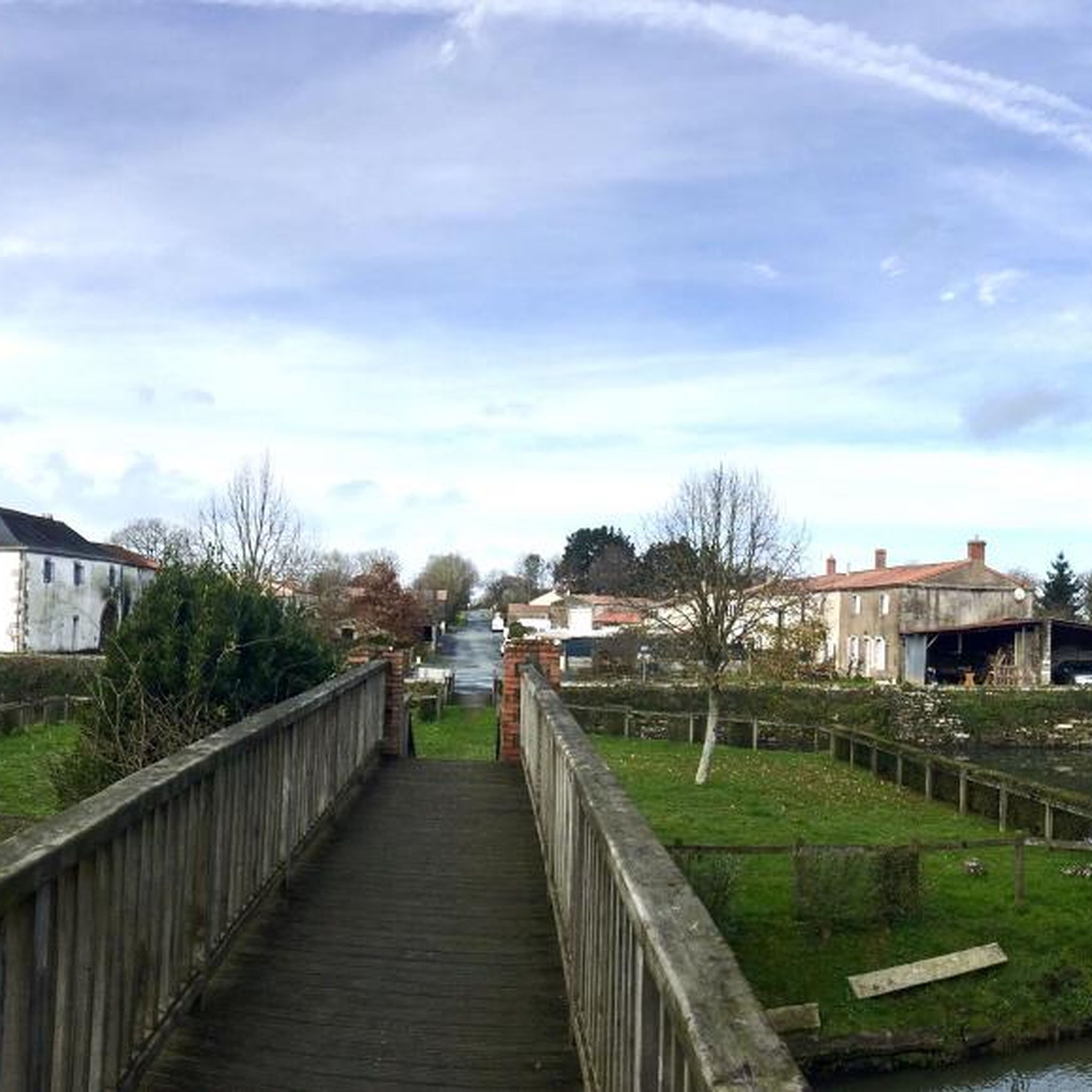
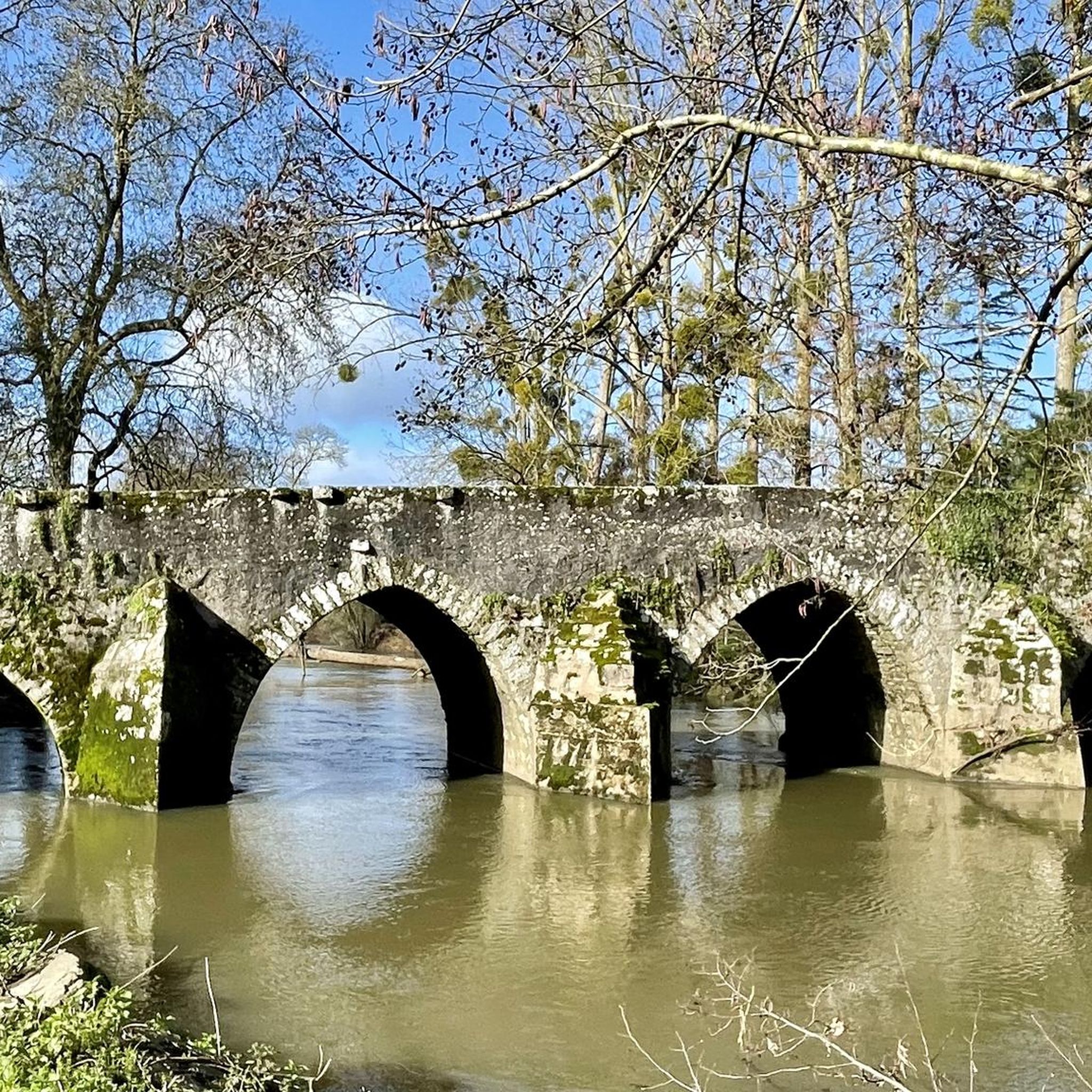


Tips from the Community

A beautifully restored old watermill, in the heart of a beautiful natural site.
0
0
19th century church whose unfinished bell tower was topped with a slate spire which clashes a little - a lot - with the rest of the monument.
0
0
It's a shame the tree is dead, but the chapel is still as amazing as ever.
0
0
A beautiful site on the Petite Maine River. Overall, the path along it between La Poitevinière and St Georges is very pleasant. Also known as the Chauveau Mill.
0
0

La Roche-Pépin, a village in Saint-Georges and its abandoned chapel—this could have been the headline in the newspaper Ouest-France in May 1992. Indeed, in the heart of the Saint-Georges hamlet stands the Chapel of the Blessed Virgin, located on the pilgrims' route to Santiago de Compostela. A chapel with the distinction of belonging to the village's inhabitants. The construction of this building began in 1858, without the bishop's authorization. Its founders, Eugène Jaunet (mayor of Saint-Georges in 1857) and his sisters Victorine and Elisa, were a wealthy family who fed the poor. On May 16, 1859, Monsignor Delamare blessed the chapel. A building that, after their deaths, would gradually fall into disrepair. But the month of Mary continued to be celebrated there until 1952. Miss Gris, who looked after the chapel, said, "When I was young, we celebrated the month of Mary there, avoiding standing under the dangerous areas." The upper part of the chapel deteriorated, and in 1970, the slate roof finally collapsed. Father Jagueneau, who had attempted repairs, gave up due to the scale and cost of the work. The bell that rang the Angelus and for funerals was almost taken down in 1972. Only the sacred stone of the altar was removed. In 1986, a stone falling from the top of the building hit a car, creating controversy and tension among the villagers, some of whom reinforced the upper part of the walls. Michel Bonnet, the mayor, gathered the villagers to discuss a crucial question: should the chapel be razed, as some local residents suggested, or should funds be raised to restore the building? In 1992, under the leadership of Marc Jaulin, the Association for the Preservation of Heritage was founded and raised funds for two years to restore the chapel. The restoration took place from May 1993 to May 1997, requiring 545 hours of volunteer work, at a total cost of €42,662, of which €32,342 was funded by the association and municipal and departmental grants. Today, the restored and flower-bedecked chapel is open to visitors, and the month of Mary is celebrated there in May. Léone Epaulais, who arranges flowers and maintains the chapel, also recalls a legend: "More than a hundred years ago, the crown of the Blessed Virgin was thrown onto the flames of a fire, and the fire went out."
0
0
The River House is a preserved natural setting spanning over 10 hectares where art and nature blend together. Imagine a river and its watermill, surrounded by 10 hectares of nature... Boat trips on the Grande Maine, family treasure hunts, twilight strolls, onboard drinks, and an art exhibition with free access on the shaded banks and in the old mill.
0
0
Bultière Lake is an artificial reservoir. The Bultière Dam was built in 1994. It is located in the commune of Chavagne en paillers. It supplies the drinking water network. Its surface area is 72 hectares and contains 5.2 million cubic meters of water. It is possible to walk around the lake via a 15-km trail. This lake, with its exceptionally rich fish population, awaits you with almost every type of fish (perch, pike, zander, catfish, carp, roach, bream, tench, etc.). You can go predator fishing from the shore or from a boat to catch zander, pike, and catfish. It is, of course, possible to still fish for roach, bleak, or bream. Carp are also present in this lake. A night carp fishing route located on the right bank in the Maurosière sector will delight those who love a good catch.
0
0
The Church of Saint-Jean-Baptiste is Gothic in style and features an imposing façade. It is built of stone and features ornate carved details. The façade features a richly decorated main portal, adorned with statues, reliefs, or architectural motifs. Inside the church, you will find a spacious, vaulted main nave supported by pillars or columns. The vaults feature decorative star and ribbed motifs typical of Gothic architecture. Restored over a period of five years, the interior of the building now reveals warm colors ranging from yellow to pinkish-red. Colored stained-glass windows are also a characteristic feature of Gothic churches, and the Church of Saint-Jean-Baptiste has magnificent stained-glass windows depicting biblical scenes and saints. In summary, the Church of Saint-Jean-Baptiste in Montaigu is an example of Gothic architecture with an imposing façade and decorative elements. It houses side chapels, a choir, a main altar, and colorful stained-glass windows. In addition to its aesthetic appeal, it is also an active place of worship and a significant historical landmark for the local community. The Church of Saint John the Baptist in Montaigu has a rich history dating back several centuries. Here is a brief overview of its history: The original church in Montaigu was built in the 11th century, but little information is available about this early structure. Over the following centuries, the church underwent alterations and expansions, reflecting changing architectural styles. In the 14th century, the church was rebuilt in the Gothic style, with a spacious main nave, elegant vaults, and carved details. Construction was completed in the 15th century, giving the church its current appearance. During the French Revolution in the 18th century, the Church of Saint John the Baptist was used for secular purposes. It was converted into a community hall and suffered significant damage, including the destruction of decorative and religious elements. After the Revolution, the church was gradually restored and returned to worship. Repair and renovation work was undertaken to restore damaged architectural features. Over the years, modifications and improvements were made to the Church of Saint-Jean-Baptiste. Side chapels were added, stained-glass windows were installed, and religious ornaments were restored. Today, the Church of Saint-Jean-Baptiste is an active place of worship for the Catholic community of Montaigu. It is also a tourist and cultural attraction, attracting visitors with its Gothic architecture, stained-glass windows, and history. Religious events, ceremonies, and concerts are regularly held there.
0
0
Frequently Asked Questions
How many touring cycling routes are available around Boufféré?
There are over 160 touring cycling routes available around Boufféré, offering a wide range of options for different skill levels and preferences. You'll find everything from easy loops to more challenging circuits.
What kind of terrain can I expect when cycling around Boufféré?
The Boufféré area is characterized by a verdant countryside and generally relatively flat terrain, making it highly suitable for touring cycling. While mostly flat, some routes may include gentle ascents, such as the Lac de la Bultière – Montaigu Castle loop from Montaigu Vendée, which has an elevation gain of around 400 meters.
Are there any family-friendly touring cycling routes in the Boufféré area?
Yes, Boufféré offers many family-friendly options. The region's generally flat terrain and dedicated cycling paths, like those integrated into the Vendée Vélo Tour, are ideal for families. An easy route like the Discovery of Montaigu and its surroundings — loop by the Véloroute de Haut Bocage, at 18.1 miles (29.2 km), is a great choice for a leisurely family outing.
What are some notable landmarks or attractions I can see along the cycling routes?
The routes around Boufféré offer a mix of natural beauty and historical sites. You can cycle past the historic Montaigu Castle, explore the serene River House, or visit the impressive Church of St Georges. The region is also dotted with picturesque rivers like the Maine, Sèvre, and Boulogne, and lakes such as the Lac de la Chausselière and Lac du Jaunay, providing scenic views.
Are there circular touring cycling routes available from Boufféré?
Absolutely. Many touring cycling routes in the Boufféré area are designed as loops, allowing you to start and finish at the same point. For example, the Villages of the heart of Vendée — circuit from Montaigu offers a moderate 44.9-mile (72.3 km) circular path exploring the charming villages of the region.
What is the best time of year for touring cycling in Boufféré?
The Vendée department, including Boufféré, generally enjoys pleasant weather for cycling. Spring and early autumn are often ideal, offering mild temperatures and beautiful landscapes. Summer can also be great, though it's advisable to cycle in the mornings or late afternoons to avoid the midday heat.
How does Boufféré connect to larger cycling networks like Vendée Vélo or La Vélodyssée?
Boufféré is well-integrated into the "Vendée Vélo Tour" circuit, providing access to a well-developed network of cycle paths across the department. Additionally, the wider Vendée region is close to "La Vélodyssée," a major long-distance route that runs along the Atlantic coast, offering extensive cycling opportunities on mostly traffic-free paths.
Where can I find parking for my car if I want to cycle in Boufféré?
While specific parking areas for cyclists in Boufféré are not detailed, Montaigu-Vendée, being a central hub, offers various parking options. Many routes, such as the Montaigu Castle – Church of St Georges loop from Montaigu Vendée, start from Montaigu, making it a convenient base for parking and beginning your ride.
Is it possible to reach Boufféré by public transport with a bicycle?
Information on specific public transport options for bicycles directly to Boufféré is limited. However, Montaigu-Vendée, as a larger commune, is likely to have better public transport connections. It's recommended to check local transport provider websites for their bicycle policies and routes to Montaigu-Vendée.
Are there places to eat or stay overnight for cyclists in Boufféré or nearby?
Boufféré and the surrounding Montaigu-Vendée area offer various amenities for cyclists. You'll find cafes, pubs, and accommodation options in the charming villages along the routes. Montaigu-Vendée, in particular, provides a good selection of services for visitors looking to refuel or stay overnight.
What do other touring cyclists say about their experience in Boufféré?
The touring cycling routes around Boufféré are highly rated by the komoot community, with an average score of 4.3 stars from over 140 reviews. More than 700 touring cyclists have used komoot to explore the varied terrain, often praising the verdant countryside, scenic waterways, and well-developed cycling infrastructure.
Are there any challenging touring cycling routes in the Boufféré area for experienced riders?
While much of the terrain is relatively flat, there are routes that offer more of a challenge. For instance, the The Arsenal – Vendée vélo loop from Montaigu Vendée is a moderate 41.5-mile (66.8 km) route that provides a longer distance and some elevation changes, suitable for those looking for a more extensive ride.
Most popular attractions around Boufféré

Get inspired with the komoot mobile app


Explore more
Browse the best Cycling routes in other regions.
